





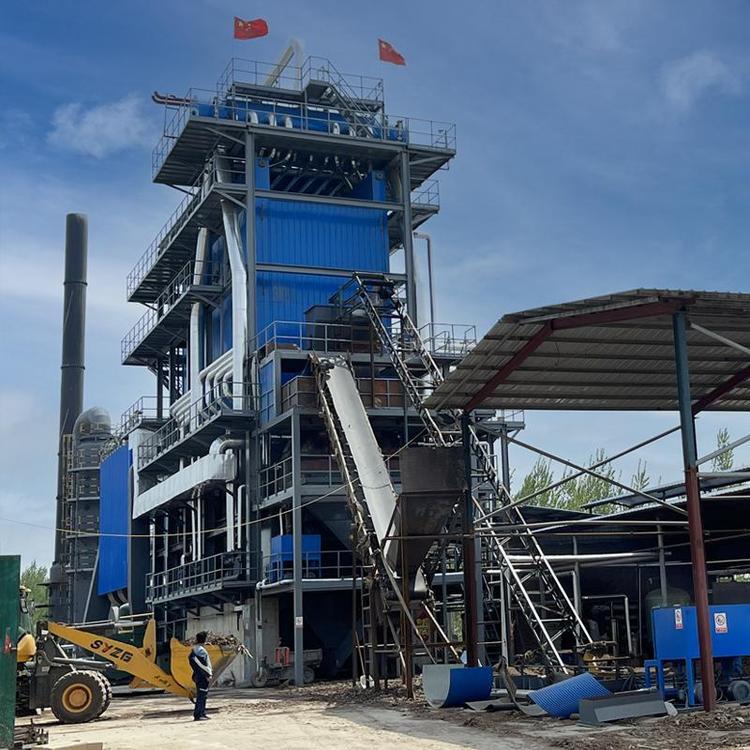



















Shandong Zhongjie Special Equipment (formerly Heze Boiler Factory Co., Ltd.) holds an A-grade boiler manufacturing license, A2-grade pressure vessel manufacturing license, A2-grade pressure vessel design license, B-grade boiler installation and GB2, GC2 class pressure pipeline installation licenses, as well as equipment and machinery installation contracting qualifications. It is a member of the China Boiler and Water Treatment Association, the China Chemical Equipment Association, and the理事 member of the Shandong Equipment Manufacturing Association. The company has also passed the ISO9001 Quality Management System, ISO14001 Environmental Management System, OHSAS18001 Occupational Health and Safety Management System certifications, and the American ASME/U2 certification.
Biomass boiler drying kiln refers to the process of using a biomass boiler for kiln heating. The following are the brief steps:
Prepare Fuel: Select appropriate biomass fuel such as wood chips and straw, and carry out pretreatment like drying and sieving to ensure the quality of the fuel and its suitability for the furnace.
Ignition and ignition adjustment: Place the fuel into the combustion chamber of the biomass boiler, ignite it, and adjust the ignition. Ignition adjustment involves modifying parameters such as the oxygen supply, fuel supply, and combustion temperature within the combustion chamber to ensure stable combustion.
Heating and Temperature Control: As fuel burns, biomass boilers produce high-temperature flue gas, which transfers its heat energy to the oven through a heat exchanger. During the heating process, it is necessary to control the temperature of the oven to ensure that the materials inside receive adequate heating.
Furnace Operation and Monitoring: During the furnace heating process, both operation and monitoring are required. Operations involve controlling fuel supply, heat transfer, and the movement of materials inside the furnace. Monitoring includes parameters such as temperature, pressure, and combustion efficiency to ensure the furnace operates normally and safely.
Furnace Completion and Cleaning: Upon completion of heating or achieving the required furnace effect, stop fuel supply and heating, and perform the furnace completion procedures. Post-completion, it is necessary to clean the furnace and biomass boiler, including the ash and soot in the combustion chamber and flue, to maintain the cleanliness and smooth operation of the equipment.
Biomass boilers, as equipment for converting thermal energy from biomass fuel, offer the following advantages:
Renewable Energy: Biomass fuel is a renewable energy source that can be continuously replenished through planting and cultivation. Compared to fossil fuels, the use of biomass fuel has a smaller environmental impact and is beneficial for sustainable development.
Environmental Protection and Energy Saving: Biomass combustion produces relatively little waste gas and slag, with low emissions of pollutants. The biomass fuel itself has low sulfur and low nitrogen characteristics, and the slag after combustion can be reused as organic fertilizer or biomass fuel, reducing environmental pollution.
Diversity and Flexibility: Biomass fuel options are abundant, including wood chips, straw, and more. Different fuels can be selected based on actual conditions, enhancing their substitutability and flexibility.
Utilization: The biomass boiler employs advanced combustion technology and heat conversion equipment, maximizing the thermal energy of biomass fuel and enhancing thermal efficiency. Additionally, equipped with an economizer and flue gas recirculation system, it further boosts thermal efficiency.
Economic Efficiency: Biomass fuel is more stable and cheaper compared to fossil fuels. The investment and operational costs of biomass boilers are relatively lower, offering good economic benefits.
Widely Applicable: Biomass boilers are suitable for various fields, including industrial production, heating, and power generation. They can meet the thermal energy needs in different scenarios.
In summary, biomass boilers offer advantages such as renewable energy, environmental protection, energy efficiency, diversity, flexibility, utilization, cost-effectiveness, and wide application, making them a sustainable thermal energy conversion solution.
Control methods for biomass boiler combustion systems can include the following aspects:
Fuel Supply Control: Regulate the supply quantity and speed of biomass fuel to ensure stable fuel supply. This can be achieved by adjusting the feeder's speed or on/off switch.
Air Supply Control: Regulate the air supply during the combustion process to ensure complete fuel combustion. This can be achieved by adjusting the fan speed or switching it on/off.
Combustion Temperature Control: Monitors the temperature inside the combustion chamber and adjusts it according to the set values. The combustion temperature can be controlled by adjusting the air supply or fuel supply inside the combustion chamber.
Combustion Process Monitoring: Monitor parameters during the combustion process, such as combustion temperature and pressure inside the combustion chamber, to real-time monitor the combustion status and adjust accordingly based on the monitoring results.
Oxygen Content Control: By monitoring the oxygen level within the combustion chamber and adjusting it according to set values, full combustion of the fuel is ensured. This can be achieved by installing an oxygen sensor and adjusting the air supply.
Ash Cleaning System Control: Monitors and controls the operation of ash cleaning equipment, promptly burning off the ash and slag in the combustion chamber to ensure combustion efficiency and the normal operation of the system.
Above are some common control methods for biomass boiler combustion systems. Specific control strategies and methods will vary according to different boiler models and system designs.
The pressure-setting methods for biomass hot water boilers mainly include the following:
Natural Circulation Pressure Regulation: Natural circulation pressure regulation refers to the circulation of hot water to the heating system through natural convection within the boiler. Under the natural circulation pressure regulation method, there is a significant difference in elevation between the supply and return water pipes of the boiler, achieving natural circulation through the density difference of the hot water. This method is suitable for small biomass hot water boilers, characterized by simplicity and economy.
Forced circulation constant pressure: Forced circulation constant pressure is achieved by using a circulating pump to forcibly circulate hot water to the heating system. Under the forced circulation constant pressure method, the boiler provides sufficient water pressure through the circulating pump, allowing the hot water to flow smoothly. This method is suitable for large-scale biomass hot water boilers and is characterized by stability.
Micro-positive Pressure Constant Pressure: Micro-positive pressure constant pressure maintains a slight positive pressure in the boiler system, allowing for stable circulation of hot water. Under this method, the pressure within the boiler system is slightly above atmospheric pressure, driving the circulation of hot water through pressure difference. This approach is suitable for situations requiring higher heating temperatures and longer heating distances.
Above are the common methods of setting pressure for biomass hot water boilers. Depending on specific usage requirements and system design, the appropriate pressure setting method can be chosen to ensure the normal operation and heating effect of the hot water boiler.
Zhongjie Special Equipment upholds the grand vision of "realizing employees' dreams, creating customer value, and striving for the prosperity and strength of our motherland," and is dedicated to the development of the green energy equipment industry. We offer society high-value products and services!
WeChat Official Account

Scan to follow Official Account




















