
















Shandong Zhongjie Special Equipment (formerly Heze Boiler Factory Co., Ltd.) holds an A-grade boiler manufacturing license, an A2-grade pressure vessel manufacturing license, an A2-grade pressure vessel design license, a B-grade boiler installation license, and GB2/Class GC2 pressure pipeline installation licenses, as well as an electromechanical equipment installation contracting qualification. It is a member of the China Boiler and Water Treatment Association, the China Chemical Equipment Association, and the Council Member of the Shandong Equipment Manufacturing Association, and has passed the ISO9001 Quality Management System, ISO14001 Environmental Management System, OHSAS18001 Occupational Health and Safety Management System certifications, and the ASME/U2 certification.
Carbon dioxide storage tanks possess the following safety technical characteristics:
- High-strength materials: These tanks are typically made of high-strength steel or alloy materials to withstand stresses and loads under high pressure and low-temperature environments.
- Safety valves and pressure relief devices: Equipped with safety valves and pressure relief devices to control internal tank pressure and prevent overpressure and explosions. When the internal pressure exceeds the set value, the safety valve will automatically open to release pressure.
- Insulation layer: The tank interior is lined with an insulation layer to minimize heat transfer and liquid evaporation. The insulation layer usually consists of a multi-layer structure, including thermal insulation materials and an external protective layer, to maintain stable internal temperatures.
- Level monitoring and control: The tank is fitted with level monitoring devices to monitor internal liquid levels. Timely monitoring and control ensure the liquid storage within the tank remains within a safe range.
- Fire and explosion prevention measures: The tank implements fire and explosion prevention measures such as fire-resistant coatings, fire separation areas, and explosion-proof devices to prevent fires and explosions.
- Leak detection and alarm system: The tank is equipped with a leak detection and alarm system for the timely detection and alerting of any leaks. Rapid response and handling can reduce the safety risks caused by leaks.
- Regular inspections and maintenance: Regular inspections and maintenance are required, including visual inspections, valve maintenance, and pressure tests, to ensure the tank's safety performance and reliability.
It should be noted that the specific safety technical characteristics of carbon dioxide storage tanks may vary depending on the type of tank and application. When using a carbon dioxide storage tank, relevant regulations and standards should be followed.
Low-Temperature Carbon Dioxide Storage Tank Knowledge
1. Structure of Low-Temperature Carbon Dioxide Storage Tank
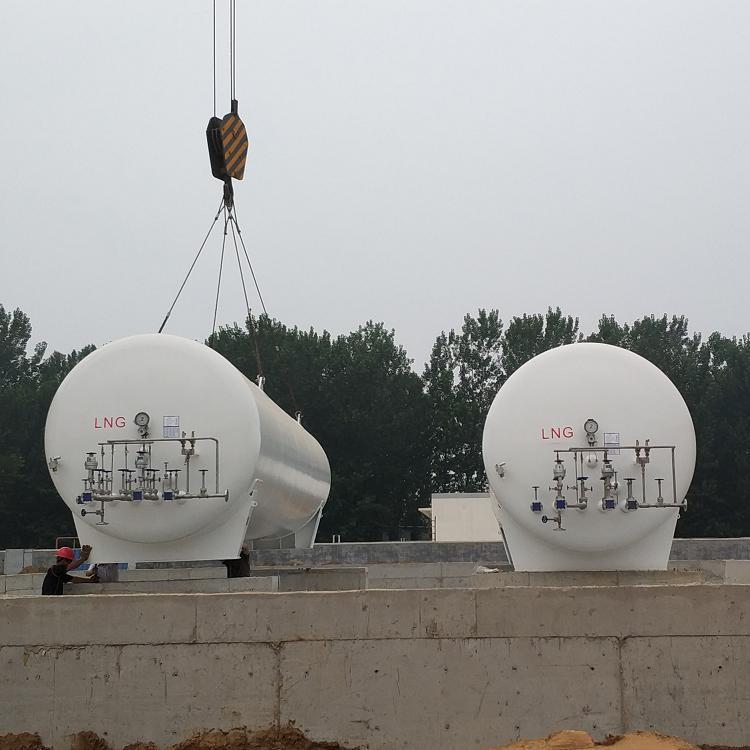
The low-temperature carbon dioxide storage tank typically features a double-walled cylindrical structure. The inner cylinder is made of 6MnDR alloy steel, while the outer cylinder is constructed from Q245R or Q345R pressure vessel steel plates. The pipeline is made of austenitic stainless steel, and the jacket is filled with high-vacuum pearlite sand or insulated with multi-layer wrapping. The storage tank is equipped with valves for operation, arranged for ease of use. It also features a pressure gauge and a level indicator for monitoring the pressure and liquid level inside the tank.
2. Key Features of Low-Temperature Carbon Dioxide Storage Tank
(1) The tank is equipped with a connection for filling with trucks, allowing liquid supply to vaporizers, tank trucks, and pumps.
(2) Both the inner and outer cylinders are equipped with safety devices to ensure safe operation for users.
(3) The insulating material in the tank has been specially treated to extend the vacuum life of the low-temperature carbon dioxide storage tank. It also includes a vacuum gauge for measuring the jacket vacuum when necessary.
3. Transportation of Low-Temperature Carbon Dioxide Storage Tank
(1) During road transportation, the tank should be securely attached to the vehicle and travel at moderate speeds. It is forbidden to collide with other objects.
(2) After arrival, the unloading personnel should work together with the equipment supervisor to formulate a scientific and reasonable unloading plan.
4. Installation of Low-Temperature Carbon Dioxide Storage Tank
(1) Once the tank arrives at the installation site, it can be positioned when the installation conditions are met. During the installation process, collision and impact should be avoided, and special attention should be paid to the explosion-proof equipment on the outer cylinder and the vacuum valve, which must not be touched.
(2) Perform a gas-tightness test on the inner cylinder system using nitrogen to the working pressure. After checking that valves, pipelines, flanges, etc., are leak-free, the installation is complete.
(3) The installation dimensions are as specified in the supply materials. When considering filling or emptying liquids with tank trucks, the vehicle's travel route should be taken into account.
二氧化碳储罐在使用过程中可能会遇到一些常见问题,需要进行维修和处理。以下是一些常见的问题和相应的维修方法: 泄漏问题:储罐可能出现泄漏,导致二氧化碳的损失和安全隐患。维修方法包括检查和更换密封件、修复或更换泄漏的管道和阀门等。 腐蚀问题:储罐的外壁和内壁可能会受到腐蚀,影响储罐的结构和安全性。维修方法包括清洗和修复腐蚀部位,涂覆防腐涂层,或者更换受损的部件。 压力问题:储罐的压力可能出现异常,过高或过低,影响储罐的正常运行。维修方法包括检查和调整压力控制系统,修复或更换压力传感器、安全阀等。 温度问题:储罐的温度可能出现异常,过高或过低,影响二氧化碳的储存和使用。维修方法包括检查和调整温度控制系统,修复或更换温度传感器、冷却设备等。 控制系统问题:储罐的控制系统可能出现故障,导致无常控制和监测储罐的运行状态。维修方法包括检查和修复控制系统的电气元件、传感器、仪表等。 需要注意的是,对于二氧化碳储罐的维修和处理,应由的技术人员进行操作,并遵循相关的安全操作规程和标准。在维修过程中,应确保储罐的安全性和稳定性,以及维修过程的安全性。好咨询工程师或储罐制造商的建议和指导。
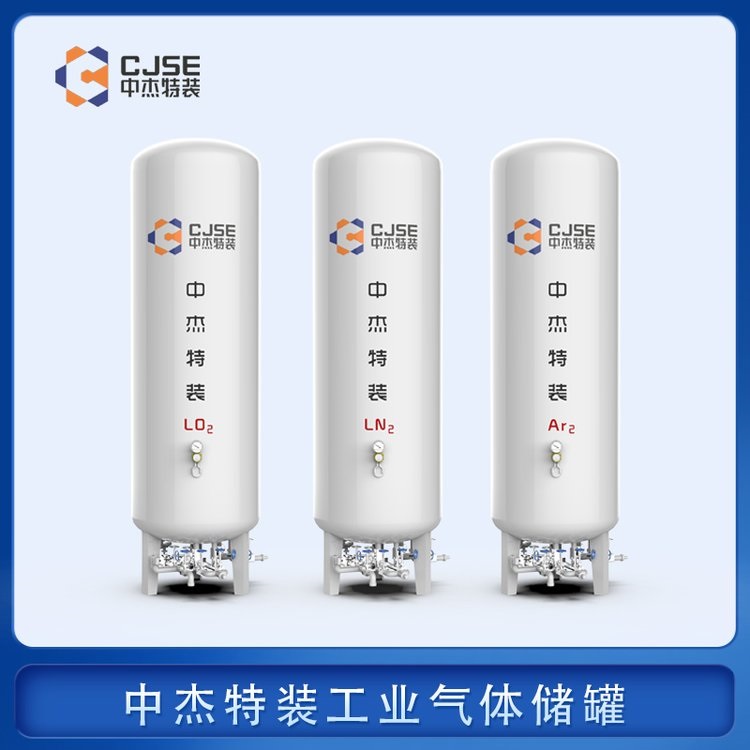
Before using a CO2 storage tank, certain inspection and filling points must be addressed. Here are some common considerations:
- Inspect the tank exterior: Check for any visible damage, corrosion, or leakage signs. Ensure the tank shell is intact.
- Check valves and fittings: Verify that the valves and fittings on the tank are securely fastened and there are no leaks. Ensure proper operation.
- Inspect the pressure gauge: Check if the pressure gauge on the tank is functioning correctly and providing accurate readings. Replace or repair if abnormal.
- Check the level indicator: Ensure the level indicator on the tank is working properly and accurately displays the level. Repair or replace if abnormal.
- Inspect the pressure relief device: Check if the pressure relief device (e.g., safety valve) on the tank is operating correctly and the set pressure meets requirements. Repair or replace if abnormal.
- Inspect filling equipment: Verify that the filling equipment (e.g., filling pipes, pumps) is functioning properly with no leaks or blockages. Ensure safety and reliability.
- Filling operation: During the filling process, pay attention to the following:
- Control the filling rate, avoiding too fast or too slow.
- Control the filling pressure, not exceeding the tank's rated pressure.
- Monitor the level to ensure proper filling.
- Regularly inspect filling equipment and valves to ensure normal operation.
- Safety measures: Adhere to relevant safety regulations and procedures during the filling process. Operators should wear appropriate protective gear, such as static-dissipative clothing, gloves, etc.
- Note that specific inspection and filling points may vary depending on the tank type and application. Before using a CO2 storage tank, check and operate according to relevant specifications and standards, and consult with experts to ensure safety and effectiveness.
Shandong Zhongjie Special Equipment, welcome customers to our factory for cooperation discussions.