

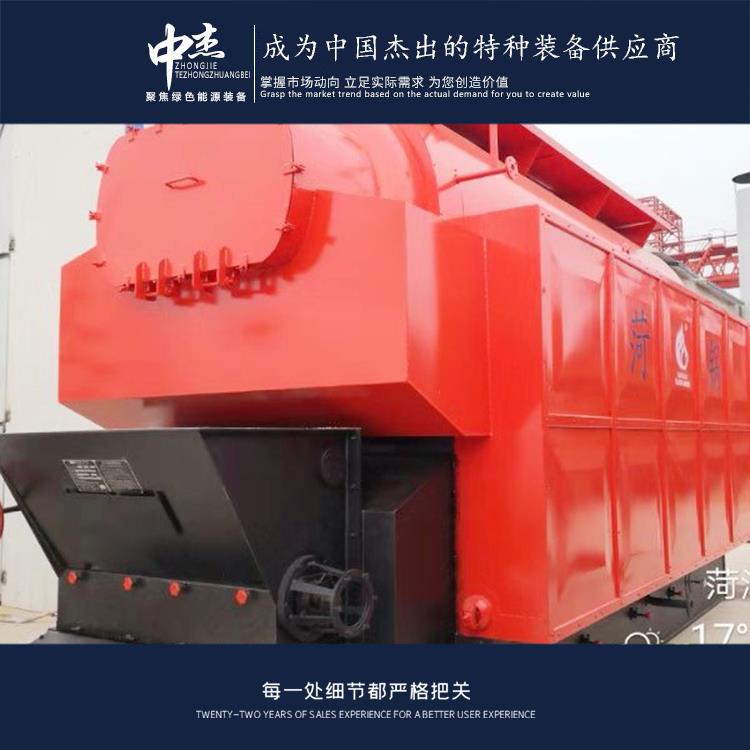
















Shandong Zhongjie Special Equipment's main products include: fuel (gas) boilers, organic heat carrier boilers, biomass boilers, waste heat boilers, and other boiler products; vacuum insulation cryogenic pressure vessels such as LNG tanks, oxygen/nitrogen/argon tanks, CO2 tanks; pressure vessel products like denitration engineering equipment, heat storage and energy storage equipment, and complete chemical equipment sets; central air conditioning and HVAC equipment such as ground (water) source heat pumps, air source units, water-cooled screw units, and air-cooled modular units. Planned products include large-scale energy centers, LNG transport vehicles, LNG tank containers, and other green energy equipment.
To enhance the thermal efficiency of biomass boilers, focus on the following aspects:
Optimize the combustion system: Reasonably adjust the biomass boiler's combustion system, including parameters such as combustion air volume, combustion temperature, and combustion time, to ensure complete fuel combustion and utilization. Adopted combustion technologies, such as fluidized bed combustion and gasification combustion, can enhance combustion efficiency.
Control Excessive Air Supply: Properly regulate the air supply during the combustion process of biomass boilers to prevent excessive air from entering the furnace, thereby reducing fuel oxidation and heat loss. Adjust the combustion air flow and air distribution to achieve the optimal mixture of fuel and air, enhancing combustion efficiency.
Enhanced Waste Heat Recovery: The flue gas produced by biomass boiler combustion contains a large amount of heat energy. This heat can be recovered and utilized through waste heat recovery systems, such as economic air preheaters, economizers, etc., thereby improving the boiler's thermal efficiency.
Optimize boiler operating parameters: Reasonably adjust the operating parameters of biomass boilers, such as boiler water temperature and steam pressure, to enhance thermal efficiency. Adjust the boiler operating mode based on actual demand and load changes to prevent over-heating or under-heating, thereby improving energy utilization efficiency.
Regular Cleaning and Maintenance: Regularly clean and maintain biomass boilers to remove ash and soot inside the furnace, maintaining heat exchange efficiency and reducing thermal resistance and losses.
Utilize equipment and materials: Selected biomass boiler equipment and materials, such as burners, heat exchangers, etc., to enhance thermal conduction and heat exchange efficiency.
By integrating these measures, the thermal efficiency of biomass boilers can be effectively improved, achieving energy utilization.
To burn biomass pellets and prevent coking issues, the following measures can be taken:
Appropriate Particle Size: The size of biomass pellets is crucial for combustion efficiency. The particle size should be maintained within an appropriate range, typically 3-5 millimeters. Larger particles can lead to incomplete combustion, while smaller particles tend to disperse and clog easily.
Sufficient Oxygen Supply: Adequate oxygen supply is required for combustion to ensure a complete combustion reaction. Biomass boilers should ensure that the combustion chamber has sufficient oxygen supply, which can be achieved by adjusting the ventilation system and the operating parameters of the burner.
Appropriate Combustion Temperature: The combustion temperature of biomass pellets is also a significant factor affecting combustion efficiency. Low combustion temperature can lead to incomplete combustion, while high combustion temperature is prone to coking. Biomass boilers should adjust the combustion temperature to an appropriate range based on the fuel characteristics and combustion requirements.
Appropriate Combustion Time: The combustion time of biomass pellets should also be properly controlled. Too short a combustion time leads to incomplete combustion, while too long a combustion time can easily cause coking. Biomass boilers should adjust the combustion time to an appropriate range based on the fuel characteristics and combustion requirements.
Regular cleaning and maintenance: Biomass boilers require regular cleaning and maintenance to keep the combustion chamber and flue passages clear. Regularly cleaning the ash and carbon buildup inside the combustion chamber, as well as the flue and heat exchanger, can prevent the occurrence of scaling issues.
Note that there may be differences between various types of biomass fuels and biomass boilers. The specific operations and adjustments should be made based on the actual situation. When making adjustments and
The SZL biomass boiler is a water-tube boiler with a double drum and a chain grate, suitable for burning biomass fuel. Below is an introduction to the structure of the SZL biomass boiler:
Boiler Drum: The SZL biomass boiler features two parallel water tube drums, the upper drum and the lower drum. The upper drum is used for the combustion chamber, while the lower drum is for heat transfer of steam and flue gas.
Briquette: The SZL biomass boiler employs a chain grate, through which the fuel enters the combustion chamber and undergoes the combustion process. The design of the chain grate ensures even and complete combustion of the fuel.
Combustion Chamber: The combustion chamber is located within the upper cylinder, where the fuel is burned, releasing heat energy. The structure and design of the combustion chamber ensure complete fuel combustion and heat energy conversion.
Chimney Flue: The flue gas produced by combustion enters the lower cylinder through the flue, where it undergoes heat exchange with the water inside the pipes, transferring heat to the water to produce steam.
Water pipes: A large number of water pipes are arranged inside the lower drum of the SZL biomass boiler. Flue gas passes through these pipes, exchanging heat with the water, transferring thermal energy to it, and producing steam.
Upper Equipment: The upper equipment of the SZL biomass boiler includes steam separators, level gauges, safety valves, etc., which are used for controlling and protecting the safe operation of the boiler.
Equipment: The SZL biomass boiler also includes equipment such as the water supply system, sewage system, and fuel supply system, which are used to provide the boiler with water, treat wastewater, and supply fuel, etc.
The SZL biomass boiler features a compact structure and high thermal efficiency, suitable for the combustion of biomass fuel. Its design with dual drum and chain grate ensures complete combustion of fuel and efficient conversion of thermal energy, while also offering excellent safety and reliability.
Several factors should be considered when selecting a suitable biomass boiler:
Fuel Type: First, determine the available biomass fuel types, such as sawdust, straw, etc. Different biomass fuels have varying characteristics, including moisture content, ash content, and calorific value, and it is necessary to select a boiler suitable for the fuel type.
Boiler Capacity: Determine the required steam or hot water output based on actual needs and select an appropriate boiler capacity. Over-sizing leads to energy waste, while undersizing fails to meet demand.
Combustion Efficiency: Focus on the boiler's combustion efficiency, which is the proportion of fuel converted into heat energy. High combustion efficiency can improve energy utilization and reduce operating costs.
Equipment Quality and Reliability: Choose biomass boilers and suppliers with excellent quality and reliability to ensure long-term stable operation and ease of maintenance for the equipment.
Environmental Performance: Focus on the environmental performance of the boiler, including emission standards and reduction of pollutant emissions. The selected biomass boiler is beneficial for environmental protection and compliance with relevant regulations.
Economic Efficiency: Choose a cost-effective biomass boiler by considering the overall purchase, operation, and maintenance costs of the boiler.
Adaptability and Flexibility: Select biomass boilers with high adaptability and flexibility, tailored to specific needs and application scenarios, capable of accommodating various fuel types and operational conditions.
When selecting biomass boilers, consult with boiler suppliers or engineers to conduct technical assessments and economic analyses based on specific circumstances, and choose the appropriate type and specification of biomass boiler.
ZJ Special Equipment adheres to the great vision of "realizing employees' dreams, creating customer value, and striving for the prosperity and strength of our motherland," and is dedicated to the development of the green energy equipment industry, contributing high-value products and services to society!