



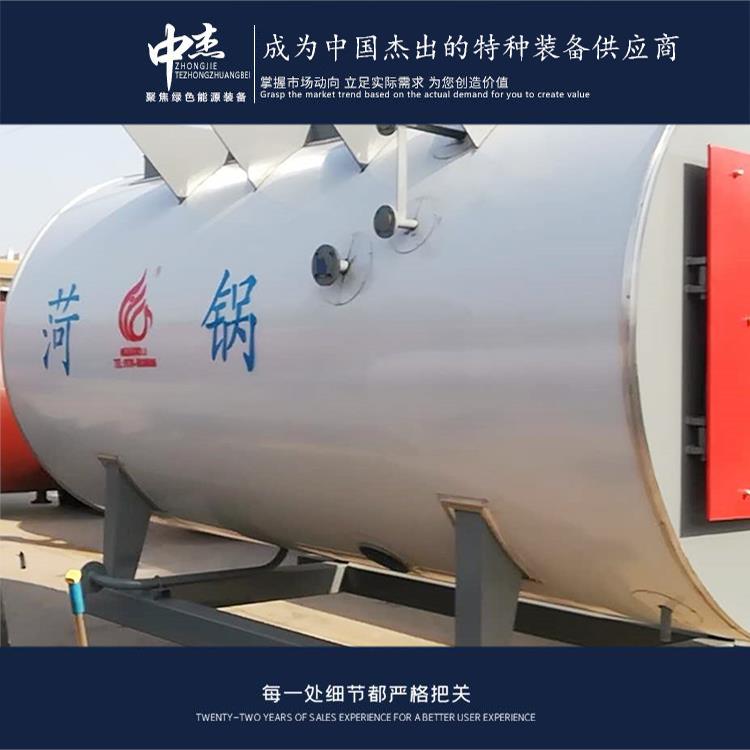



















Shandong Zhongjie Special Equipment (formerly Heze Boiler Factory Co., Ltd.) holds an A-grade boiler manufacturing license, an A2-grade pressure vessel manufacturing license, an A2-grade pressure vessel design license, a B-grade boiler installation license, and GB2/Class, GC2/Class pressure pipeline installation licenses, as well as a mechanical and electrical equipment installation contracting qualification. It is a member of the China Boiler and Water Treatment Association, the China Chemical Equipment Association, and the council member of the Shandong Equipment Manufacturing Association. The company has also passed the ISO9001 Quality Management System, ISO14001 Environmental Management System, OHSAS18001 Occupational Health and Safety Management System certifications, and the American ASME/U2 certification.
The key to maintaining a hot water boiler is regular maintenance and inspections. Here are some common maintenance steps and precautions:
* Clean the burner and flue: Regularly clean the burner and flue to remove accumulated soot and dirt, maintaining combustion and heat exchange efficiency. Use cleaning tools and equipment as per the operation manual.
* Check water level and pressure: Regularly inspect the water level and pressure of the hot water boiler to ensure safe operation within the specified range. Refill water and adjust pressure to avoid issues caused by low or high water levels.
* Test water quality: Regularly conduct water quality tests to check for hardness, alkalinity, oxygen content, and other indicators. Take appropriate water treatment measures based on test results, such as descaling and replenishing missing chemicals, to prevent scale and corrosion damage to the boiler.
* Inspect safety devices: Regularly check the safety devices of the hot water boiler, including safety valves, pressure switches, and water level controllers, to ensure normal operation and safe boiler operation.
* Check the electrical system: Regularly inspect the boiler's electrical system, including power connections, controllers, and sensors, to ensure the proper functioning of electrical equipment and avoid electrical failures.
* Regularly drain: Regularly drain the wastewater and impurities from the boiler to avoid their impact on the boiler. Develop a reasonable drainage plan based on the boiler's usage and water quality conditions.
* Keep records and monitor: Record the boiler's operating parameters, maintenance records, and fault situations, and regularly monitor and analyze them to identify and address issues promptly.
* Train operators: Ensure that operators are adequately trained.
To reduce the heat loss of a gas boiler, the following measures can be taken:
- Enhance Insulation: Insulate the outer shell and pipes of the gas boiler to minimize heat loss. Use insulating materials like rock wool or glass wool to wrap the boiler and pipes.
- Install Heat Recovery Systems: Install heat recovery devices in the flue of the gas boiler to utilize the residual heat in the flue gases. This can improve thermal efficiency and reduce heat loss.
- Control Combustion Process: Properly control the combustion process to ensure complete, stable, and efficient combustion. Adjust the parameters of the burner, such as air flow and gas supply, to enhance combustion efficiency and reduce heat loss.
- Clean Heat Exchangers: Regularly clean the heat exchangers of the gas boiler to remove dirt and deposits on the surface. This maintains the heat transfer efficiency of the heat exchangers and reduces heat loss.
- Control Flue Gas Temperature: Reasonably control the flue gas temperature of the gas boiler to avoid excessive temperatures that lead to significant heat loss. This can be achieved by adjusting burner parameters and flue design.
- Regular Inspection and Maintenance: Conduct regular inspections and maintenance on the gas boiler to ensure proper operation. This includes checking the combustion system, water level control, and safety valves, and promptly repairing or replacing damaged parts.
- Make Rational Use of Waste Heat: Utilize the waste heat produced by the gas boiler for other processes requiring heat, such as water heating and heating. By utilizing waste heat, reduce energy waste and improve energy utilization efficiency.
- Through these measures, heat loss of the gas boiler can be effectively reduced, energy utilization efficiency can be improved, and energy consumption can be minimized.
The necessity of flow control in thermal oil heaters is primarily reflected in the following aspects: Thermal Energy Transfer Efficiency: The efficiency of thermal energy transfer in thermal oil heaters is closely related to the flow rate of the thermal oil. An appropriate flow rate ensures that thermal energy is fully transferred in the heat exchanger, improving the efficiency of energy utilization. An excessively low flow rate may result in insufficient heat exchange and affect the effectiveness of thermal energy transfer; conversely, an excessively high flow rate will increase energy consumption and operating costs. Temperature Control: The flow control of thermal oil heaters is also closely related to temperature control. By adjusting the flow rate of the thermal oil, the temperature inside the furnace can be controlled, ensuring stable operation within the set working temperature range. An excessively low flow rate may lead to excessive temperatures, while an excessively high flow rate may cause temperatures to drop too low, both of which can affect the normal operation of the equipment. System Stability: An appropriate flow rate of thermal oil can enhance system stability. Through flow control, the supply and demand of thermal energy can be balanced, avoiding overheating or underheating conditions, and maintaining stable system operation. Stable operation helps extend the lifespan of the equipment and reduce the frequency of failures and maintenance. Safety: The flow control of thermal oil heaters is also closely related to safety. Proper flow control can prevent excessive accumulation of thermal oil in the system, reducing the risk of leaks and explosions. Additionally, flow control ensures that system pressure remains within a safe range, avoiding overpressure and other safety issues. In summary, flow control in thermal oil heaters is necessary for improving thermal energy transfer efficiency, temperature control, system stability, and safety. Through reasonable flow control, the operation of thermal oil heaters can be optimized, energy utilization efficiency can be increased, operating costs can be reduced, and the safety and stable operation of the equipment can be ensured.
Switching from a conventional boiler to a gas boiler can significantly enhance energy efficiency and energy-saving effects. Here's some insight into the energy-saving efficiency of switching to a gas boiler:
- High combustion efficiency: Gas boilers use gas as fuel and typically have higher combustion efficiency. Compared to traditional coal or oil-fired boilers, gas boilers can achieve a higher level of combustion efficiency, reducing energy waste.
- Low emissions: Gas boilers produce less exhaust emissions during combustion, causing less environmental pollution. The combustion technology and emission control devices used in gas boilers can effectively reduce the emissions of harmful substances like nitrogen oxides.
- Fast start and stop: Gas boilers can start and stop quickly, allowing for flexible adjustments based on actual needs. Compared to coal-fired boilers, gas boilers have shorter start and stop times, avoiding prolonged preheating and cooling processes, and reducing energy waste.
- High thermal efficiency: Gas boilers generally have higher thermal efficiency, achieving a higher level of heat energy conversion. The heat exchange technology and energy-saving design used in gas boilers maximize the utilization of the heat energy from gas, improving heating performance.
- Intelligent control and management: Gas boilers are often equipped with intelligent control systems that can automatically adjust operating conditions based on actual needs. Through intelligent control and regulation, gas boilers can ensure stable heating and avoid unnecessary energy waste.
It is important to note that when switching to a gas boiler, the reliability and safety of the gas supply, as well as the suitability and installation requirements of the gas boiler, should be considered. It is recommended to consult with engineers or relevant agencies before making the conversion to ensure.
Zhongjie Special Equipment adheres to the great vision of "realizing employees' dreams, creating value for customers, and striving for the prosperity and strength of our motherland," and is dedicated to the development of the green energy equipment industry. We offer products and services with high performance and cost-effectiveness to contribute to society!
WeChat Official Account

Scan to follow Official Account




















