




















Shandong Zhongjie Special Equipment (formerly Heze Boiler Factory Co., Ltd.) holds an A-grade boiler manufacturing license, an A2-grade pressure vessel manufacturing license, an A2-grade pressure vessel design license, a B-grade boiler installation license, and GB2/Class, GC2/Class pressure pipeline installation licenses, as well as a mechanical and electrical equipment installation contracting qualification. It is a member of the China Boiler and Water Treatment Association, the China Chemical Equipment Association, and the council member of the Shandong Equipment Manufacturing Association. The company has also passed the ISO9001 Quality Management System, ISO14001 Environmental Management System, OHSAS18001 Occupational Health and Safety Management System certifications, and the American ASME/U2 certification.
Liquid nitrogen cylinders are widely used in various industries, mainly including the following aspects:
Industry: Liquid nitrogen tanks are used for storing and supplying liquid nitrogen, which is essential for cryogenic preservation of biological samples, cells, tissues, and vaccines. They are widely applied in biopharmaceutical research institutions and biobanks, among other organizations.
Experimental Research: Liquid nitrogen tanks are used to provide low-temperature environments in scientific research and laboratories, for purposes such as cryopreservation and cryogenic experiments. Liquid nitrogen tanks play a crucial role in experimental research across various fields, including physics, chemistry, biology, and materials science.
Metalworking Industry: Liquid nitrogen tanks are used in the metalworking and welding industries to provide low-temperature cooling for processes such as metal cutting, welding, and heat treatment. The tanks can achieve the required hardness and toughness of the metal during processing by maintaining low temperatures.
Food Industry: Liquid nitrogen tanks are used in the food industry for freezing and refrigerating foods, such as frozen meats, frozen fruits, and frozen seafood, etc. The low temperature of liquid nitrogen can quickly freeze foods, preserving their freshness and quality.
Semiconductor Industry: Liquid nitrogen tanks are used in semiconductor manufacturing and the electronics industry to provide a low-temperature environment, for the freezing and preparation of semiconductor materials. The low temperature of liquid nitrogen can enhance the purity and performance of semiconductor materials.
The configuration of liquid nitrogen tanks typically includes the following aspects:
Vessel Structure: Liquid nitrogen tanks commonly feature double or multi-layered construction, filled with insulating material in the middle to minimize heat transfer and evaporation of the liquid nitrogen. The vessel material is typically made of stainless steel or aluminum alloy, offering excellent corrosion and low-temperature resistance.
Insulation Layer: The insulation layer of liquid nitrogen tanks commonly uses multi-layered insulation materials such as polyethylene foam, glass fiber, and vacuum layers to reduce heat transfer and evaporation of liquid nitrogen.
Temperature Control System: Liquid nitrogen tanks are typically equipped with a temperature control system to regulate the tank's temperature, maintaining the liquid state.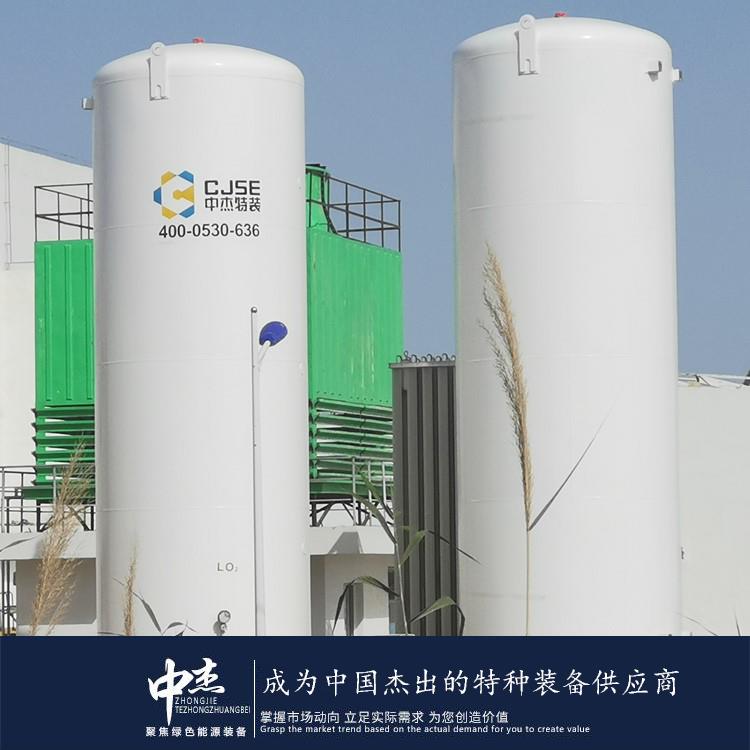
Leakage defects in liquid argon storage tanks may be caused by the following reasons:
Design or Manufacturing Defects: Deficiencies in the design or manufacturing process, such as poor welding, inappropriate material selection, or inadequate sealing, lead to leakage issues in the tank.
Corrosion and Oxidation: Long-term exposure of liquid argon tanks to low temperatures can lead to corrosion and oxidation. These issues can damage the tank's surface protective layer, causing leakage problems.
Fatigue and stress cracking: Over time, due to temperature and pressure fluctuations, storage tanks may experience fatigue and stress cracking. These cracks can degrade the tank's sealing performance, leading to leaks.
Improper operation: Failure to follow proper procedures during the storage tank's operation, such as overfilling with liquid argon or applying excessive pressure, can lead to tank damage and leakage.
External Damage: The tank may sustain damage from external factors such as mechanical impacts or objects.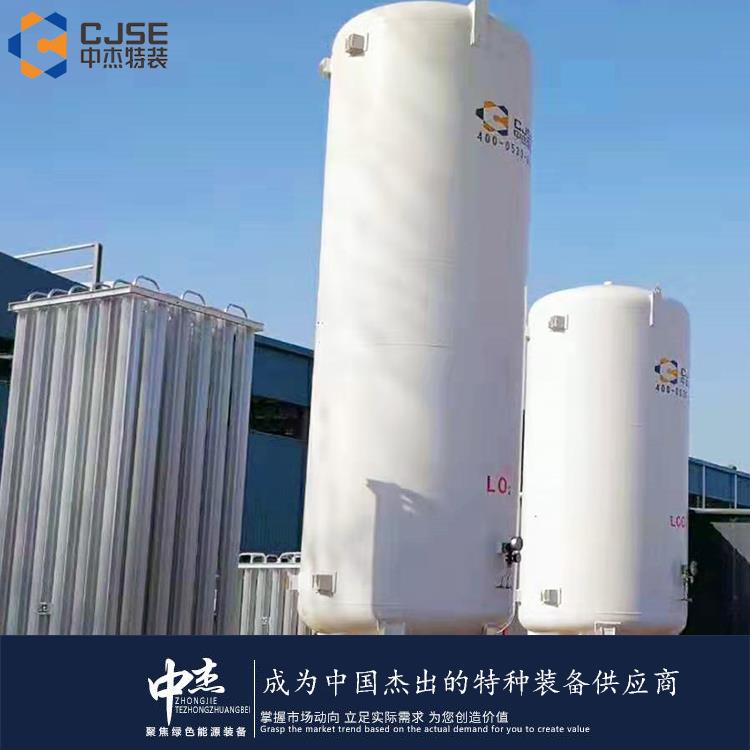
A water pressure test for liquid nitrogen storage tanks is a common method used to check the tank's sealing and pressure resistance. Below are the general steps for a water pressure test on a liquid nitrogen storage tank:
Preparation: Ensure the tank interior is clean and the tank is empty of gases and liquids. Check the tank's sealing and safety devices for proper operation.
Fill water: Fill the tank with water to ensure the water level is above the low water mark. Use a pump or other appropriate methods for filling.
Apply Pressure: Use a pressure pump or other pressure source to gradually increase the water pressure until it reaches the predetermined test pressure. The test pressure is typically 1.1 times the design working pressure of the tank.
Pressure maintenance: After reaching the test pressure, maintain it for a period of time (usually 30 minutes to 1 hour), and observe for any abnormal conditions such as leaks or deformation in the tank.
Pressure Relief: Gradually release pressure to drain water from the tank until the tank is completely empty.
Inspection and Evaluation: Check for leaks, deformations, or other damage on the surface and inside of the tank. Evaluate the test results to ensure the tank meets design requirements and safety standards.
需要注意的是,液氮储罐水压试验需要由人员进行操作,并遵循相关的安全操作规程。在进行测试前,应仔细阅读和遵守储罐制造商提供的操作指南和安全注意事项。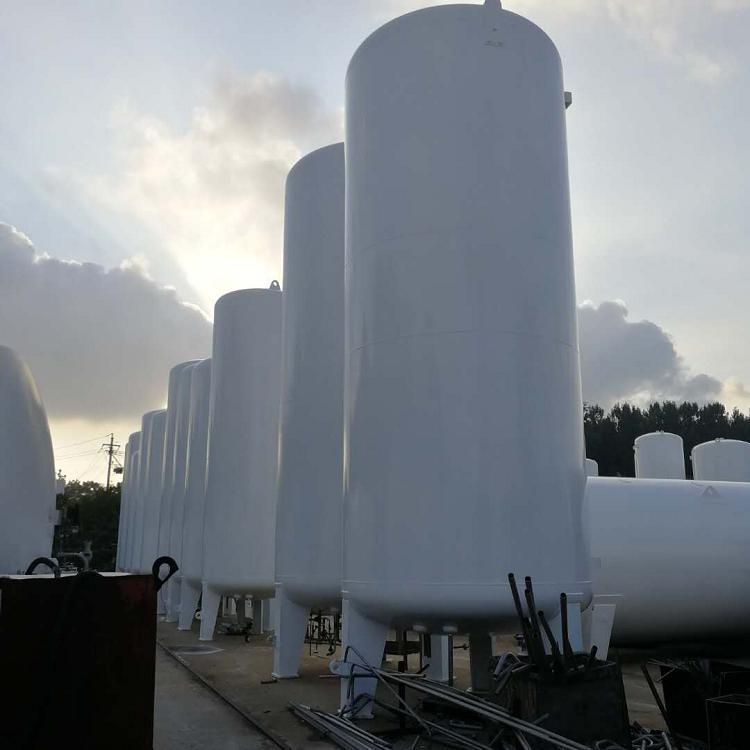
Liquid nitrogen tanks feature the following characteristics during the construction process:
Low-Temperature Construction: The construction of liquid nitrogen tanks must be carried out in low-temperature environments, as liquid nitrogen has a low boiling point of about -196 degrees Celsius. Construction personnel must take appropriate protective measures, such as wearing thermal protective clothing and gloves, to safeguard against低温 injuries.
Welding Technology: A substantial amount of welding is required during the manufacturing process of liquid nitrogen storage tanks, including the bonding of wall panels, bottom plates, top plates, and weld seams. Welding technology is crucial for the quality and safety of the tanks, necessitating the use of appropriate welding methods and materials to ensure the strength and sealability of the welds.
Insulation Layer Installation: Liquid nitrogen tanks must have excellent insulation properties to minimize heat conduction and retain low temperatures. The installation of the insulation layer requires materials such as polyester foam and glass wool, ensuring the thickness and quality of the insulation layer.
Proper installation steps for a liquid nitrogen tank are as follows:
Site Preparation: Select a suitable site for tank installation, ensuring it is level, sturdy, and has adequate load-bearing capacity. The site should be kept away from flammable, explosive materials, and other hazardous sources.
Foundation Construction: Construction of the foundation based on the tank's dimensions and weight, including excavation of the foundation pit and pouring of concrete foundation. The design and construction of the foundation should comply with relevant standards and regulations.
Tank Installation: Transport the tank to the site and perform vertical installation. Appropriate lifting equipment and safety measures must be used during the installation process to ensure the stability and safety of the tank.
Pipe connections: As required, connect the storage tank to the related pipeline system, including intake pipes, exhaust pipes, and liquid supply pipes. Sealing and testing are necessary during the connection process to ensure the safety of the pipes.
Our company attaches great importance to technological innovation and research and development design, boasting one municipal-level enterprise technology center in Heze City. We have established testing facilities for non-destructive testing, physical and chemical testing, welding testing, hydrostatic testing, and more. Equipped with over 600 various instruments and equipment such as CNC machine tools, X-ray flaw detectors, digital ultrasonic flaw detectors, mechanical property testing machines, chemical analyzers, spectrometers, tensile testing machines, and plasma welding machines, our R&D of key products like temperature and pressure vessel welding, biomass boiler emission reduction, and waste heat utilization has been selected for multiple Shandong Provincial Department of Industry and Information Technology science and technology projects, Shandong Provincial key projects, and Heze City innovative and excellent projects. We have accumulated 27 authorized utility models, 16 authorized inventions, participated in drafting 2 standards, 2 industry standards, and registered 15 trademarks. The technical team, in collaboration with Professor Li Yajiang of Shandong University, has developed deep cryogenic container processing technology using the international plasma arc + filler wire tungsten inert gas arc welding (PAW-GTAW) technology. This technology has been appraised as reaching an international level in deep cryogenic container manufacturing. Choose Zhongjie Special Equipment, and let's create brilliance together!
WeChat Official Account

Scan to follow Official Account




















