



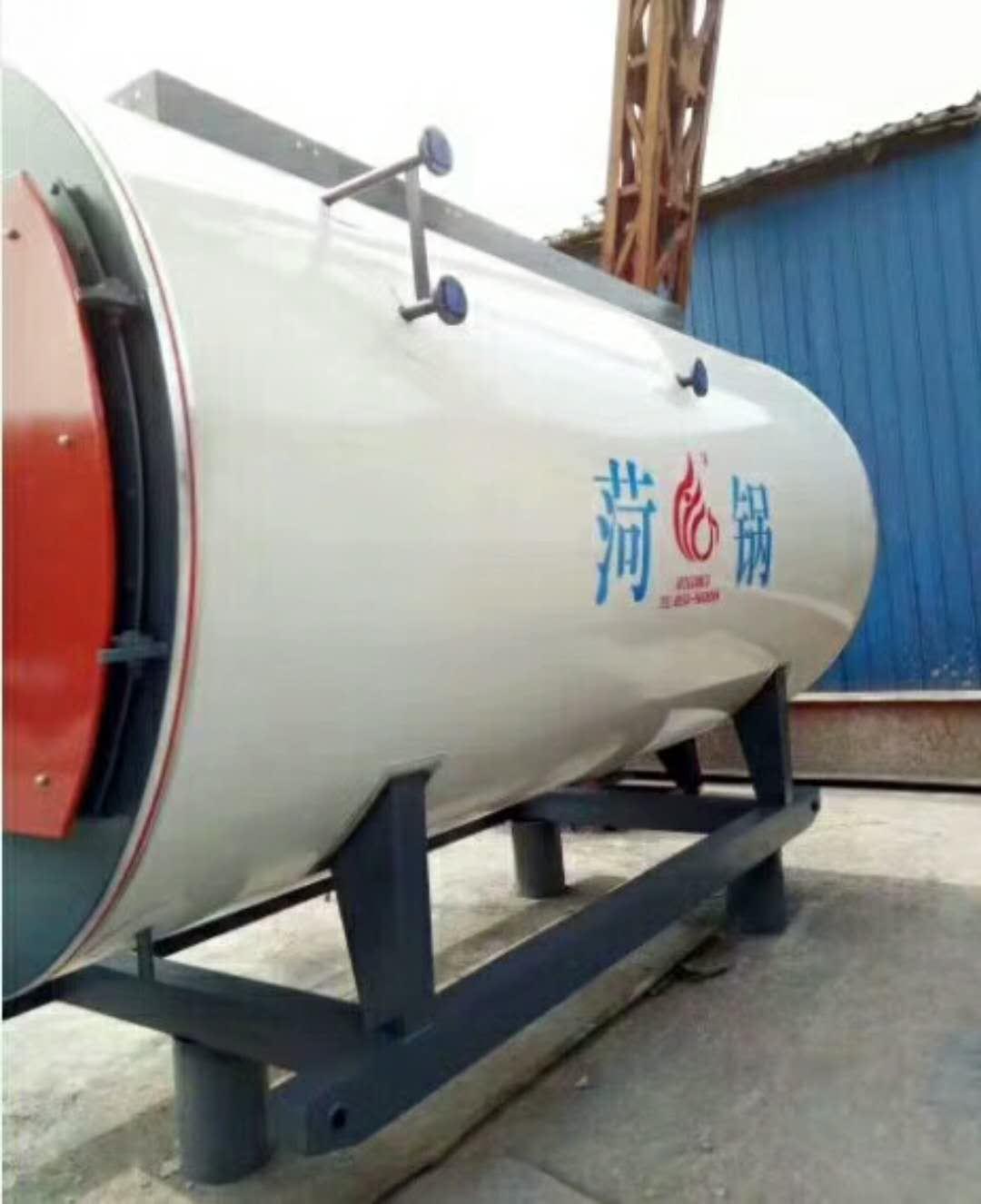



















Shandong Zhongjie Special Equipment (formerly Heze Boiler Factory Co., Ltd.) was established in 2001, located at No. 2218 Jinnan Road, Development Zone, Heze City, with a registered capital of 50 million yuan and total assets of 500 million yuan. The company has 7 business centers: boilers, deep-freeze containers, pressure vessels, central air conditioning, engineering installation, international trade, and Internet of Things. It has three factory sites on Jinnan Road, East Changjiang Road, and Bohai Road, covering a total of 200,000 square meters, with the main workshop spanning 83,000 square meters. It currently employs 710 people, including 247 engineers and technicians and 82 intermediate-level technicians. In December 2016, it was recognized as a "High-tech Enterprise" by the Science and Technology Department. In June 2021, it was identified as a "Specialized and New Enterprise in Shandong Province" by the Ministry of Industry and Information Technology. In June 2022, it was recognized as a "Gazelle Enterprise in Shandong Province" and in August 2022, it was identified as a "Specialized and New Small Giant Enterprise" by the Ministry of Industry and Information Technology.
The reasons for not leaving liquid oxygen tanks empty for extended periods are mainly as follows:
Evaporation Loss of Liquid Oxygen: Liquid oxygen has a low boiling point, and prolonged storage without use will cause continuous evaporation, leading to a loss of liquid oxygen within the storage tank. The evaporation rate is relatively fast, with daily evaporation amounts potentially reaching several percent of the tank's capacity. Extended periods of storage without use can result in waste of liquid oxygen.
Safety Risk: Liquid oxygen is a strong oxidizer with high flammability and explosive properties. Extended empty storage of liquid oxygen tanks increases the likelihood of contact with the surrounding environment, thus raising the risk of accidental fires and explosions.
Risk of Storage Tank Damage: Long-term emptying of liquid oxygen storage tanks can lead to internal oxidation reactions, accelerating corrosion and damage to the tank. Tank damage can affect its sealing performance and structural integrity, increasing the risk of leaks and safety accidents.
Therefore, to ensure the safe storage and effective use of liquid oxygen, liquid oxygen tanks should be regularly maintained and serviced to avoid long-term empty storage. When the tank is not in use, appropriate measures should be taken, such as sealing the tank and reducing oxygen evaporation, to minimize liquid oxygen loss and safety risks.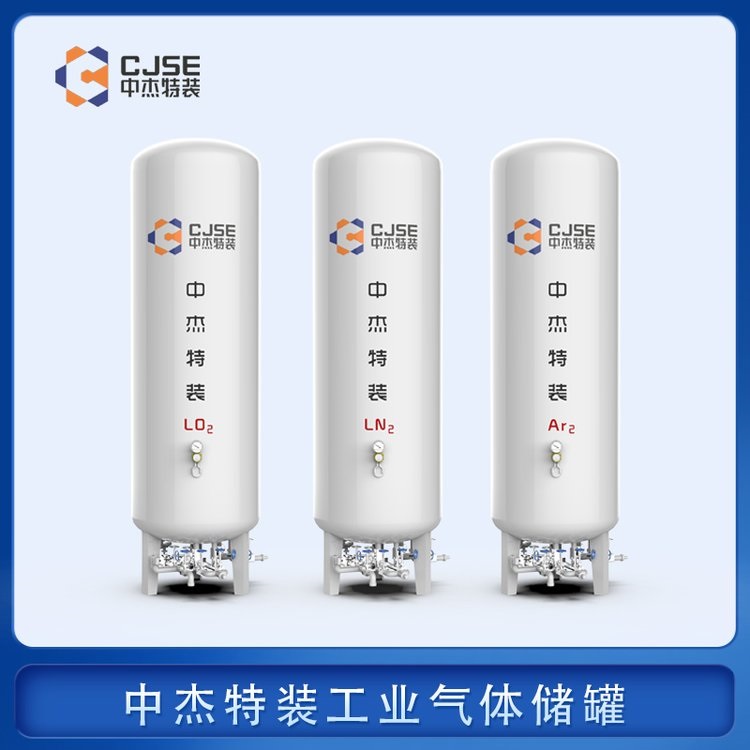
Nitrogen charging of liquid nitrogen tanks refers to the process of injecting nitrogen gas into the tank to increase the nitrogen concentration and pressure inside, in order to meet certain safety requirements and operational objectives. Here are some precautions to consider when nitrogen charging liquid nitrogen tanks:
Safety Operation: Prior to conducting nitrogen charging operations on liquid nitrogen tanks, it is mandatory that operators possess relevant safety knowledge and skills. Operators should wear appropriate personal protective equipment, such as safety goggles, gloves, and protective clothing.
Nitrogen Quality: High-purity nitrogen is used for nitrogen blanketing operations to ensure the quality and purity of the nitrogen. Nitrogen with low purity may contain impurities or oxygen, which could adversely affect the liquid nitrogen within the storage tank.
Nitrogen Inerting Speed Control: During the nitrogen inerting process, the speed of nitrogen inerting should be controlled to avoid being too fast or too slow. Too fast a nitrogen inerting speed can lead to excessive internal pressure within the tank, while too slow a speed can result in extended inerting time.
Pressure Monitoring: During the nitrogen charging process, the internal pressure of the tank should be regularly monitored. Ensure the internal pressure of the tank remains within the safe range and adjust as necessary.
Temperature Control: During the nitrogen purge process, attention should be given to controlling the tank's temperature. The low temperature of liquid nitrogen can lead to condensation and dew on the tank and pipes. Appropriate measures, such as heating or insulation, should be taken to prevent condensation and dew from occurring.
Post-nitrogen flushing treatment: After the nitrogen flushing operation is completed, the flushing unit should be promptly turned off, and the tank should be inspected and cleaned. Ensure that there is no residual nitrogen or impurities inside the tank.
Note: Nitrogen purging operations for liquid nitrogen tanks must be strictly adhered to the relevant safety standards.
To safely utilize liquid oxygen tanks, attention should be paid to the following aspects:
Training: Personnel operating liquid oxygen tanks must undergo training to understand the properties of liquid oxygen, safety operating procedures, and emergency response measures. Only trained personnel are authorized to operate liquid oxygen tanks.
Safety Operating Procedures: Establish and adhere to the safety operating procedures for liquid oxygen tanks, including proper operational procedures, protective measures, and emergency response plans. Ensure operators follow the procedures to minimize accident risks.
Equipment Inspection and Maintenance: Regularly inspect the status of liquid oxygen storage tanks and related equipment, including valves, pipes, pressure gauges, etc. Ensure the equipment is in perfect condition, and promptly repair or replace any damaged parts.
Leak Control: Equipped with leak detection and alarm systems to promptly identify and control leaks in liquid oxygen tanks. In the event of a leak, immediate action should be taken to contain the source of the leak and to conduct repairs.
Fire Prevention Measures: Liquid oxygen contains a high oxygen content and is prone to cause fires. Measures such as setting up firewalls around liquid oxygen storage tanks and using fire-resistant coatings are taken to prevent the occurrence and spread of fires.
Static protection: Electrostatic buildup in liquid oxygen tanks may cause sparks, increasing the risk of fire. Measures such as using static-conductive materials and anti-static equipment are taken to reduce the accumulation and release of static electricity.
Ventilation Requirements: Ensure adequate ventilation within the enclosed space of the liquid oxygen storage tank to expel gases produced by the evaporation of liquid oxygen. Avoid excessive oxygen concentration and reduce...
When selecting the support for a liquid argon tank, consider the following factors:
Load Capacity: The support must be able to bear the weight of the liquid argon tank. Select a support with adequate load capacity based on the tank's capacity and dimensions. Typically, the weight of the liquid argon tank is specified in the design specifications, which can be used to determine the load capacity of the support.
Stability: The support must provide sufficient stability to ensure the tank does not tilt or sway during use. The design of the support should consider the tank's center of gravity and its changes to provide stable support.
Corrosion Resistance: Liquid argon has low temperature and corrosive properties; the support material should have excellent corrosion resistance to prevent corrosion and damage. Common support materials include stainless steel, aluminum alloy, etc.
Insulation: Liquid argon storage tanks usually require thermal insulation. The supports should have certain insulation properties to reduce heat transfer and evaporation of liquid argon. The design of the supports should consider the installation and protection of the insulation layer.
Installation and Maintenance: The bracket should feature ease of installation and maintenance, facilitating the tank's installation and routine maintenance tasks.
When selecting the supports for liquid argon tanks, it's recommended to consult with engineers or suppliers. Choose the appropriate supports based on the specific tank requirements and usage environment. Additionally, adhere to relevant design codes and safety standards to ensure the quality and reliability of the supports.
Our company highly values technological innovation and R&D design, boasting 1 municipal-level enterprise technology center in Heze City. We have established testing facilities for non-destructive testing, physical and chemical testing, welding testing, hydrostatic testing, and more. We are equipped with over 600 types of instruments and equipment, including CNC machine tools, X-ray flaw detectors, digital ultrasonic flaw detectors, mechanical property testing machines, chemical analyzers, spectrometers, tensile testing machines, plasma welding machines, and more. The key products and technologies we have developed, such as welding for temperature and pressure vessels, biomass boiler emission reduction, and waste heat utilization, have successively been selected for multiple Shandong Provincial Department of Industry and Information Technology science and technology innovation projects, key projects in Shandong Province, and Heze City innovation and excellence projects. We have cumulatively obtained 27 authorized utility model patents, 16 authorized invention patents, participated in drafting 2 standards, 2 industry standards, and registered 15 trademarks. Our technical team, in collaboration with Professor Yajiang Li from Shandong University, has jointly developed deep cryogenic container processing technology, utilizing the internationally recognized plasma arc + wire filling tungsten inert gas arc welding (PAW-GTAW) technology. After provincial-level scientific and technological achievement evaluation, the technology level has reached international standards in the field of deep cryogenic container manufacturing. Choose ZJ Special Equipment, and let's create brilliance together!
WeChat Official Account

Scan to follow Official Account




















