


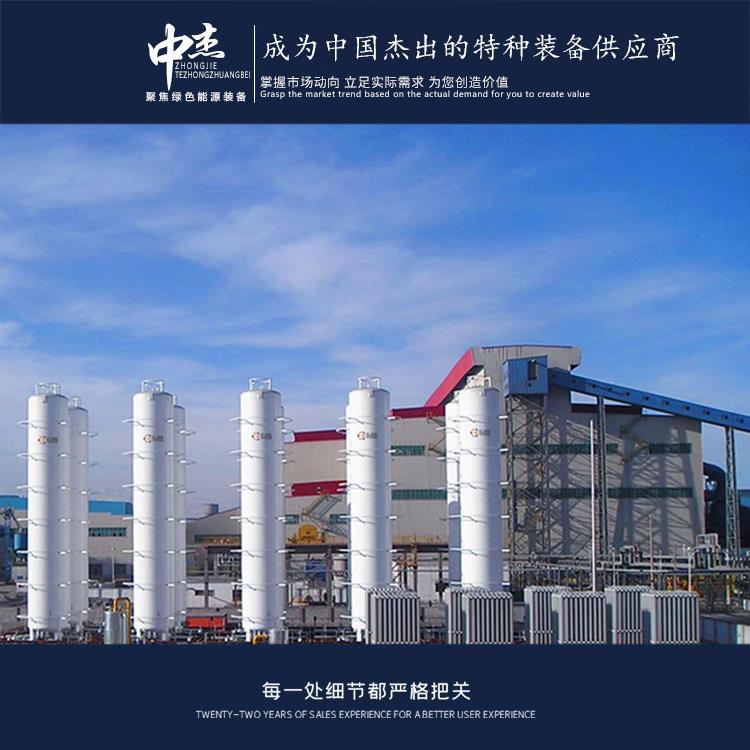

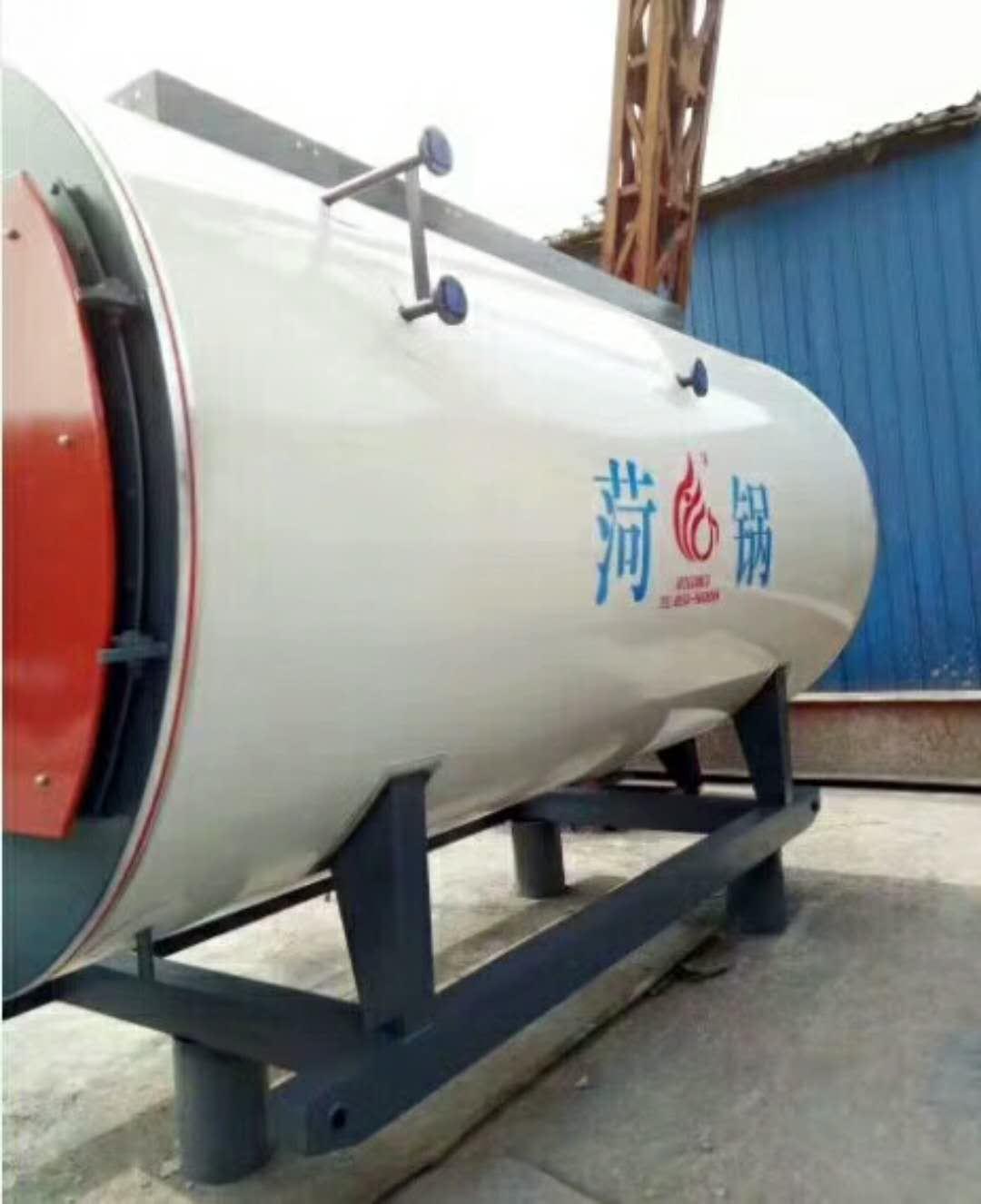



















Shandong Zhongjie Special Equipment's main products include: fuel (gas) boilers, organic heat carrier boilers, biomass boilers, waste heat recovery boilers, and other boiler products; vacuum insulation cryogenic pressure vessels such as LNG tanks, oxygen-nitrogen-argon tanks, and CO2 tanks; pressure vessel products such as denitrification engineering equipment, heat storage and energy storage equipment, and complete chemical equipment; central air conditioning and HVAC equipment such as ground (water) source heat pumps, air source units, water-cooled screw units, and air-cooled modular units. Planned products include large-scale energy centers, LNG transport vehicles, LNG tank containers, and other green energy equipment.
Liquid oxygen storage tanks feature the following safety technical characteristics:
High-pressure Vessel: Liquid oxygen storage tanks are high-pressure vessels capable of withstanding high pressure. Their design and manufacturing must comply with relevant standards and specifications to ensure the tank's strength and seal integrity.
Low-Temperature Storage: Liquid oxygen tanks are used for storing liquid oxygen, with operating temperatures typically around -183 degrees Celsius. The materials and insulation of the tank must be able to withstand low-temperature environments to prevent the evaporation of liquid oxygen and the infiltration of external heat.
Fireproof Design: Liquid oxygen has a high oxygen content, making it prone to fires. The design of liquid oxygen storage tanks must incorporate fireproof measures, such as setting up fire walls and using fire-resistant coatings, to prevent fire outbreaks and spread.
Leakage Control: Leaks in liquid oxygen storage tanks can lead to increased oxygen concentrations, heightening the risk of fires and explosions. Tanks must be equipped with leak detection and alarm systems to promptly detect and control leaks, and to implement appropriate emergency measures.
Static protection: The accumulation of static electricity in liquid oxygen tanks may cause sparks, increasing the risk of fire. Tanks must adopt measures such as using static-conductive materials and anti-static equipment to reduce the accumulation and release of static electricity.
Safety Valves and Pressure Control: Liquid oxygen tanks must be equipped with safety valves and pressure control devices to ensure the internal pressure of the tank remains within a safe range. When the pressure exceeds the set value, the safety valve will automatically release pressure to protect the tank.
Regular inspections and maintenance: Liquid oxygen tanks require regular inspections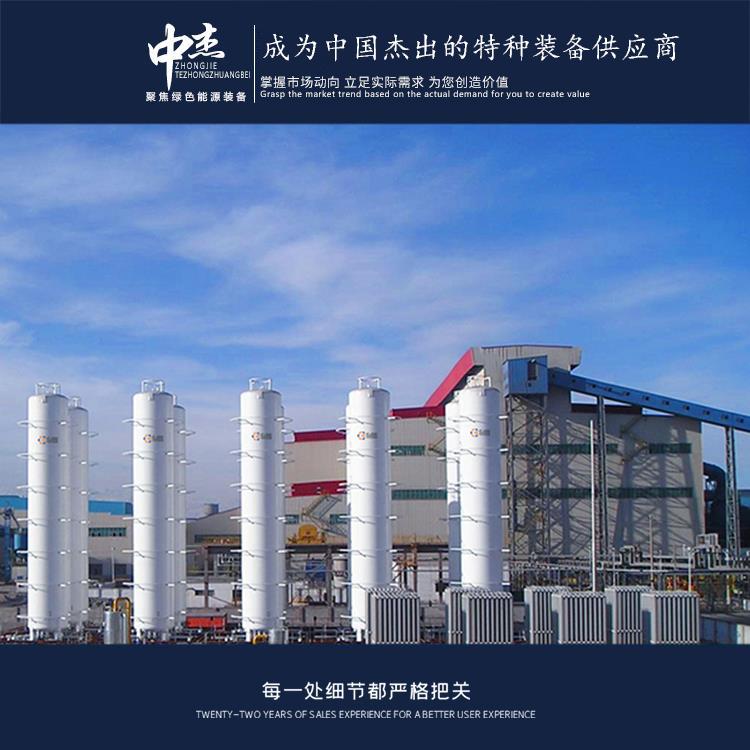
The liquid oxygen tank possesses the following characteristics:
High Purity: The liquid oxygen storage tank contains liquid oxygen of high purity, typically exceeding 99.5%. This makes the liquid oxygen storage tank crucial in applications requiring high purity oxygen, such as medical, aerospace, and research fields.
Low Temperature: As the boiling point of liquid oxygen is -183°C, liquid oxygen storage tanks must have excellent insulation properties to maintain the low temperature state of the liquid oxygen. Tanks are typically designed with double or multi-layer structures, filled with insulating material in between to minimize heat transfer and evaporation of the liquid oxygen.
High Pressure: Liquid oxygen tanks typically need to withstand high pressure to maintain their liquid state. The design and material selection of the tank must consider the pressure requirements of liquid oxygen to ensure the tank's safety and reliability.
Flammability: Liquid oxygen is highly flammable and can support combustion. Therefore, fire prevention measures must be implemented during the design and use of liquid oxygen storage tanks, ensuring there are no ignition sources nearby and appropriate fire extinguishing equipment is available.
High Density: Liquid oxygen has a higher density, allowing liquid oxygen tanks to store more oxygen compared to gas oxygen. This gives liquid oxygen tanks an advantage in applications requiring large oxygen supplies, such as in the field of and .
Corrosiveness: Liquid oxygen has certain properties of腐蚀性.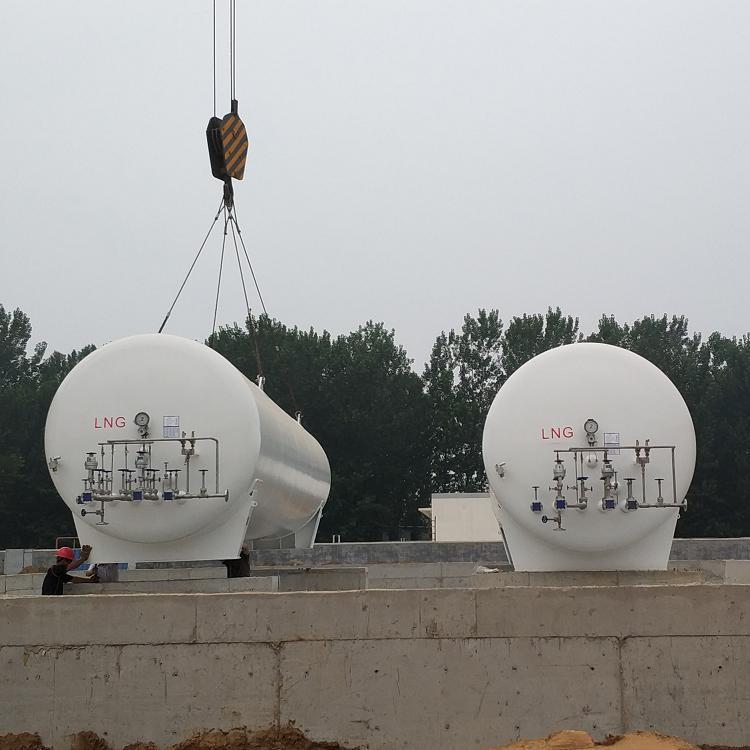
When selecting welding materials for pressure vessels, several factors should be considered:
Material Matching: The selection of welding materials should match the base material of the pressure vessel to ensure the strength and corrosion resistance of the weld joint. Common material matches include carbon steel welding materials with carbon steel base materials, stainless steel welding materials with stainless steel base materials, etc.
Strength requirements: Select welding materials with sufficient strength based on the design requirements and working conditions of the pressure vessel. The strength of the welding materials should match the base material to ensure that the strength of the weld joint does not become a weakness of the vessel.
Corrosion Resistance: Select welding materials with excellent corrosion resistance based on the working environment and medium of the pressure vessel. For instance, pressure vessels operating in corrosive media may require the use of stainless steel welding materials with superior corrosion resistance.
Welding Performance: The selection of welding materials should consider their welding properties, including penetration depth, weld bead shape, and crack resistance. The chosen materials should meet the requirements of the welding process and ensure the quality of the weld joints.
Related Standards and Regulations: When selecting welding materials, refer to relevant standards and regulations such as the ASME Boiler and Pressure Vessel Code, AWS (American Welding Society) standards, etc. These standards and regulations provide guidance and requirements for the selection of welding materials.
It's important to note that the selection of welding materials should be done by a welding engineer or a qualified welder. They can choose the appropriate materials based on specific application requirements, working conditions, and safety standards, in conjunction with relevant regulations and specifications. Additionally, manufacturers and suppliers often provide recommendations for welding material selection and technical support.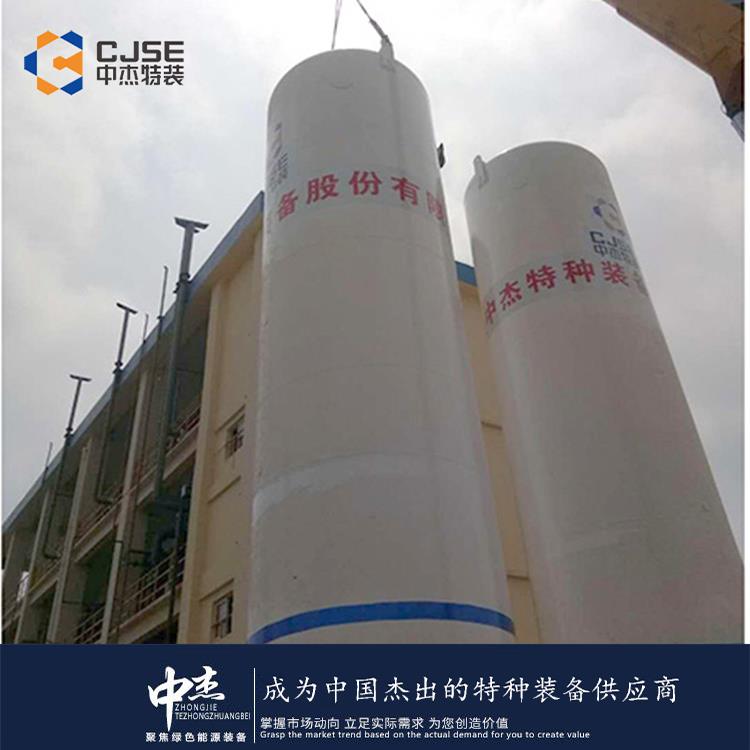
The filling of low-temperature liquid nitrogen tanks refers to the process of transferring liquid nitrogen from an external supply source into the storage tank. Below is an explanation of the filling process for low-temperature liquid nitrogen tanks:
Preparation: Prior to filling the liquid nitrogen tank, preparation is required. This includes inspecting the tank's condition and safety, ensuring the interior is clean, free of impurities and contaminants. Additionally, check the quality of the liquid nitrogen from the supply source and the safety of the supply pipeline.
Connect supply source: Link the liquid nitrogen supply source to the liquid outlet of the storage tank. Ensure the connection is secure and reliable to prevent leaks.
Control Liquid Level: During the bottling process, it is necessary to control the liquid nitrogen level to prevent overfilling or overflow. A liquid level gauge or a liquid level control system can be used to monitor and control the level.
Slow injection: The nitrogen liquid should be injected slowly to prevent drastic vaporization and pressure increase. Appropriate valves and flow control devices can be used to regulate the injection speed.
Monitor Pressure: During the canning process, it is necessary to monitor the tank's pressure to ensure it remains within a safe range. Pressure gauges or pressure sensors and similar equipment can be used for monitoring.
Canning Completed: Stop the injection of liquid nitrogen when the liquid level reaches the predetermined filling quantity or the tank's capacity limit. Disconnect the connection with the supply source and ensure the sealing integrity of the filling port.
Safe Operation: Throughout the canning process, relevant safety regulations and operating guidelines must be followed. Liquid nitrogen is highly flammable at low temperatures, so operators should wear appropriate personal protective equipment and ensure the operation environment is free of any ignition sources.
When bottling liquid nitrogen, be mindful of its low-temperature characteristics and safety. Ensure safe operation and control throughout the bottling process to guarantee the safe operation of the storage tank and the effective storage of liquid nitrogen.
Our company attaches great importance to technological innovation and R&D, with one municipal-level enterprise technology center in Heze City. We have built testing facilities for non-destructive testing, physical and chemical tests, welding tests, hydrostatic tests, and more. Equipped with over 600 instruments and equipment including CNC machine tools, X-ray flaw detectors, digital ultrasonic flaw detectors, mechanical property test machines, chemical analyzers, spectrometers, tensile test machines, plasma welding machines, and others, our key products and technologies such as thermal-pressure vessels for welding, biomass boiler emissions reduction, and waste heat recovery have successively been selected for multiple Shandong Provincial Department of Industry and Information Technology Science and Technology Innovation Projects, key projects in Shandong Province, and Heze City innovation and excellence projects. We have accumulated a total of 27 authorized utility models, 16 authorized inventions, participated in drafting 2 standards, 2 industrial standards, and registered 15 trademarks. The technical team of our company, in collaboration with Professor Li Yajiang of Shandong University, has jointly developed deep cryogenic container processing technology, utilizing the international plasma arc + filler wire tungsten inert gas arc welding (PAW-GTAW) technology. The provincial-level scientific and technological achievement identification indicates that our technology level in deep cryogenic container manufacturing has reached an international standard. Choose ZJ Special Equipment, let's create brilliance together!
WeChat Official Account

Scan to follow Official Account




















