


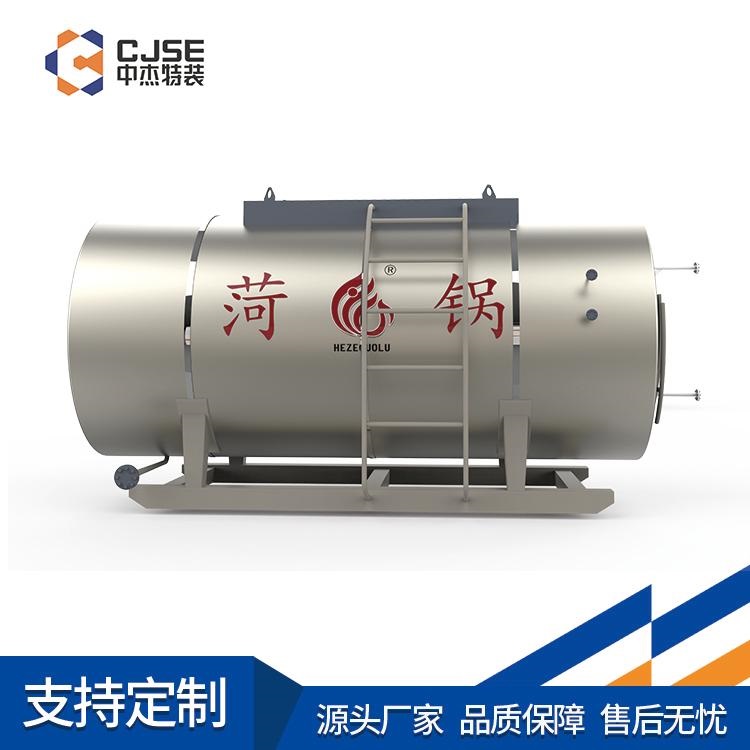


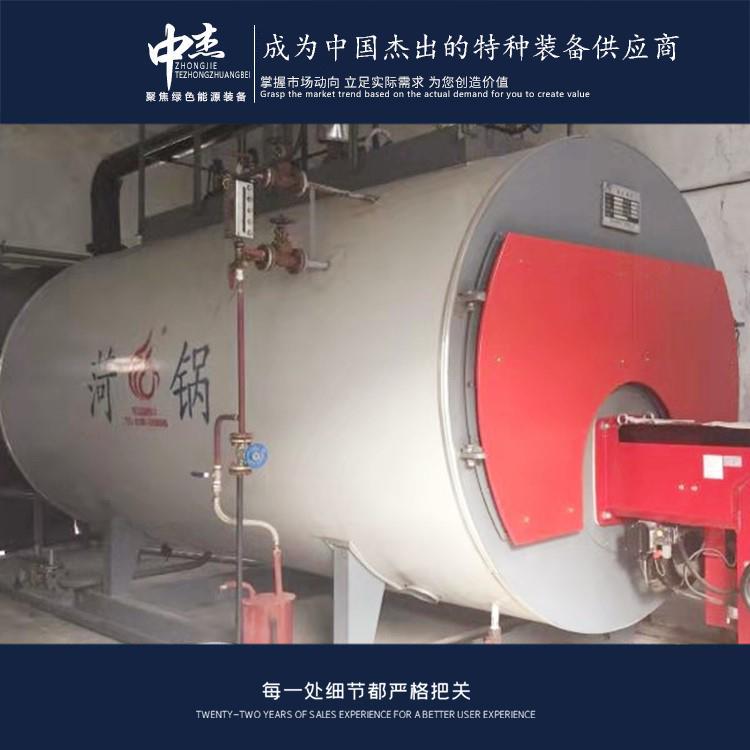



















Shandong Zhongjie Special Equipment Co., Ltd. (formerly Heze Boiler Factory Co., Ltd.) was established in 2001, located at No. 2218 Jinnan Road, Economic and Technological Development Zone, Heze City, with a registered capital of 50 million yuan and total assets of 500 million yuan. The company has 7 business centers: boilers, deep-freeze containers, pressure vessels, central air conditioning, engineering installation, international trade, and the Internet of Things. It has three factory sites on Jinnan Road, East Changjiang Road, and Bohai Road, covering a total of 200,000 square meters. The main workshop spans 83,000 square meters. Currently, it employs 710 staff, including 247 engineering technicians and 82 middle-level technicians. In December 2016, it was recognized as a "High-tech Enterprise" by the Science and Technology Department. In June 2021, it was identified as a "Specialized and New Enterprise of Shandong Province" by the Industrial and Information Technology Department. In June 2022, it was recognized as a "Gazelle Enterprise of Shandong Province" and in August 2022, it was identified as a "Specialized and New Small Giant Enterprise" by the Ministry of Industry and Information Technology.
Hot water boilers and steam boilers are two common types of boilers, differing in their working principles, application scenarios, and operating parameters:
- Working Principle: Hot water boilers provide heat by heating water, which is then circulated into the heating system. Steam boilers, on the other hand, generate steam by heating water, which is then sent to the heating system.
- Operating Temperature and Pressure: Hot water boilers typically operate at temperatures between 60°C and 100°C with lower pressures. Steam boilers usually operate at temperatures between 100°C and 200°C, with higher pressures, typically ranging from 0.7MPa to 2.5MPa.
- Heating Method: Hot water boilers circulate hot water through the system using a pump, primarily transferring heat through conduction and convection. Steam boilers distribute steam through pipes to the heating system, primarily transferring heat through steam conduction.
- Application Scenarios: Hot water boilers are suitable for heating, bathing, swimming pool heating, and other applications requiring hot water in industrial processes. Steam boilers are used in industrial settings that require steam, such as power plants, chemical factories, and textile mills.
- Equipment Structure: Hot water boilers are generally simpler and have a smaller structure with less floor space. Steam boilers are typically more complex, with a larger structure and more floor space.
- Note: In some special application scenarios, hot water and steam boilers may overlap, such as in industrial processes where both hot water and steam are needed. Therefore, when choosing a boiler type, it is necessary to consider specific requirements and application scenarios.
Steam boiler equipment water treatment refers to the process of treating water in steam boilers to ensure normal operation and extend the lifespan of the equipment. Here are the basic principles of steam boiler equipment water treatment:
Water Quality Requirements: The water quality in steam boilers is of high importance, typically requiring the removal of impurities, dissolved oxygen, and hardness substances. Impurities and hardness substances can lead to scaling and corrosion on the boiler's interior walls, while dissolved oxygen can cause corrosion and the formation of bubbles.
Removal of Impurities: Common methods for removing water impurities include sedimentation, filtration, and ion exchange. Sedimentation involves adding chemical agents to make impurities settle, filtration removes impurities through filtering media, and ion exchange uses resins to adsorb and exchange ions to eliminate impurities in the water.
Hardness Adjustment: The hardness substances in water are mainly calcium and magnesium salts, which can cause scaling on the boiler's interior walls. Hardness can be adjusted by adding chemical agents or using water softening equipment to prevent scaling issues.
Dissolved Oxygen Removal: Dissolved oxygen can cause corrosion and bubble formation. It can be removed by adding oxidizing agents or using deaeration equipment.
pH Control: The pH level of the water in steam boilers affects equipment corrosion and scaling. It is usually necessary to maintain the water pH within an appropriate range, using buffers or regulators to adjust the pH.
Regular Testing and Maintenance: Regular water quality testing of steam boiler equipment should be conducted, including measuring hardness, dissolved oxygen, and pH levels. Appropriate water treatment measures and maintenance should be implemented based on the test results.
Steam boiler equipment water treatment is a crucial aspect for ensuring normal boiler operation and extending equipment lifespan. Rational water treatment measures can effectively prevent scaling, corrosion, and malfunctions on the boiler's interior walls.
The importance of energy-saving in steam boilers is significant for the following reasons: Energy Costs: Steam boilers typically use fuels (such as coal, gas, oil, etc.) to produce steam, with energy costs forming a substantial part of the boiler's operational expenses. Energy-saving measures can reduce energy consumption and lower costs. Environmental Protection: The combustion process of steam boilers generates exhaust gases and particulate matter, contributing to environmental pollution. Energy-saving can decrease fuel consumption and reduce emissions, positively impacting environmental protection. Sustainable Development: Energy-saving is a crucial aspect of sustainable development. By reducing energy consumption and extending the boiler's lifespan, resources are conserved and waste minimized, promoting sustainable practices. Measures for energy-saving include: Improving Boiler Thermal Efficiency: Enhance the boiler's combustion system, optimize combustion parameters, and improve heat exchange efficiency to increase thermal efficiency and reduce energy waste. Heat Recovery Utilization: Employ heat recovery systems to capture and utilize the excess heat from the flue gases, using it to heat water or other processes requiring heat, thereby improving energy utilization. Application of Energy-Saving Equipment: Use energy-saving equipment like variable frequency drives, energy-saving burners, and heat pumps to lower energy consumption and enhance efficiency.
A condensing steam boiler is an energy-saving boiler equipment, with the following working principle and features:
Working Principle:
Steam Generation: The condensing steam boiler produces high-temperature flue gas by burning gas, which then exchanges heat with the water pipes inside the boiler, heating the water into steam.
Steam Condensation: After steam is generated, it enters the condenser, where it exchanges heat with the condensing medium (usually cold water or recycled water) to release the heat from the steam and condense it back into water.
Flue Gas Reuse: The flue gas after condensation still contains a certain amount of heat, which can be recovered and reused by a flue gas reuse device to improve the boiler's thermal efficiency.
Features:
Energy-saving: The condensing steam boiler utilizes the principle of steam condensation to fully utilize the heat in the steam, improving the efficiency of heat utilization and saving energy consumption.
Low Emission: Due to the condensation process that recovers most of the heat from the flue gas, the flue gas temperature is lower, resulting in a relative decrease in pollutant emissions, minimizing environmental impact.
Compact Structure: The condensing steam boiler typically features a compact structural design, occupying less floor space, making it suitable for places with limited space.
Quick Start-up: The condensing steam boiler has the characteristic of quick start-up and shutdown, allowing for flexible adjustments and operations based on actual needs.
Wide Application Range: The condensing steam boiler is suitable for heating and steam requirements in industrial production processes, such as power plants, chemical factories, and textile mills.
It is important to note that proper maintenance and care should be taken with the condensing steam boiler during use, including regular cleaning of the condenser and flue gas reuse device to ensure normal operation and performance.
Zhongjie Special Equipment adheres to the great vision of "realizing employee dreams, creating customer value, and striving for the prosperity and strength of our motherland," and is dedicated to the development of the green energy equipment industry. We commit to society with high-quality products and services at competitive prices!
WeChat Official Account

Scan to follow Official Account




















