






















Shandong Zhongjie Special Equipment Co., Ltd. (formerly Heze Boiler Factory Co., Ltd.) was established in 2001, located at No. 2218 Jinnan Road, Development Zone, Heze City. With a registered capital of 50 million yuan and total assets of 500 million yuan, the company has 7 business centers: boilers, deep-freeze containers, pressure vessels, central air conditioning, engineering installation, international trade, and the Internet of Things. It has three factory sites on Jinnan Road, East Changjiang Road, and Bohai Road, covering a total area of 200,000 square meters, with the main workshop spanning 83,000 square meters. It currently employs 710 people, including 247 engineers and technicians, and 82 intermediate-level technicians. In December 2016, it was recognized as a "High-tech Enterprise" by the Science and Technology Department. In June 2021, it was identified as a "Specialized and New Enterprise of Shandong Province" by the Department of Industry and Information Technology. In June 2022, it was recognized as a "Deer Enterprise of Shandong Province" and in August 2022, as a "Specialized and New Small Giant Enterprise" by the Ministry of Industry and Information Technology.
Prior to starting the heating gas hot water boiler, the following correct procedures must be followed:
- Check the gas supply system: Ensure the gas supply system is operating properly, inspect the gas pipes, valves, and pressure regulators, ensuring there are no leaks or blockages in the gas supply.
- Check the water system: Inspect the water circulation system of the heating system, including pumps, valves, and pipes, ensuring the waterways are clear of leaks and blockages.
- Check the electrical system: Inspect the boiler's electrical system, including power connections, controllers, and sensors, ensuring electrical equipment is functioning normally.
- Check the safety devices: Inspect the boiler's safety devices, including safety valves, pressure switches, and water level controllers, ensuring they are working properly to ensure safe boiler operation.
- Prepare for ignition: According to the boiler's operating instructions, prepare the tools and equipment needed for ignition, including an igniter and ignition electrode.
- Open the gas valve: Slowly open the gas valve to ensure a steady gas supply and avoid gas surges.
- Ignition start-up: Follow the boiler's operating instructions for ignition start-up. Perform the appropriate actions based on the boiler model and control system to ensure smooth ignition.
- Monitor operating status: After startup, closely monitor the boiler's operating status, including combustion, water level, and pressure, ensuring normal operation without any anomalies.
- Adjust parameters: Adjust the boiler's parameters as needed, including temperature, pressure, and water level, to meet the heating system's requirements.
- Regular maintenance: After startup, perform regular maintenance, including cleaning the burner, checking water and pressure levels, and replacing worn parts, to ensure normal operation and safety of the boiler.
- Before starting the heating gas hot water boiler, it is recommended to refer to the boiler's operation manual and the manufacturer's guidelines to ensure correct and safe operation. If necessary, request personnel to operate and maintain the boiler.
The inspection contents and requirements for gas-fired boilers typically include the following aspects:
- Safety valve and pressure gauge: Check the installation and fixation of the safety valve and pressure gauge to ensure normal operation and accurate pressure display.
- Combustion system: Inspect the operating status of the burner, including ignition, combustion, and combustion stability. Check the connection of the gas supply pipeline and valves to ensure no leakage.
- Flue and heat exchanger: Examine the cleanliness of the flue and heat exchanger, as well as any accumulated dust and dirt, to ensure heat exchange efficiency and smoke emission meet requirements.
- Water level control system: Check the operating status of the water level controller and gauge to ensure accurate and reliable water level control, preventing overfilling or low water levels.
- Gas supply system: Inspect the installation and connection of the gas supply pipeline and valves to ensure normal gas supply and no leakage.
- Electrical system: Check the wiring and connection of the electrical system, including power supply, controllers, and sensors, to ensure normal operation of electrical equipment and avoid electrical failures.
- Safety devices: Verify the operating status of safety devices, including safety valves, pressure switches, and temperature controllers, to ensure normal operation and safeguard the safe operation of the boiler.
- Records and documents: Review the boiler's operating records, maintenance records, and inspection reports, ensuring the completeness and accuracy of the operation and maintenance records.
The inspection of gas-fired boilers should be conducted by institutions or individuals with the corresponding qualifications, following relevant laws, regulations, and standards. The frequency and specific requirements of the inspection can be determined based on the boiler's usage and local regulations. Timely inspections and maintenance can ensure the safe operation and performance of the gas-fired boiler.
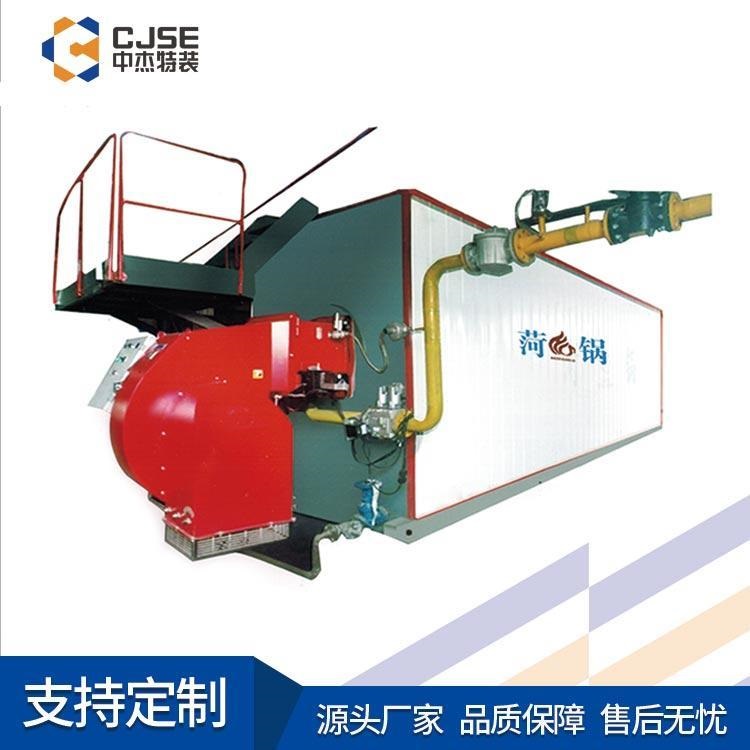
A gas thermal oil boiler is a device that uses gas as fuel to heat thermal oil through the heat generated by combustion. Here are some basic knowledge points about gas thermal oil boilers:
Operating Principle: The operating principle of a gas thermal oil boiler involves mixing gas with air, then burning it to produce high-temperature flue gas. This flue gas is then passed through the flue and heat exchanger to exchange heat with the thermal oil, transferring heat energy to the thermal oil and raising its temperature. The thermal oil circulates within the boiler, transferring heat energy to the equipment or process that requires heating.
Thermal Oil: The thermal oil used in gas thermal oil boilers is typically an organic heat carrier, such as mineral oil or synthetic oil. It has high thermal conductivity and thermal stability, allowing it to operate stably at high temperatures and transfer heat energy to the heated equipment.
Gas Combustion System: Gas thermal oil boilers are equipped with a gas combustion system, including burners, gas supply systems, and control systems. The burners are responsible for mixing gas with air and burning it to produce heat energy. The gas supply system is responsible for providing gas and adjusting the gas supply as needed. The control system monitors and controls the gas combustion process to maintain a stable operating state.
Safety Protection Devices: Gas thermal oil boilers are equipped with various safety protection devices to ensure safe operation of the equipment. Common safety protection devices include overheat protection, overpressure protection, and water level protection. They monitor and control the boiler's operating status to prevent equipment damage and safety accidents.
Application Fields: Gas thermal oil boilers are widely used in industrial sectors such as chemicals, textiles, food processing, and papermaking. They can provide stable high temperatures for various applications.
The purpose of oxygen removal from feed water in industrial boilers is to minimize oxygen corrosion and bubble formation within the boiler, ensuring the safety and smooth operation of the boiler and pipeline system. The main methods of oxygen removal include:
1. Mechanical Deoxygenation: Removing oxygen from water using physical methods. Common mechanical deoxygenation equipment includes deaerators and degassers. Deaerators eliminate oxygen by spraying water into a thin film, taking advantage of the difference in gas solubility. Degassers remove oxygen by spraying water into fine droplets, utilizing the same principle of solubility difference.
2. Thermal Deoxygenation: Removing oxygen from water by heating the water body, as the solubility of oxygen decreases with increasing temperature. Common thermal deoxygenation equipment includes deaerator pots and deaerators. Deaerator pots release oxygen from water by heating it to saturation temperature. Deaerators remove oxygen by heating the water, taking advantage of the reduced solubility of oxygen.
3. Chemical Deoxygenation: Removing oxygen from water by adding chemicals that react with it, eliminating oxygen. Common chemical deoxygenating agents include salts, reducers, etc. Chemical deoxygenation is often used in high-pressure boiler systems and can effectively remove oxygen from water.
The choice of deoxygenation method depends on the specific boiler system and water quality. In practice, a combination of various deoxygenation methods is often used to achieve optimal results. The selection and operation of deoxygenation equipment should be assessed and adjusted based on actual conditions to ensure the safety and smooth operation of the boiler system.
Our company attaches great importance to technological innovation and R&D design. We have one municipal-level enterprise technology center in Heze City, equipped with testing facilities for non-destructive testing, physical and chemical testing, welding testing, hydrostatic testing, etc. We have over 600 types of equipment, including CNC machine tools, X-ray flaw detectors, digital ultrasonic flaw detectors, mechanical property testing machines, chemical analyzers, spectrometers, tensile testing machines, plasma welding machines, and more. The key products and technologies we have developed, such as welding of temperature and pressure vessels, biomass boiler emission reduction, and waste heat utilization, have successively been included in multiple Shandong Provincial Department of Industry and Information Technology science and technology innovation projects, Shandong key projects, and Heze City innovative and excellent projects. We have accumulated a total of 27 authorized utility models, 16 authorized inventions, participated in drafting 2 standards, 2 industry standards, and registered 15 trademarks. Our technical team, in collaboration with Professor Yajiang Li from Shandong University, has jointly developed deep cryogenic container processing technology, utilizing the international plasma arc + wire-filled tungsten inert gas arc welding (PAW-GTAW) technology. The provincial-level scientific and technological achievement appraisal has determined that our technology level in deep cryogenic container manufacturing has reached an international standard.
Choose ZJETT Customization, let's create brilliance together!
WeChat Official Account

Scan to follow Official Account




















