


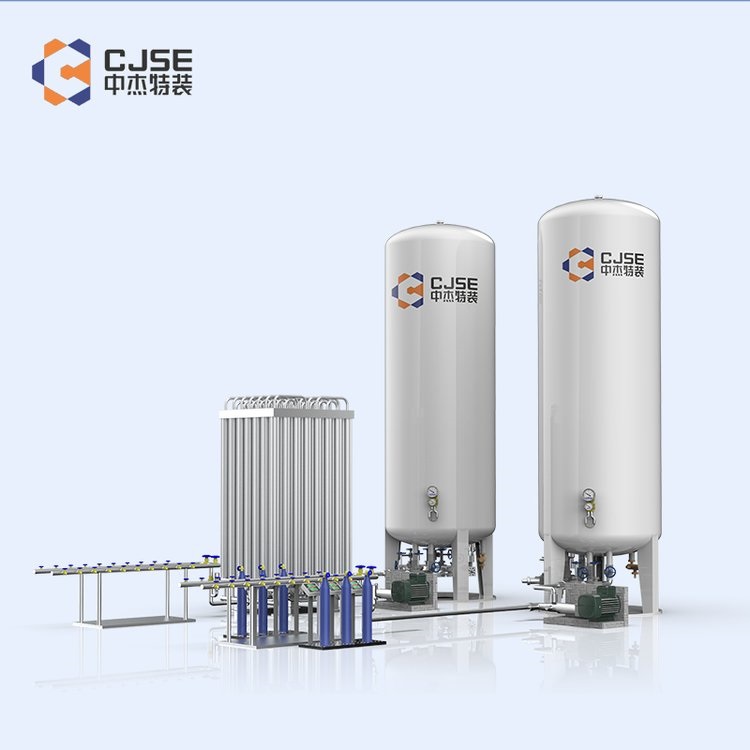


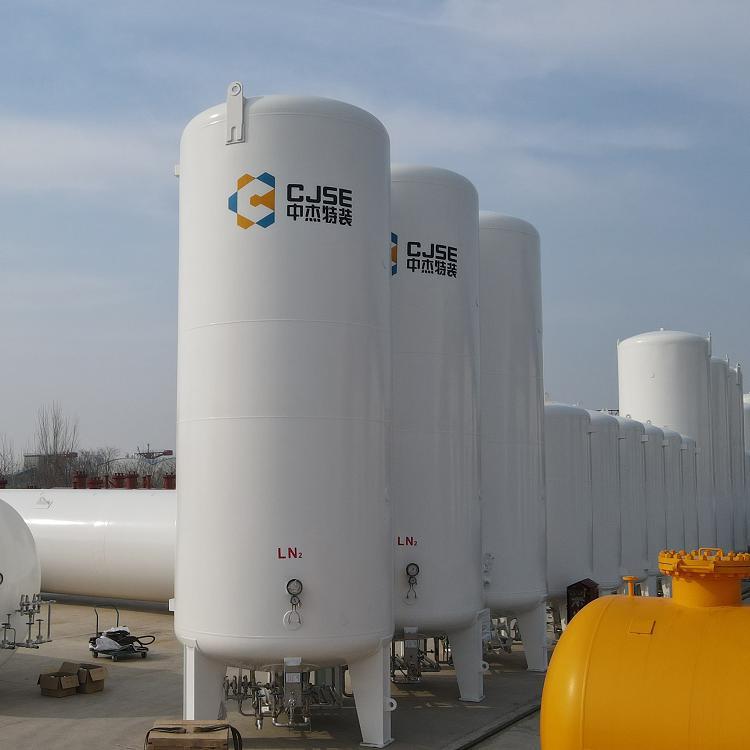



















Shandong Zhongjie Special Equipment Co., Ltd. specializes in the following products: fuel (gas) boilers, organic heat carrier boilers, biomass boilers, waste heat recovery boilers, and other boiler products; vacuum insulation cryogenic pressure vessels such as LNG storage tanks, oxygen/nitrogen/argon storage tanks, and CO2 storage tanks; pressure vessel products including denitrification engineering equipment, heat storage and energy storage equipment, and complete chemical equipment; central air conditioning and HVAC equipment such as ground (water) source heat pumps, air source units, water-cooled screw units, and air-cooled modular units. Planned products include large-scale energy centers, LNG transport vehicles, LNG tank containers, and other green energy equipment.
The safe placement of liquid oxygen tanks is a crucial measure to ensure that the tanks pose no danger to the surrounding environment and personnel during use. The following are the safety requirements for the placement of liquid oxygen tanks:
Safety Distance: Liquid oxygen tanks should maintain a certain distance from other buildings and equipment. This is to ensure effective control and minimize the impact on the surrounding environment in the event of a tank leak or fire.
Fire and explosion prevention measures: Liquid oxygen tanks should be placed in a fire-resistant area, away from open flames, high-temperature sources, and flammable materials. The surrounding area should be equipped with fire and explosion prevention facilities, such as fire extinguishers and foam sprinkler systems, to address potential fire risks.
Level placement: The liquid oxygen tank should be placed on a solid, flat foundation to ensure stability. The bottom of the tank should make full contact with the ground to prevent the tank from tilting or rocking.
Ventilation Requirements: Liquid oxygen tanks should be placed in well-ventilated areas to ensure the normal circulation of gas emissions and oxygen supply. There should be no obstructions around the tank that could hinder gas flow.
Identification and Warnings: Liquid oxygen tanks should be clearly marked with information such as the stored medium, capacity, and pressure. Warning signs and safety alerts should be placed in the surrounding area to remind personnel of the presence and potential hazards of the liquid oxygen tank.
Regular Inspections and Maintenance: Liquid oxygen tanks should be regularly inspected and maintained, including checking the tank's appearance, sealing, and corrosion prevention measures. Any issues found should be promptly repaired or the tank replaced to ensure proper operation and safety.
It's important to note that the safety requirements for the placement of liquid oxygen tanks may vary depending on different regions and industries. When placing liquid oxygen tanks, it's essential to comply with relevant regulations, standards, and safety procedures, and to establish appropriate safety measures based on the actual situation. If you're unfamiliar with or have doubts about the safety requirements, it's advisable to consult with experts or relevant institutions.
Liquid oxygen storage tanks may deform during use. The following are common deformation defects in liquid oxygen storage tanks:
Elastic Deformation: The liquid oxygen tank may undergo elastic deformation when subjected to external pressure or temperature changes. Such deformation is typically reversible, meaning the tank will return to its original shape once the external pressure is removed or the temperature returns to normal.
Plastic Deformation: When a liquid oxygen storage tank is subjected to significant external force or pressure, it may undergo plastic deformation. This deformation is irreversible, and the tank cannot return to its original shape. Plastic deformation can cause changes in the tank's shape, such as dents or warping.
Hot Deformation: Liquid oxygen tanks may undergo thermal deformation when exposed to high temperatures or temperature fluctuations. This can cause the tank's shape to change, expand, or contract.
Cold Deformation: Liquid oxygen tanks may experience cold deformation when subjected to low temperatures or temperature changes. Cold deformation can cause the tank to alter its shape, shrink, or crack.
These deformation defects may affect the structural integrity and safety of liquid oxygen tanks. Therefore, it is important to regularly inspect and assess the deformation of liquid oxygen tanks to ensure their normal operation and safe use. If deformation defects are found in the tanks, timely repair or replacement measures should be taken to avoid further damage and safety risks.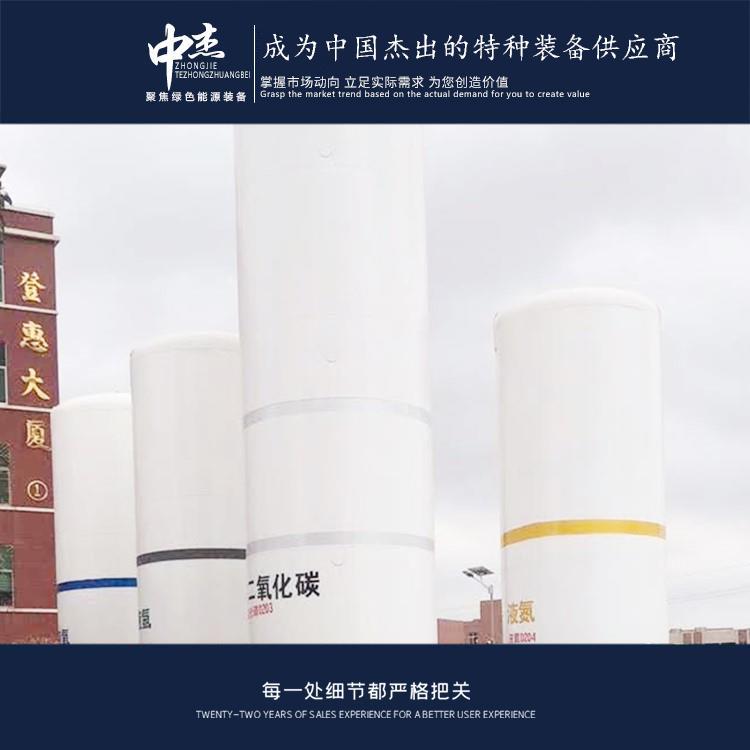
When selecting a liquid oxygen cylinder with a medical oxygen concentrator, several factors should be considered:
Requirement: First, determine the oxygen demand of the institution or individual. Select the appropriate oxygen concentrator model and specifications based on the required oxygen flow rate and pressure.
Safety and Reliability: Ensure the selected oxygen concentrator boasts high safety and reliability. Choose products that comply with relevant standards and regulations, featuring safety functions such as over-pressure protection, leakage protection, and overload protection.
Ease of Operation: Choose an oxygen concentrator that is simple to operate and user-friendly. Consider the methods for adjusting oxygen flow and concentration, as well as the clarity and readability of the operating interface.
Quality and Reputation: Choose an oxygen concentrator with excellent quality and reliability. Refer to customer reviews, word-of-mouth, and institutional endorsements when selecting your product.
Maintenance and After-Sales Service: Familiarize yourself with the maintenance requirements and after-sales support for oxygenators. Ensure timely access to repairs and technical assistance to guarantee the smooth operation and maintenance of the oxygenators.
Cost-effectiveness: Choose a product with a good price-performance ratio, considering the price, performance, and features of the oxygenator. Select the appropriate oxygenator based on actual needs and budget.
Be mindful that when selecting liquid oxygen tanks with medical oxygen generators, adhere to the relevant equipment procurement regulations and standards. It's advisable to consult with equipment suppliers or relevant institutions to ensure the chosen oxygen generator meets the requirements and safety standards.
Possible causes of leakage in liquid argon storage tanks include:
Design or Manufacturing Defects: Defects in the design or manufacturing process of the tank, such as loose welding, improper material selection, or poor sealing, lead to leakage issues in the tank.
Corrosion and Oxidation: Long-term exposure to low temperatures can easily cause corrosion and oxidation in liquid argon storage tanks. This can damage the surface protective layer of the tank, leading to leakage issues.
Fatigue and stress cracking: During long-term use, tanks may experience fatigue and stress cracking due to temperature and pressure fluctuations. These cracks can lead to a decrease in the tank's sealing performance, resulting in leaks.
Improper Operation: Failure to follow proper procedures during the storage tank's operation, such as overfilling with liquid argon or excessive pressure, can lead to tank damage and leakage.
External Damage: Tanks may sustain damage from external factors, such as mechanical collisions or impacts from objects.
Shandong Zhongjie Special Equipment, welcome customers to visit our factory for business discussions.
WeChat Official Account

Scan to follow Official Account