


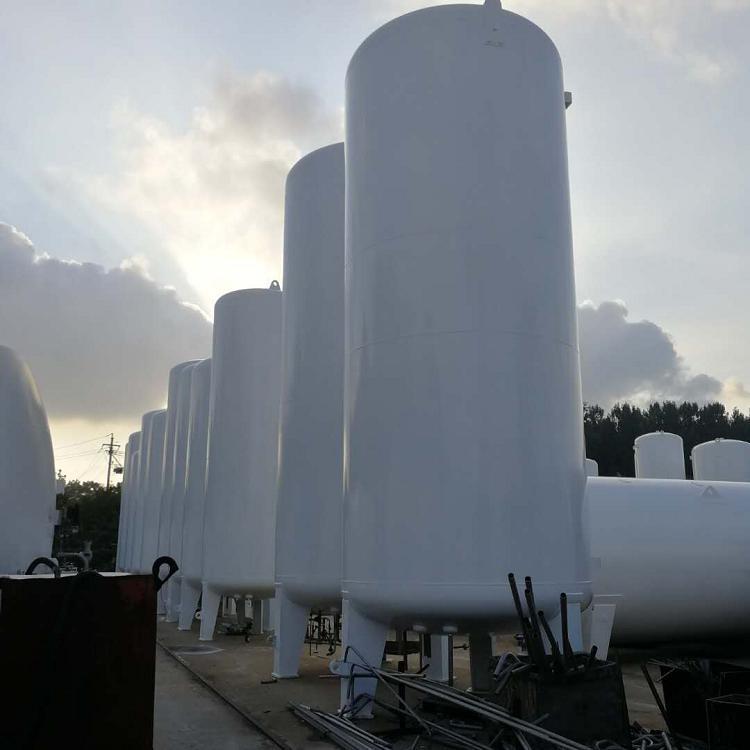


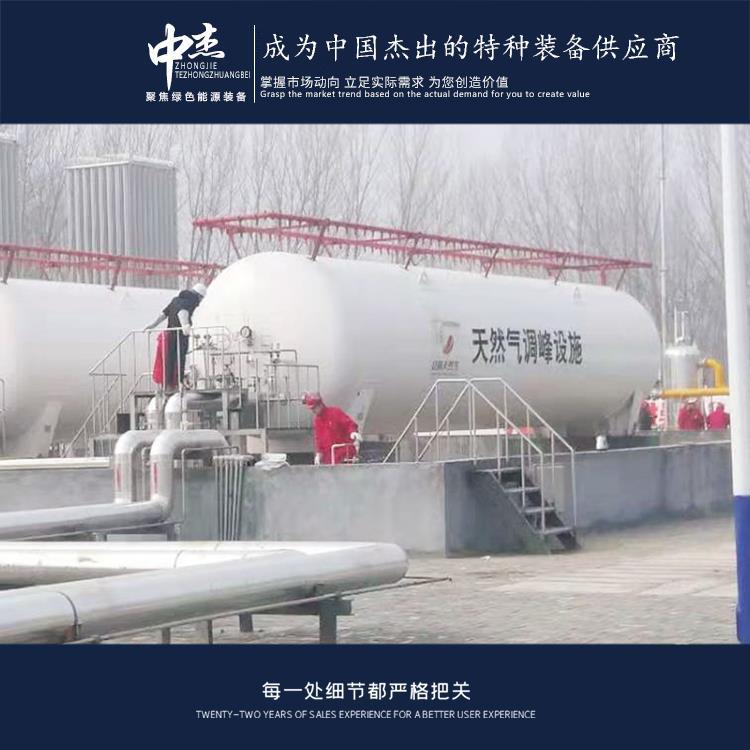



















Shandong Zhongjie Special Equipment (formerly Heze Boiler Factory Co., Ltd.) holds an A-grade boiler manufacturing license, an A2-grade pressure vessel manufacturing license, an A2-grade pressure vessel design license, a B-grade boiler installation license, as well as GB2 and GC2 class pressure pipeline installation licenses and mechanical and electrical equipment installation contracting qualifications. It is a member of the China Boiler and Water Treatment Association, the China Chemical Equipment Association, and the council member of the Shandong Equipment Manufacturing Association. The company has also passed certifications for the ISO9001 Quality Management System, ISO14001 Environmental Management System, OHSAS18001 Occupational Health and Safety Management System, and the American ASME/U2 certification.
Carbon dioxide storage tanks offer several advantages:
- High storage density: These tanks can compress carbon dioxide gas into a liquid state, significantly increasing storage density. Compared to storing it in gas form, liquid carbon dioxide can be stored in a smaller tank, saving space and costs.
- Multiple application fields: Carbon dioxide storage tanks are widely used in various industries, including food and beverage, industrial, fire suppression, and gas supply. Carbon dioxide can be used as a preservative, beverage effervescent agent, gas, and extinguishing agent, with broad applications and market demand.
- Environmental and renewable: Carbon dioxide is an environmentally friendly gas, and its increased concentration in the atmosphere can lead to warming and climate change. By storing and utilizing carbon dioxide, we can reduce its emissions into the atmosphere, achieving environmental protection and sustainable development.
- Safe and reliable: During design and manufacturing, carbon dioxide storage tanks typically use high-strength materials (such as carbon steel or stainless steel) with good pressure resistance and safety. The tanks are usually equipped with safety valves, pressure gauges, level indicators, and other accessories to ensure safe operation. Additionally, carbon dioxide is a non-flammable and non-explosive gas, making it relatively safe.
- Supply: Carbon dioxide storage tanks provide a stable supply of carbon dioxide. Through tank design and control systems, accurate measurement and supply of carbon dioxide can be achieved, meeting the needs of various industries and applications.
These advantages make carbon dioxide storage tanks an important storage and supply equipment, widely used in multiple industries. However, it is still necessary to follow relevant safety operation procedures and standards when using carbon dioxide storage tanks to ensure safe operation and use.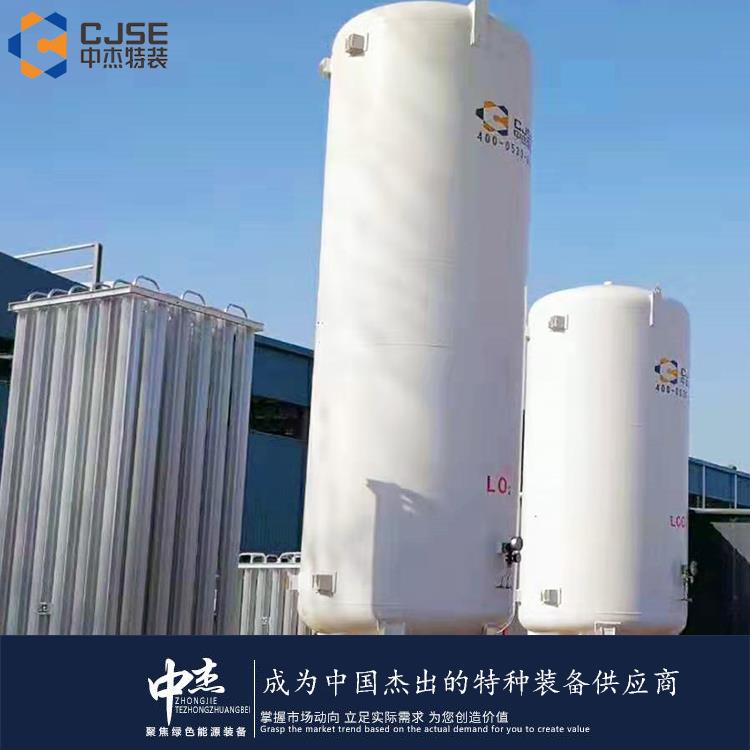
Before using a CO2 storage tank, certain inspection and filling points must be addressed. Here are some common considerations:
- Inspect the tank's exterior: Check for any visible damage, corrosion, or leakage signs. Ensure the tank shell is undamaged.
- Check valves and fittings: Verify that the tank's valves and fittings are securely fastened and there are no leaks. Ensure proper operation.
- Inspect the pressure gauge: Check that the tank's pressure gauge is functioning correctly and readings are accurate. Replace or repair as needed.
- Check the level indicator: Ensure the tank's level indicator is working properly and accurately displays the level. Repair or replace if abnormal.
- Inspect the pressure relief device: Check that the tank's pressure relief device (e.g., safety valve) is functioning correctly and the set pressure meets requirements. Repair or replace if abnormal.
- Inspect filling equipment: Verify that the filling equipment (e.g., filling pipes, pumps) is working properly with no leaks or blockages. Ensure safety and reliability.
- Filling operation: During the filling process, note the following points:
- Control the filling speed, avoiding too fast or too slow.
- Control the filling pressure, not exceeding the tank's rated pressure.
- Monitor the level, ensuring proper filling.
- Regularly inspect filling equipment and valves to ensure proper operation.
- Safety measures: Adhere to relevant safety regulations and procedures during filling. Operators should wear appropriate protective gear, such as static-free clothing, gloves, etc.
- Note that specific inspection and filling points may vary depending on tank type and application. Before using a CO2 storage tank, inspect and operate according to relevant specifications and standards, and consult with experts to ensure safety and effectiveness.
The safe operation of low-temperature CO2 storage tanks is crucial and primarily includes the following aspects: Design and Manufacturing: The tank's design and construction must comply with relevant standards and regulations to ensure it can withstand working conditions in low temperatures and high pressures. The tank should have adequate strength and sealing performance to prevent leaks and ruptures. Safety Valves and Pressure Control: The tank should be equipped with safety valves and pressure control devices to ensure the internal pressure remains within safe limits. Safety valves should be regularly inspected and tested to ensure proper functioning. Temperature Control: Effective temperature control is necessary for low-temperature CO2 storage tanks to prevent freezing or embrittlement due to excessively low temperatures. Appropriate insulation materials and equipment should be used to maintain the tank and pipeline temperatures within safe ranges. Leak Detection and Alarm: The tank should be fitted with leak detection devices and alarm systems, along with corresponding monitoring equipment. These devices can detect leaks promptly and trigger alarms for appropriate action. Safe Operation and Training: Operators should receive relevant training to understand the safe operating procedures and standards for low-temperature CO2 storage tanks. Operators should be familiar with the tank's characteristics, operational principles, and emergency response measures. Regular Inspections and Maintenance: Tanks should be regularly inspected and maintained, including visual inspections, anti-corrosion coating maintenance, and leak detection. Regular inspections can detect potential issues early and enable appropriate repair actions. Emergency Preparedness: Establish an emergency response plan and equip with appropriate firefighting and first aid equipment. Operators should be familiar with emergency procedures and capable of responding swiftly to emergencies. Please note that these key points are general recommendations. Specific safe operation should be based on the design and usage requirements of the low-temperature CO2 storage tank. It is recommended to refer to relevant safety operation manuals and guidelines before using the tank to ensure safety.
In daily operation, CO2 storage tanks require protection and maintenance to ensure proper functioning and safety. Here are some common protection and maintenance methods:
- Visual Inspection: Regularly check the tank's exterior for signs of corrosion, wear, and cracks. Take prompt repair actions upon discovering any anomalies.
- Seal Integrity Check: Regularly inspect the tank's sealing performance, particularly at valve and pipe connections, and the tank's own seal. Ensure there are no leaks, and address any promptly.
- Temperature Control: Maintain a suitable ambient temperature around the tank and implement appropriate insulation measures to ensure the tank's internal低温 state.
- Pressure Relief Device Inspection: Regularly check the tank's pressure relief devices, such as safety valves, to ensure they are functioning correctly. Verify that the set pressure of the relief devices meets requirements and perform regular maintenance and replacements.
- Level Monitoring: Regularly monitor the tank's liquid level to ensure accurate measurements. Take immediate action to investigate and address any abnormal levels.
- Regular Cleaning: Clean the tank's interior regularly to remove accumulated impurities and dirt. Exercise caution during cleaning to avoid flammable and corrosive substances.
- Regular Testing: Conduct regular pressure tests and leak detection on the tank to ensure safety performance meets requirements. The frequency and methods of testing should comply with relevant regulations and standards.
- Storage Capacity Control: Control the tank's storage capacity to prevent exceeding the rated capacity. Overfilling can lead to excessive pressure and increased safety risks.
It should be noted that specific protection and maintenance methods may vary depending on the type of tank and its application.
Our company highly values technological innovation and R&D design. We have one city-level enterprise technology center in Heze City, equipped with non-destructive testing, physical and chemical testing, welding testing, hydrostatic testing, and other testing facilities. We have over 600 various instruments and equipment, including CNC machine tools, X-ray flaw detectors, digital ultrasonic flaw detectors, mechanical property testing machines, chemical analyzers, spectrometers, tensile testing machines, plasma welding machines, etc. The key products and technologies we have developed, such as welding of temperature and pressure vessels, biomass boiler emission reduction, and waste heat utilization, have successively been shortlisted for multiple Shandong Provincial Department of Industry and Information Technology science and technology innovation projects, Shandong Provincial key projects, and Heze City innovation and excellence projects. We have accumulated 27 authorized utility models, 16 authorized inventions, participated in drafting 2 standards, 2 industry standards, and registered 15 trademarks. The technical team of our company, in collaboration with Professor Li Yajiang of Shandong University, has developed deep cryogenic container processing technology using the international plasma arc + wire filling tungsten inert gas arc welding (PAW-GTAW) technology. After the provincial-level scientific and technological achievement appraisal, the technology level has reached the international standard in the field of deep cryogenic container manufacturing. Choose Zhongjie Special Equipment, let's join hands to create brilliance!
WeChat Official Account

Scan to follow Official Account




















