



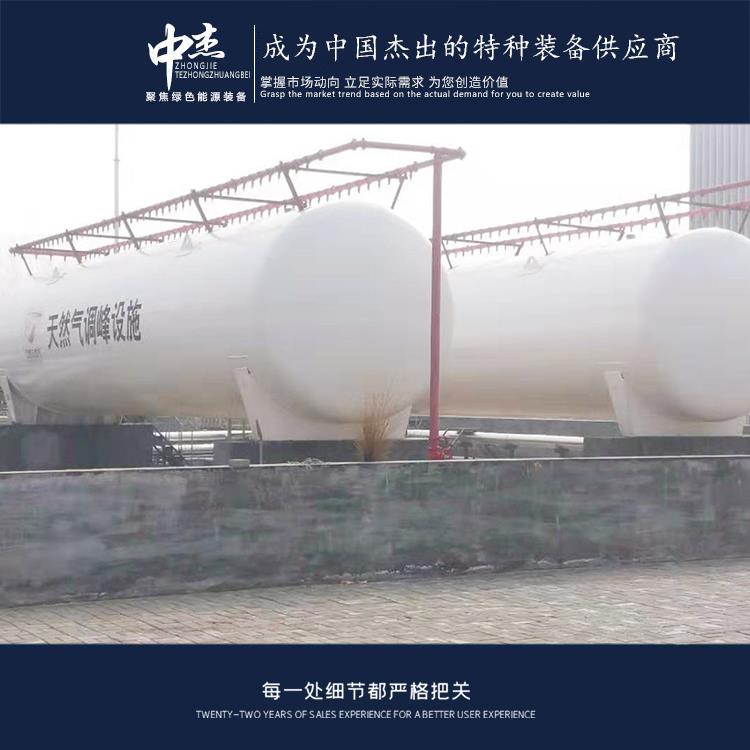



















Shandong Zhongjie Special Equipment's main products include: fuel (gas) boilers, organic heat carrier boilers, biomass boilers, waste heat recovery boilers, and other boiler products; vacuum insulation cryogenic pressure vessels such as LNG tanks, oxygen/nitrogen/argon tanks, and CO2 tanks; pressure vessel products like denitrification engineering equipment, heat storage and energy storage equipment, and complete chemical equipment; central air conditioning and HVAC equipment such as ground (water) source heat pumps, air source units, water-cooled screw units, and air-cooled modular units. Planned products include large-scale energy centers, LNG transport vehicles, LNG tank containers, and other green energy equipment.
The inspection frequency of carbon dioxide storage tanks should be determined based on local regulations, standards, and manufacturer recommendations. Generally, several factors can influence the inspection frequency of carbon dioxide storage tanks:
Regulatory and Standard Requirements: Different regions may have varying regulations and standards that specify the inspection requirements and frequency for tanks. For instance, the U.S. DOT standards require liquid gas tanks to undergo external inspections every 5 years and internal inspections every 10 years.
Manufacturer Recommendations: Manufacturers typically provide recommendations for inspection frequency, based on factors such as tank design, materials, and service life, which can serve as references for developing an inspection plan.
Usage Environment and Conditions: The tank's usage environment and conditions also affect inspection frequency. For example, tanks exposed to corrosive environments or subjected to frequent mechanical stress may require more frequent inspections.
In general, external inspections of liquid gas tanks are typically conducted through visual inspections, ultrasonic testing, magnetic particle testing, and other methods to assess the external condition and potential defects of the tank. Internal inspections may require emptying the tank and using methods such as internal inspections, thickness measurements, and weld inspections to evaluate the internal condition.
It is crucial that inspections be carried out by trained and experienced personnel and strictly adhere to relevant regulations, standards, and manufacturer recommendations. Regular inspections and maintenance can ensure the safety and reliability of the tank, reducing the risk of accidents.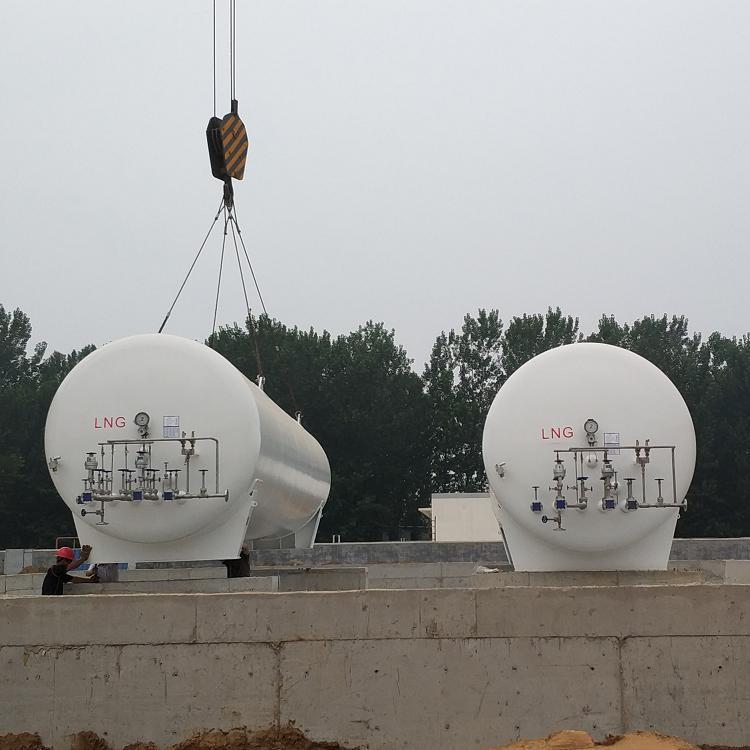
CO2 storage tank spacing rules are typically dictated by relevant safety codes and standards, with specific requirements varying depending on location, usage, and tank capacity factors. Here are some common spacing rules:
- Small spacing between tanks: Generally, the small spacing between adjacent tanks should comply with relevant safety codes and standards. This space ensures that in the event of a leak or accident in one tank, the adjacent tank is not affected.
- Spacing between tanks and buildings: The spacing between tanks and buildings also needs to meet the requirements of relevant codes and standards. This ensures that in the event of a leak or accident in a tank, the building remains unaffected.
- Spacing between tanks and equipment: The spacing between tanks and other equipment (such as pipes, pumps, etc.) should also comply with relevant codes and standards. This space ensures the proper operation and maintenance of the equipment.
- Safety and evacuation routes: Adequate safety and evacuation routes should be provided around and between tanks for safe evacuation of personnel during emergencies.
It is important to note that specific spacing rules may vary depending on different regions and industries. Therefore, when installing and using CO2 storage tanks, it is necessary to refer to local safety codes and standards and consult with experts to ensure compliance with the relevant requirements.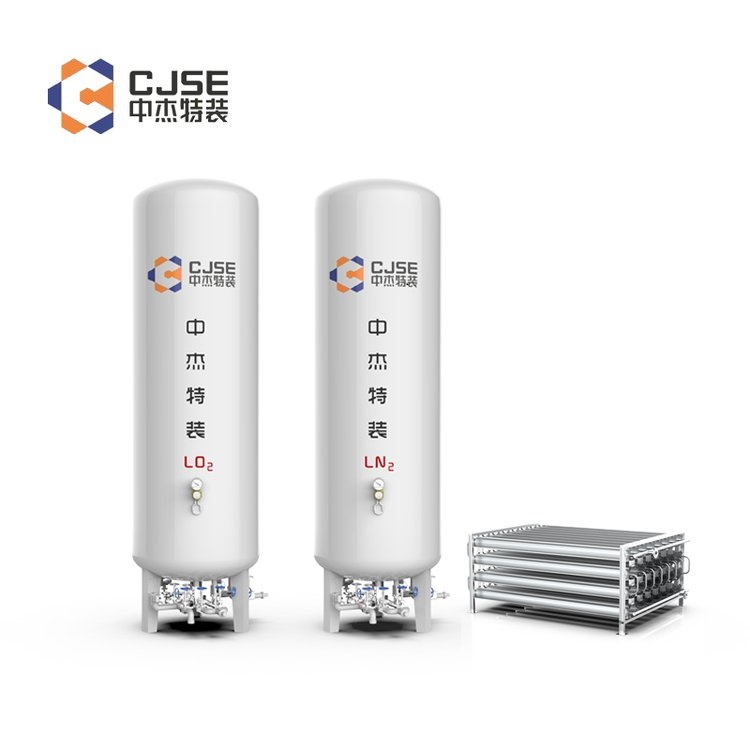
Carbon dioxide tank level gauges are devices used for measuring and monitoring the liquid level of CO2 within the tank. Depending on different working principles and application requirements, common types of CO2 tank level gauges include the following:
- Buoy Level Gauges: Use the buoyancy of a float to indicate the level's height, measured by a mechanical device or electrical signal sensor connected to the float.
- Pressure Level Gauges: Measure the level by utilizing the relationship between liquid pressure and level. The level height is calculated by measuring the pressure changes on a pressure sensor.
- Ultrasonic Level Gauges: Measure the level using the propagation time of ultrasound. An ultrasonic transmitter emits waves, and when the beam encounters the liquid surface, some of the beam is reflected back. The level height is calculated by measuring the reflection time.
- Capillary Level Gauges: Utilize the capillary principle to measure the level. By inserting a thin tube into the liquid, the liquid rises within the tube, and the level height is calculated based on the rise.
- Level Gauges: Measure the level by reflecting waves. The transmitter emits waves, and when the beam hits the liquid surface, some of the beam is reflected back. The level height is calculated by measuring the reflection time.
The application of these level gauges in CO2 tanks can be selected based on specific needs and tank design. When selecting and installing level gauges, factors such as liquid properties, working environment, and precision requirements should be considered, and they must be ensured to match the tank's safe operation and monitoring system.
Carbon dioxide capture and recovery is a technology designed to capture carbon dioxide from industrial emission sources or the atmosphere, storing or utilizing it to reduce CO2 emissions. Here are some common carbon dioxide recovery techniques:
1. Coal-fired power plant CO2 recovery: In coal-fired power plants, the CO2 produced by burning coal can be captured and recovered. Common methods involve carbon capture technologies to separate CO2 from flue gas and then store or utilize it.
2. Industrial emission source CO2 recovery: CO2 produced by many industrial processes can be treated through capture and recovery techniques. For instance, CO2 emitted during the production processes of steel, cement, and chemical industries can be recovered to reduce emissions.
3. Atmospheric CO2 capture: CO2 in the atmosphere can also be recovered using direct air capture technologies. This technique uses adsorbents or chemical reactions to capture and separate CO2 from the atmosphere, followed by storage or utilization.
4. CO2 utilization: Captured CO2 can be used to produce valuable chemicals and fuels. For example, through CO2 catalytic conversion technology, CO2 can be converted into fuels like ethanol or chemicals.
The development of CO2 recovery technologies aims to reduce greenhouse gas emissions and mitigate climate change. However, these technologies are still under development and research, requiring further technological breakthroughs and practical verification for large-scale application.
Zhongjie Special Equipment upholds the grand vision of "realizing employees' dreams, creating value for customers, and striving for the prosperity and strength of our motherland," wholeheartedly commits to the development of green energy equipment, and dedicates high-value products and services to society!
WeChat Official Account

Scan to follow Official Account




















