

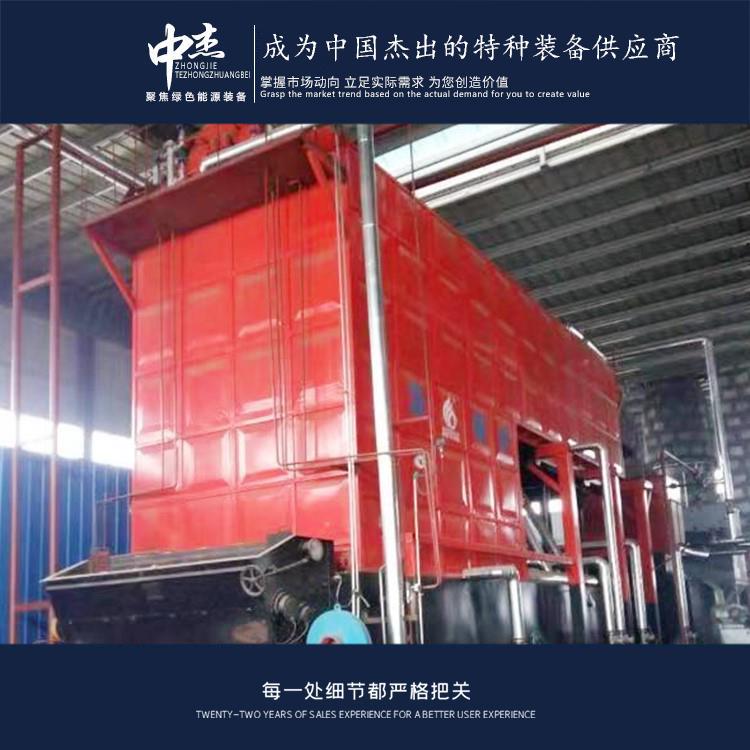

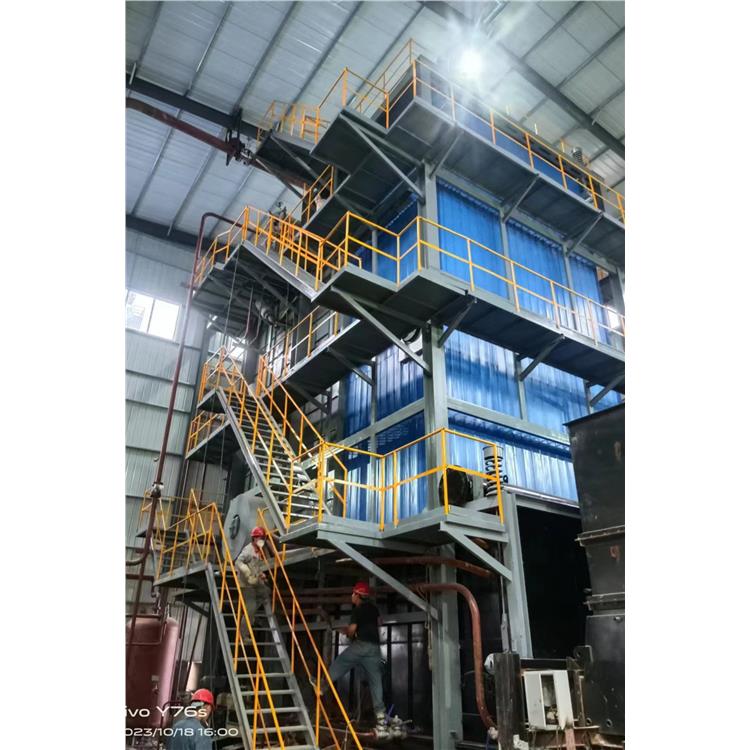



















Shandong Zhongjie Special Equipment (formerly Heze Boiler Factory Co., Ltd.) holds an A-grade boiler manufacturing license, an A2-grade pressure vessel manufacturing license, an A2-grade pressure vessel design license, a B-grade boiler installation license, and GB2/Class and GC2/Class pressure pipeline installation licenses, as well as a mechanical and electrical equipment installation contracting qualification. It is a member of the China Boiler and Water Treatment Association, the China Chemical Equipment Association, and the council member of the Shandong Equipment Manufacturing Association. The company has also passed the ISO9001 Quality Management System, ISO14001 Environmental Management System, OHSAS18001 Occupational Health and Safety Management System certifications, and the ASME/U2 certification.
The reasons for energy conservation in biomass steam boilers mainly include the following points:
Energy Costs: Energy-saving measures can reduce the energy consumption of biomass steam boilers, decrease energy costs, and enhance economic benefits.
Environmental Protection: Energy conservation can reduce carbon dioxide emissions and other pollutants from biomass steam boilers, minimize environmental impact, and protect the ecological environment.
Sustainable Development: Energy conservation extends the lifespan of biomass resources, promotes sustainable development, and reduces dependence on natural resources.
To achieve energy-saving in biomass steam boilers, the following measures can be taken:
Boiler Design Optimization: By optimizing the structural design and combustion system of the boiler, enhance energy utilization efficiency and reduce energy waste.
Optimized Combustion Control: Utilizes advanced combustion control technology to regulate the combustion process, reducing fuel consumption and emissions.
Hot Recovery Utilization: Employing waste heat recovery technology, we harness the thermal energy from boiler flue gas to enhance energy efficiency.
Water Treatment Optimization: Utilize appropriate water treatment techniques to prevent scale and corrosion issues, enhancing the boiler's heat transfer efficiency.
Regular Maintenance: Conduct regular maintenance on biomass steam boilers to keep the equipment in optimal condition, reduce energy loss, and minimize the occurrence of malfunctions.
System Operation Optimization: Through reasonable operation management and control strategies, optimize the operating parameters of biomass steam boilers to enhance system efficiency and stability.
Training and Awareness Enhancement: Strengthen employee training and awareness, boost energy management and conservation awareness, and promote the implementation and continuous improvement of energy-saving measures.
By integrating these measures, energy-saving in biomass steam boilers can be effectively achieved, reducing energy consumption and environmental impact, and enhancing the economic and sustainable performance of the equipment.
Biomass boilers may encounter issues such as ash accumulation and slagging during prolonged operation. These problems can affect the boiler's combustion efficiency and safety. Here are methods to deal with ash accumulation and slagging in biomass boilers:
Regular Cleaning: Regularly cleaning the ash and soot from the boiler is crucial for preventing ash accumulation and scaling. A cleaning schedule can be established based on the boiler's usage, including the combustion chamber, flue, and heat exchanger. During the cleaning process, appropriate tools and cleaning agents should be used to ensure the removal of ash and soot.
Adjust combustion parameters: Properly adjusting the combustion parameters of biomass boilers can reduce the occurrence of ash accumulation and slagging. For instance, adjust combustion temperature, oxygen supply, and combustion time to enhance combustion efficiency and decrease ash and slag formation.
Additives Usage: During biomass combustion, special additives such as ash inhibitor and slagging inhibitor can be added. These additives can reduce the formation of ash and carbon buildup, enhancing the boiler's cleanliness and combustion efficiency. The use of additives should be based on specific conditions and manufacturer recommendations.
Regular Inspections and Maintenance: Regularly inspect and maintain all components of the biomass boiler, including burners, fans, flues, and heat exchangers, to promptly identify and address issues like ash accumulation and fouling. During inspections, you can clear clogged parts and repair damaged components, ensuring the boiler operates smoothly.
Be mindful that dealing with biomass boiler ash and slagging issues requires a case-by-case approach. Consult with boiler maintenance personnel or manufacturers for more detailed and accurate advice. Additionally, regular cleaning and maintenance are crucial for preventing ash and slagging problems.
When selecting biomass boilers, pay attention to the following factors:
Fuel Adaptability: Different types of biomass boilers are suitable for various fuels, such as wood chips, straw, and waste crops. When selecting a biomass boiler, consider the availability and cost of the required fuel to ensure the boiler can accommodate the fuel type being used.
Boiler Power and Heat Load: Select an appropriate biomass boiler power based on the heating area and heat load required. An undersized boiler power may not meet the heating needs, while an oversized one will result in energy waste.
Combustion Efficiency: Combustion efficiency is a critical indicator of a boiler's energy utilization efficiency. Choosing biomass boilers with high combustion efficiency can reduce energy consumption and carbon emissions.
Equipment Quality and Reliability: Choose a biomass boiler manufacturer with an excellent reputation to ensure the equipment is of high quality, reliable, and operates stably, reducing the cost of breakdowns and maintenance.
Environmental Performance: Focus on the environmental performance of biomass boilers, including emission standards and flue gas treatment systems. Chosen boilers reduce environmental pollution.
Control systems and automation level: The control systems and automation level enhance the operational efficiency and stability of biomass boilers, reducing labor operation and management costs.
After-sales Service and Technical Support: Choose suppliers with excellent after-sales service and technical support to ensure timely access to technical assistance and repair services during use.
In summary, when selecting biomass boilers, consider fuel adaptability, boiler power and heat load, combustion efficiency, equipment quality and reliability, environmental performance, control systems, and level of automation.
The emission characteristics of biomass fuel boiler flue gases mainly include the following aspects:
Particulate Emissions: During the combustion process of biomass fuel boilers, particulates are produced, including visible dust and fine particles. The amount of particulate emissions is related to fuel characteristics, combustion temperature, and combustion equipment, among other factors. Generally, particulate emissions from biomass fuel boilers are lower than those from coal boilers, but they still require treatment through dust removal equipment.
(SO2) Emissions: The content of SO2 in biomass fuel is low, so the SO2 emissions from biomass fuel boilers are generally low. However, in some cases, such as using waste as fuel, the SO2 emissions may increase. Measures such as combustion control and desulfurization devices can be adopted to control SO2 emissions.
NOx Emissions: The NOx emissions from biomass fuel boilers are related to factors such as fuel characteristics, combustion temperature, and combustion equipment. Biomass fuel contains a higher nitrogen content, which generates a certain amount of NOx during combustion. To control NOx emissions, measures such as low-NOx combustion technology, combustion control, and denitrification devices can be adopted.
(CO) Emissions: Carbon monoxide (CO) emissions from biomass fuel boilers are typically low due to the relatively complete combustion process of biomass fuel. However, in cases of incomplete combustion or unstable burning, CO emissions may increase. To control CO emissions, it is necessary to ensure a thorough and stable combustion process.
Volatile Organic Compounds (VOCs) Emissions: The VOCs emissions from biomass fuel boilers are related to the fuel characteristics and combustion conditions. Some biomass fuels contain volatile organic compounds.
Our company highly values technological innovation and R&D, boasting one municipal-level enterprise technology center in Heze City. We have established testing facilities for non-destructive testing, physical and chemical testing, welding testing, hydrostatic testing, and more. We are equipped with over 600 pieces of various instruments and equipment, including CNC machine tools, X-ray flaw detectors, digital ultrasonic flaw detectors, mechanical property testing machines, chemical analyzers, spectrometers, tensile testing machines, plasma welding machines, and more. The key products and technologies we have developed, such as temperature and pressure vessel welding, biomass boiler emission reduction, and waste heat utilization, have successively been selected for multiple Shandong Provincial Department of Industry and Information Technology science and technology innovation projects, Shandong Provincial key projects, and Heze City innovation and excellence projects. We have cumulatively obtained 27 authorized utility models, 16 authorized inventions, participated in drafting 2 standards, 2 industry standards, and registered 15 trademarks. Our technical team, in collaboration with Professor Yajiang Li of Shandong University, has developed deep cryogenic vessel processing technology using the international plasma arc + filler wire tungsten inert gas arc combination welding (PAW-GTAW) technology. After provincial-level scientific and technological achievement appraisals, the technology level has reached international standards in the field of deep cryogenic vessel manufacturing. Choose Zhongjie Special Equipment, and let's create brilliance together!
WeChat Official Account

Scan to follow Official Account