


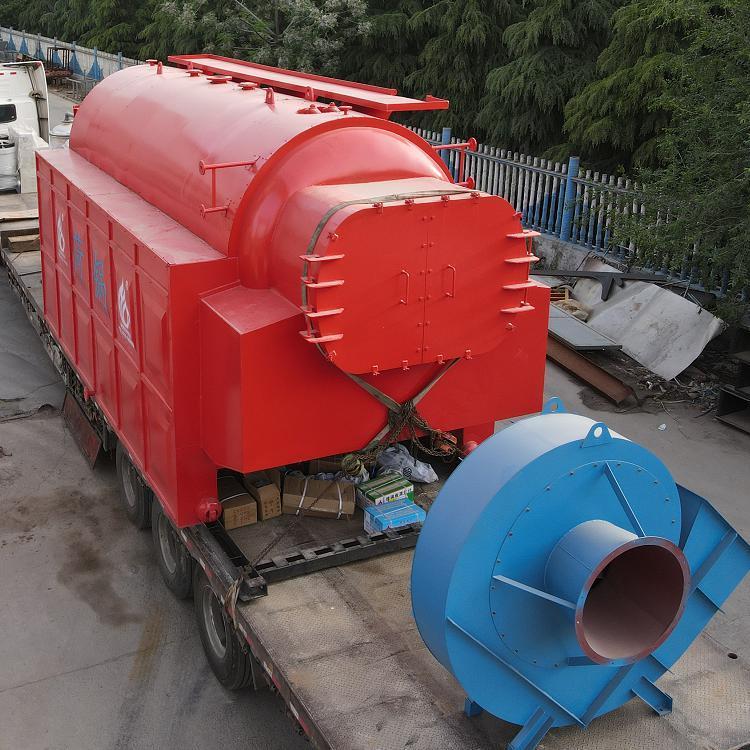



















Shandong Zhongjie Special Equipment (formerly Heze Boiler Factory Co., Ltd.) holds an A-grade boiler manufacturing license, an A2-grade pressure vessel manufacturing license, an A2-grade pressure vessel design license, a B-grade boiler installation license, and GB2/Class and GC2/Class pressure pipeline installation licenses, as well as a mechanical and electrical equipment installation contracting qualification. It is a member of the China Boiler and Water Treatment Association, the China Chemical Equipment Association, and the council member of the Shandong Equipment Manufacturing Association. The company has also passed certifications for the ISO9001 Quality Management System, ISO14001 Environmental Management System, OHSAS18001 Occupational Health and Safety Management System, and the American ASME/U2 certification.
The DZH steam boiler is a manually fired solid fuel boiler featuring the following technical characteristics:
Firing Method: The DZH steam boiler utilizes a manual firing method, where the operator manually feeds fuel and adjusts the combustion process. This method is relatively simple and flexible, suitable for small to medium-sized applications.
Multiple Fuel Adaptability: The DZH steam boiler boasts strong fuel adaptability, capable of burning solid fuels such as wood chips, straw, etc. This feature allows the DZH steam boiler to be widely used in various regions and under different fuel resource conditions.
Furnace Structure: The DZH steam boiler features a double-chamber furnace structure, with a partition between the combustion chambers. This design enhances the temperature and combustion efficiency of the chambers, thereby improving thermal efficiency.
Flue Channels: The DZH steam boiler features a spiral flue tube design for its flue channels, which increases the contact area between flue gas and water, enhancing heat exchange efficiency. Additionally, a flue gas reversal chamber is incorporated within the flue channels, allowing the flue gas to circulate multiple times within the furnace, thereby increasing the residence time of the flue gas and improving combustion efficiency.
Safety Protection: The DZH steam boiler is equipped with various safety devices such as pressure controllers, water level controllers, and overheat protectors, ensuring the safe operation of the boiler.
Compact Structure: The DZH steam boiler features a compact structure with minimal floor space, making it ideal for installation in limited areas.
In summary, the DZH steam boiler boasts strong fuel adaptability, flexible operation, and high thermal efficiency, making it suitable for small to medium-sized solid fuel steam demand scenarios.
Biomass boilers can achieve energy conservation and emission reduction in the following ways:
Combustion Technology: The biomass boiler utilizes advanced combustion technologies such as fluidized bed combustion and pellet combustion, which enhance combustion efficiency, ensuring more thorough fuel utilization, and reduce energy waste.
Recovery of Heat Energy: Biomass boilers generate a large amount of heat energy during the combustion process, which can be recovered and utilized through a flue gas waste heat recovery system. For instance, by using a flue gas waste heat boiler or a flue gas heat exchanger, the heat energy in the flue gas can be converted into hot water, steam, or other forms of heat energy, enhancing energy utilization efficiency.
Control combustion parameters: Biomass boilers can achieve optimal combustion effects by controlling parameters such as combustion temperature and oxygen supply. Reasonable combustion parameters can enhance combustion efficiency and reduce fuel consumption and emissions.
Fuel Quality Control: Selecting biomass fuels in quantity with high dryness and low ash content can enhance combustion efficiency and reduce the generation of ash and pollutants.
Regular maintenance and cleaning: Regular maintenance and cleaning of biomass boilers are essential to remove ash and carbon deposits from the combustion chamber and flue, ensuring the boiler operates and burns efficiently.
Our control system: Utilizes an automatic control system, capable of real-time monitoring and adjustment of the biomass boiler's operating status, ensuring stable combustion processes.
Through these measures, biomass boilers can achieve energy conservation and emission reduction, enhance energy utilization efficiency, decrease carbon emissions and the generation of pollutants, and be more environmentally friendly.
Biomass fuel boilers may encounter the following issues during operation:
Fuel quality inconsistency: The quality of biomass fuel is affected by factors such as raw material source, processing methods, and storage conditions, leading to inconsistent fuel quality. Inconsistent fuel quality may affect combustion efficiency and the stable operation of boilers.
Ash disposal issue: Biomass fuel generates a substantial amount of ash during combustion, including waste, ash content, and unburnt materials. The handling and disposal of ash may pose environmental pollution and cost concerns.
High-Temperature Corrosion: Ash and elements like chlorine in biomass fuel are prone to cause corrosion at high temperatures, damaging the metal components of boilers. Measures need to be taken to protect and treat against high-temperature corrosion issues.
Low combustion efficiency: The combustion characteristics of biomass fuel differ from traditional fossil fuels, potentially leading to lower combustion efficiency. It is necessary to optimize the combustion system and control strategies to enhance combustion efficiency and reduce energy waste.
Gas emissions from combustion: The combustion of biomass fuel produces certain gas emissions, such as carbon dioxide, nitrogen oxides, and particulates. These emissions have an impact on the environment and air quality, and appropriate control measures must be taken.
Transportation and Storage Costs: The transportation and storage costs for biomass fuels are high, especially for areas far from the source of supply. This may increase the operational costs of biomass fuel boilers.
In summary, biomass fuel boilers face issues such as inconsistent fuel quality, ash and slag disposal, and high temperatures.
Possible reasons for the black smoke produced by biomass boiler combustion may include:
Incomplete combustion: Inadequate oxygen supply or insufficiently high combustion temperatures in biomass fuel can lead to incomplete combustion, resulting in a large amount of smoke and soot. This may be caused by poor combustion chamber ventilation, poor fuel quality, or improper settings of combustion parameters.
High moisture content: Excessive water content in biomass fuel leads to the evaporation of a large amount of steam during combustion, lowering the combustion temperature, thereby affecting combustion efficiency and resulting in the production of black smoke.
Fuel Quality Issue: If biomass fuel contains impurities, ash, or uneven moisture, it can affect the combustion process, leading to incomplete combustion and the production of black smoke.
Combustion equipment issues: If the biomass boiler's combustion equipment has malfunctions or wear, such as slagging in the combustion chamber or clogging of the burners, it will affect the combustion efficiency and lead to the production of black smoke.
To reduce the emission of black smoke, the following measures can be taken:
Ensure adequate oxygen supply: Adjust the ventilation system of the combustion equipment to ensure sufficient oxygen supply, enhance combustion efficiency, and reduce the production of black smoke.
Control combustion temperature: Adjust combustion parameters, such as combustion temperature and duration, to ensure complete fuel combustion and reduce the production of black smoke.
Optimize Fuel Quality: Select biomass fuel in appropriate quantities, ensuring consistent dryness and quality, reducing moisture content and impurities, and enhancing combustion efficiency.
Regular Maintenance: Perform regular maintenance on biomass boilers to clean the combustion chamber, burners, and other components, ensuring the equipment operates smoothly and reduces the production of black smoke.
Install Pollutant Control Equipment: As required, install flue gas purification equipment such as dust collectors and desulfurization devices, effectively removing particles generated during the combustion process.
ZJ Special Equipment adheres to the great vision of "realizing employees' dreams, creating customer value, and striving for the prosperity and strength of our motherland," and is dedicated to the development of the green energy equipment industry. We commit to society with high-quality products and services at competitive prices!
WeChat Official Account

Scan to follow Official Account




















