


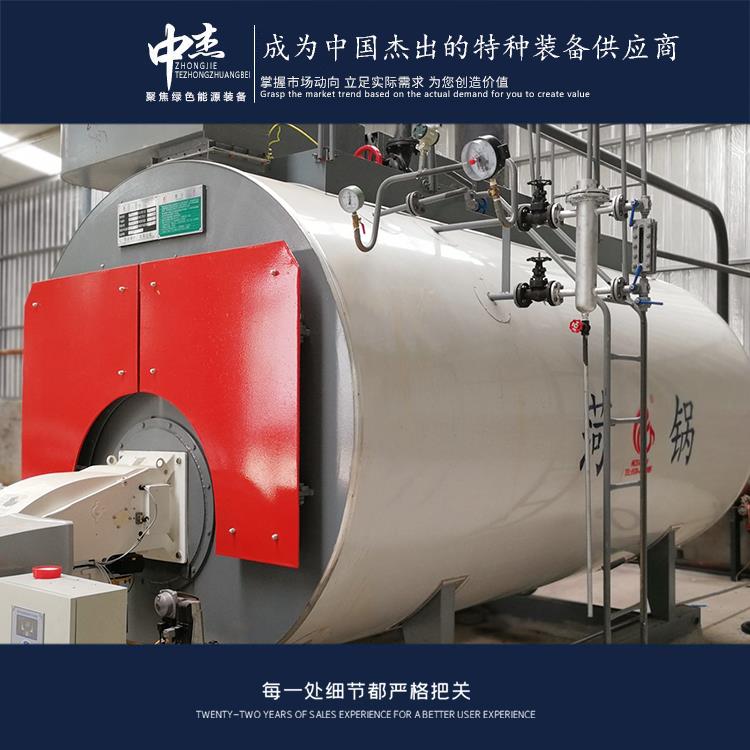



















Shandong Zhongjie Special Equipment (formerly Heze Boiler Factory Co., Ltd.) holds an A-grade boiler manufacturing license, an A2-grade pressure vessel manufacturing license, an A2-grade pressure vessel design license, B-grade boiler installation and GB2, GC2 pressure pipeline installation licenses, as well as equipment and machinery installation contracting qualifications. It is a member of the China Boiler and Water Treatment Association, the China Chemical Equipment Association, and a director unit of the Shandong Equipment Manufacturing Association. The company has also passed the ISO9001 Quality Management System, ISO14001 Environmental Management System, OHSAS18001 Occupational Health and Safety Management System certifications, and the American ASME/U2 certification.
A thermal oil furnace fueled by gas utilizes thermal oil to transfer heat energy. Its features include:
- High thermal efficiency: Using thermal oil as the heat transfer medium, these furnaces have high heat transfer efficiency due to the high thermal conductivity and stability of the oil, enabling rapid heat transfer and improved energy utilization.
- Temperature control: The furnace can control working temperature by regulating gas supply and thermal oil circulation, catering to various process and production requirements, enhancing production efficiency and product quality.
- Safety and reliability: Employing a closed-loop system, combustion occurs in a sealed environment, minimizing the risk of gas leaks. Additionally, with a high flash point and ignition point, the combustion process is relatively safe and reliable.
- Versatility: Suitable for various industrial fields like chemicals, textiles, and food processing, these furnaces can adapt to different process demands and working conditions, offering strong flexibility.
- Environmental and energy-saving: Emissions during combustion are relatively low, causing minimal environmental pollution. With high thermal efficiency and temperature control, these furnaces can save energy and reduce energy costs.
- It is important to note that regular inspections and maintenance are necessary for the furnace during operation to ensure proper functioning and extend its service life. Additionally, selecting the appropriate model and supplier is crucial for ensuring the furnace's characteristics and performance.
To achieve sensitive and energy-efficient performance in gas-fired hot water boilers, the following measures can be taken:
- Regular Maintenance and Cleaning: Conduct regular maintenance and cleaning of the gas-fired hot water boiler, including cleaning the burner, flue, and heat exchanger components. This ensures the efficiency of the combustion process and heat transfer, reducing energy waste.
- Intelligent Control System: Install an intelligent control system that regulates temperature and pressure to automatically adjust and optimize the operation of the gas-fired hot water boiler. The intelligent control system can adjust the burner's operating status based on actual needs, avoiding excessive heating and energy waste.
- Energy-Saving Equipment and Technology: Utilize energy-saving equipment and technology, such as heat recovery units and flue gas waste heat utilization systems. These devices and technologies can recover and utilize the excess heat in the flue gas emitted by the boiler, improving energy utilization efficiency.
- Water Quality Management: Manage the water quality of the gas-fired hot water boiler appropriately to prevent the accumulation of scale and dirt. Scale and dirt reduce the heat transfer efficiency of the heat exchanger and increase energy consumption. Regular water quality testing and treatment help maintain clean water quality, enhancing the boiler's energy efficiency.
- Good Insulation and Sealing: Ensure that the gas-fired hot water boiler has good insulation and sealing properties. The selection and maintenance of insulation materials, as well as the sealing of pipes and valves, can reduce heat loss and improve the boiler's energy efficiency.
- Regular Monitoring and Optimization: Regularly monitor the operation of the gas-fired hot water boiler, analyze energy consumption and efficiency indicators. Based on the monitoring results, make optimization adjustments to improve the boiler's energy efficiency.
- By applying a comprehensive set of these measures, gas-fired hot water boilers can achieve sensitive energy efficiency, enhancing energy utilization.
The necessity of flow control in thermal oil furnaces is primarily reflected in the following aspects: Heat transfer efficiency: The efficiency of heat transfer in thermal oil furnaces is closely related to the flow rate of the thermal oil. An appropriate flow rate ensures the full transfer of heat in the heat exchanger, enhancing the efficiency of heat utilization. An excessively low flow rate may result in insufficient heat exchange, affecting the heat transfer effect; conversely, a high flow rate can increase energy consumption and operating costs. Temperature control: The flow control of thermal oil furnaces is also closely linked to temperature control. By adjusting the flow rate of the thermal oil, the internal temperature of the furnace can be controlled to ensure stable operation within the set working temperature range. An overly low flow rate can lead to excessive temperatures, while a high flow rate can cause temperatures to drop, both affecting normal equipment operation. System stability: An appropriate flow rate of thermal oil can enhance system stability. Flow control can balance the supply and demand of heat energy, preventing overheating or undercooling, and maintaining stable system operation. Stable operation aids in extending the lifespan of equipment and reducing the frequency of failures and maintenance. Safety: Flow control in thermal oil furnaces is also crucial for safety. Proper flow control can prevent excessive accumulation of thermal oil in the system, reducing the risks of leakage and explosion. Additionally, flow control ensures the system pressure remains within safe limits, avoiding overpressure and other safety issues. In summary, flow control in thermal oil furnaces is necessary for improving heat transfer efficiency, temperature control, system stability, and safety. Reasonable flow control can optimize the operation of thermal oil furnaces, enhance energy utilization efficiency, reduce operating costs, and ensure safe and stable operation of the equipment.
Safety requirements for steam boiler valves mainly include the following aspects: Valve Selection: Choose valve types and specifications suitable for steam boilers. Valves should meet relevant standards and specifications, and possess characteristics such as high-temperature resistance, pressure resistance, and corrosion resistance. Valve Installation: Valves should be correctly installed in the corresponding positions on the steam boiler. During installation, ensure that the connections are secure, the seals are reliable, and leaks and loose connections are prevented. Valve Operation: The operation of the valve should be convenient, flexible, and capable of accurately controlling steam flow and pressure. The operating handle or device should indicate the direction of valve opening and closing, as well as the corresponding operation method. Valve Sealing: The sealing performance of the valve is crucial. Valves should have good sealing properties to prevent steam leakage and energy loss. The sealing surfaces should be flat, smooth, and able to withstand high temperatures and wear. Valve Maintenance: Regularly inspect and maintain valves to ensure their normal operation and safety performance. This includes cleaning the valve, checking the sealing surfaces, lubricating moving parts, and promptly repairing or replacing damaged components. Safety Valve: A safety valve must be installed on the steam boiler to protect its safe operation. The safety valve should meet relevant standards and specifications and should be capable of automatically opening and releasing over-pressure steam when exceeding the set pressure, preventing boiler explosion. Valve Identification: Valves should be marked with their type, specifications, working pressure, and flow rates, etc. This helps operators correctly identify and operate the valves, avoiding incorrect operation and accidents. It should be noted that the above safety requirements are general guidelines; specific safety requirements should be determined according to the type, scale, and operating environment of the steam boiler. When using valves, follow relevant laws, regulations, and safety operation procedures to ensure safe and effective control of the valves.
ZJ Special Equipment upholds the grand vision of "realizing employees' dreams, creating customer value, and striving for the prosperity and strength of our motherland," and is dedicated to the development of green energy equipment. We commit to society with high-quality products and services at competitive prices!
WeChat Official Account

Scan to follow Official Account




















