

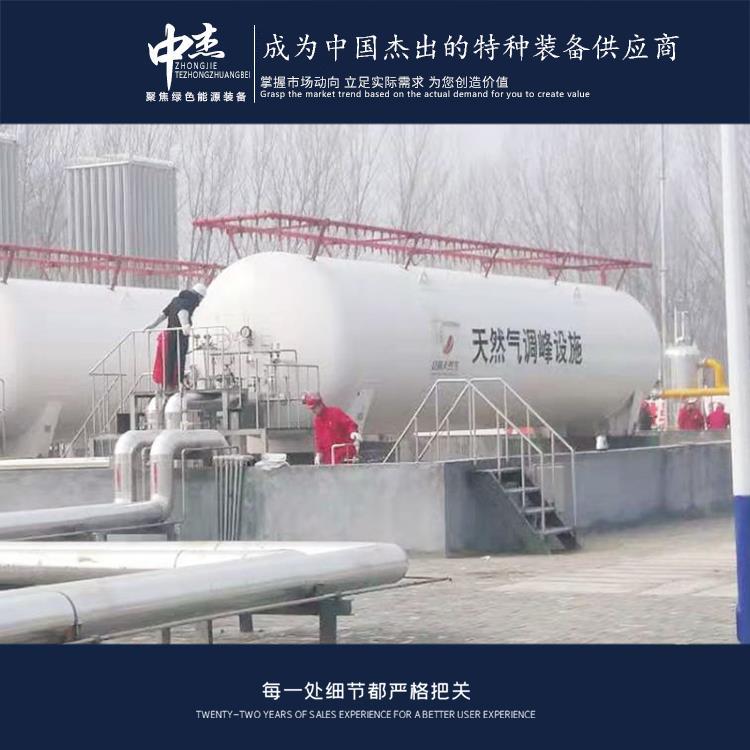



















Shandong Zhongjie Special Equipment (formerly Heze Boiler Factory Co., Ltd.) holds an A-grade boiler manufacturing license, A2-grade pressure vessel manufacturing license, A2-grade pressure vessel design license, B-grade boiler installation license, GB2 and GC2 class pressure pipeline installation licenses, and mechanical and electrical equipment installation contracting qualifications. It is a member of the China Boiler and Water Treatment Association, the China Chemical Equipment Association, and the Council Member of the Shandong Equipment Manufacturing Association, and has passed the ISO9001 Quality Management System, ISO14001 Environmental Management System, OHSAS18001 Occupational Health and Safety Management System certifications, as well as the American ASME/U2 certification.
Consider the following aspects to distinguish the quality of liquid nitrogen storage tanks:
Material: Liquid nitrogen storage tanks are typically made from high-strength, corrosion-resistant materials such as stainless steel or aluminum alloy. These materials offer excellent corrosion resistance and mechanical strength, ensuring the tank's long-term stable operation.
Sealability: The liquid nitrogen storage tank should have excellent sealing performance, effectively preventing any leakage of liquid nitrogen. The valves, pipe connections, and other parts of the tank should be designed reasonably to ensure reliable sealing.
Insulation: Liquid nitrogen tanks should have excellent insulation properties to minimize evaporation loss. The insulation layer of the tank should use materials like polyethylene foam to reduce heat conduction and evaporation loss.
Safety: Liquid nitrogen storage tanks should possess excellent safety performance, including the installation of safety valves, pressure gauges, and other safety equipment, as well as features like fire resistance and explosion-proof. The design and manufacture of the tanks should comply with relevant safety standards and regulations.
Service Life: Liquid nitrogen tanks generally have a long service life, capable of withstanding long-term use and transportation. The manufacturer and reputation of the tank are also significant factors in assessing service life.
Price and After-Sales Service: The price of liquid nitrogen tanks should be reasonable, and excellent after-sales service is provided. Choosing manufacturers or suppliers with a good reputation and reliable after-sales service ensures high-quality products and technical support.
Considering these factors, the quality of liquid nitrogen tanks can be discerned. When selecting a liquid nitrogen tank, it is recommended to choose one that meets the requirements based on actual needs and usage environment, to ensure safe and reliable storage of liquid nitrogen.
When initially using a liquid nitrogen tank, there are some precautions to consider for safe and effective operation. Here are some suggested precautions:
Safe Operation: Liquid nitrogen is a low-temperature liquid with strong refrigerating and asphyxiating effects. When handling liquid nitrogen tanks, it is mandatory to wear appropriate personal protective equipment, such as insulated gloves and protective suits. Avoid direct contact with liquid nitrogen to prevent injury or harm.
Ventilation Environment: Liquid nitrogen evaporation produces a large amount of gas, which may displace other gases, resulting in a decrease in oxygen content in the air. Therefore, when using liquid nitrogen tanks, it is essential to ensure that the operational area is well-ventilated to prevent oxygen deficiency.
Tank Inspection: Prior to the first use of the liquid nitrogen tank, a thorough visual and seal inspection is required. Ensure there are no obvious damages, leaks, or other safety hazards. If any issues are found, they should be addressed promptly by repairing or replacing the tank.
Tanks Filling: Prior to the initial use of the liquid nitrogen tank, it is necessary to fill it with liquid nitrogen. During the filling process, adhere to the correct operational steps and safety protocols to ensure the filling is safe and reliable. Additionally, be mindful to control the filling speed and pressure to prevent excessive tank pressure and temperature increase.
Labeling and Record Keeping: Prior to the initial use of the liquid nitrogen tank, relevant information should be labeled on the tank, such as the storage medium, capacity, manufacturing date, etc. It is also recommended to establish a tank usage record, including filling dates, filling quantities, usage details, etc., for future tracking and management.
Note that the use of liquid nitrogen tanks involves safety risks such as low temperatures and high pressures. Operators should receive training and strictly adhere to the relevant operational procedures and safety measures. If unfamiliar with the operation or have doubts, it is recommended to consult experts or relevant institutions for guidance.
The spacing regulations between liquid oxygen storage tanks are typically governed by relevant safety standards and specifications to ensure safe distances and fire separations between tanks. Below is a reference to general spacing rules for liquid oxygen storage tanks:
Horizontal spacing between tanks: The horizontal spacing between liquid oxygen tanks is typically required to maintain a certain distance to prevent heat transfer and mutual influence between tanks. The specific spacing distance should be determined based on factors such as tank capacity, pressure, and arrangement, with a general recommendation to maintain a safe distance to ensure safe operation and maintenance between tanks.
Tank and building or facility spacing: The spacing between liquid oxygen tanks and buildings, other facilities must also meet relevant safety requirements. This is to prevent the tanks from causing danger to surrounding buildings or facilities in the event of a leak or accident. Specific spacing requirements will be determined based on factors such as the tank's capacity, pressure, and surrounding environment, with a general recommendation to maintain a certain safety distance.
Fire separation: It is crucial to maintain fire separation between liquid oxygen tanks and between tanks and buildings. Liquid oxygen has a high oxygen content and is highly flammable, which may cause fires upon leakage or accidents. Therefore, liquid oxygen tanks must maintain a certain fire separation from other facilities to ensure that fires do not spread or pose a danger to the surrounding environment.
Note that specific liquid oxygen tank spacing regulations may vary by region or industry. When designing, arranging, and operating liquid oxygen tanks, adhere to local safety standards and regulations, and consult with experts for accurate guidance.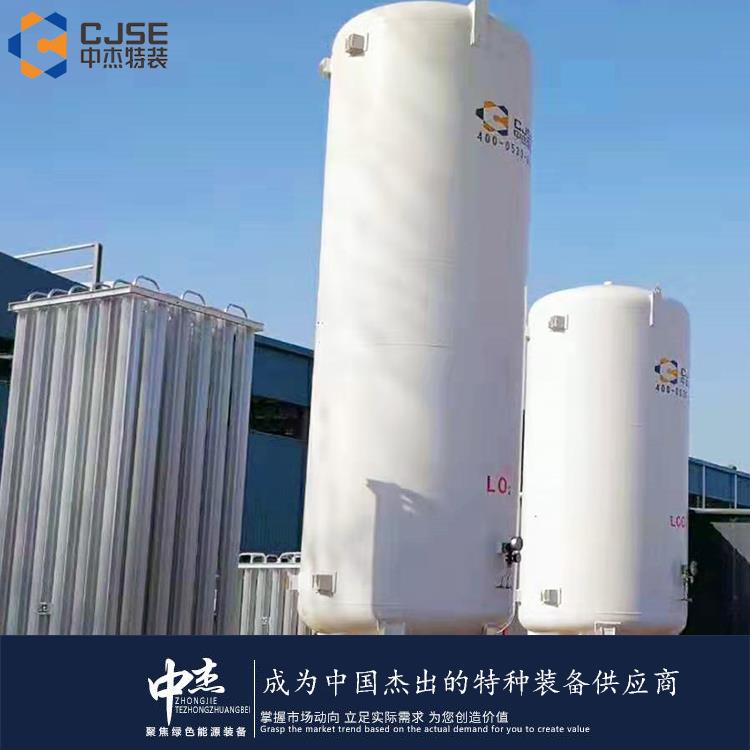
The safety distance between liquid oxygen storage tanks and buildings is typically specified by relevant safety standards and regulations to ensure a safe distance and fire separation between them. The following is a general reference for the safety distance between liquid oxygen storage tanks and buildings:
Horizontal clearance: The horizontal distance between the liquid oxygen tank and the structure is typically required to maintain a certain distance to prevent the tank from causing danger to the structure in case of leakage or accidents. The specific distance should be determined based on factors such as the tank's capacity, pressure, and the nature of the structure, with a general recommendation to maintain a safe distance.
Vertical spacing: The vertical spacing between the liquid oxygen storage tank and the building must also comply with relevant safety requirements. This is to prevent any danger to the building in case of tank leakage or accidents. Specific spacing requirements will be determined based on factors such as the tank's capacity, pressure, and the height of the building, with a general recommendation to maintain a certain safety distance.
Fire Protection Distance: Liquid oxygen has a high oxygen content and flammability, and in the event of a leak or accident, it may cause a fire. Therefore, a certain fire protection distance must be maintained between the liquid oxygen storage tank and the building to ensure that the fire does not spread or pose a danger to the building. Specific fire protection distance requirements
Zhejiang Zhetong Special Equipment adheres to the great vision of "realizing employees' dreams, creating customer value, and striving for the prosperity and strength of our motherland," and is dedicated to the development of green energy equipment. We commit to society with high-quality products and services at competitive prices!
WeChat Official Account

Scan to follow Official Account