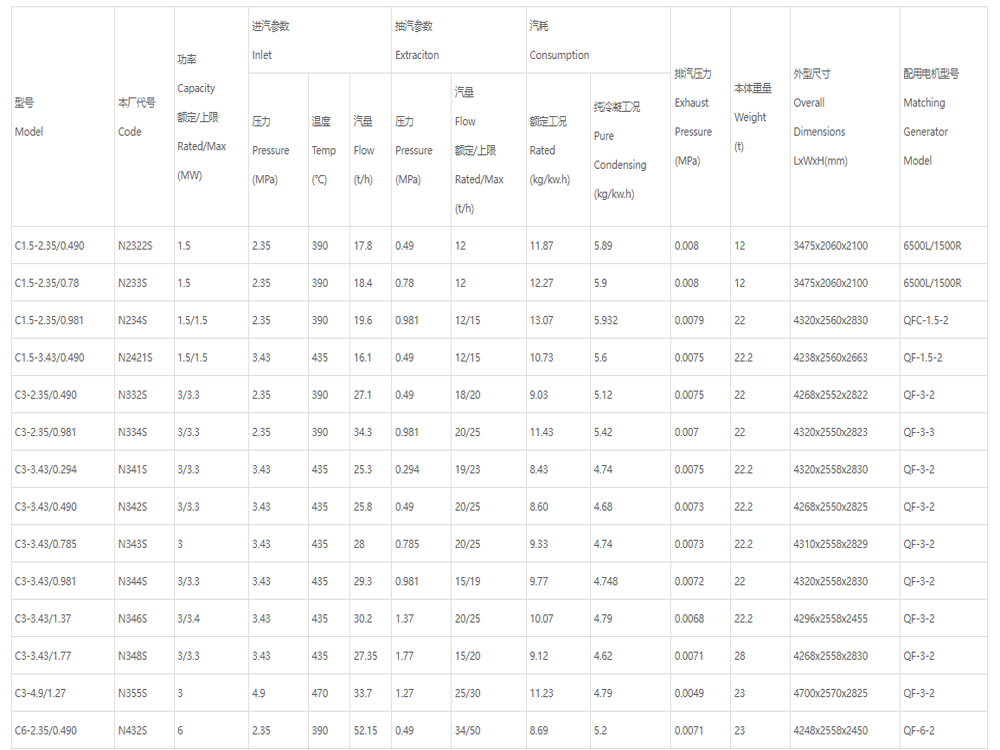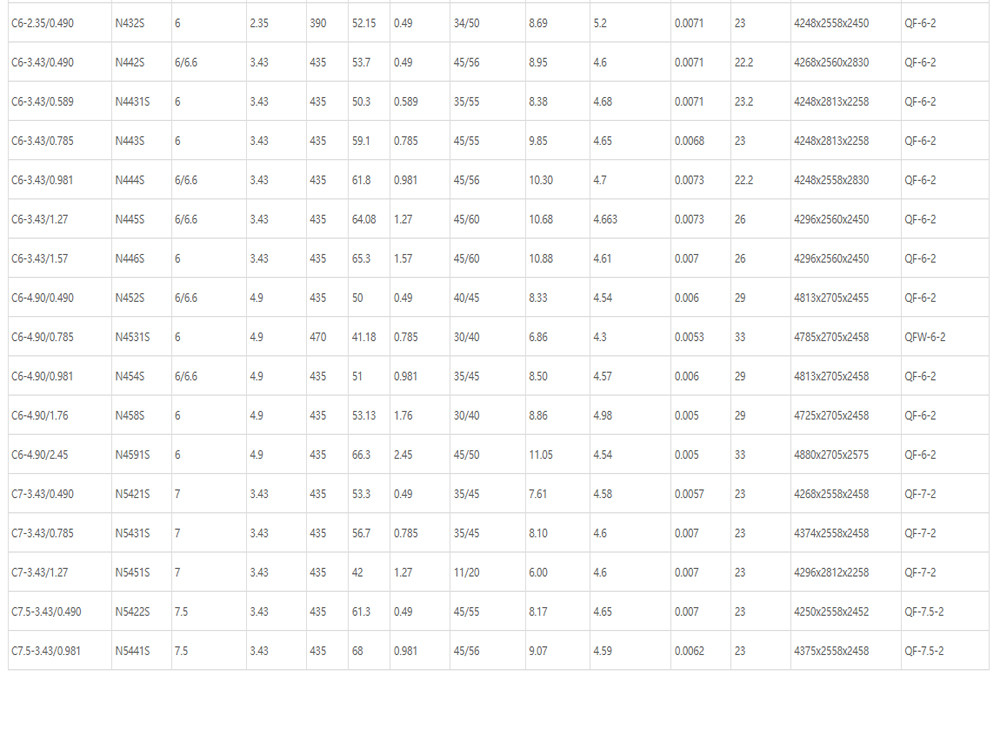

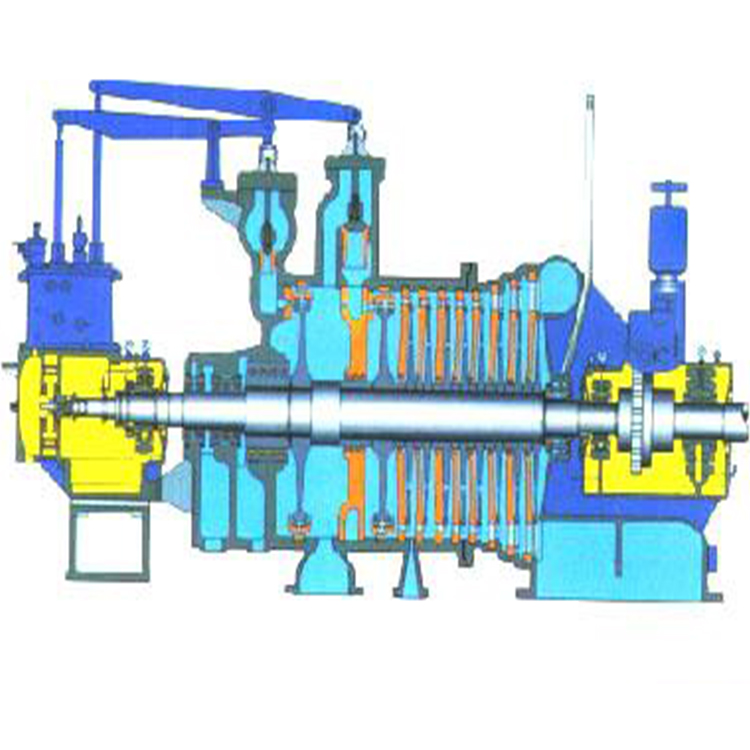















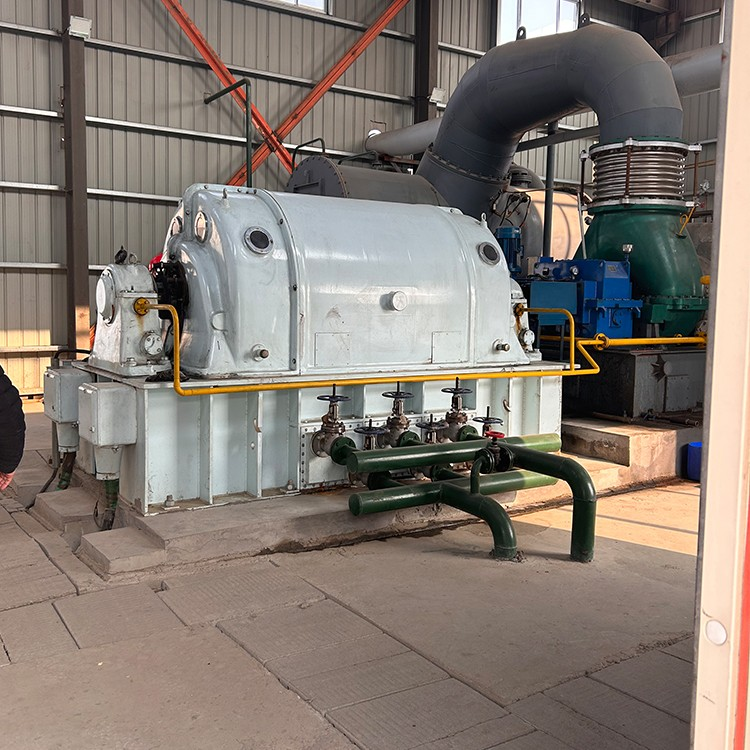

A condensing steam turbine refers to a turbine that extracts a portion of steam from the intermediate stage to supply users, meaning it generates electricity while also providing heating. It can be designed as a single-regulation extraction or double-regulation extraction turbine based on user requirements.
A single adjustment of a once-through steam turbine
Also known as a single-extraction steam turbine. It consists of a high-pressure section and a low-pressure section, essentially a combination of a back-pressure turbine and a condensing turbine. The new steam enters the high-pressure section to do work, expands to a certain pressure, and then splits into two streams: one extracted to supply heat users, and the other entering the low-pressure section to continue expanding and doing work before being discharged into the condenser.
Double-regulation extraction steam turbine
Also known as a two-extraction steam turbine. It can meet the heat loads with different parameters simultaneously. The entire turbine is divided into three sections: high, medium, and low pressure. New steam enters the high-pressure section to do work, expands to a certain pressure, and extracts part of the steam to supply heat to the user; the other part enters the medium-pressure section, continues to expand and do work, then extracts more steam for heating, and the remaining steam is discharged into the condenser through the low-pressure section.
Turbine structural characteristics
Structural Form: Quick Assembly Multi-Stage Steam Turbine
Laying Method: Double-layer
Mechanical speed regulation: Full hydraulic adjustment
Electronic Speed Control (Domestic or Imported): Electro-hydraulic speed controller, four-in-one control, detection, and protection system speed controller
Over-speed Protection: Mechanical flywheel protection and electromagnetic valve electronic intelligent control
Steam seal type: Stainless steel blade labyrinth steam seal, honeycomb contact steam seal
Main Valve: Integrated Automatic Main Valve (Quick Closing Regulating Combination Valve)
Main shaft assembly: Variable speed impeller blades, sleeve fit rotor and impeller set
Lubrication System: Oil lubrication (equipped with a joint lubrication station)
Thermal Expansion Compensation: The front bearing support is equipped with sliding thermal compensation
Electrical Configuration: Complete control cabinet, protective cabinet, main control cabinet, and matching domestic generators (voltage 400-6300-10050V).
Chassis Turning Method: Manual or Electric