


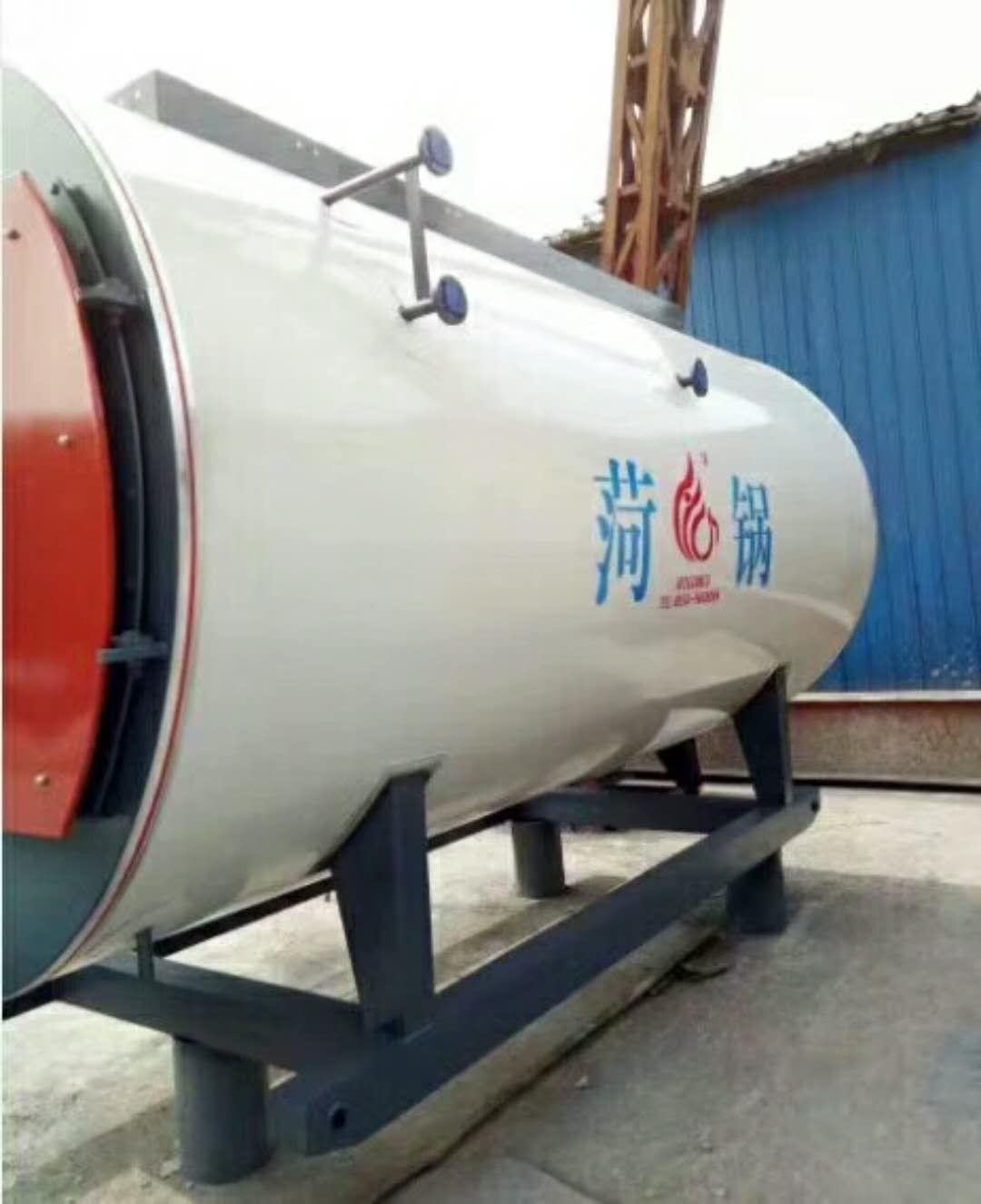


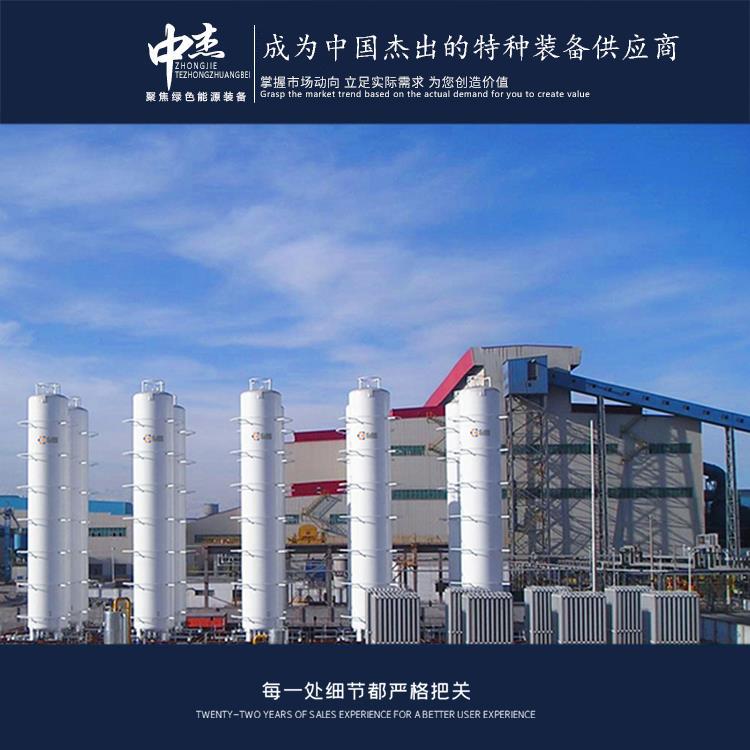



















Shandong Zhongjie Special Equipment's main products include: fuel (gas) boilers, organic heat carrier boilers, biomass boilers, waste heat recovery boilers, and other boiler products; vacuum insulation cryogenic pressure vessels such as LNG tanks, oxygen-nitrogenargon tanks, and CO2 tanks; pressure vessel products like denitrification engineering equipment, heat storage and energy storage equipment, and complete chemical equipment sets; central air conditioning and ventilation equipment such as ground (water) source heat pumps, air source units, water-cooled screw units, and air-cooled modular units. Planned products include large-scale energy centers, LNG transport vehicles, LNG tank containers, and other green energy equipment.
When planning CO2 storage tanks, the following requirements should be considered:
- Safety Distance: Tanks should maintain adequate safety distances from surrounding buildings, equipment, and personnel to prevent injuries and losses in case of accidental incidents. Specific safety distance requirements can be determined based on local regulations and standards.
- Tank Capacity: Determine the tank's capacity based on actual needs and usage. The capacity selection should consider factors such as CO2 usage, storage duration, and supply requirements.
- Tank Layout: The layout should facilitate operation and maintenance while meeting safety and environmental protection requirements. Sufficient spacing between tanks should be ensured for ease of operation and maintenance.
- Tank Material: Choose appropriate materials for tank construction to ensure corrosion and pressure resistance. Common materials include carbon steel and stainless steel.
- Safety Equipment: Tanks should be equipped with necessary safety equipment, such as safety valves, pressure sensors, and temperature sensors, to ensure safe operation.
- Leak Protection: Measures should be taken to prevent CO2 leaks, such as sealed valves and leak detection systems. Corresponding leak handling procedures and emergency response plans should also be in place.
- Environmental Impact Assessment: An environmental impact assessment should be conducted when planning tanks to evaluate their impact on the surrounding environment and implement corresponding measures for environmental protection.
- Regulations and Standards: Adhere to local regulations and standards when planning tanks, including building codes, safety regulations, and environmental protection requirements.
- It is important to note that planning CO2 storage tanks should be carried out by engineers or relevant agencies to ensure compliance with safety and environmental protection requirements. Consulting with local authorities for advice and guidance is also necessary.
If a leak in the CO2 storage tank is detected, the following procedures should be taken immediately:
Confirm the leak location: First, determine the exact location of the leak. This can be done by listening, observing, or using gas detection equipment.
Emergency response: If a leak is found, take immediate emergency measures to ensure personnel safety. Evacuate people to a safe area and notify relevant personnel and emergency agencies.
Cut off the gas supply: As soon as possible, shut off the CO2 supply source by closing valves or disconnecting power to stop the supply of CO2.
Locate the leak: In a safe manner, use gas detection equipment or visual inspection to find the leak. Apply soap water or other leak detection agents to potential leak points and observe for bubble formation.
Seal the leaks: Once the leak location is confirmed, temporary sealing measures can be taken, such as using tape, sealant, or other reliable sealing materials for temporary repair. Ensure that the sealing measures are secure and can effectively prevent gas leakage.
Maintenance and repair: Under safe conditions, more extensive maintenance and repair work can be carried out. Depending on the nature of the leak, it may be necessary to replace seals, repair or replace valves, etc. Maintenance and repair work should be performed by qualified personnel.
Inspection and testing: After maintenance and repair, conduct leak detection and testing to ensure that the leaks have been completely repaired and that the tank's safety performance has returned to normal.
It is important to handle CO2 tank leaks with caution and follow relevant safety regulations and procedures. If you do not have the necessary knowledge and skills, contact a professional for assistance.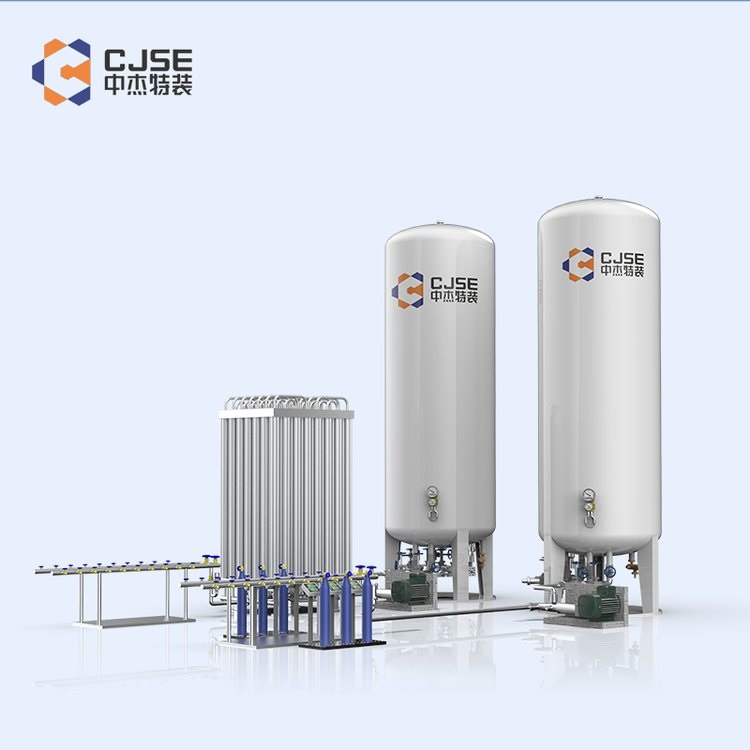
The inspection frequency of CO2 storage tanks should be determined based on local regulations, standards, and manufacturer recommendations. Generally, the following factors can affect the inspection frequency of CO2 storage tanks:
Regulatory and standard requirements: Different regions may have varying regulations and standards that specify the inspection requirements and frequency for tanks. For example, the U.S. DOT standards require liquefied gas tanks to undergo external inspections every 5 years and internal inspections every 10 years.
Manufacturer recommendations: Manufacturers often provide suggestions on inspection frequency, based on factors such as tank design, material, and lifespan. These recommendations can serve as references for establishing an inspection plan.
Operating environment and conditions: The tank's operating environment and conditions also influence inspection frequency. For instance, tanks exposed to corrosive environments or frequently subjected to mechanical stresses may require more frequent inspections.
Typically, external inspections of liquefied gas tanks are conducted through visual inspections, ultrasonic testing, and magnetic particle inspections to evaluate the tank's external condition and any potential defects. Internal inspections may necessitate emptying the tank and assessing the internal condition through internal checks, thickness measurements, and weld inspections.
It is crucial that tank inspections are carried out by trained and experienced personnel and strictly in accordance with relevant regulations, standards, and manufacturer recommendations. Regular inspections and maintenance can ensure tank safety and reliability, reducing the risk of accidents.
Key measures to ensure the quality of CO2 storage tanks include the following aspects: Selecting Qualified Suppliers: Choose suppliers with a good reputation and experience, ensuring that the tanks they provide meet relevant quality standards and specifications. This can be achieved by assessing the supplier's qualifications, referencing customer reviews, and conducting on-site inspections to select the right supplier. Strict Quality Control: Implement rigorous quality control measures during the manufacturing process of the tanks. This involves selecting and inspecting raw materials, controlling production processes, monitoring process parameters, and conducting product testing and inspections to ensure the tanks meet quality requirements. Compliance with Standards and Regulations: The design, manufacturing, and installation of the tanks should comply with relevant standards and regulations, such as industry standards and specifications. These include the structural design of the tank, material selection, welding processes, corrosion prevention measures, and the configuration of safety valves and pressure sensors. Regular Inspections and Maintenance: Tanks require regular inspections and maintenance during use to ensure safety and reliability. This includes checking the tank's appearance, sealing, valves, and pipeline connections, conducting regular pressure tests and leak detection, and promptly addressing any anomalies. Establishing a Quality Management System: Establish a comprehensive quality management system, including quality control procedures, documentation, quality training, and internal audits. By establishing a quality management system, tank quality control and continuous improvement can be ensured. Third-party Testing and Certification: Delegate tank testing and certification to third-party institutions to verify the quality and compliance of the tanks. Third-party testing and certification bodies typically offer objectivity and reliability, providing impartial assessment and certification results. By implementing these measures, the quality of CO2 storage tanks can be effectively ensured, enhancing their safety and reliability.
Our company attaches great importance to technological innovation and R&D design. We have one municipal enterprise technology center in Heze City, equipped with test facilities for non-destructive testing, physical and chemical testing, welding testing, hydrostatic testing, and more. We possess over 600 pieces of equipment, including CNC machine tools, X-ray flaw detectors, digital ultrasonic flaw detectors, mechanical property testing machines, chemical analyzers, spectrometers, tensile testing machines, plasma welding machines, and others. Our R&D on key products such as thermal pressure vessel welding, biomass boiler emission reduction, and waste heat recovery has successively been selected for multiple Shandong Provincial Department of Industry and Information Technology innovation projects, Shandong Provincial key projects, and Heze City innovation and excellence projects. We have累计 obtained 27 authorized utility models, 16 authorized inventions, participated in drafting 2 standards, 2 industry standards, and registered 15 trademarks. Our technical team, in collaboration with Professor Yajiang Li of Shandong University, has developed deep cryogenic container processing technology using the international plasma arc + filler wire argon arc welding (PAW-GTAW) technique. This technology has been appraised as reaching an international level in deep cryogenic container manufacturing after provincial-level scientific and technological achievement identification. Choose Zhongjie Special Equipment, and let's create brilliance together!
WeChat Official Account

Scan to follow Official Account




















