


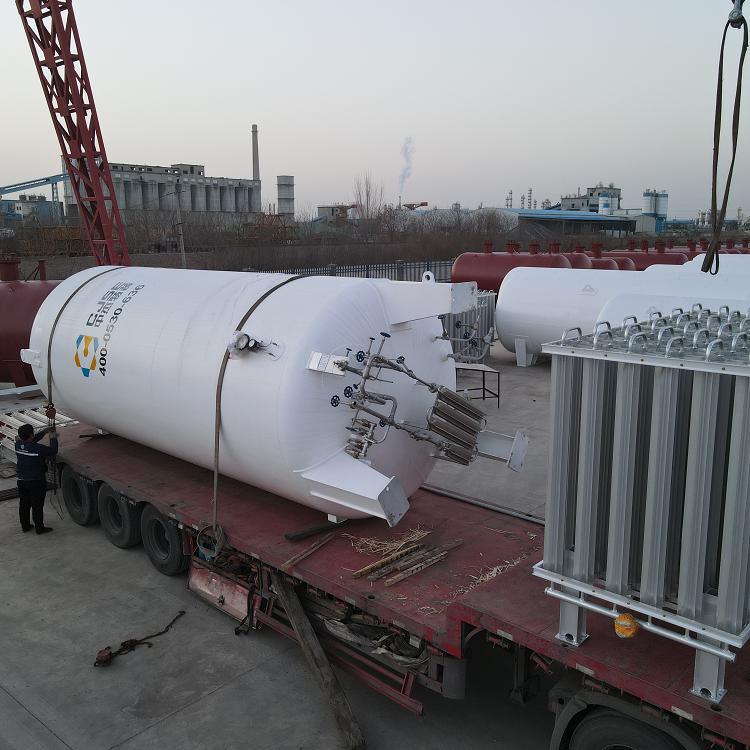

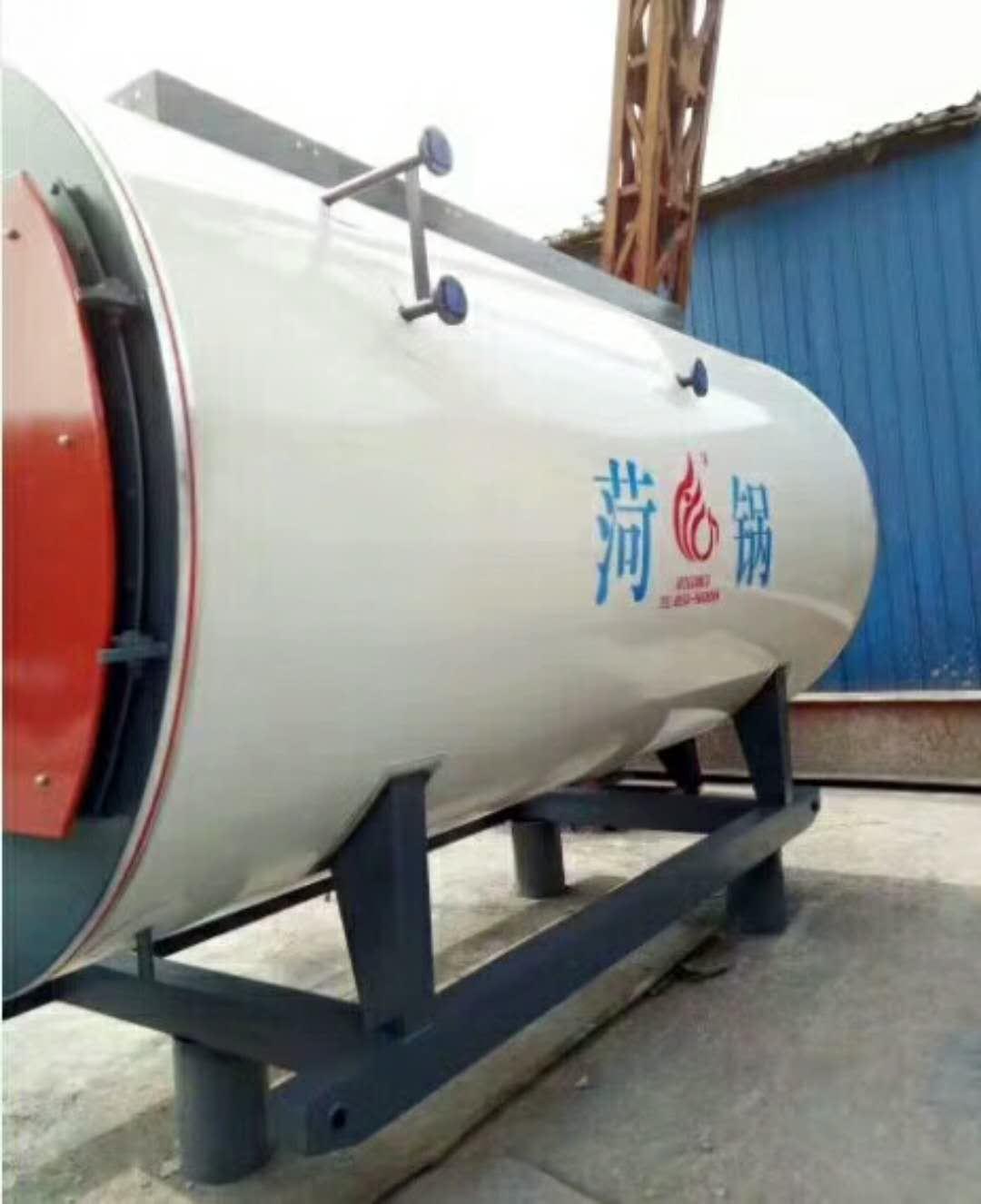



















Shandong Zhongjie Special Equipment (formerly Heze Boiler Factory Co., Ltd.) was established in 2001, located at No. 2218 Jinnan Road, Development Zone, Heze City, with a registered capital of 50 million yuan and total assets of 500 million yuan. The company has 7 business centers: boilers, deep-freeze containers, pressure vessels, central air conditioning, engineering installation, international trade, and Internet of Things. It has three factory sites on Jinnan Road, East Changjiang Road, and Bohai Road, covering a total of 200,000 square meters. The main workshop spans 83,000 square meters. There are currently 710 employees, including 247 engineers and technicians, and 82 intermediate-level technicians. In December 2016, it was recognized as a "High-tech Enterprise" by the Science and Technology Department. In June 2021, it was identified as a "Specialized and New Enterprise in Shandong Province" by the Ministry of Industry and Information Technology. In June 2022, it was recognized as a "Gazelle Enterprise in Shandong Province," and in August 2022, it was identified as a "Specialized and New Small Giant Enterprise" by the Ministry of Industry and Information Technology.
Proper placement of liquid oxygen tanks is a crucial measure to ensure they do not pose a danger to the surrounding environment and personnel during use. The following are the safety requirements for the placement of liquid oxygen tanks:
Safety Distance: Liquid oxygen storage tanks should maintain a certain distance from other buildings and equipment. This is to ensure effective control and minimize the impact on the surrounding environment in the event of a leak or fire.
Fire and explosion prevention measures: Liquid oxygen tanks should be placed in fireproof areas, away from open flames, high-temperature sources, and flammable materials. The surrounding area should be equipped with fire and explosion prevention facilities, such as fire extinguishers and foam sprinkler systems, to address potential fire risks.
Level placement: Liquid oxygen tanks should be placed on a solid, flat foundation to ensure stability. The bottom of the tank should make full contact with the ground to prevent the tank from tilting or rocking.
Ventilation Requirements: Liquid oxygen tanks should be placed in a well-ventilated area to ensure normal circulation of gas emissions and oxygen supply. There should be no obstructions around the tank that hinder gas flow.
Identification and Warning: Liquid oxygen tanks must be clearly marked with information such as the storage medium, capacity, and pressure. Warning signs and safety警示 symbols should be placed in the surrounding area to alert personnel to the presence and potential hazards of the liquid oxygen tank.
Regular inspections and maintenance: Liquid oxygen tanks should be regularly inspected and maintained, including checking the tank's appearance, sealing, and anti-corrosion measures. Any issues found should be promptly repaired or the tank replaced to ensure proper operation and safety.
It's important to note that the safety requirements for the placement of liquid oxygen tanks may vary depending on the region and industry. When placing liquid oxygen tanks, comply with relevant regulations, standards, and safety procedures, and establish appropriate safety measures based on the actual situation. If you're unfamiliar with or have doubts about the safety placement requirements, it's advisable to consult with experts or relevant institutions.
The temperature difference between the interior and exterior of a low-temperature liquid storage tank depends on various factors, including the tank's design, insulation performance, the temperature of the liquid, and the ambient temperature. Generally, the temperature inside the low-temperature liquid storage tank will be significantly lower than the ambient temperature.
Low-temperature liquid storage tanks are commonly used for storing liquefied nitrogen, oxygen, argon, and other low-temperature liquids. These liquids have very low boiling points, usually below -100°C. To maintain the低温 state of the liquids, the tank's interior must have excellent insulation to minimize heat transfer and evaporation loss.
Low-temperature liquid storage tanks typically offer lower temperature variations. Generally, the internal temperature of the tank can be maintained near the boiling point of the liquid, usually several degrees cooler than the external environment. The specific temperature difference depends on the tank's design and insulation properties, as well as the characteristics of the liquid.
It's important to note that the temperature differences in low-temperature liquid storage tanks may change over time. As time passes, the insulation material's performance may be affected by wear or aging, leading to increased temperature differences. Therefore, regular inspections and maintenance of the tank's insulation are crucial to ensure its effective and stable insulating performance.
Low-temperature liquid storage tanks (such as liquid nitrogen, liquid oxygen, liquid argon, etc.) possess several advantages:
High-Density Storage: Low-temperature liquid storage tanks can convert gases into liquids, significantly enhancing storage density. Compared to gas storage, liquid storage allows for more material to be stored in a relatively smaller space, thereby improving storage efficiency.
Low-Temperature Retention: Low-temperature liquid storage tanks are equipped with excellent insulation properties, effectively maintaining the低温 state of the liquid. The design and construction of the insulation layer can reduce heat conduction and thermal loss, preserving the liquid's低温 and minimizing evaporation and loss.
Supply: Low-temperature liquid storage tanks provide a stable liquid supply. Through internal pressure control and pipeline system design, precise liquid delivery is achievable, meeting industrial production and experimental requirements.
Safety: Low-temperature liquid storage tanks offer high safety. Compared to gas storage, liquid storage reduces the risk of gas leakage and explosion. Tanks are typically equipped with safety devices such as pressure relief valves and level alarms to ensure timely measures can be taken in abnormal situations, safeguarding the tank's safety.
Multi-functional Applications: Low-temperature liquid storage tanks are widely used in various fields, such as industrial production, scientific research, etc. Low-temperature liquids like liquid nitrogen and liquid oxygen are suitable for uses such as freezing, refrigeration, and gas supply, meeting diverse industry needs.
In summary, low-temperature liquid storage tanks offer advantages such as high-density storage, temperature retention, supply, safety, and versatile applications, providing reliable liquid storage and supply solutions across various industries.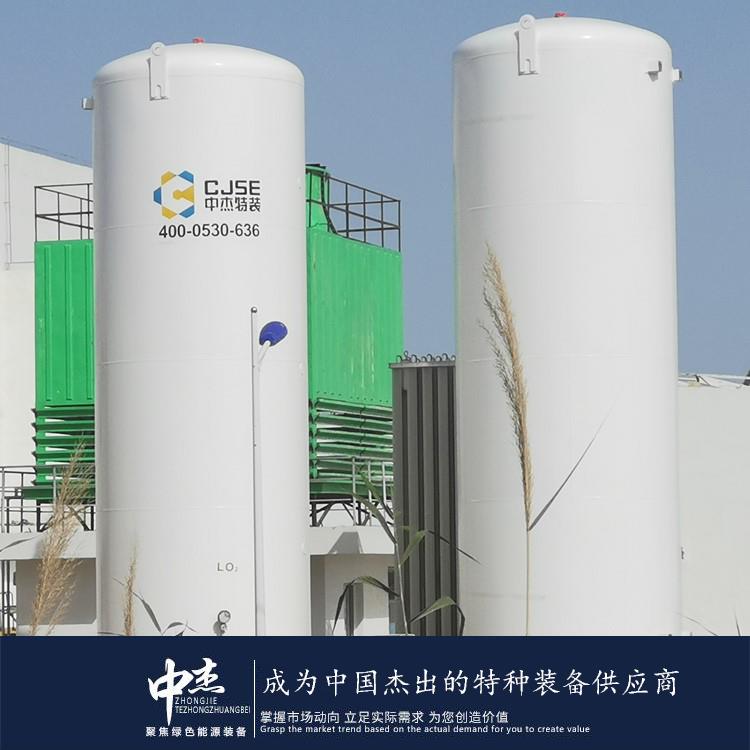
When selecting low-temperature liquefied natural gas (LNG) storage tanks, the following factors should be considered:
Tank Types: Common LNG tank types include vertical fixed-roof tanks, spherical tanks, and horizontal tanks. Choose the appropriate tank type based on specific application requirements and site conditions.
Tank Capacity: Determine the tank capacity based on the storage requirements and anticipated usage of LNG. The tank capacity should be sufficient to meet the expected storage duration and supply demands.
Material Selection: LNG tanks are typically made of low-temperature steel or nickel alloys to ensure corrosion resistance and strength in low-temperature environments. Select the appropriate material based on the tank's design pressure and temperature requirements.
Safety Performance: LNG tanks should possess excellent safety performance, including seismic resistance, fire resistance, and leakage control capabilities. The tanks must comply with relevant safety standards and specifications, such as API 620, EN 1473, etc.
Maintenance and Inspection: Consider the maintenance and inspection requirements of the tank, including internal cleaning, coating protection, and anti-corrosion measures. The tank design should facilitate maintenance and inspection operations to ensure long-term reliable operation.
Environmental Impact: When selecting LNG tanks, the impact on the surrounding environment must be considered. The layout and design of the tanks should comply with environmental protection requirements, minimizing noise, vibration, and gas emissions to reduce environmental impact.
Cost-effectiveness: Considering the investment, operational, and lifecycle costs of the tank, select a tank with a favorable cost-performance ratio.
需要注意的是,选型LNG储罐时应遵循相关的和地区的法规、标准和规范。此外,咨询的工程师或储罐制造商,以获取更详细和准确的选型建议。
Our company attaches great importance to technological innovation and R&D design. We have one municipal-level enterprise technology center in Heze City, equipped with testing facilities for non-destructive testing, physical and chemical testing, welding testing, hydrostatic testing, and more. We have over 600 various instruments and equipment, including CNC machine tools, X-ray flaw detectors, digital ultrasonic flaw detectors, mechanical property testing machines, chemical analyzers, spectrometers, tensile testing machines, plasma welding machines, and others. The key products we have developed, such as temperature and pressure vessel welding, biomass boiler emission reduction, and waste heat utilization, have successively been selected for multiple Shandong Provincial Department of Industry and Information Technology science and technology innovation projects, Shandong Provincial key projects, and Heze City innovation and excellence projects. We have accumulated 27 authorized utility models, 16 authorized inventions, participated in drafting 2 standards, 2 industry standards, and registered 15 trademarks. Our technical team, in collaboration with Professor Yajiang Li from Shandong University, has developed deep cryogenic container processing technology using the international plasma arc + filler wire argon arc welding (PAW-GTAW) technology. This technology has been appraised as reaching international standards in the field of deep cryogenic container manufacturing. Choose Zhongjie Special Equipment, and let's create brilliance together!
WeChat Official Account

Scan to follow Official Account