


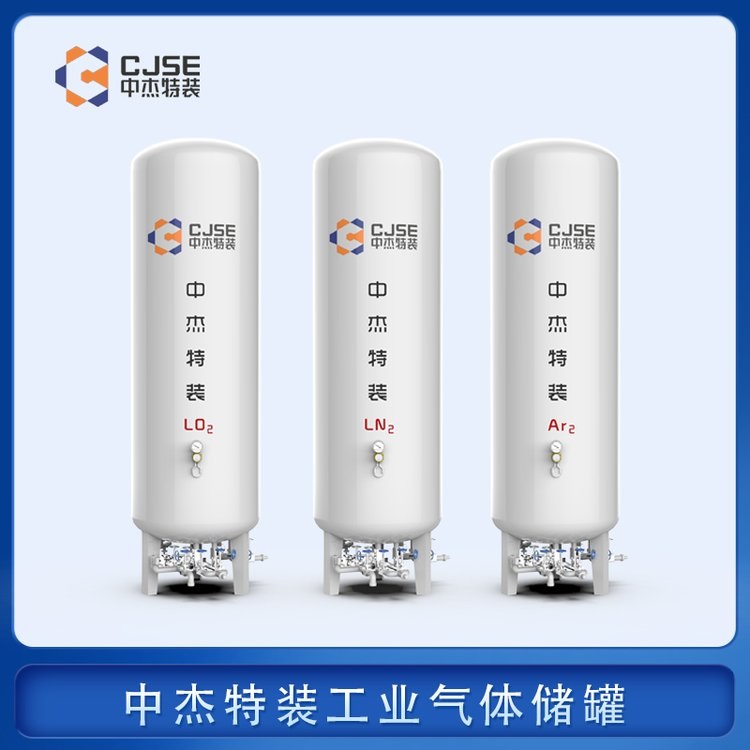


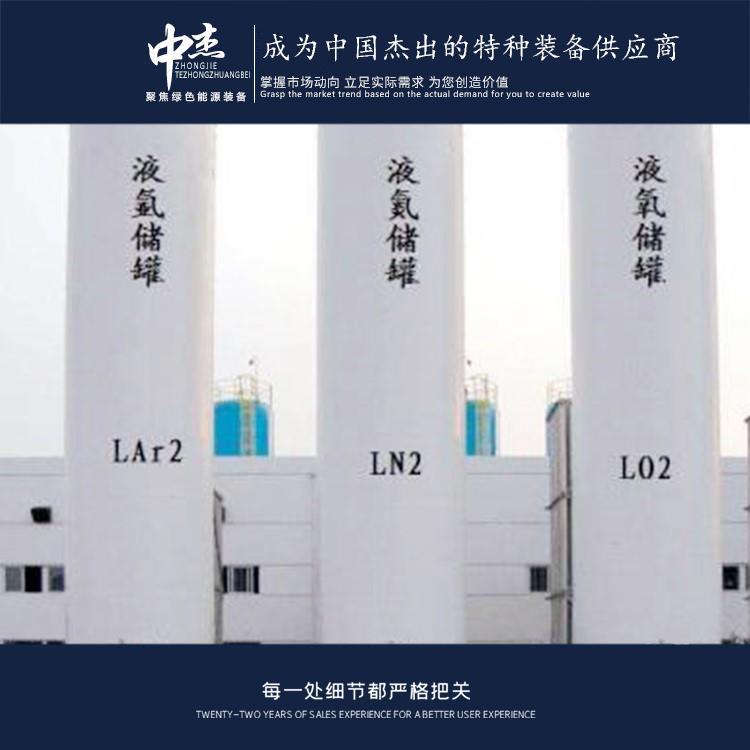



















Shandong Zhongjie Special Equipment's main products include: fuel (gas) boilers, organic heat carrier boilers, biomass boilers, waste heat boilers, and other boiler products; vacuum insulation cryogenic pressure vessels such as LNG tanks, oxygen-nitrogen-argon tanks, and CO2 tanks; pressure vessel products such as denitrification engineering equipment, heat storage and energy storage equipment, and complete chemical equipment sets; central air conditioning and ventilation equipment such as ground (water) source heat pumps, air source units, water-cooled screw units, and air-cooled modular units. Planned products include large-scale energy centers, LNG transport vehicles, LNG tank containers, and other green energy equipment.
Maintenance and upkeep are crucial for ensuring the safety of low-temperature storage tanks. Here are some common maintenance measures:
Regular Inspections: Conduct regular inspections of low-temperature storage tanks, including checks of the exterior, internal structure, and anti-corrosion coatings. Look for cracks, corrosion, wear, and other issues, and promptly identify and repair potential safety hazards.
Cleaning and Deicing: Regularly clean the external surface and internal structure of low-temperature storage tanks to remove accumulated dirt and ice layers. The buildup of ice can lead to structural damage and corrosion; cleaning and deicing can extend the lifespan of the tank.
Level Monitoring: Regularly monitor the liquid level in low-temperature storage tanks to ensure it stays within the safe range. Excessive or insufficient levels can lead to over-pressure or over-vacuum in the tanks, increasing safety risks.
Leak Detection: Install a leak detection system to regularly check for leaks in low-temperature storage tanks. Leaks can lead to the release and evaporation of liquids or gases, increasing safety risks.
Corrosion Protection Measures: Implement appropriate corrosion protection measures, such as coating protection and corrosion-resistant coatings, to safeguard the metal structure of low-temperature storage tanks from corrosion damage.
Emergency Fault Handling: Establish an emergency fault handling mechanism to promptly address and repair issues with low-temperature storage tanks, in order to prevent accidents from occurring or escalating.
Training and Development of Personnel: Train and develop operation and maintenance personnel to ensure they possess the relevant knowledge and skills for proper operation and maintenance of low-temperature storage tanks.
Note that maintenance should be tailored to the specific type of tank and operating conditions, adhering to relevant local laws, regulations, and standards. During maintenance, it is recommended to consult with engineers or guidance from relevant institutions to ensure the tank's safety and reliability.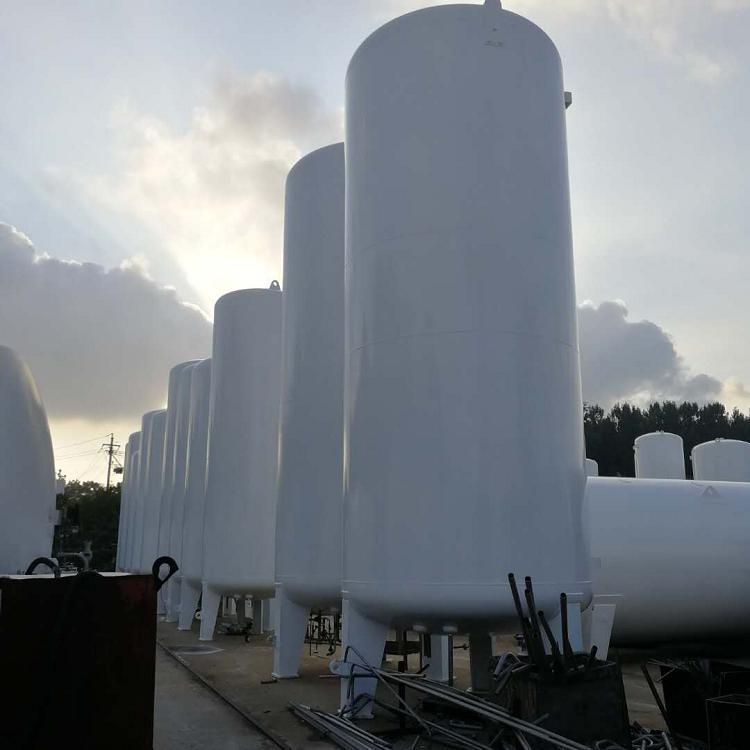
To prevent hazards caused by static electricity in liquid oxygen storage tanks, the following measures can be taken:
Grounding: Ensure proper grounding for the liquid oxygen storage tank and associated equipment. Grounding releases static electricity to the ground, reducing the likelihood of static buildup. Metal components such as tanks and pipes should be connected to a reliable grounding system.
Static dissipative materials: Utilize static dissipative materials to reduce the accumulation of static electricity. For instance, apply conductive coatings or materials on the insulation layer of liquid oxygen storage tanks and pipelines to discharge static electricity to the ground.
Static Dissipative Equipment: Utilize static dissipative equipment, such as static-conductive pipes and hoses, to minimize the accumulation and release of static electricity. These devices aid in dissipating static to the ground, reducing the occurrence of static sparks.
Static ground wire: Install static ground wires on liquid oxygen storage tanks and related equipment to discharge static electricity to the ground. These grounding wires should be connected to a reliable grounding system and be inspected and maintained regularly.
Static Eliminators: Utilize static eliminators to dissipate static electricity. These devices neutralize static by releasing opposite charges, reducing static buildup and spark generation.
Electrostatic Safety Training: Conduct electrostatic safety training for personnel using liquid oxygen storage tanks to enhance their awareness and prevention of electrostatic hazards. The training content can include the principles of electrostatic formation, preventive measures, and emergency response procedures.
It is important to note that the static electricity prevention measures for liquid oxygen tanks should be designed and implemented by personnel, following relevant safety operation procedures and standards. During operation, strict adherence to the prescribed operational procedures is required to avoid the generation of static sparks, ensuring the safety of the tank.
Proper placement of liquid oxygen tanks is a crucial measure to ensure that the tanks do not pose a danger to the surrounding environment and personnel during use. The following are the safety requirements for the placement of liquid oxygen tanks:
Safety Distance: Liquid oxygen storage tanks should maintain a certain distance from other buildings and equipment. This is to ensure effective control and minimize the impact on the surrounding environment in the event of a leak or fire.
Fire and explosion prevention measures: Liquid oxygen tanks should be placed in fire-resistant areas, far from open flames, high-temperature sources, and flammable materials. The surrounding area should be equipped with fire and explosion prevention facilities, such as fire extinguishers, foam sprinkler systems, etc., to address potential fire risks.
Level placement: Liquid oxygen tanks should be placed on a solid, flat foundation to ensure stability. The bottom of the tank should make full contact with the ground to prevent tilting or rocking.
Ventilation Requirements: Liquid oxygen tanks should be placed in a well-ventilated area to ensure the normal circulation of gas emissions and oxygen supply. There should be no obstructions around the tank that hinder gas flow.
Identification and Warnings: Liquid oxygen tanks should be clearly marked with information such as the stored medium, capacity, and pressure. Warning signs and safety alerts should be placed in the surrounding area to remind personnel of the presence and potential hazards of the liquid oxygen tank.
Regular Inspections and Maintenance: Liquid oxygen storage tanks should be regularly inspected and maintained, including checking the tank's appearance, seal integrity, and corrosion protection measures. Any issues found should be addressed promptly by repairing or replacing the tank to ensure proper operation and safety.
It's important to note that the safety requirements for the placement of liquid oxygen tanks may vary depending on different regions and industries. When placing liquid oxygen tanks, comply with relevant regulations, standards, and safety procedures, and develop appropriate safety measures based on the actual situation. If you are unfamiliar with or have doubts about the safety placement requirements, it is recommended to consult with experts or relevant institutions.
Liquid Argon Storage Tanks are specialized equipment designed for storing liquid argon, featuring the following parameters, functions, and characteristics:
Parameters:
Tank Capacity: The capacity of liquid argon tanks can be customized to meet requirements, typically available in various sizes such as 500L, 1000L, 2000L, and so on.
Working Pressure: The working pressure of liquid argon tanks is typically at atmospheric pressure or slightly above atmospheric pressure.
Storage Temperature: The storage temperature for liquid argon tanks is typically -196 degrees Celsius, which is the boiling point of argon, maintaining its liquid state.
Function:
Store Liquid Argon: Liquid argon tanks are primarily used for storing liquid argon, maintaining its liquid state at low temperatures for supply and use.
Insulation: The liquid argon storage tank utilizes advanced insulation materials and structural design to minimize heat conduction and retention, maintaining the low-temperature state of the liquid argon.
Safety Controls: The liquid argon tank is equipped with safety devices such as pressure relief valves and level alarms, ensuring safe operation and use.
Features:
High Purity Supply: Liquid argon tanks provide high purity liquid argon supply to meet the requirements of applications such as cryogenic storage, gas shielded welding, and semiconductor manufacturing.
Long-term Storage: Liquid argon tanks are designed for long-term storage of liquid argon, extending their service life. By controlling the tank's internal temperature and the performance of the insulation layer, the evaporation and oxidation of the liquid argon are slowed down.
Broad Applications: Liquid Argon Storage Tanks are widely used in industries such as cryogenic storage, semiconductor manufacturing, and more.
Environmental Protection and Energy Saving: Liquid argon storage tanks enable efficient storage and utilization of liquid argon, reducing energy waste and environmental pollution.
In summary, liquid argon storage tanks are designed for storing liquid argon, thermal insulation, and safety.
Our company attaches great importance to technological innovation and R&D design. We have one municipal-level enterprise technology center in Heze City, equipped with testing facilities for non-destructive testing, physical and chemical testing, welding testing, hydrostatic testing, etc. We have over 600 types of instruments and equipment, including CNC machine tools, X-ray flaw detectors, digital ultrasonic flaw detectors, mechanical property testing machines, chemical analyzers, spectrometers, tensile testing machines, plasma welding machines, and more. The key products we have developed, such as temperature and pressure vessel welding, biomass boiler emission reduction, and waste heat recovery, have successively been selected for several Shandong Province Ministry of Industry and Information Technology science and technology projects, key provincial projects, and Heze City innovative and excellent projects. We have accumulated a total of 27 authorized utility models, 16 authorized inventions, participated in drafting 2 standards, 2 industry standards, and registered 15 trademarks. The technical team of our company, in collaboration with Professor Yajiang Li of Shandong University, has jointly developed deep cryogenic container processing technology using the international plasma arc + wire filling argon arc welding (PAW-GTAW) technology. This technology has been appraised as reaching international standards in the field of deep cryogenic container manufacturing at the provincial level. Choose ZJ Special Equipment, and let's create brilliance together!
WeChat Official Account

Scan to follow Official Account




















