


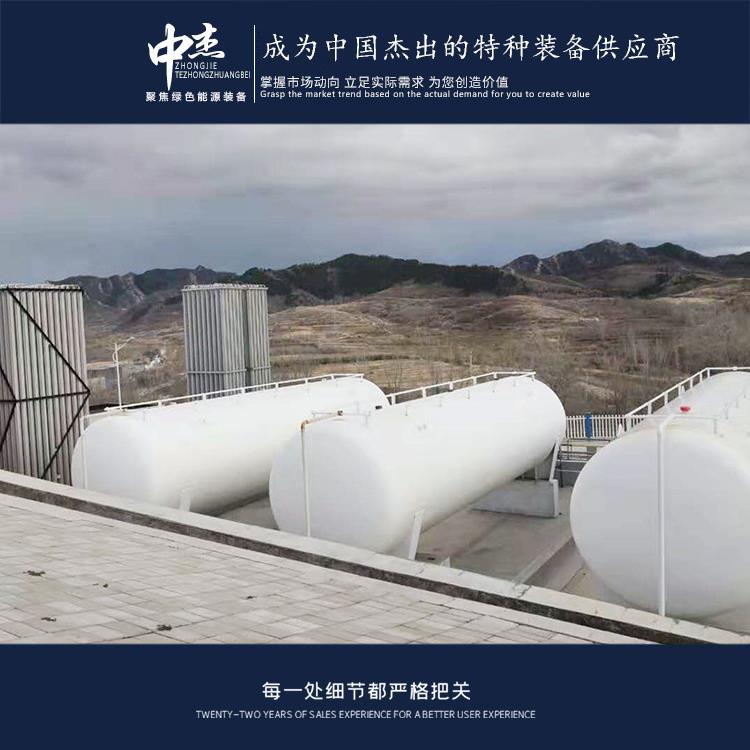

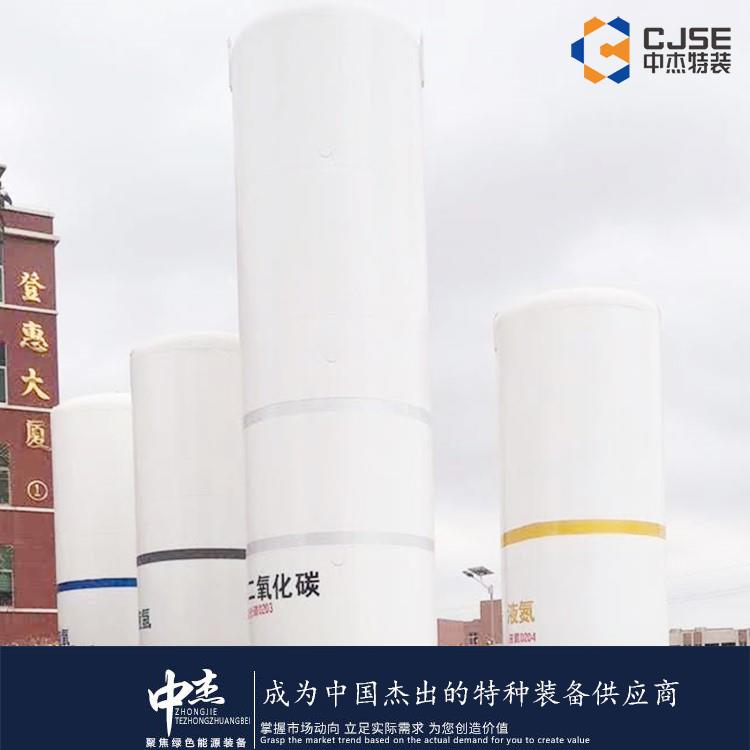



















Shandong Zhongjie Special Equipment's main products include: fuel (gas) boilers, organic heat carrier boilers, biomass boilers, waste heat boilers, and other boiler products; vacuum insulation cryogenic pressure vessels such as LNG tanks, oxygen/nitrogen/argon tanks, and CO2 tanks; pressure vessel products like denitrification engineering equipment, heat storage and energy storage equipment, and complete chemical equipment sets; central air conditioning and ventilation equipment such as ground (water) source heat pumps, air source units, water-cooled screw units, and air-cooled modular units. Planned products include large-scale energy centers, LNG transport vehicles, LNG tank containers, and other green energy equipment.
To extend the service life of carbon dioxide storage tanks, the following measures can be taken:
Regular inspections and maintenance: Conduct regular checks of the tank's exterior, lining, valves, and pipe connections to ensure they are intact and undamaged. Promptly repair or replace any abnormalities or damage.
Corrosion prevention: Carbon dioxide is corrosive, so both the internal and external surfaces of the tank should be treated for corrosion resistance. Regularly inspect and maintain the integrity and effectiveness of the protective coatings or paints.
Cleaning and draining: Regularly clean the interior of the tank to remove accumulated impurities and sediments. Also, periodically drain the liquid and gas impurities from the tank interior to maintain cleanliness and normal operation.
Temperature and pressure control: Maintain the tank's temperature and pressure within the design limits. Avoid extremes that could damage the tank.
Regular testing and calibration: Conduct regular tests and calibrations of the tank, including parameters such as liquid level, pressure, and temperature. Ensure the tank's measurement and control systems are accurate and reliable.
Adhere to operational procedures: Strictly follow operational procedures and safety protocols to ensure the tank operates normally and safely. Train operators to enhance their operational skills and safety awareness.
Updating and upgrading: Timely update and upgrade tank components and equipment as needed to adapt to new technology and safety requirements.
Regular assessments and monitoring: Regularly assess and monitor the tank, including structural integrity, corrosion status, and safety. Take appropriate maintenance and repair measures based on assessment results.
These measures can help extend the service life of carbon dioxide storage tanks and ensure their safe and reliable operation.
The testing and maintenance of liquid oxygen storage tanks are crucial for ensuring safe operation and extending their service life. Below is a general outline of the testing and maintenance procedures for liquid oxygen storage tanks:
- **Visual Inspection**: Regularly inspect the exterior of the liquid oxygen storage tank for signs of corrosion, wear, and cracks. If any anomalies are detected, promptly repair or replace them.
- **Internal Cleaning**: Regularly clean the interior of the liquid oxygen storage tank to remove accumulated impurities and dirt. Use appropriate cleaning agents and tools to avoid damaging the tank.
- **Level Measurement**: Regularly measure the liquid level to ensure it remains within a safe range within the tank. Use a level gauge or other measuring equipment, and record the results.
- **Pressure Testing**: Regularly conduct pressure tests to verify the tank's pressure resistance. Pay attention to controlling pressure and time during testing to ensure safety and accuracy.
- **Leak Detection**: Regularly perform leak detection to ensure the tank's sealing integrity. Use leak detection instruments such as gas detectors or foam leak detection agents.
- **Valve and Pipe Inspection**: Regularly check the valves and pipe connections of the liquid oxygen storage tank to ensure proper sealing and no leakage. If issues are found, repair or replace them promptly.
- **Maintenance Records**: Keep records of the testing and maintenance activities, including dates, inspection items, and results. These records help track the tank's maintenance history and issue resolution.
- **Regular Maintenance**: Develop a regular maintenance schedule based on the tank's usage and requirements. Maintenance includes lubrication, bolting, and replacing seals to ensure normal operation.
When conducting routine inspections of CO2 storage tanks, follow these steps:
Visual Inspection: Check for any visible damage, corrosion, or oil leakage on the tank's exterior. Pay attention to any abnormalities in the tank shell, valves, and pipeline connections.
Valve and Pipeline Inspection: Verify that the tank's inlet and outlet valves and pipeline connections are functioning properly, for any signs of leakage or looseness. Ensure that the valves operate smoothly and reliably.
Pressure Relief Device Inspection: Check that the tank's pressure relief devices (e.g., safety valves) are functioning correctly. Confirm that the set pressure of the pressure relief devices meets requirements.
Level Measurement System Inspection: Check the accuracy and reliability of the level measurement system. Calibrate the level sensors to ensure accurate level measurements.
Pressure and Temperature Inspection: Verify that the tank's pressure and temperature sensors are operating properly. Confirm the accuracy of pressure and temperature measurements.
Safety Equipment Inspection: Check the tank's safety equipment, such as safety valves, pressure sensors, and temperature sensors, to ensure they are functioning correctly. Confirm that their set parameters meet requirements.
Fire Protection Equipment Inspection: Ensure that fire protection equipment around the tank is intact and check that extinguishers, sprinkler systems, etc., are operating properly.
Liquid and Gas Quality Inspection: Ensure that the quality of CO2 liquid and gas in the tank meets requirements, with no impurities or contaminants.
Documentation and Reporting: Record the date of the inspection, the inspection content, any issues found, and the measures taken. Submit inspection reports to relevant departments or management as needed.
The above are general steps for routine inspections of CO2 storage tanks. Specific operations should be carried out according to the tank's characteristics and requirements. During inspections, follow relevant safety operating procedures, and only allow trained personnel to perform operations.
Carbon dioxide capture is a technology designed to capture carbon dioxide from industrial emissions sources or the atmosphere and store or utilize it to reduce CO2 emissions. Below are some common carbon dioxide capture technologies:
1. Coal-fired Power Plant CO2 Capture: In coal-fired power plants, the carbon dioxide produced by burning coal can be captured and recycled. A common method is to use carbon capture technology to separate the CO2 from flue gas and store or utilize it.
2. Industrial Emission Source CO2 Capture: Many industrial processes produce CO2 that can be treated through capture and recycling techniques. For example, CO2 produced during the production processes of industries such as steel, cement, and chemicals can be captured and recycled to reduce emissions.
3. Atmospheric CO2 Capture: CO2 in the atmosphere can also be captured using direct air capture technology. This technology uses absorbents or chemical reactions to capture and separate CO2 from the atmosphere, then store or utilize it.
4. CO2 Utilization: Captured CO2 can be used to produce valuable chemicals and fuels. For instance, through CO2 catalytic conversion technology, CO2 can be converted into fuels or chemical raw materials such as ethanol.
The development of CO2 capture technology aims to reduce greenhouse gas emissions and mitigate climate change. However, these technologies are still under development and research, requiring further technological breakthroughs and practical verification for large-scale application.
Zhongjie Special Equipment upholds the great vision of "realizing the dreams of our employees, creating value for our customers, and striving for the prosperity and strength of our motherland," wholeheartedly devoting ourselves to the development of the green energy equipment industry, and contributing high-value products and services to society!
WeChat Official Account

Scan to follow Official Account




















