



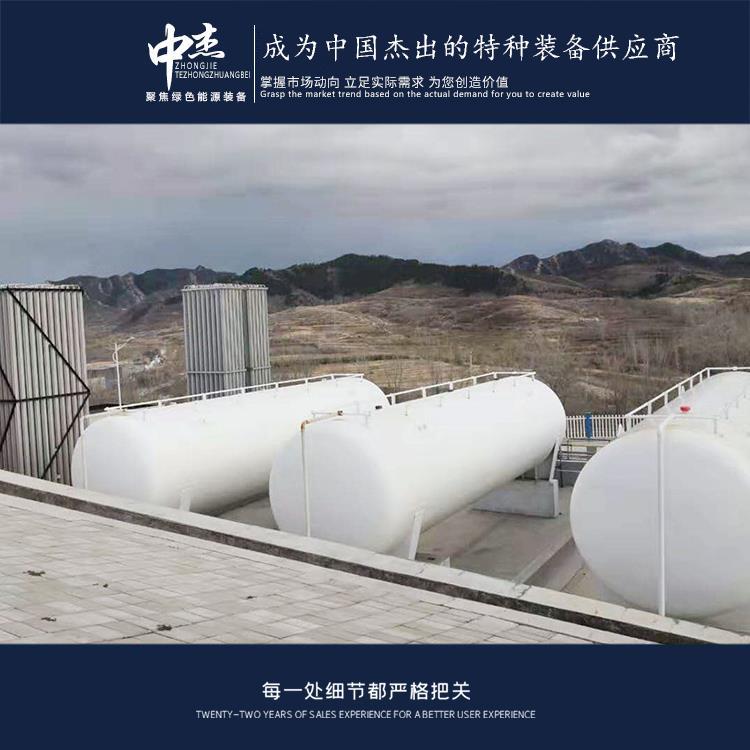



















Shandong Zhongjie Special Equipment (formerly Heze Boiler Factory Co., Ltd.) was established in 2001, located at No. 2218 Jinnan Road, Economic and Technological Development Zone, Heze City. With a registered capital of 50 million yuan and total assets of 500 million yuan, the company has seven business centers: boilers, deep-freezing vessels, pressure vessels, central air conditioning, engineering installation, international trade, and Internet of Things. It has three factory sites on Jinnan Road, East Changjiang Road, and Bohai Road, covering a total area of 200,000 square meters, with the main workshop spanning 83,000 square meters. The company currently employs 710 people, including 247 engineering and technical staff and 82 intermediate-level technicians. In December 2016, it was recognized as a "High-tech Enterprise" by the Science and Technology Department. In June 2021, it was identified as a "Specialized and New Enterprise in Shandong Province" by the Ministry of Industry and Information Technology. In June 2022, it was recognized as a "Gazelle Enterprise in Shandong Province" and in August 2022, it was identified as a "Specialized and New Small Giant Enterprise" by the Ministry of Industry and Information Technology.
For the maintenance and repair of carbon dioxide storage tanks, here are some recommended methods:
Regular Inspections: Conduct regular checks on the tank's exterior and interior conditions, including inspecting for corrosion, cracks, and leaks. Non-destructive testing methods, such as ultrasonic testing, can be used to assess the tank's integrity.
Cleaning and Corrosion Protection: Regularly clean the tank's exterior surface to remove dirt and debris. For tanks coated with corrosion-resistant paint, regularly inspect the coating's condition and perform repairs or recoating to protect the tank from corrosion.
Leak Detection: Regularly perform leak detection to ensure there are no leakage issues. Use gas detectors or leak detectors for testing, or conduct pressure tests to evaluate the tank's sealing performance.
Safety Valve Inspection: Regularly inspect and test the operation of safety valves to ensure they function properly under overpressure conditions. Adjust and test according to the specifications and requirements of the safety valves.
Pipe and Valve Maintenance: Regularly inspect and maintain the pipes and valves connected to the tank to ensure their proper operation and sealing performance. Clean and lubricate valves, check for leaks at pipe connections.
Documentation: Record the dates, contents, and results of maintenance and repairs, establishing a maintenance record for the tank. Retain relevant documents and reports for future reference and review.
Please note that for the maintenance and repair of carbon dioxide storage tanks, it is recommended to follow relevant safety operation procedures and standards. If you do not possess the necessary knowledge and experience, it is advisable to consult personnel or manufacturers for maintenance and repair work.
When using CO2 storage tanks, the following safety protocols must be adhered to ensure safety:
- Tank Operator Training: All operators must undergo training to understand the characteristics, operation requirements, and safety measures of CO2 storage tanks. The training should include safe tank operation, leak handling, emergency response plans, etc.
- Safe Operation Procedures: Establish and adhere to relevant safe operation procedures, including tank startup, shutdown, inspections, and maintenance. Operators must operate in accordance with the procedures to ensure safe tank operation.
- Leak Handling: Implement a leak handling program including leak detection, emergency shutdown, and isolation of the leak source. Operators should be familiar with the leak handling procedures and be able to respond quickly and correctly to leak incidents.
- Fire Prevention Measures: CO2 is flammable; therefore, fire prevention measures must be observed. Smoking, open flames, or placement of flammable materials near the tank is prohibited. Ensure that fire protection facilities around the tank are in good condition and conduct regular fire drills.
- Waste Gas Discharge: When using CO2 storage tanks, waste gases should be discharged properly to avoid CO2 accumulation in enclosed spaces, which could lead to asphyxiation and safety risks. Ensure the waste gas discharge system is unobstructed and functioning properly.
- Regular Inspections and Maintenance: Conduct regular inspections of the tank's exterior, seals, valves, and pipeline connections. In case of any anomalies or damage, repair or replacement should be carried out promptly. Additionally, regularly inspect and maintain safety valves, pressure sensors, and other accessories.
- Emergency Response Plans: Develop and implement emergency response plans, including handling of leak incidents, evacuation procedures, and first aid measures. Operators should be familiar with the emergency response plans and conduct drills regularly.
- Monitoring and Alarm Systems: Install and maintain monitoring and alarm systems for the storage tanks.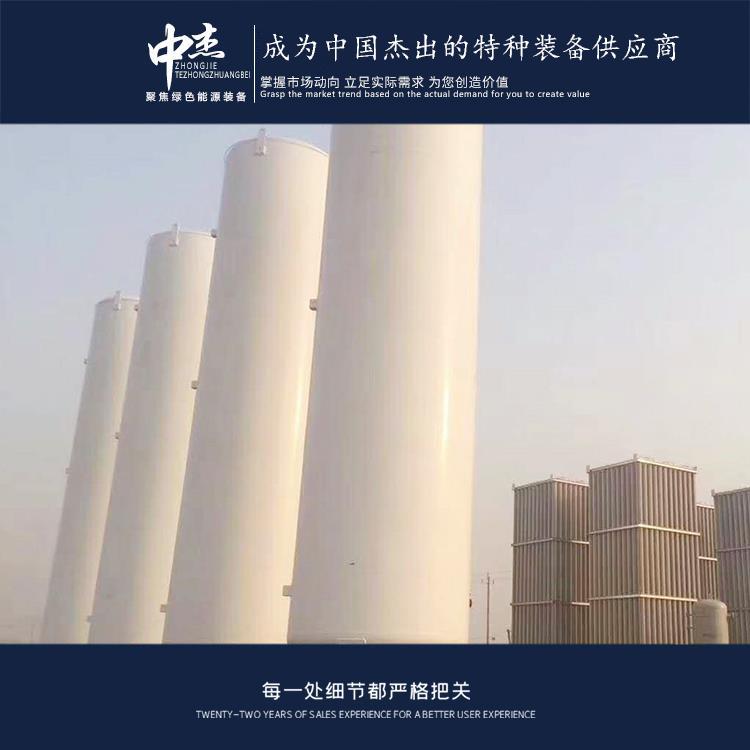
Carbon dioxide storage tanks feature the following characteristics and advantages: High storage density: These tanks can compress carbon dioxide gas into a liquid state, significantly increasing storage density. Compared to storing it in gaseous form, liquid carbon dioxide can be stored in smaller tanks, saving space and costs. Multiple application areas: Carbon dioxide storage tanks are widely used in various fields, including the food and beverage industry, industry, fire suppression, and gas supply. Carbon dioxide serves as a preservative, beverage effervescent agent, gas, and fire extinguisher, among other uses, with broad applications and market demand. Environmental friendly and renewable: Carbon dioxide is an environmentally friendly gas, and its increase in the atmosphere can lead to warming and climate change. By storing and utilizing carbon dioxide, we can reduce its emissions into the atmosphere, achieving environmental protection and sustainable development. Safe and reliable: During design and manufacturing, carbon dioxide storage tanks typically use high-strength materials (such as carbon steel or stainless steel) with excellent pressure resistance and safety. The tanks are usually equipped with safety valves, pressure gauges, and level indicators to ensure safe operation. Moreover, carbon dioxide is a non-flammable and non-explosive gas, making it relatively safe. Supply: These storage tanks provide a stable supply of carbon dioxide. Through tank design and control systems, accurate measurement and supply of carbon dioxide can be achieved, meeting the needs of various industries and applications. In summary, carbon dioxide storage tanks offer high storage density, multiple application areas, environmental friendliness, renewability, safety, reliability, and supply. This makes them a crucial storage and supply equipment, widely used in numerous industries. However, safety operating procedures should still be followed when using carbon dioxide storage tanks.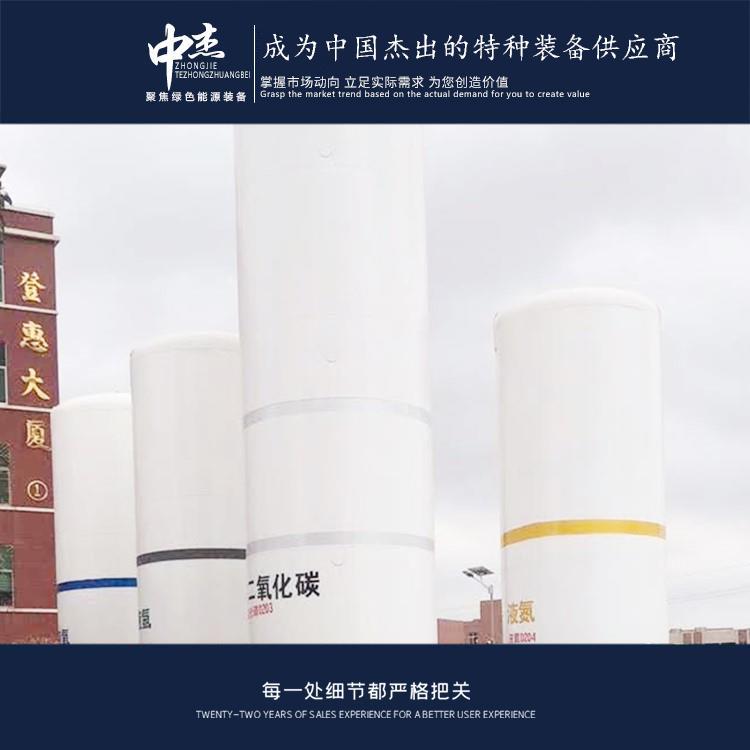
Key features of carbon dioxide storage tanks primarily include the following aspects: High storage density: Carbon dioxide storage tanks can compress carbon dioxide gas into a liquid state, significantly increasing the storage density. Compared to storing it in gas form, liquid carbon dioxide can store more carbon dioxide in relatively smaller tanks, saving space and costs. Stable storage and supply: Carbon dioxide storage tanks can stably store and supply carbon dioxide. Through tank design and control systems, precise measurement and supply of carbon dioxide can be achieved, meeting various industrial and application needs. Environmental friendly and renewable: Carbon dioxide is an environmentally friendly gas, and its increased concentration in the atmosphere can lead to warming and climate change. By storing and utilizing carbon dioxide, its emissions to the atmosphere can be reduced, promoting environmental protection and sustainable development. Safe and reliable: During design and manufacturing, carbon dioxide storage tanks typically use high-strength materials (such as carbon steel or stainless steel) with good pressure resistance and safety. The tanks are usually equipped with safety valves, pressure gauges, level indicators, and other accessories to ensure safe operation. Additionally, carbon dioxide is a non-flammable and non-explosive gas, making it relatively safe. Wide range of applications: Carbon dioxide storage tanks are widely used in various fields, including the food and beverage industry, manufacturing, fire suppression, and gas supply. Carbon dioxide can be used as a preservative, carbonation agent, gas, and fire extinguisher, among other applications, with broad usage and market demand. In summary, the key features of carbon dioxide storage tanks include high storage density, stable storage and supply, environmental friendliness and renewability, safety and reliability, and a wide range of applications. This makes carbon dioxide storage tanks an essential
Our company highly values technological innovation and R&D design. We possess 1 municipal-level enterprise technology center in Heze City, equipped with non-destructive testing, physical and chemical testing, welding testing, hydrostatic testing, and other testing facilities. We have over 600 pieces of equipment, including CNC machine tools, X-ray flaw detectors, digital ultrasonic flaw detectors, mechanical property testing machines, chemical analyzers, spectrometers, tensile testing machines, plasma welding machines, and more. The key products and technologies we have developed, such as welding for temperature and pressure vessels, biomass boiler emission reduction, and waste heat recovery, have successively been selected for multiple Shandong Provincial Department of Industry and Information Technology science and technology innovation projects, Shandong key projects, and Heze City innovation and excellence projects. We have accumulated a total of 27 authorized utility models, 16 authorized inventions, participated in drafting 2 standards, 2 industry standards, and registered 15 trademarks. The technical team of our company, in collaboration with Professor Yajiang Li of Shandong University, has developed deep cryogenic container processing technology using the international plasma arc + wire filling argon arc welding (PAW-GTAW) technology. After being appraised by the provincial-level scientific and technological achievements, our technology level has reached an international standard in the field of deep cryogenic container manufacturing. Choose Zhongjie Special Equipment, and let's create brilliance together!
WeChat Official Account

Scan to follow Official Account




















