
















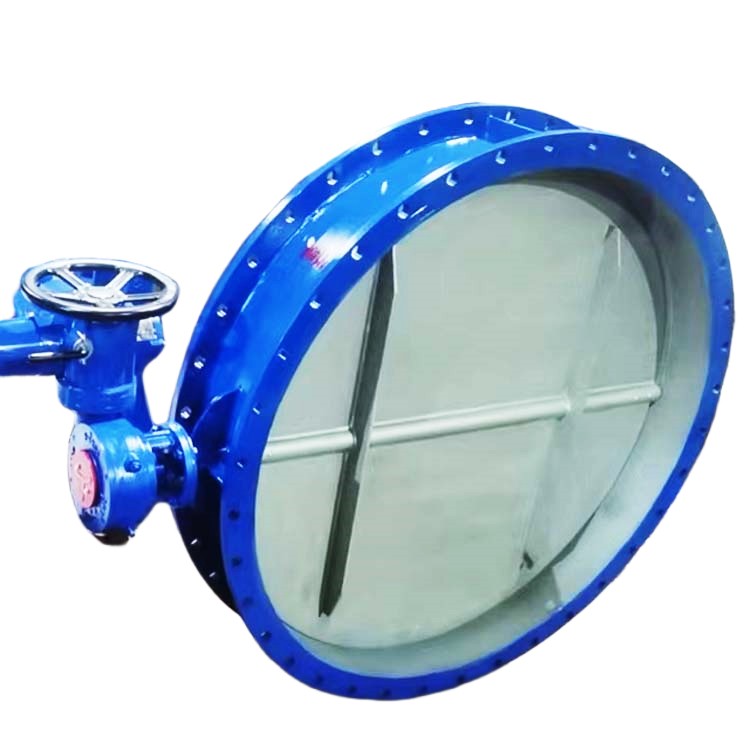
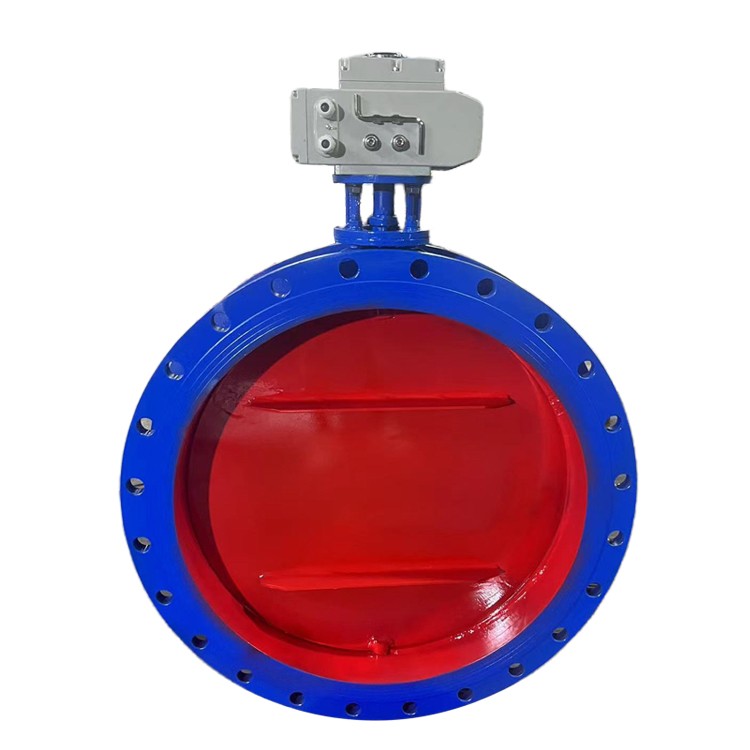
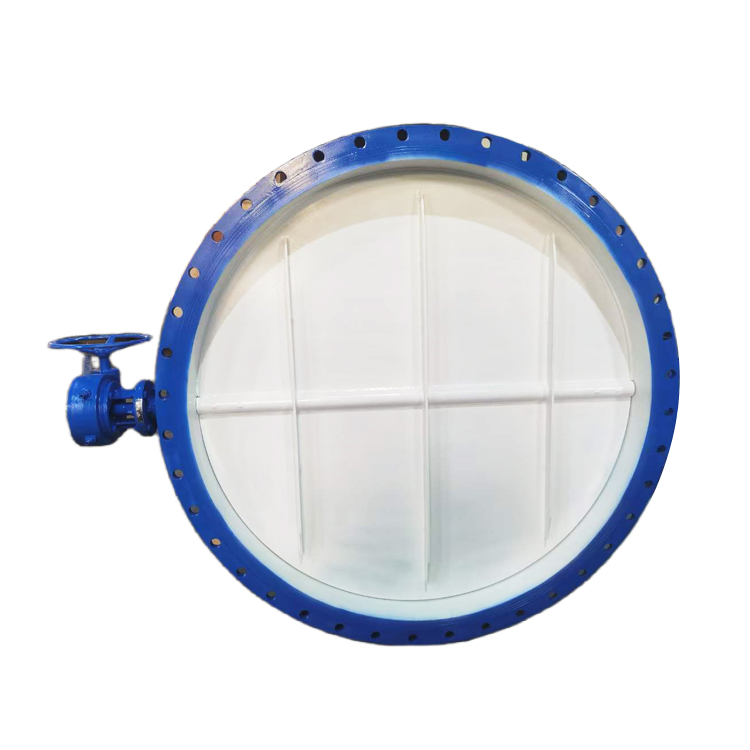

Turbo Blind Flange Valve, also known as Spiral Vane Gate Valve, Flip Disc Valve, or Butterfly Valve, is a safe and reliable isolation equipment used in metallurgy, chemical industry, environmental protection, and other industries. It is primarily applied for cutting off and isolating toxic, harmful, and flammable gas pipelines, ensuring the smooth progress of pipeline maintenance, replacement, and safe operation of the system.
Structural Features
The Turbine Blind Flange Valve consists of a left body, middle body, right body, sector blind flange, screw thread nut, stainless steel compensator, and two worm gear drive mechanisms. It is connected as a rigid structure by three screws. The middle body and right body are connected by stainless steel expansion pipes, and the left body and middle body are connected by three screws with trapezoidal threads. The blind plate rotates around the axis, with positioning blocks on the lower two screws preventing the blind plate from drifting and scraping the seal.
Working Principle
The operation principle of the blind plate valve includes the following steps:
Release and Close: The clamping motor drives the screw to rotate counterclockwise, releasing the valve body; the drive motor rotates the gate counterclockwise to close it; then, the clamping motor drives the screw clockwise, tightening the valve body, completing the closing process._
Open and release: The clamping motor drives the screw to rotate counterclockwise, releasing the valve body; the drive motor rotates the gate clockwise to open its support position, completing the opening process._
Application Scenario
Turbo blind plate valves are widely used for reliable isolation in gas pipelines for coal gas and other toxic, harmful, and flammable gases. They feature a compact structure, light weight, and good overall rigidity. Made with stainless steel and rubber sealing rings, they offer a flexible sealing structure that boasts excellent sealing performance, long service life, and easy maintenance. The valves can be equipped with different driving methods as required, supporting single or multiple units for remote control over a network, and can be switched to manual operation during abnormal operating conditions.


















