











I. Core Principle and Functional Orientation
The spray tower transfers pollutants through countercurrent contact of gas and liquid phases, with its core principle being the thorough mixing of liquid (such as water, alkali solution, acid solution) with waste gases, removing suspended particles, acidic/basic gases, organic pollutants, and particulates through physical adsorption, chemical reactions, or dissolution. Its functional positioning is as the front-end purification equipment for waste gas treatment, which can be used independently or combined with processes like activated carbon adsorption and catalytic combustion to form a multi-stage treatment system.
II. Structural Design and Component Analysis
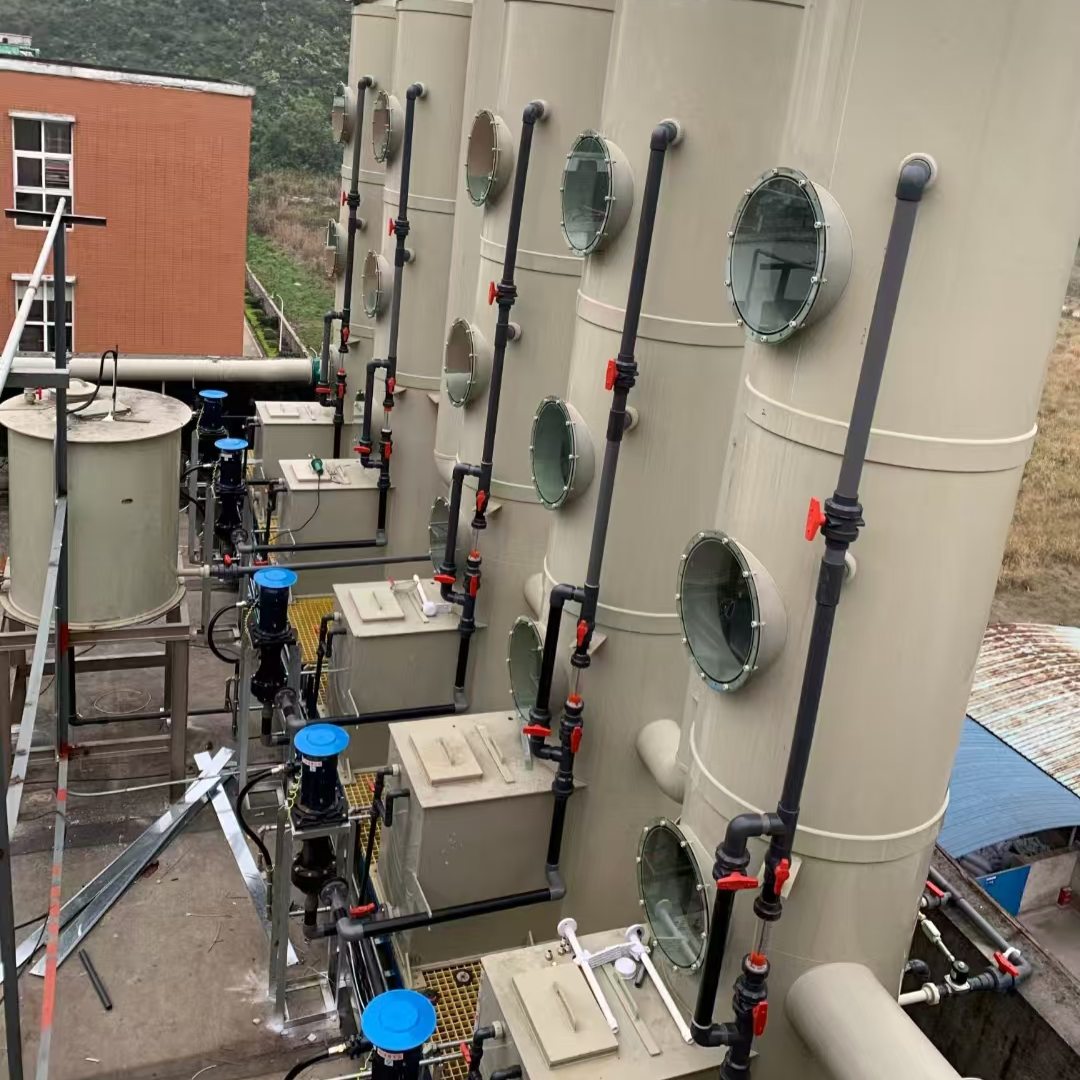
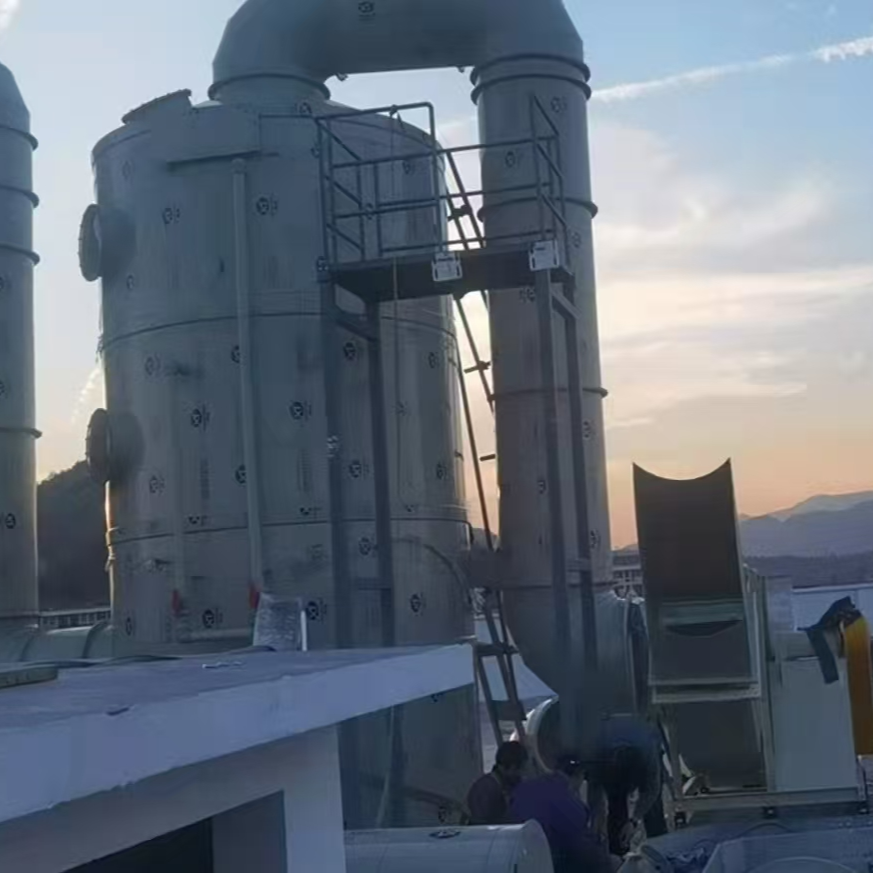
- Tower material selectionSelect corrosion-resistant materials based on the nature of the exhaust gas, such as glass fiber reinforced plastic (FRP) for acidic exhaust, polypropylene (PP) for neutral exhaust, and 304/316 stainless steel for high-temperature or chlorine-containing exhaust.
- Structural DesignTypically in a vertical cylindrical structure, it is divided into an inlet section, spray layer, packing layer, demisting layer, and an outlet cone cap to ensure thorough gas-liquid contact and separation.
- Spray System Nozzle TypesUtilizing helical solid cone nozzles or high-pressure atomizing nozzles, the spray angle is 120°-150°, with droplet sizes ranging from 50 to 200 μm, ensuring uniform liquid coverage across the tower cross-section.
- Spray DensityAdjust the spray quantity based on exhaust gas concentration, typically designed as 3-8L/(m²·s) to prevent overflow or leakage.
- Filling Layer Filling Type: Commonly used hollow sphere packing (specific surface area 200-500 m²/m³), Raschig rings (specific surface area 100-200 m²/m³), or Pall rings. The packing height is typically 1.5-3 meters to extend the contact time between gas and liquid.
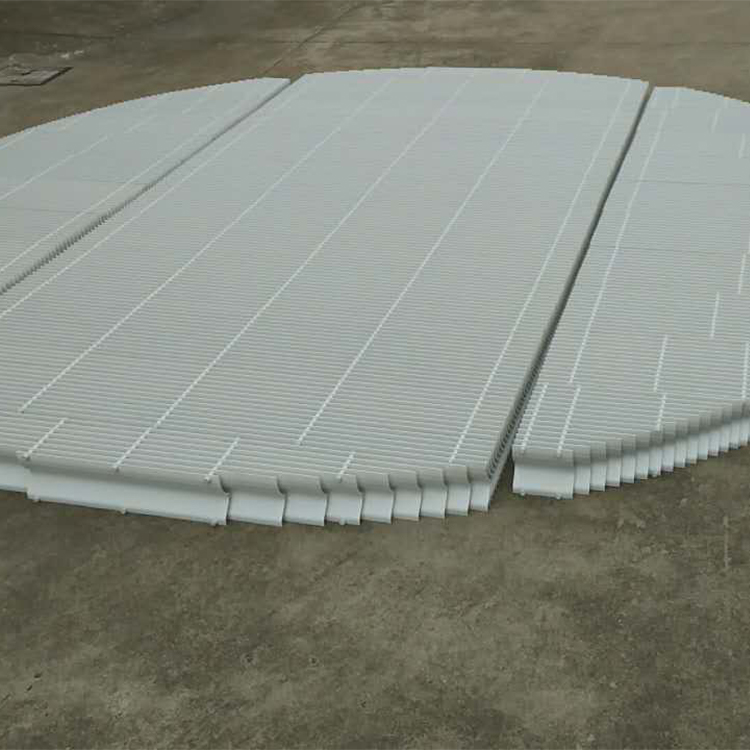
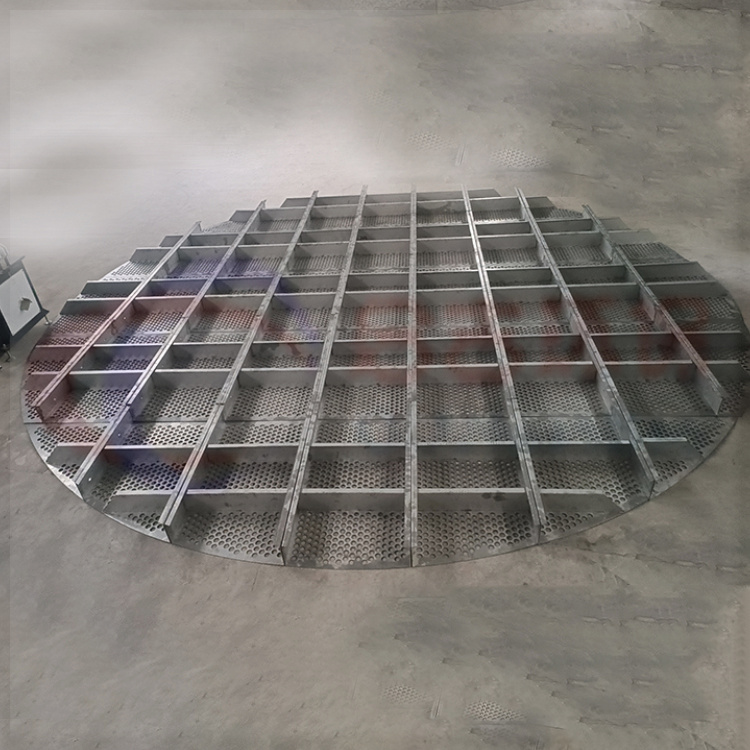
- Support StructureThe bottom is equipped with a grate board to support the filling material, and a pressure plate is installed above to prevent the filling material from shifting due to air flow impact.
- Demisting Layer and Demisting DeviceUtilize a mesh demister (demineralization efficiency ≥98%) or baffle demister to remove liquid droplets (particle size ≥10μm) carried by exhaust gas, preventing secondary pollution.
- Recirculation System Circulation PumpSelect corrosion-resistant centrifugal pumps; flow rate is designed based on the spray quantity, and the head must overcome the tower pressure drop (usually 2-5 meters of water column).
- Level ControlAutomatically adjust make-up water through a float valve or level sensor to maintain the stability of the circulating fluid.