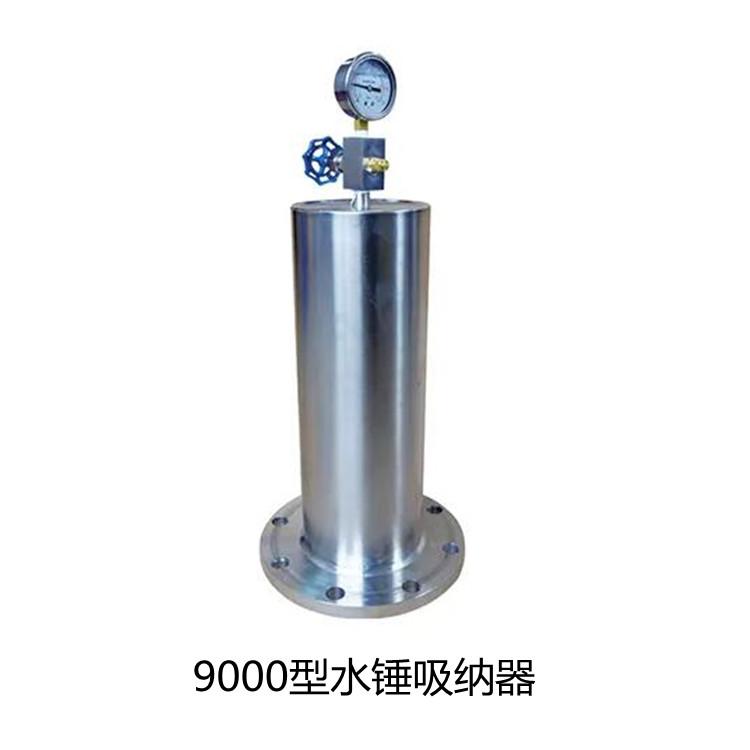

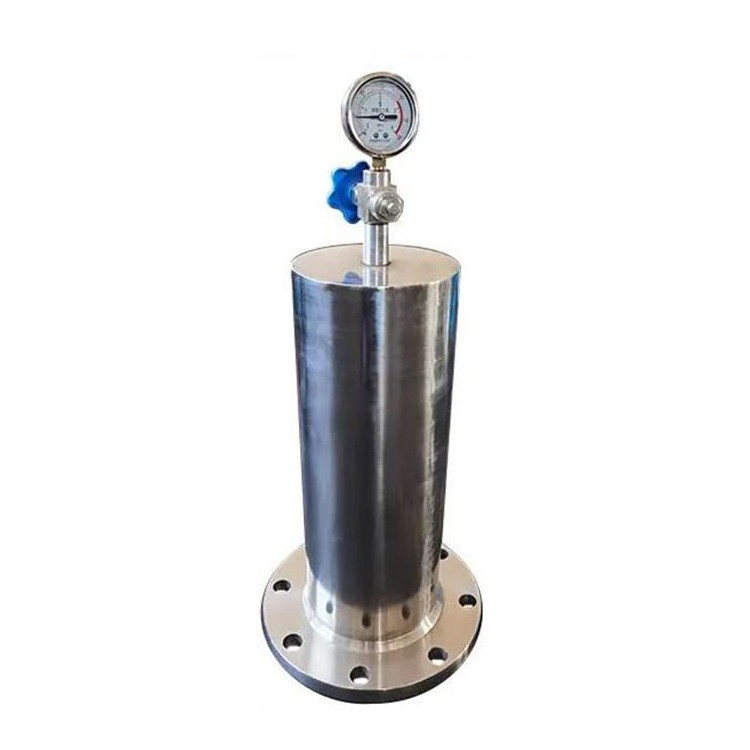
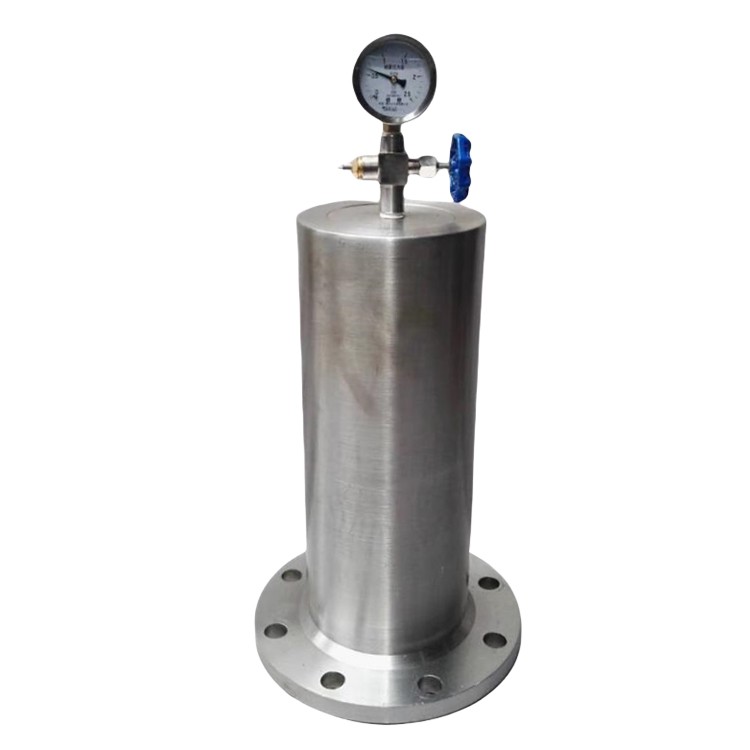
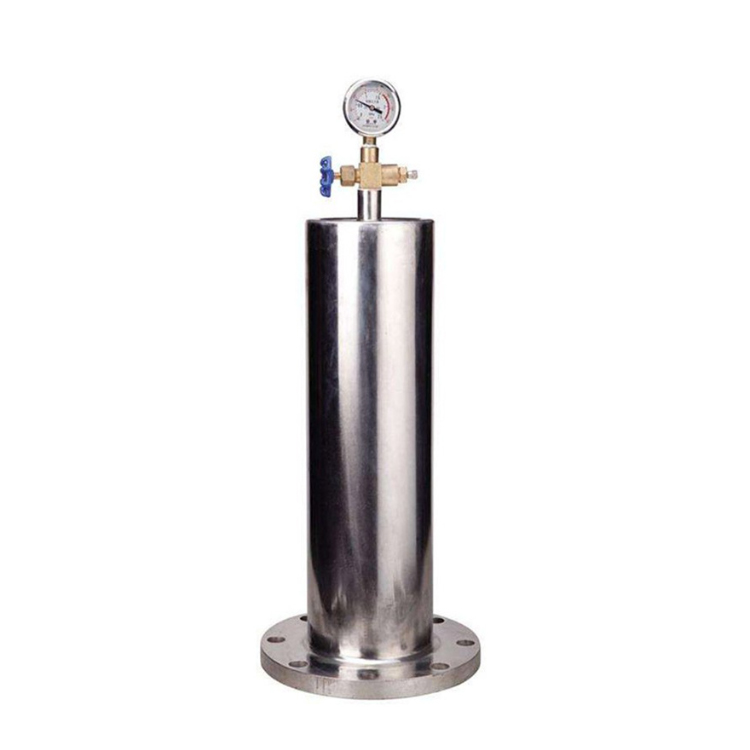














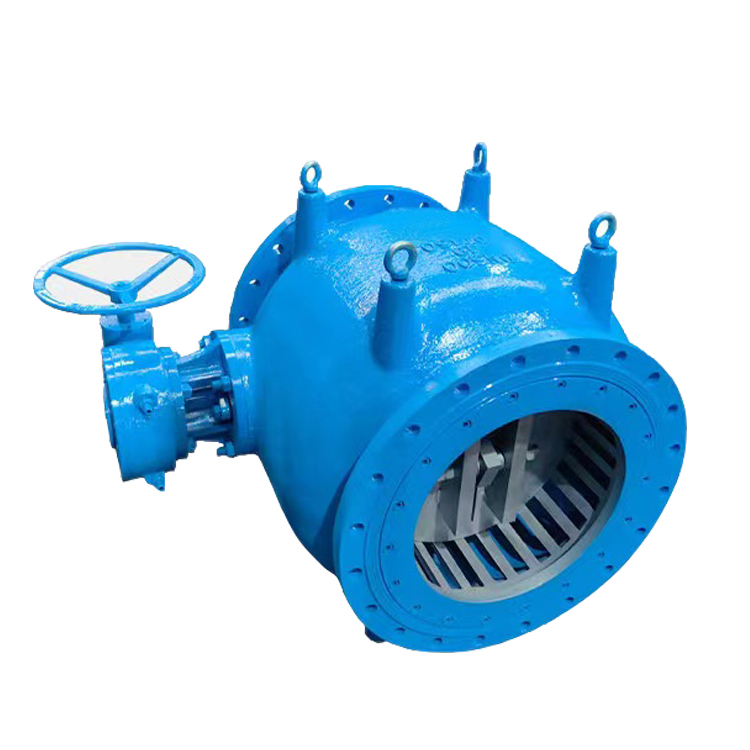
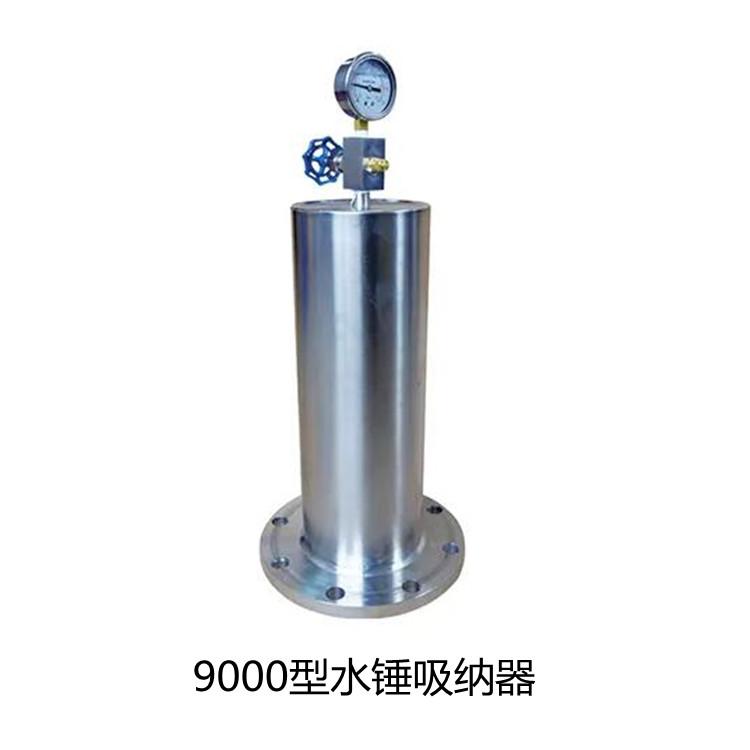
Piston-type water hammer absorber is an industrial equipment used to eliminate water hammer shock waves in water supply systems, primarily applied in industrial and mining, high-rise buildings, power stations, and other water supply and drainage systems. Its core working principle is to utilize the energy dissipation mechanism of an air cushion, balancing pressure fluctuations through the dynamic equilibrium of gas compression and expansion within a sealed air cavity, effectively mitigating shock waves caused by sudden changes in water flow or pump failures.
Structural Features
Core Components: Composed of stainless steel cylinders, pistons, and air bags, featuring brass or stainless steel valve bodies, with nitrile rubber seals.
Sealed Design: The seal is paired with silicone lubricant for a maintenance-free, long-lasting performance.
Installation Method: Typically installed vertically in pipes and requires combination with an anti-siphon check valve.
Working Principle
When pipeline pressure abnormally increases, the piston dynamically moves within the cylinder, regulating pressure fluctuations through the compression of the air bag. The gas within the cylinder is highly compressible, capable of rapidly absorbing impact energy and maintaining system stability.
Application Range
Pressure Range: Nominal pressure covers 1.6-25 MPa.
Medium Temperature: Suitable for temperatures of 0-80°C.
Bore Size Range: Covers 15-300mm.
Industry Applications: Widely used in fire protection, building water supply, and municipal engineering fields.
Installation Standards
According to the "Technical Code for Water Supply and Fire Hydrant Systems," when the water supply height of fire pumps exceeds 24 meters, water hammer arresters must be installed, and they should be vertically mounted at the end of the check valve or non-return valve after the pump's discharge pipe.