
















Medium Transportable:
Lubricating oil, fuel oil, hydraulic oil, cutting fluid, coolant, paraffin oil, tar, polyhydric alcohol
Application Fields
The product is widely used in industries such as power, metallurgy, petrochemicals, shipping, building materials, machinery, and environmental protection.
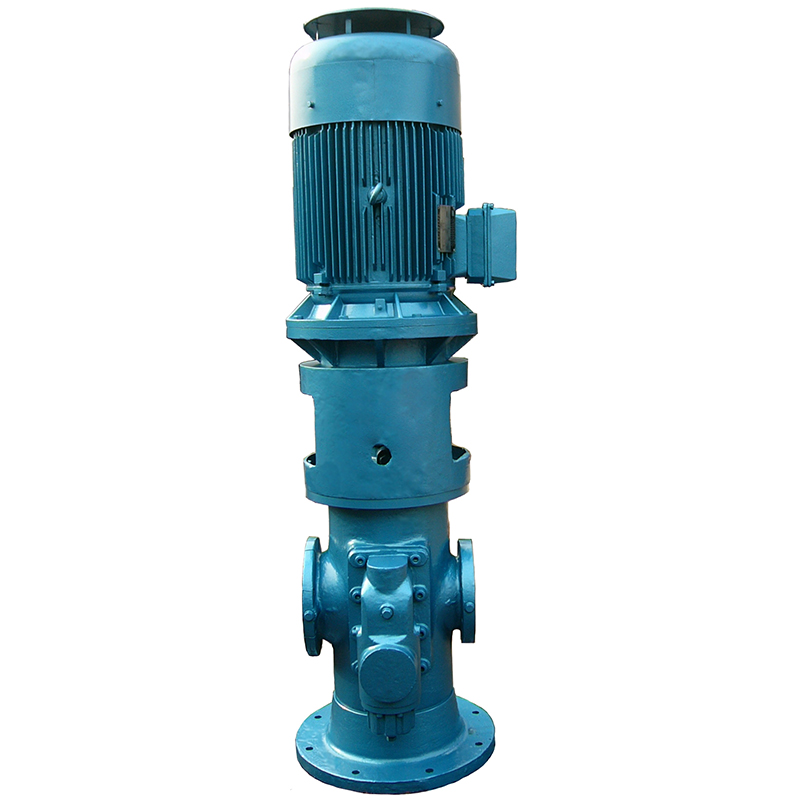
Advantages and Disadvantages of Three-Screw Pumps
① Compared to centrifugal pumps, screw pumps do not require valves for installation. They provide a stable linear flow rate, with a wide and stable pressure and flow range, minimal pulsation, and the liquid moves continuously and uniformly in a straight line within the pump without any stirring phenomena.
② Flow is directly proportional to the pump's speed, hence it offers excellent variable regulation capabilities.
③ Compared to plunger pumps, screw pumps have stronger self-priming ability and suction height, and do not require auxiliary equipment such as a bottom valve for vacuum extraction.
④ Compared to gears, screw pumps can transport high-viscosity substances; they offer a wide range of liquid types and viscosities.
⑤ The intermeshing screws have minimal wear, resulting in a long service life for the pump. Generally, oil pumps can last 30-40 years, or even longer.
⑥ The pump exhibits minimal vibration and noise.
Because the rotating components inside the pump have low inertia force, it can operate at high speeds.
⑧ Simple and compact structure, easy to disassemble, small in size, and light in weight. Solid construction, easy to install and maintain.
Compared to diaphragm pumps, screw pumps can handle various media containing mixed impurities, gases, solid particles, or fibers, as well as corrosive substances; they are not overly sensitive to incoming gases and impurities.
⑩ Unlike plunger pumps, diaphragm pumps, and gear pumps, screw pumps are suitable for pharmaceutical filling and metering.

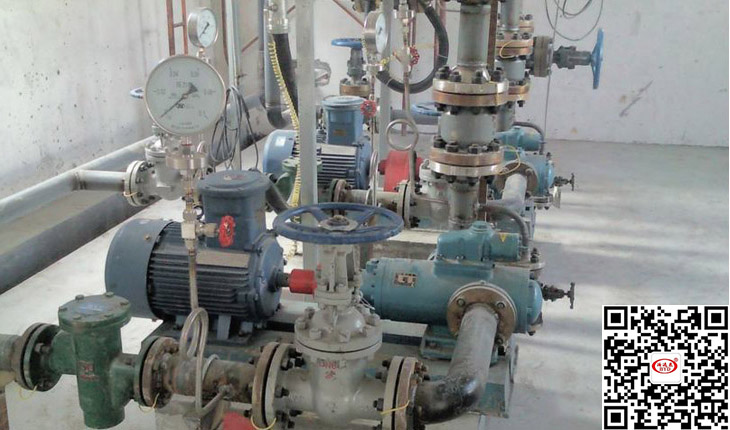
Application Site: