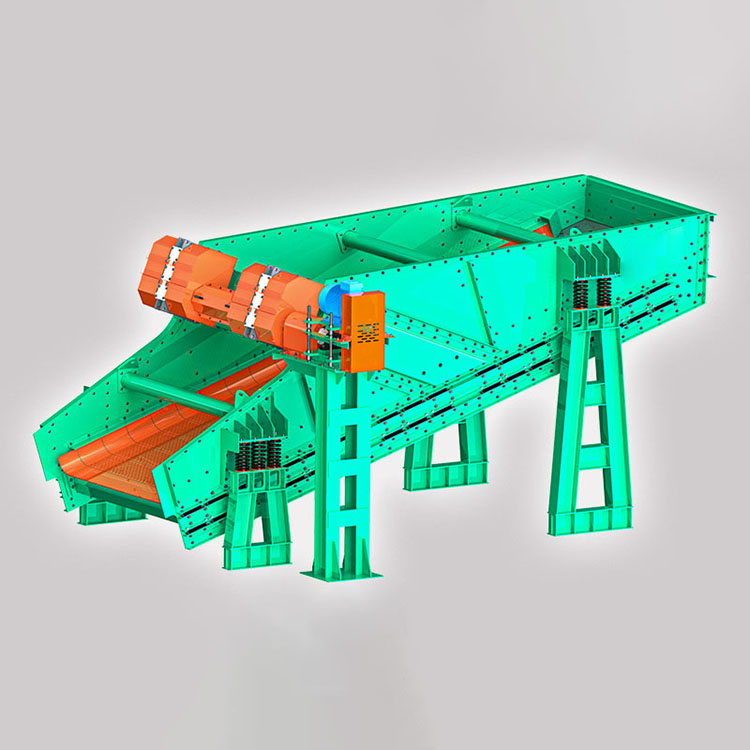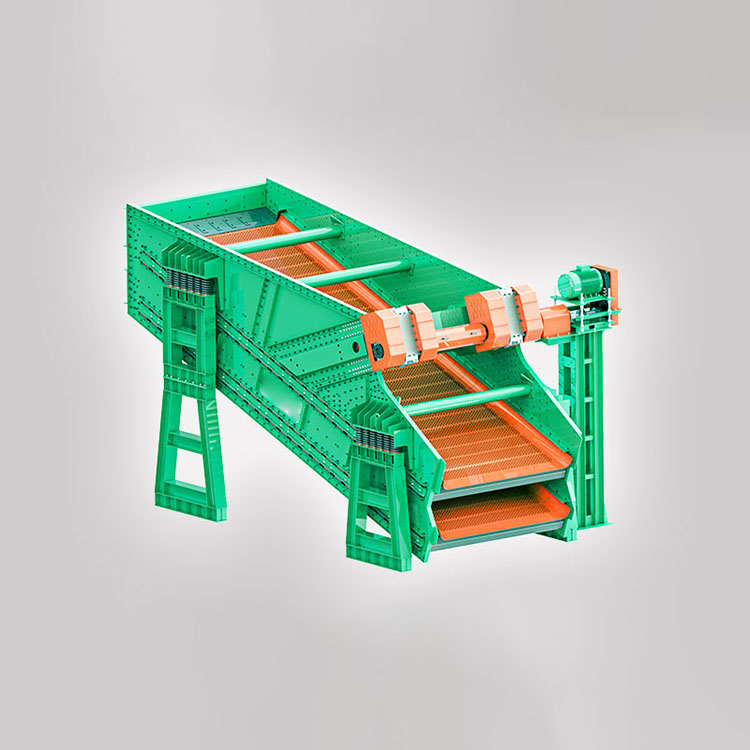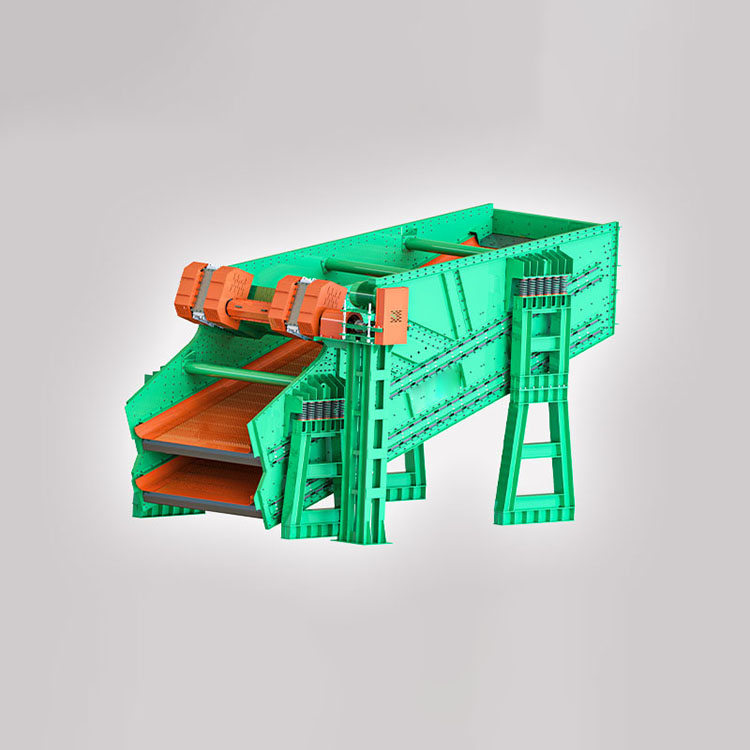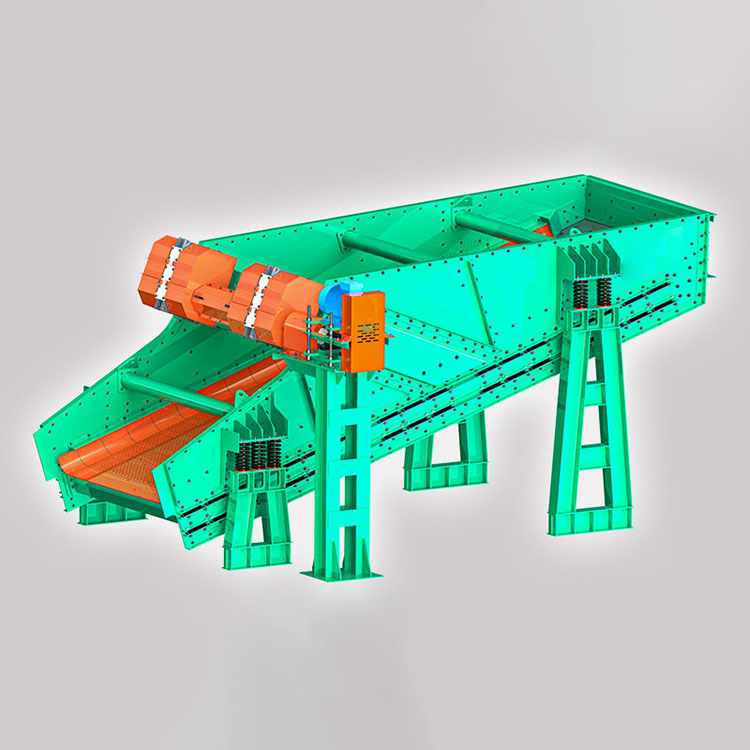















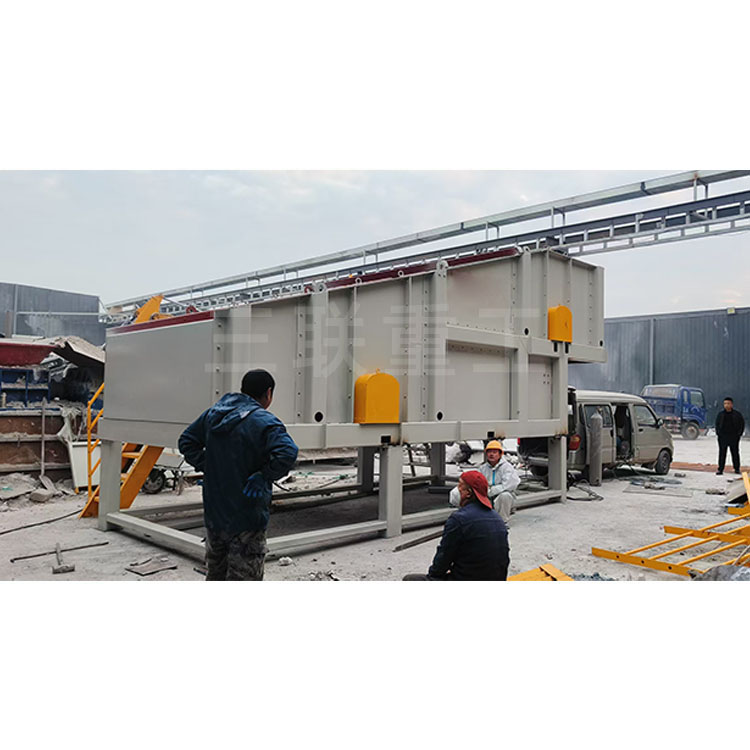
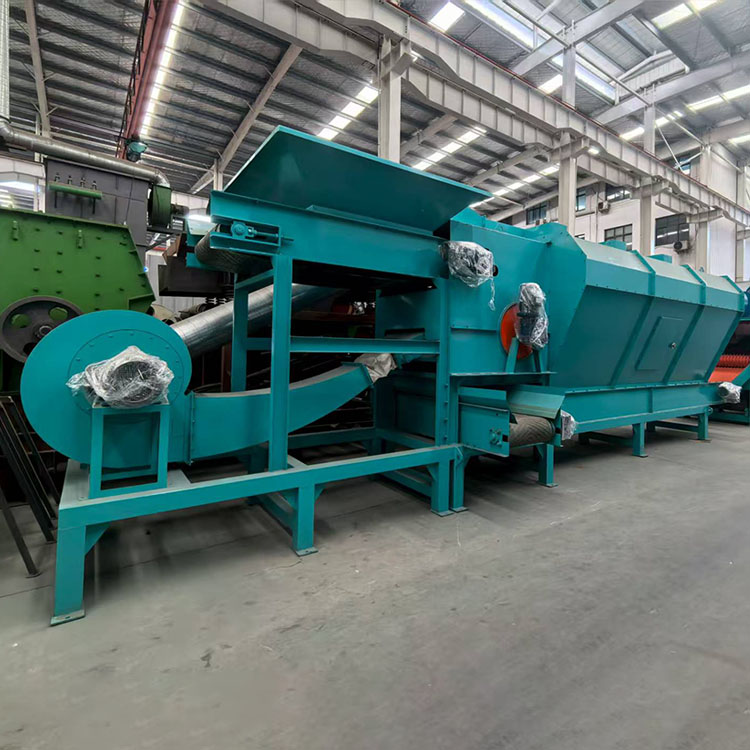
The large tension screen is mainly composed of box-type exciter, main vibration sieve frame, floating sieve frame, shear spring, damping spring, flexible polyurethane sieve mesh, support, and drive unit. Its operating amplitude trajectory is linear. The tension screen utilizes the double-particle near-resonance principle, producing dual vibrations from a single drive. The main vibration sieve frame is driven by the excitation force to perform fundamental vibration. The floating sieve frame, connected to the main vibration sieve frame via shear springs, moves relatively in a near-resonant state. One end of the polyurethane sieve mesh is fixed to a fixed crossbeam, while the other end is attached to a floating crossbeam. The relative movement of the fixed and floating beams causes the sieve mesh to continuously contract and expand, imparting a very high acceleration to the material, ensuring thorough lifting and separation. The sieve mesh of the tension screen can transfer up to 50g of acceleration to the material, allowing for complete loosening and screening. During the screening process, the sieve mesh undergoes elastic deformation under continuous bending movement, casting off wet and sticky materials from the sieve surface, providing self-cleaning functionality. This significantly enhances the sieve machine's throughput and screening efficiency. The tension screen is widely used in dry screening operations for medium to fine-grained, wet, sticky, and difficult-to-screen materials, characterized by its non-clogging sieve mesh and high screening efficiency.