








- AllProduct Category
-
Water Level Sensing
Traffic Sensing
Weighing Instrument
Analytical Instruments
Flow Meters
Pressure Gauges
Material Level Instrument





详情描述
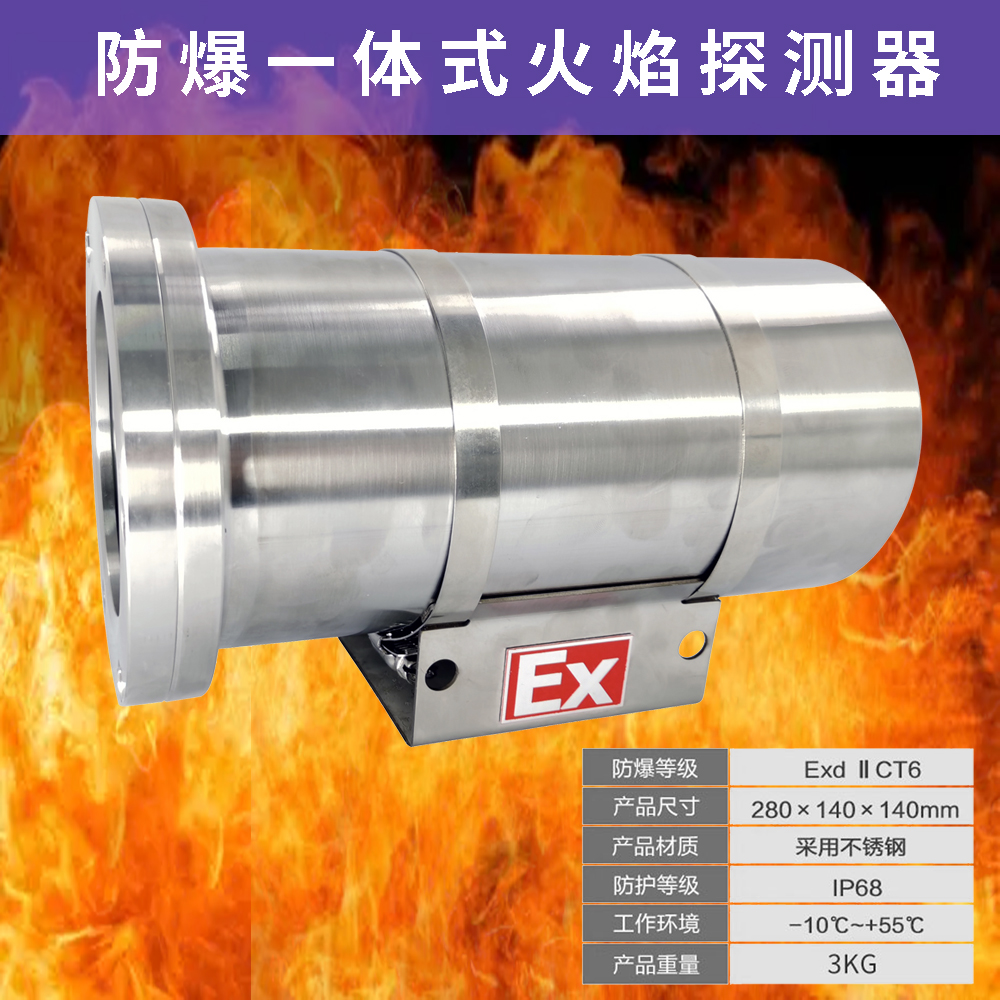
AOFT UV Flame Detector (shortened to Detector) is an unencoded (relay output) photoelectric sensor, suitable for installation in explosive gas environments with II-C T6 temperature groups. It is used for fire detection in situations where open flames are likely to occur during a fire. This product features reasonable structure, attractive design, reliable performance, and easy installation. It is a high-reliability, strong-interference-resistant fire detection device.
Ultraviolet flame sensors (185-260 nm) can respond quickly to ultraviolet radiation in the instant of fire alarm and explosion ignition (but sources of ultraviolet radiation such as lightning, arc welding, and direct sunlight can cause false alarms in ultraviolet detectors). The high-intensity LED on the detector indicates its status, and its automatic test function ensures the detector operates at full capacity at all times.
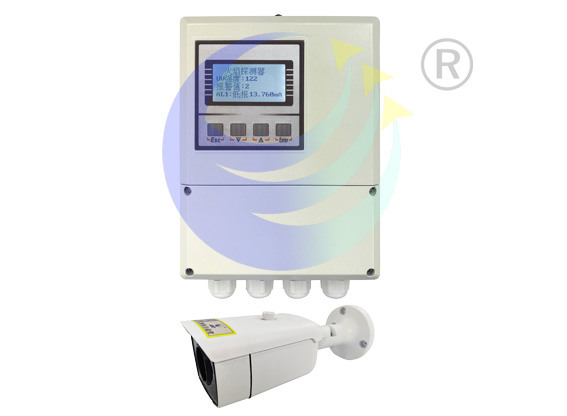
Key Technical Parameters
① Power Supply: 24VDC
② Flame Detection: The instrument operates normally upon detecting a flame.
③ Transmitter Output: 4~20mA, Current-type transmitter output load impedance: <300Ω
④ Communication Output: With RS485 communication isolation interface
⑤ Alarm Output: With one relay output, relay capacity: 0.5A/240V AC, resistive.
⑥ Alarm Status Output: 4mA ± 1mA output during normal operation.
During alarm, the output is 12mA ± 1mA.
Testing, Installation, and Wiring
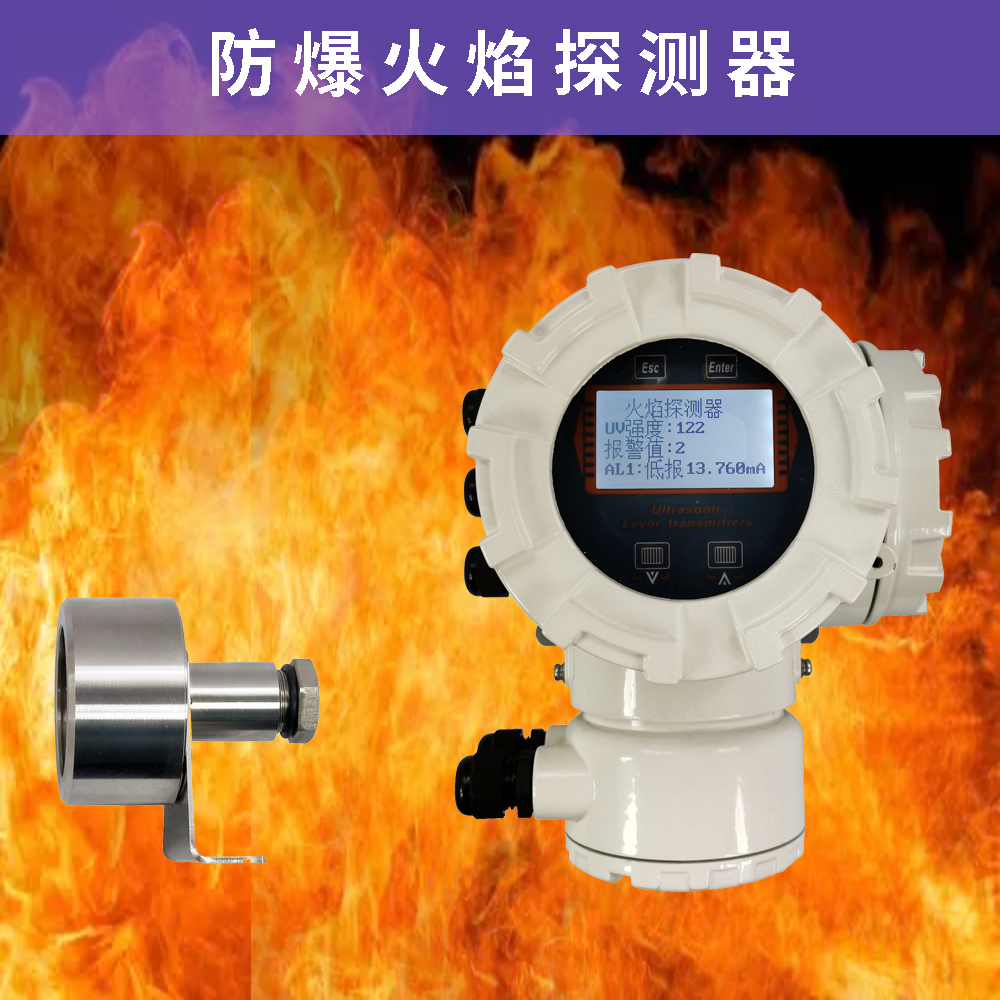
1. Test: Each detector has four external wires at the entry port, used for testing the detector. The user should perform the alarm test as soon as possible after opening the box. Connect the DC24V power cable to the detector's DC24V power terminal (note the polarity), and the other two wires are passive contacts. When there is no open flame within the detection range, the resistance between the passive contacts is infinite. When there is an open flame within the detection range, the resistance between the passive contacts is zero. Note: The four external wires of the product are only for testing purposes. When connecting the product to the system, remove the test wires and use a general cable with a cross-sectional area S≥1.0mm2. Otherwise, the explosion-proof detector will lose its explosion-proof performance.
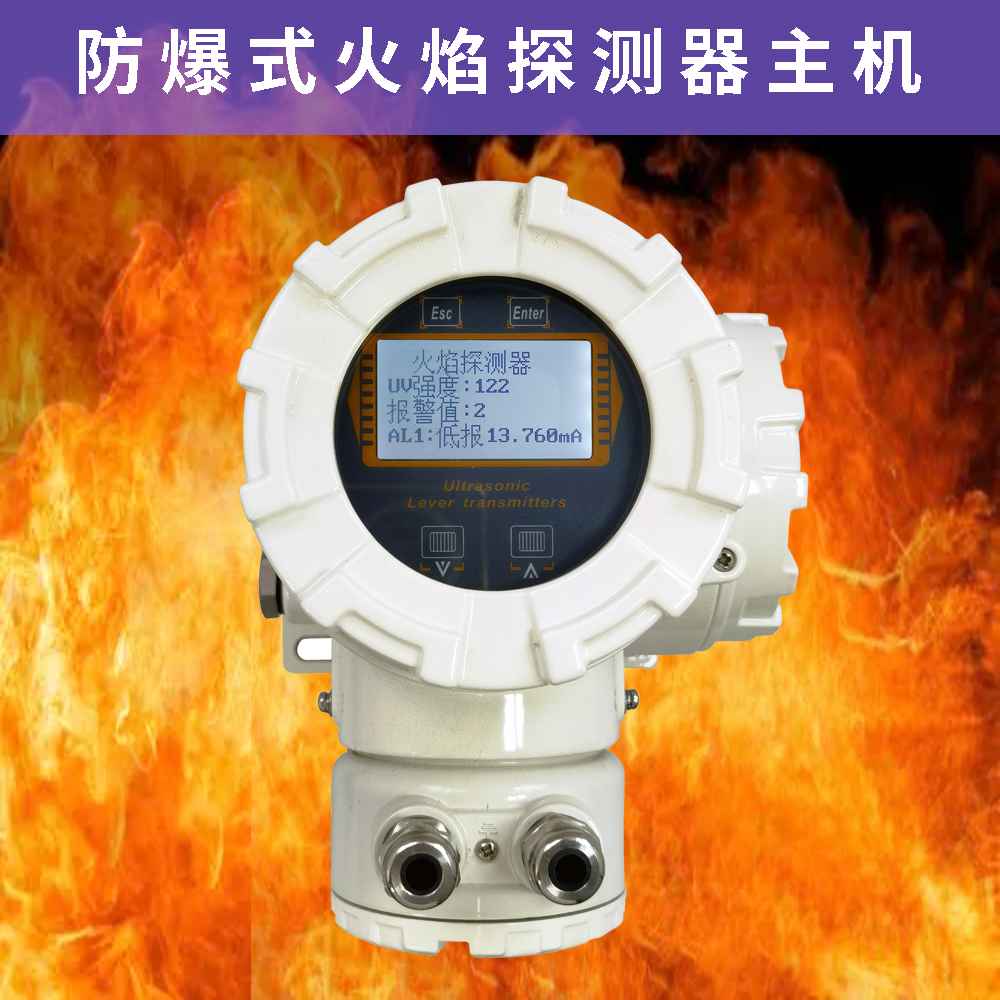
2. Installation: Mount the detector's mounting bracket to the wall, then connect the explosion-proof housing to the bracket. Cable entry device: Utilizes a sealed cap and a tight-fitting gasket structure.
3. Wiring: Loosen the fixing screws of the detector, open the wiring cavity, and connect the cable wires to the terminal connectors separately. After the wiring is complete, securely fit the cover back onto the body.
Adjustment
Warning: Please connect power only after all detectors are installed.
1. The detector must be tested after installation or each scheduled maintenance.
2. Test Content:
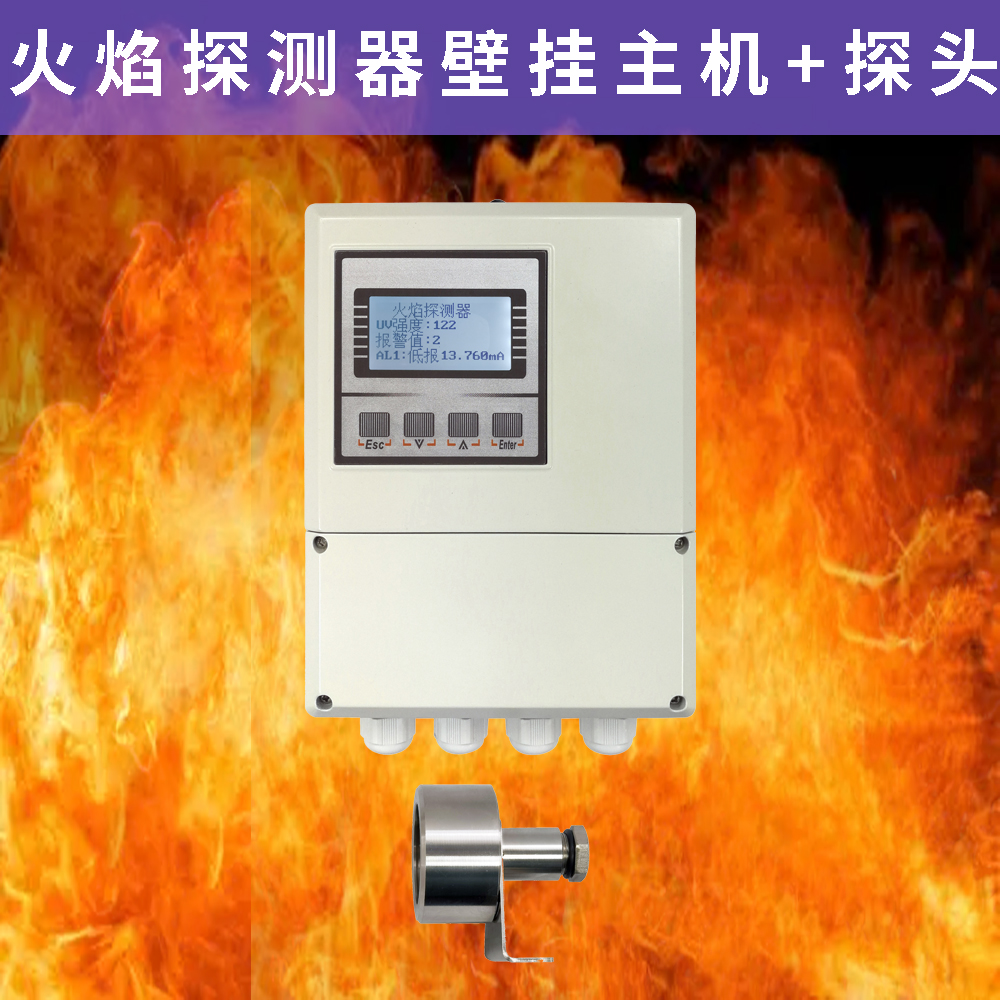
Simulated Fire Alarm: After the detector is powered on, bring a lit lighter, candle, or other UV radiation light source close to the detector. The detector should report a fire alarm, with the fire alarm indicator light illuminating and the output contact closing.
3. After testing, reset the detector by cutting off the power and notify the relevant management department that the system has returned to normal operation.
询价单


