







- AllProduct Category
-
Water Level Sensing
Traffic Sensing
Weighing Instrument
Analytical Instruments
Flow Meters
Pressure Gauges
Material Level Instrument





详情描述
AOXY5000 Dissolved Oxygen Meter
Oxygen meters measure the oxygen content dissolved in aqueous solutions. Oxygen dissolves in water through surrounding air, air flow, and photosynthesis. They are used to monitor processes where oxygen content affects reaction speed, process efficiency, or the environment, such as aquaculture, bioreactors, environmental testing (lakes, streams, oceans), water/wastewater treatment, and wine production.
Dissolved oxygen in water is consumed through respiration and decomposition, primarily replenished by air and photosynthesis. The oxygen content in water mainly depends on temperature. Oxygen concentration in warm water is lower than in cold water. However, an excessively high dissolved oxygen level can be harmful to both animals and plants.
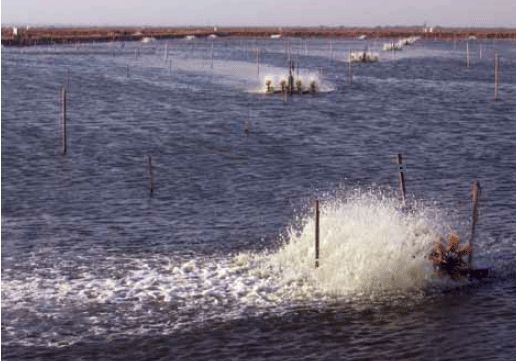
Dissolved Oxygen (DO) electrodes are used to measure the oxygen content in water solutions of samples at the site or in the laboratory. As dissolved oxygen is one of the primary indicators of water quality, DO electrodes are widely used for measuring oxygen content in various scenarios, particularly in aquaculture water, photosynthesis and respiration, and on-site measurements. When assessing the ability of brook and lake water to support biological survival, biochemical oxygen demand (BOD) tests must be conducted. These tests measure the relationship between dissolved oxygen concentration and sample water temperature as the oxygen-consuming organic sample water solution decomposes.
Oxygen concentration is typically measured in mg/L (oxygen per liter of water) or ppm (parts per million). There are two methods to determine oxygen levels: polarography and primary cell methods. In polarography, the electrode requires an instrument to input a voltage for polarization. Since the applied voltage may take up to 15 minutes to stabilize, the polarography electrode usually needs to be preheated before use to ensure proper polarization. The primary cell method consists of two electrodes made of metals that can spontaneously polarize and generate voltage. Since the voltage in the primary cell method is spontaneously generated rather than externally provided, there is no need for the "preheating" required by polarography electrodes when using primary cell electrodes.
Oxygen Solubility Meters Feature Practical Membrane Electrodes in Two Types: Polarography and Galvanic Cell. Polarography: In the electrode, a gold (Au) ring or platinum (Pt) ring serves as the cathode; silver-chloride (or mercury-chloride submercury) as the anode. The electrolyte is a potassium chloride solution. The outer surface of the cathode is covered with an oxygen-permeable film. The film can be made from materials like polytetrafluoroethylene, polyvinyl chloride, polyethylene, silicone rubber, etc. An external polarization voltage of 0.5 to 1.5 volts is applied between the two electrodes. Some polarization voltages are 0.7 volts. When dissolved oxygen passes through the film to the gold cathode surface, the following reaction occurs on the electrode.
Cathode Reduction: O2 + 2H2O + 4e → 4OHˉ
Simultaneously, the anode is oxidized: 4Cl⁻ + 4Ag - 4e → 4AgCl
Under normal circumstances, the diffusion current i∞ resulting from the aforementioned reduction-oxidation reaction is proportional to the dissolved oxygen concentration. It can be expressed by the following formula:
i∞=nFA(Pm/L)Cs
Equation: Diffusion current at the steady-state, i∞
n - number of gained or lost electrons
Faraday's Constant (96500 coulombs)
Cathode Surface Area (sq. cm)
Pm - Permeability coefficient of the film (cm²/s)
L - Film Thickness (cm)
Cs - Dissolved Oxygen Concentration (ppm)
Once the electrode structure and film are determined, A, Pm, L, n, and other terms in the equation are constants. Let K = nFA(Pm/L), then in the above equation: i∞ = KCs.
Therefore, it can be seen that once the diffusion current i∞ is measured, the dissolved oxygen concentration can be determined. To eliminate the effects of temperature, salinity, and atmospheric pressure, each model product uses its own technology for compensation.
Galvanic Cell: When external oxygen molecules pass through the film into the electrode's inner phase and reach the three-phase interface at the cathode, the following reaction occurs.
Silver cathode is reduced: O2 + 2H2O + 4e → 4OHˉ
Simultaneously, the lead anode is oxidized: 2Pb + 2KOH + 4OH⁻ → 2KHPbO₂ + 2H₂O
That is: Oxygen is reduced to hydroxide ions on the silver cathode, while simultaneously gaining electrons from the external circuit; the lead anode is corroded by potassium hydroxide solution, forming potassium hydrogen lead(II) sulfate, and releasing electrons into the external circuit. Upon connecting the external circuit, a signal current flows, its value being directly proportional to the dissolved oxygen concentration.
I. Overview
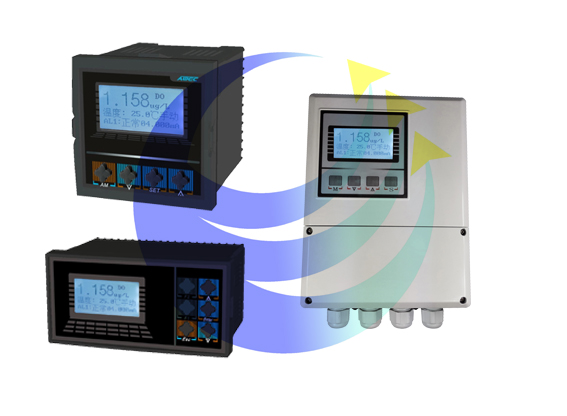
The Online Dissolved Oxygen Meter is one of our online continuous monitors, being one of the online electrochemical analyzers. It can be equipped with a T401 polarographic electrode, enabling automatic wide-range measurements from ppb to ppm levels. It is a specialized instrument for measuring oxygen content in the liquid of industries such as environmental wastewater, boiler feed water, and condensate.
The T401ppb, with its quick response, stability, reliability, and low operating costs, is ideal for extensive use in thermal power plants. Paired with the T401ppm electrode for ppm-level measurement, it is suitable for the environmental protection industry.
II. Features and Characteristics
Aesthetically pleasing, full Chinese display: Utilizes a high-resolution LCD display module, with all data, status, and operation prompts displayed in full Chinese, without any manufacturer-defined symbols or codes.
Multi-parameter Display: simultaneously shows oxygen concentration, input current or output current, temperature, and status on the same screen.
Three calibration methods: In addition to the traditional zero-point and slope calibration methods, there is also manual input for zero-point or slope.
III. Technical Specifications
1. Standard: JJG 291-1999 "Membrane Electrode Dissolved Oxygen Meter"
2. Chinese LCD display, Chinese operating interface;
3. Measurement Range: 0~200.0 ug/L; 0~20.00 mg/L (auto-switch)
0~60℃;
Resolution: 0.1 ug/L, 0.01 mg/L, 0.1℃; 0.1%
4. Basic whole machine error: ug/L: ±1.0% FS; mg/L: ±0.5% FS
Temperature: ±0.5℃
5. Whole Machine Repeatability: ±0.5% FS
6. Overall Indicating Stability: ±1.0% FS
7. Automatic Temperature Compensation Range: 0~60°C, with 25°C as the reference.
8. Response Time: <60 seconds (98% of final value at 25°C)
37℃: 98% final value < 20 seconds
9. Output Current Error: ≤±1.0% FS
10. Optional RS485 communication interface; RS232 communication is also available upon request, please specify during ordering.
Section 4: Electrode Usage and Maintenance
4.1 Electrode Working Principle
This table employs a polarographic electrode, consisting of an anode made of Ag/AgCl and a cathode of platinum (Pt), with an electrolyte filled with special components between them. The electrodes are wrapped in a silicone rubber permeation membrane. During measurement, a polarization voltage of 675mV is applied between the electrodes. Oxygen permeates through the diaphragm and is consumed at the cathode, while an equal amount of oxygen is produced at the anode. This dynamic process reaches equilibrium when the oxygen partial pressures on both sides are equal. At this point, the current between the electrodes is proportional to the oxygen partial pressure. The secondary meter detects this current, which is then transformed to obtain oxygen concentration and content. Additionally, an NTC (negative temperature coefficient thermistor) detects the temperature of the measured liquid, and the secondary meter samples it for temperature compensation, converting the oxygen concentration or content to values at 25°C.
Cathodic Reaction: O2 + 2H2O + 4e- → 4OH-
Anode Reaction: 4Ag + 4Cl- → 4AgCl + 4e-
4.2 Electrode Structure
The following image shows the components and their relationships of the oxygen electrode:
Remove protective cover when in use.
The glass rod contains a platinum wire cathode and a thermosensitive electrode, encased within a tubular silver anode. Together, they form the electrode core, which is then embedded into a stainless steel electrode rod.
Due to the reasonable geometric dimensions of the electrodes, high membrane permeability, good electrolyte composition within the electrode cavity, and minimal usage, the electrodes respond quickly. In contrast, some domestic oxygen electrodes with coated membranes require approximately 20mL of electrolyte, resulting in a significantly longer time for background oxygen consumption and causing extended periods of time without successful application.
4.3 Storage of Electrodes
When filled with electrolyte and fitted with a protective sleeve, the electrode can be stored for several months. The protective sleeve helps reduce the evaporation of the electrolyte.
If storing electrodes continuously for more than six months, pour out the electrolyte from the diaphragm to keep the anode and cathode electrodes dry. At this time, do not connect the electrodes to the secondary table for electrolysis.
4.4 Electrode Polarization
Upon initial use or after a continuous power outage of 5 to 10 minutes or more, after connecting the instrument and powering it on, the process is polarization. This is to balance the chemical system within the electrode, reduce the zero oxygen current, and stabilize the electrode. Initially, the electrode current is high and decreases exponentially, reaching a stable state after 6 hours. During this period, the displayed data will gradually decrease until stable. Calibration can then be performed.
The polarization process takes 6 hours. First, correctly connect the electrodes to the secondary meter, then plug in the instrument's power supply. If the power is off for a short period, the polarization time will be shorter, stabilizing more quickly.
4.5 Calibration of the 4.5 Electrode
Each oxygen electrode has its own zero point and slope, and as it is used, the electrolyte gradually depletes, causing the zero point and slope to change. Calibration is necessary to obtain the electrode's true zero point and slope.
Slope Calibration: Calibrate the electrode slope in the air.
Zero-point Calibration: The electrode zero-point is usually set using the laboratory comparison method, and is pre-calibrated before shipment, so the customer does not need to calibrate the zero-point again.
Upon factory shipment, we have already calibrated the zero point and slope of the electrode. In fact, the zero point is very stable, with minimal change during actual use. Even after replacing the electrolyte or diaphragm, the zero point drift is minimal.
Note: 1. Anhydrous Na2SO3 dissolves in pure water at temperatures above 35℃ to form "oxygen-free water" for zero-point calibration. This method can only detect if the electrode can drop to about 10ug/L, achieving oxygen-free water at 0ug/L is difficult. Therefore, "oxygen-free water" cannot be used for zero-point calibration.
2. Trace oxygen electrodes, each oxygen electrode only needs to be calibrated for slope in air. If the online closed measurement has a large error, the laboratory comparison method can be used to calibrate the electrode zero point using the zero-point calibration method.
4.6 Maintenance of Electrodes
Membrane clogging during use is common, leading to unstable and inaccurate measurements. Due to changes in water quality, especially for power plants, after shutting down and restarting the furnace, the water carries more impurities. In severe cases, visible dirt (such as sludge, rust, algae, etc.) can be seen covering the membrane. This type of contamination is easy to detect, but ion contamination is not as noticeable to users. The tiny ions adhere to the membrane surface, affecting its breathability, and are not easily seen with the naked eye. For this type of contamination, remove the electrode, soak it in 3% to 5% dilute hydrochloric acid for several hours before reuse.
Before each calibration, visually inspect the diaphragm for any damage. If there is dirt on the diaphragm, gently wipe it away with a soft paper.
Membranes should be replaced after failure. The following phenomena often indicate membrane failure:
Response time is elongated, and reaction is slower; secondary gauge readings are unstable, with significant drift.
4.7 Electrode Performance Inspection
To assess the quality of the electrode performance, a zero-oxygen measurement can be used to qualitatively determine the electrode's condition. First, remove the electrode, place it in the air, and stabilize for several minutes before recording the concentration value. Compare the concentration value with the temperature and concentration correlation table in the appendix; if it doesn't match, use the slope calibration. Then, immerse the electrode in an oxygen-free water solution, and after several minutes, the T401ppb electrode should be below 10ug/L, and the T401ppm electrode should be below 500ug/L. If the readings exceed these ranges, it often indicates that the electrolyte is depleted or the diaphragm is damaged, and a replacement is needed. If the issue persists after replacement, it may be a problem with the electrode itself; please contact us.
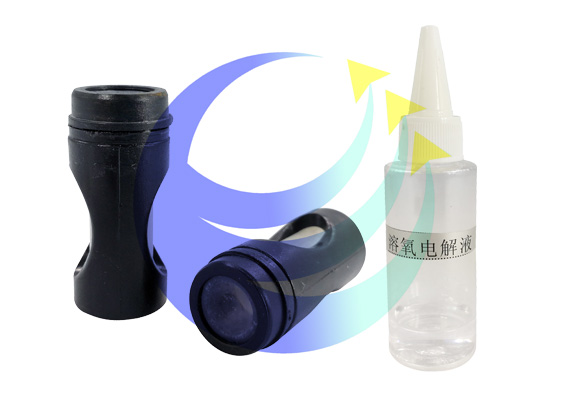
4.8 Replacement of Electrolyte and Membrane
Electrolytes have a strong alkalinity of 13.0 pH and should be avoided from contact with skin, mucous membranes, and eyes. In case of accidental contact, rinse thoroughly with plenty of water immediately. It is recommended to wear gloves for protection.
The electrodes are shipped with membranes and electrolytes, and have been tested; users can use them directly. However, if the user has stored them for several months before use, they should replace the electrolyte first.
If there is a diaphragm failure (such as increased response time, excessive current in a zero-oxygen environment, or mechanical damage, etc.), the sensitive diaphragm should be replaced.
Replace electrolyte and sensitive membrane, adhere to the following key points:
1. Hold the electrode in hand, positioning it vertically with the membrane facing down, then unscrew the old membrane.
2. Like flicking a thermometer, shake off any remaining electrolyte.
3. Rinse the membrane, positive and negative electrodes, and electrode interiors with clean water, then air dry or wipe dry with a soft paper, ensuring no water droplets remain on either.
4. Inspect the O-ring for damage; if any, replace it.
5. Pour the new original electrolyte into the (new) membrane body cavity. Do not overfill (just enough to fill the space between the electrode and the membrane) - it should occupy most of the cavity's volume.
6. Hold the electrode vertically and slowly tighten the membrane upward. Make sure to turn it two circles and then back one, to ensure no air bubbles are trapped. Excess electrolyte will seep out, wipe it clean. The membrane should fit over the O-ring easily; if it's too tight or won't fit at all, it indicates the membrane is not properly installed and needs to be reassembled.
7. After replacing the electrolyte or membrane, re-polarization and calibration are required.
询价单


