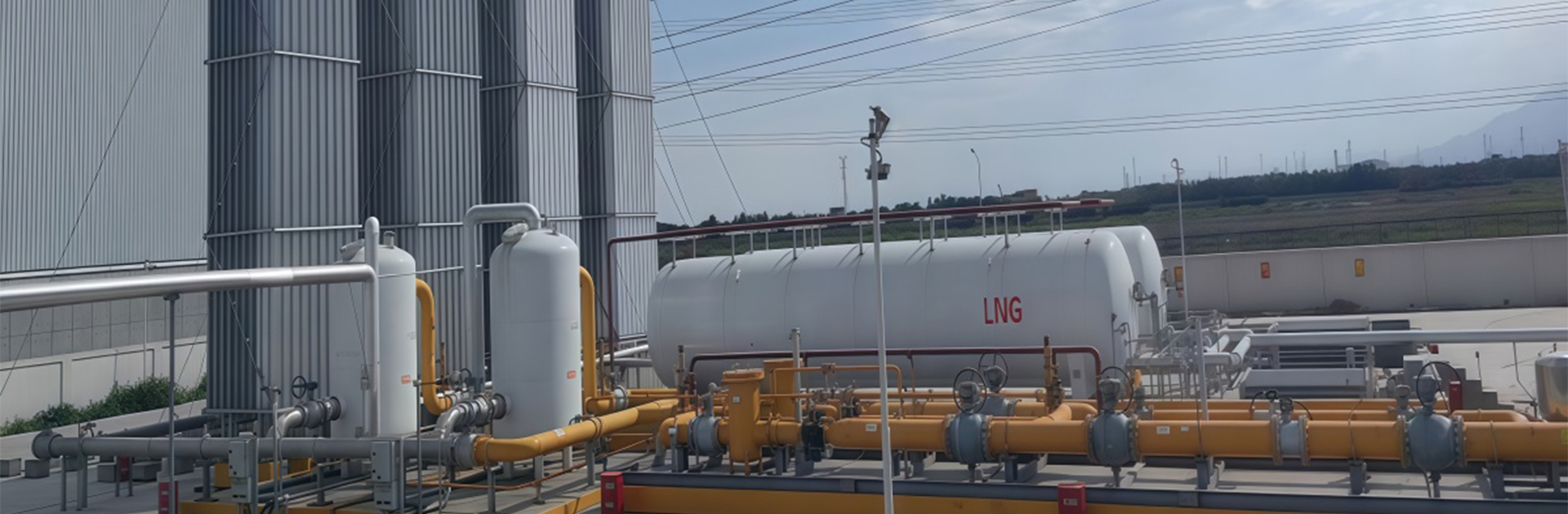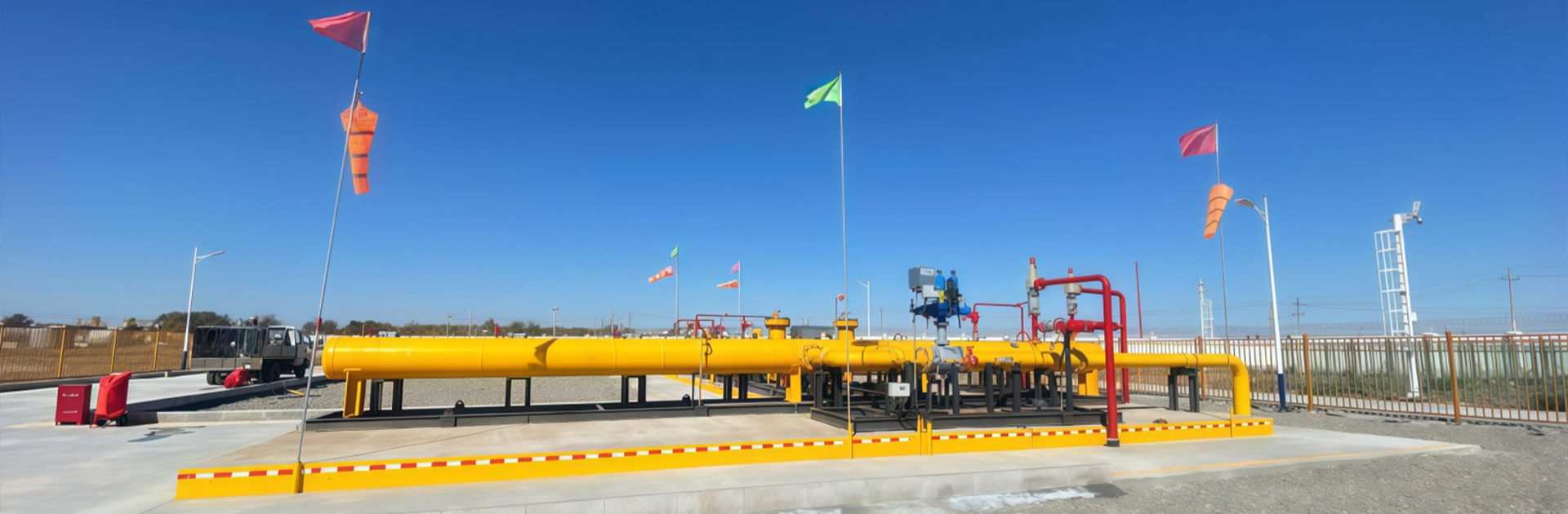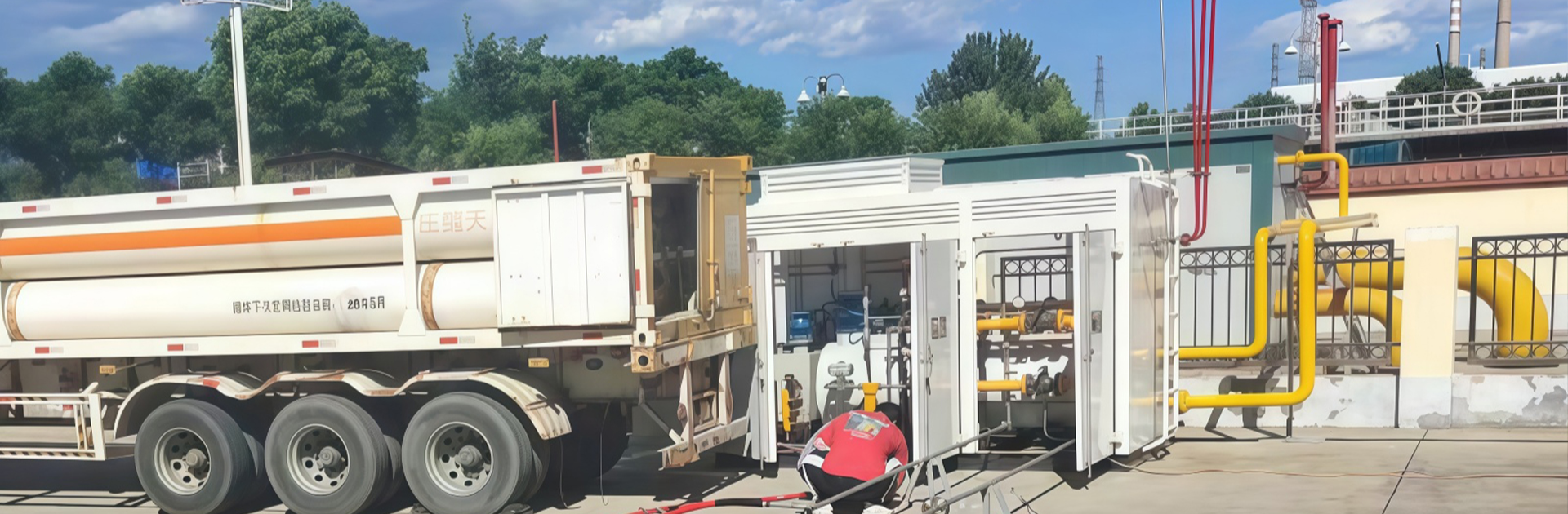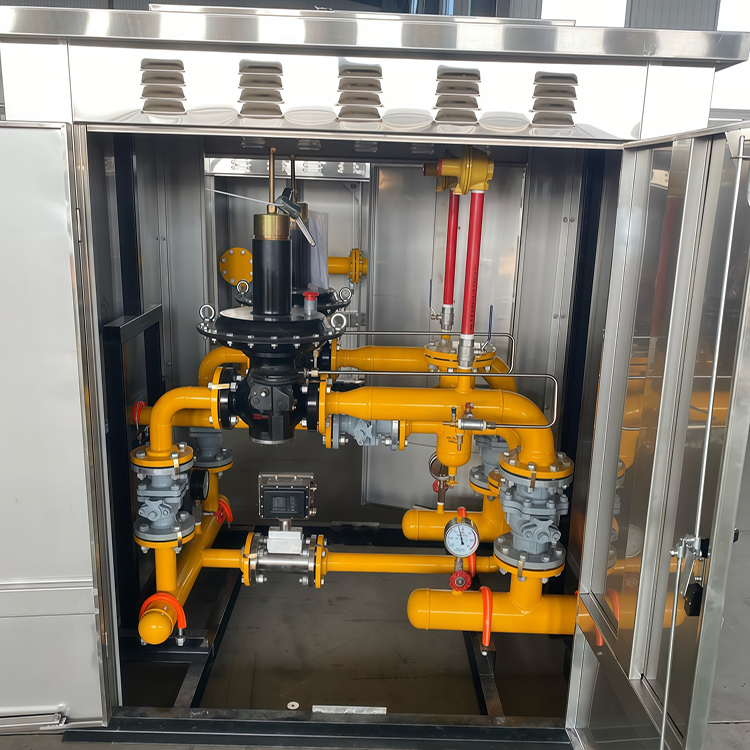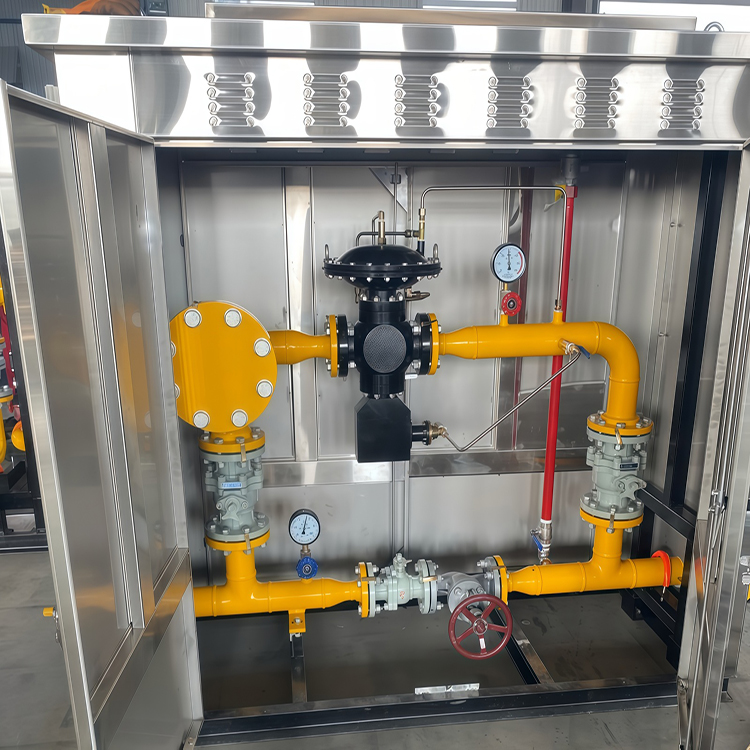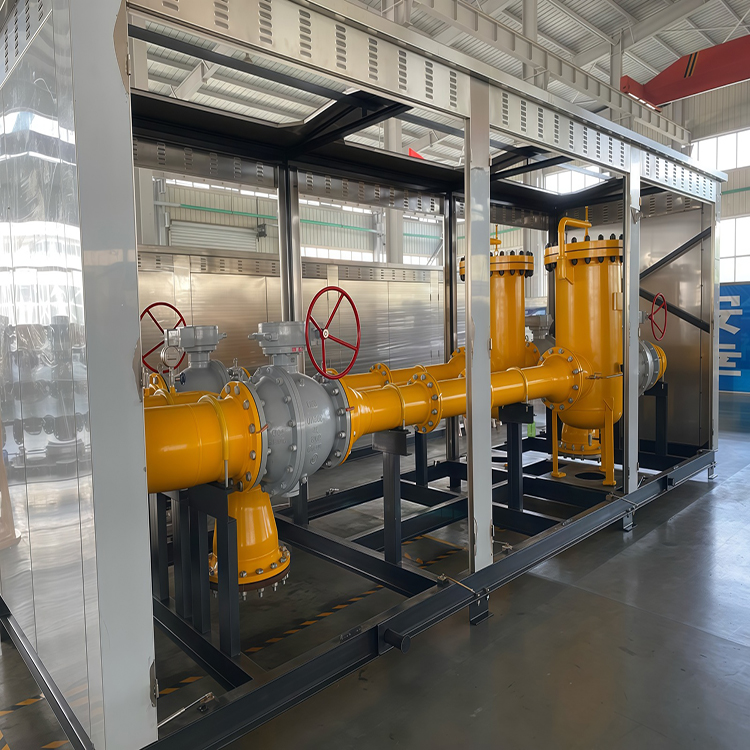
The pressure regulating cabinet achieves automatic pressure adjustment through the联动 of diaphragms, springs, and valves: when the inlet pressure increases, the diaphragm is compressed and deformed by the pressure, pushing the valve to close and reduce flow; when the pressure is insufficient, the spring rebounds, opening the valve wider to restore the gas supply. Core components include the main regulator (for pressure regulation), overpressure cut-off device (blocks gas source in abnormal conditions), and pressure relief valve (releases gas at extreme pressure).
Regular Maintenance and Inspection Points
Routine Inspections
Utilize a gas alarm to detect leaks and observe the pressure gauge readings for normalcy.
Clean the exterior of the pressure regulating cabinet, check for no rust on the cabinet and clear warning signs.
2. Key Milestones
Shut down pressure test: Close the outlet valve, and the pressure should be ≤ 1.25 times the startup pressure after 3 minutes.
Cut-off Valve Test: Gradually introduce air, verify if the cut-off pressure meets the set value.
Filter Cartridge Maintenance: Clean or replace every six months; address abnormal pressure differences immediately.
3. Common Fault Handling
Export Pressure Reduced: Check for Insufficient Pre-Pressure and Clogged Filter Cartridges
Valve Not Operating: Check for a cracked diaphragm or blocked signal hole
Pressure Fluctuations: Reset Spring Pressure or Clean Dust from the Detent Mechanism
Safety Operation Standards:
Slowly open and close the valve during start-up and shutdown to avoid pressure surges.
Fault resolution requires the operation of two or more personnel, involving the closure of进出口 valves and pressure release.
Every 3 years, replace the diaphragm of the pressure regulator and establish a maintenance record.
www.114global.com © Zhongshang 114 Hebei Network Technology Co., Ltd.Address: Room 6009, Oriental New World Center, No.118 East Zhongshan Road, Qiaoxi District, Shijiazhuang City, Hebei ProvincePlatform Service Hotline: 4006299930