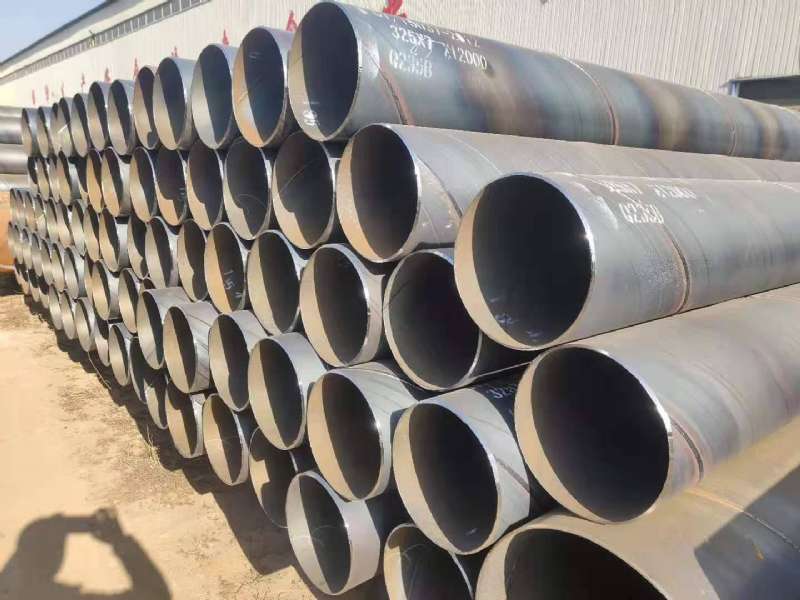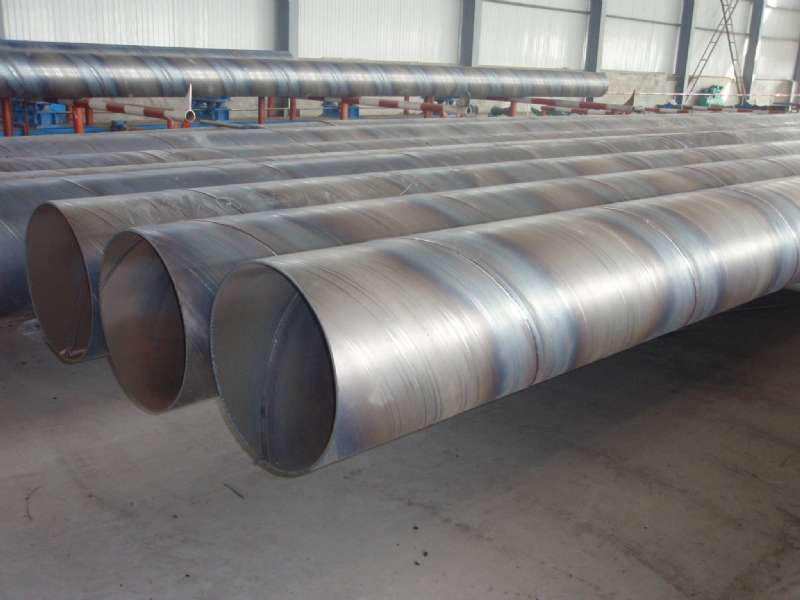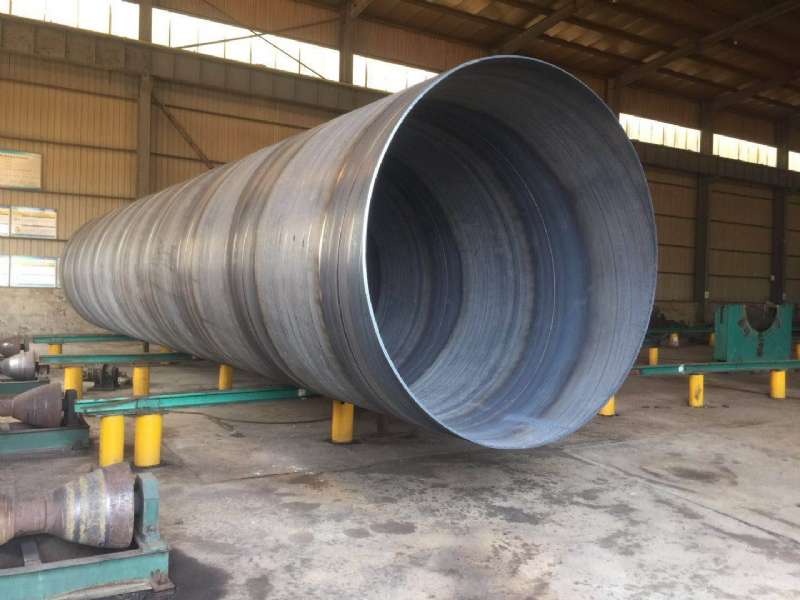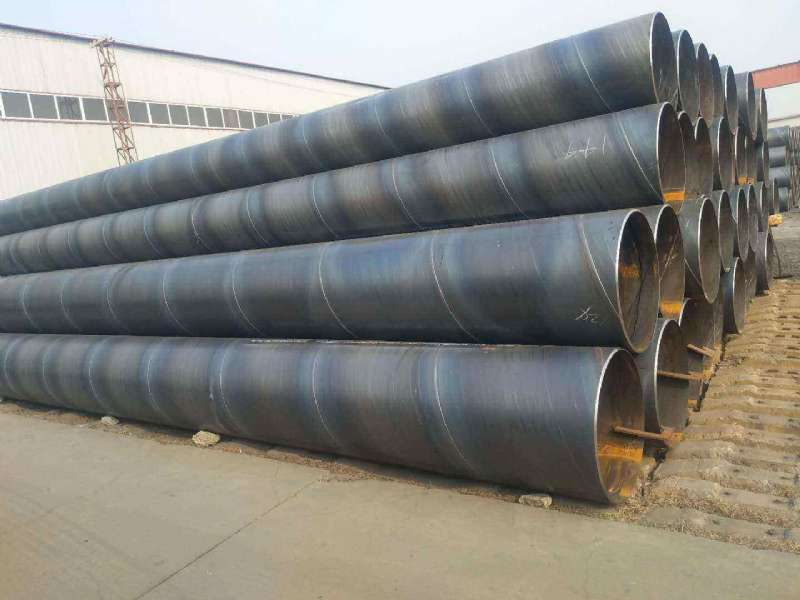


The National Standard Spiral Steel Pipe is made from strip steel coils, formed through cold extrusion, and焊接 using the automatic double-spiral double-sided submerged arc welding process. The spiral steel pipe involves feeding the strip steel into the welding pipe unit, where it passes through multiple roller rolls, gradually rolling into a circular billet with an open gap. The pressure of the extrusion rolls is adjusted to control the weld gap between 1~3mm, ensuring the ends of the weld are flush.
(1) Raw materials include steel coils, welding wire, and flux. All must undergo rigorous physical and chemical testing prior to use.
(2) Steel strip ends are joined with single or double wire submerged arc welding, and then automatically submerged arc welding is used for supplementary welding after the strip is coiled into a steel pipe.
(3) Prior to forming, the steel strip undergoes leveling, trimming, edge trimming, surface cleaning and transport, as well as pre-bending treatment.
(4) The electric contact pressure gauge is used to control the pressure of the hydraulic cylinders on both sides of the conveyor, ensuring smooth steel strip transport.
(5) Utilize externally or internally controlled roller forming.
(6) Utilize a weld gap control device to ensure the weld gap meets welding requirements; strict control is maintained over pipe diameter, misalignment, and weld gap.
(7) Both internal and external welds are performed using Lincoln electric welding machines for single or double wire flux-cored welding, ensuring consistent welding quality.
(8) All焊ed seams undergo online continuous ultrasonic automatic flaw detection, ensuring full coverage of non-destructive testing for spiral seams. In the event of defects, an automatic alarm is triggered and marking is applied, allowing production workers to adjust process parameters in real-time and promptly eliminate the defects.
(9) Single steel pipes are cut using an air plasma cutting machine. National Standard Spiral Steel Pipe | National Standard Spiral Steel Pipe Manufacturer | National Standard Spiral Steel Pipe Price
(10) After cutting the steel pipes into single tubes, each batch must undergo a rigorous initial inspection system, checking the mechanical properties of the welds, chemical composition, fusion state, surface quality of the pipes, and undergo non-destructive testing to ensure the tube manufacturing process meets standards before formal production can commence.
(11) Areas with continuous ultrasonic flaw detection markings on the welds are subject to manual ultrasonic and X-ray re-inspection. If defects are confirmed, they are repaired and then re-inspected for non-destructive testing until the defects are eliminated.
(12) All pipes at the welds of steel strips and the T-joints intersecting helical welds have been inspected using X-ray televisions or filmography.
(13) Each steel pipe undergoes hydrostatic testing with radial sealing pressure. Both the test pressure and time are strictly controlled by the steel pipe hydraulic pressure microcomputer detection device. Test parameters are automatically printed and recorded.
(14) Machining at the pipe end ensures precise control of the end face perpendicularity, bevel angle, and burr.