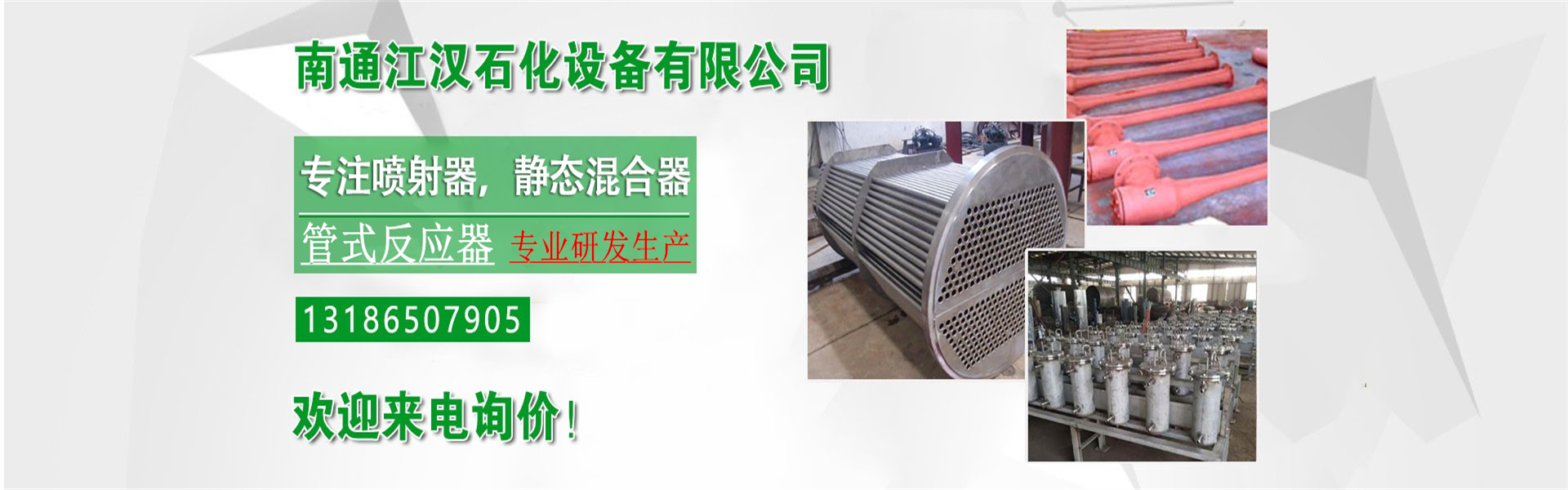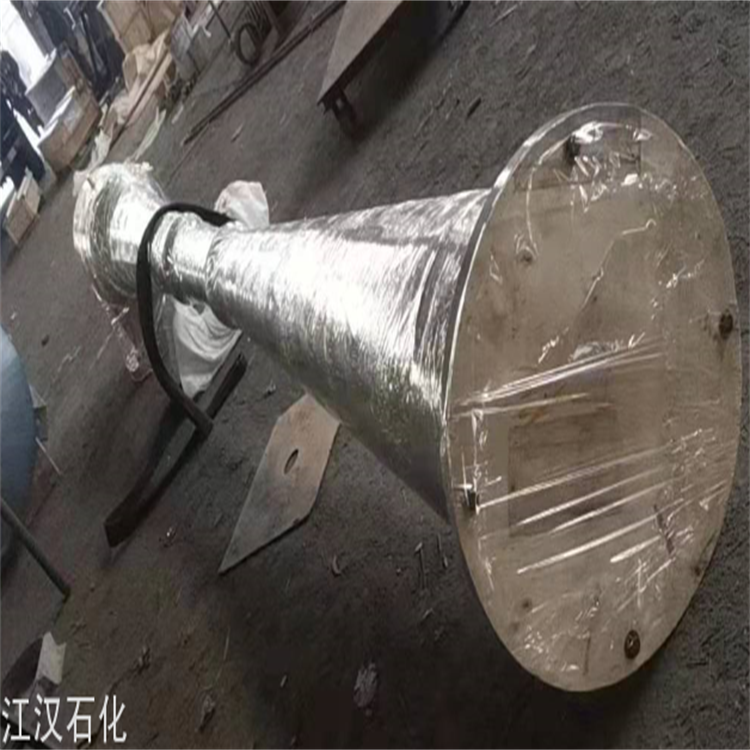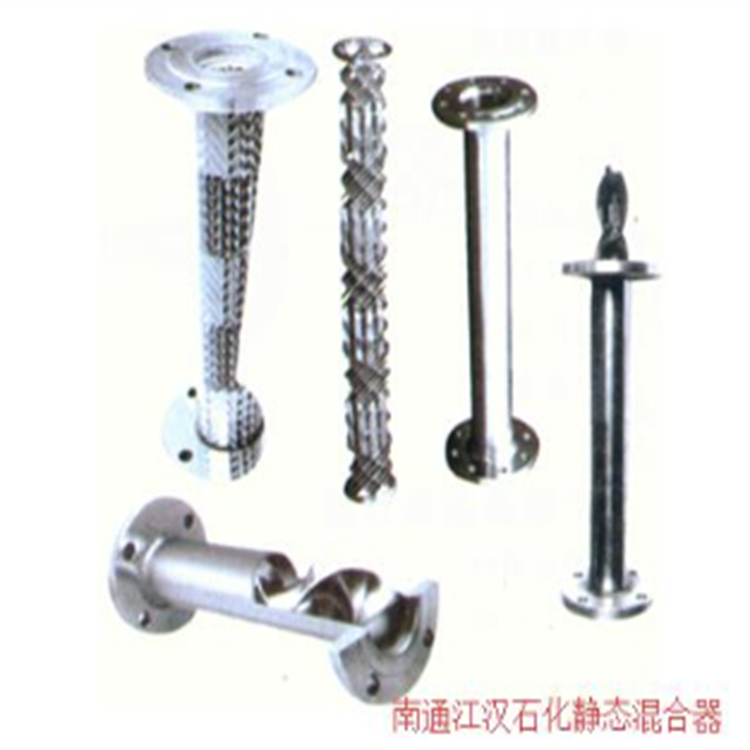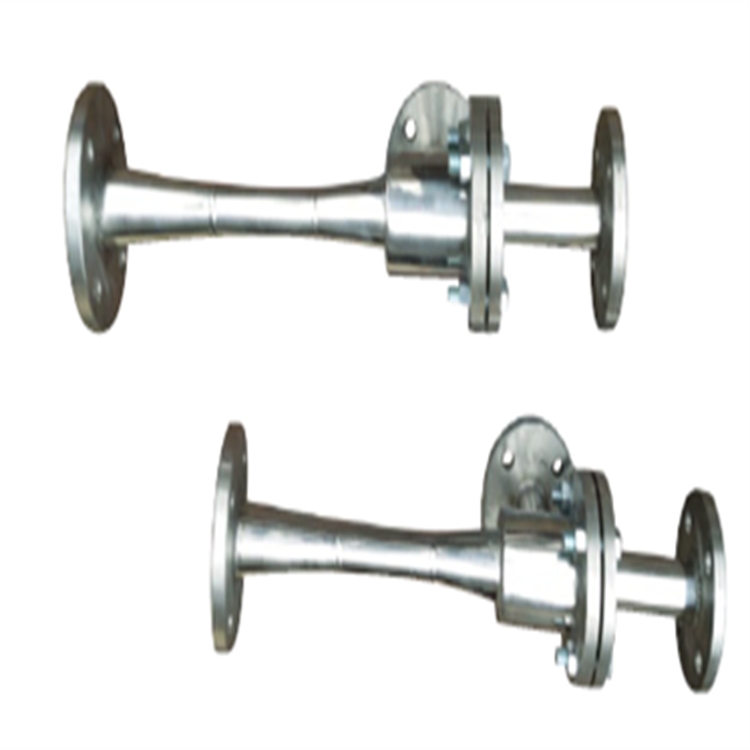
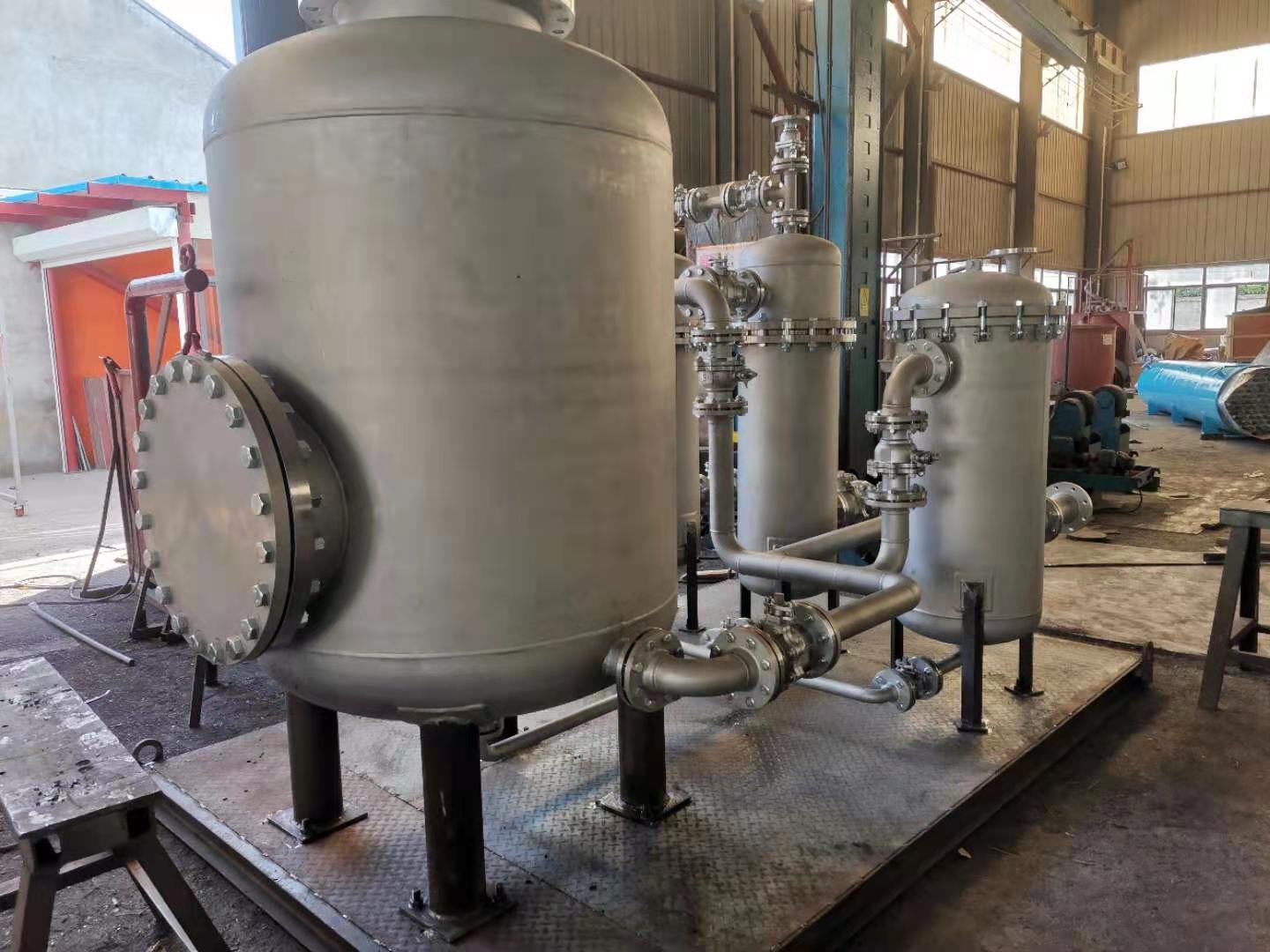
Specializes in tubular reactors, pipe reactors, steam-water mixers, and other petrochemical equipment
13186507905


Product Recommendation
No Chinese content provided. Please provide the text to be translated.Tubular reactors and kettle reactors each have their own advantages and can perform their respective strengths in operation. However, to understand the differences between the two, one must analyze their performance and characteristics. This way, customers can make informed decisions on which to choose. Here are some points to consider: ① There are differences between tubular reactors and kettle reactors, and whether a switch is possible depends on the specific process and reaction requirements. ② Generally speaking, tubular reactors are classified as plug flow reactors, while kettle reactors are classified as complete mix reactors. The reaction process may have specific requirements for both plug flow and complete mix. ③ Tubular reactors typically have shorter residence times, whereas kettle reactors generally have longer residence times. Removing reaction heat is more challenging in tubular reactors compared to kettle reactors. ④ External jackets or internal coils can be installed outside the kettle or inside the kettle, respectively. In your case, consider a hybrid reaction process using both tubular and kettle reactors, where the bottom outlet material from the kettle reactor is circulated into the tubular reactor and then back to the kettle reactor. ⑤ An external circulation cooler can be set up after the tubular reactor to control temperature. Reaction feed enters from the tubular reactor's inlet or the external circulation pump's inlet, and the finished material overflows from the kettle reactor's top. This way, both reactors are utilized. Although tubular reactors differ from kettle reactors, each has its own strengths. Therefore, when selecting equipment, choose what best fits your needs to save time, effort, and costs, while yielding greater benefits.
Principle of釜Reactor
Batch Reactor, also known as an Intermittent Kettle Reactor
Flexible operation, easy to adapt to various operating conditions and product varieties, suitable for the production of small batches, diverse products, and those with longer reaction times. The disadvantages of the batch kettle are: it requires auxiliary operations such as loading and unloading.
Quality of the products is not easily stable. However, some reaction processes, such as certain fermentation and polymerization reactions, still face difficulties in achieving continuous production, and batch reactors are still being used to this day.
Batch operation reactors add raw materials in a certain proportion at one time, and then discharge the material once after the reaction reaches a certain requirement. Continuous operation reactors continuously add raw materials and continuously discharge the reaction.
When the operation reaches a steady state, the composition and state parameters such as temperature of the material at any position within the reactor do not change over time. A semi-continuous operation reactor is also known as a semi-batch reactor.
Between the two, it is typically done by adding one reactant at a time, followed by the continuous addition of the other reactant. Once the reaction reaches the required level, operations are halted and the material is discharged.
The advantages of batch reactors include their simplicity, as they can be used to produce a variety of products with the same equipment, making them particularly suitable for small-scale, diverse production in industries such as pharmaceuticals and dyes. Additionally, batch reactors offer...
No material blending; beneficial for most reactions. Drawback is the need for auxiliary processes like loading and unloading, cleaning, etc., which makes it difficult to maintain stable product quality.
2. Continuous釜reactor, also known as a Continuous釜
The disadvantages of the batch kettle can be avoided, but the stirring action may cause back-mixing of the fluid inside the kettle. In cases of vigorous stirring, low liquid viscosity, or longer average residence time, the flow pattern of the material inside the kettle can be considered as perfectly mixed.
The reactor is correspondingly called a fully mixed reactor. In situations where high conversion rates are required or there are coupled side reactions, the back-mixing phenomenon in the釜 reactor is an adverse factor. At this point, a multi-reactor in series can be used to minimize it.
The adverse effects of mixing back and the ability to control reaction conditions by batch.
Mass production should ideally utilize continuous reactors. The advantages of continuous reactors include stable product quality and ease of operation and control. However, a drawback of continuous reactors is the presence of varying degrees of backmixing, which...
Most reactions are detrimental factors that should be suppressed through rational selection of the reactor and structural design. Composed of tubes with a large length-to-diameter ratio, either empty or filled, they are suitable for achieving gas-phase and liquid-phase reactions.
The principle of the tubular reactor is composed of a hollow tube or a packed tube with a relatively large length-to-diameter ratio, which can be used to achieve gas-phase and liquid-phase reactions.
Performance Features:
Due to the equal residence time of the reactant molecules within the reactor, the concentration of the reactants and the rate of the chemical reaction at any point within the reactor remain unchanged over time, varying only with the length of the tube.
2. The tubular reactor features small volume, large specific surface area, and a large heat transfer area per unit volume, making it particularly suitable for reactions with significant heat effects.
Due to the rapid reaction rate and high flow rate of the reactants in the tubular reactor, its production capacity is high.
4. Tubular reactors are suitable for large-scale and continuous chemical production.
5. Compared to the釜-type reactor, it exhibits less backmixing, and at lower flow rates, the fluid flow pattern inside the pipe is closer to an ideal fluid.
The tubular reactor is suitable for both liquid-phase and gas-phase reactions, particularly ideal for pressure reactions.
Additionally, the tubular reactor allows for segmented temperature control. Its main drawback is that when the reaction rate is very low, the required pipeline becomes excessively long, making it difficult to achieve industrially.
Contact us

Service Hotline
13186507905
Company Telephone
13186507905

Address
8, Chengdong Industrial Park, Qidong, Jiangsu Province
www.114global.com © Zhongshang 114 Hebei Network Technology Co., Ltd.Address: Room 6009, Oriental New World Center, No.118 East Zhongshan Road, Qiaoxi District, Shijiazhuang City, Hebei ProvincePlatform Service Hotline: 4006299930