




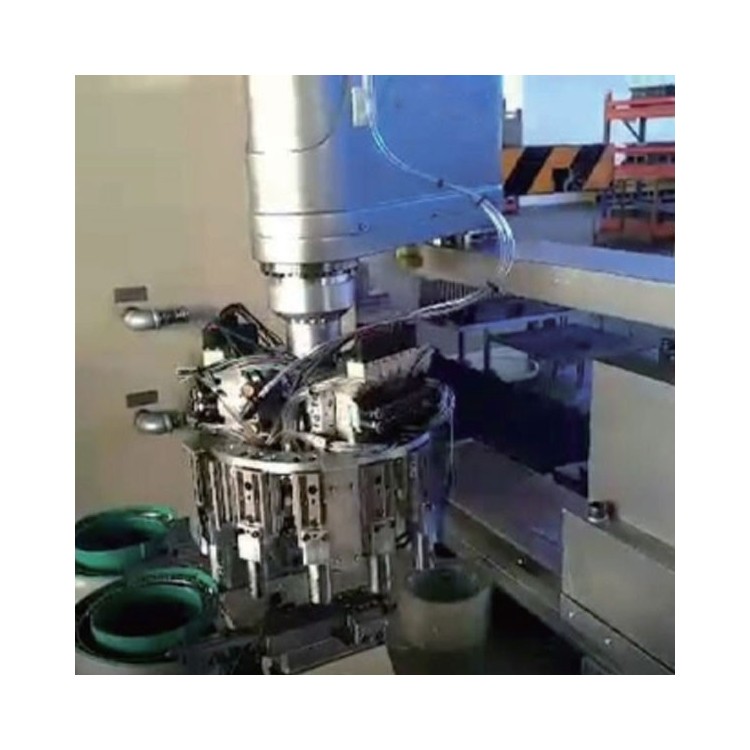

Assembly robots are the core equipment of flexible automation assembly systems, consisting of robot manipulators, controllers, end-effectors, and sensor systems. The manipulator structures include horizontal joint, Cartesian coordinate, multi-joint, and cylindrical coordinate types, among others; controllers typically use multi-CPU or multi-level computer systems for motion control and programming; end-effectors are designed into various grippers and wrists to accommodate different assembly objects; and the sensor system gathers information on the interaction between the assembly robot, the environment, and the assembly objects. Common assembly robots include the Programmable Universal Manipulator for Assembly (PUMA) robots (introduced in 1978, the ancestor of industrial robots) and the Selective Compliance Assembly Robot Arm (SCARA) robots. Compared to general industrial robots, assembly robots feature high precision, good compliance, a smaller working range, and the ability to be integrated with other systems, and are mainly used in the manufacturing of various electrical appliances.
3C industry keyboard tray
