
A team dedicated to quality product for many years
021-65352003
In gas chromatography analysis, the common sample forms during injection are typically liquids or gases. Actual samples (such as vegetables) are converted into liquid samples after undergoing pretreatment steps like solvent extraction, filtration, extraction, concentration, and final volume adjustment. Volatile components from water, soil, and solid waste (after treatment), as well as atmospheric and factory exhaust gases, are processed as gas samples. The varying forms and properties of samples result in different methods of introducing them into the injector, giving rise to a variety of sample introduction devices.
Common sample introduction devices include micro syringes, gas-tight syringe needles, multi-port valves, thermal desorption devices, purge and trap devices, headspace samplers, and solid-phase microextraction.
1. Headspace Analysis and HeadspaceSampler
1.1 Basic Principles and Working Process
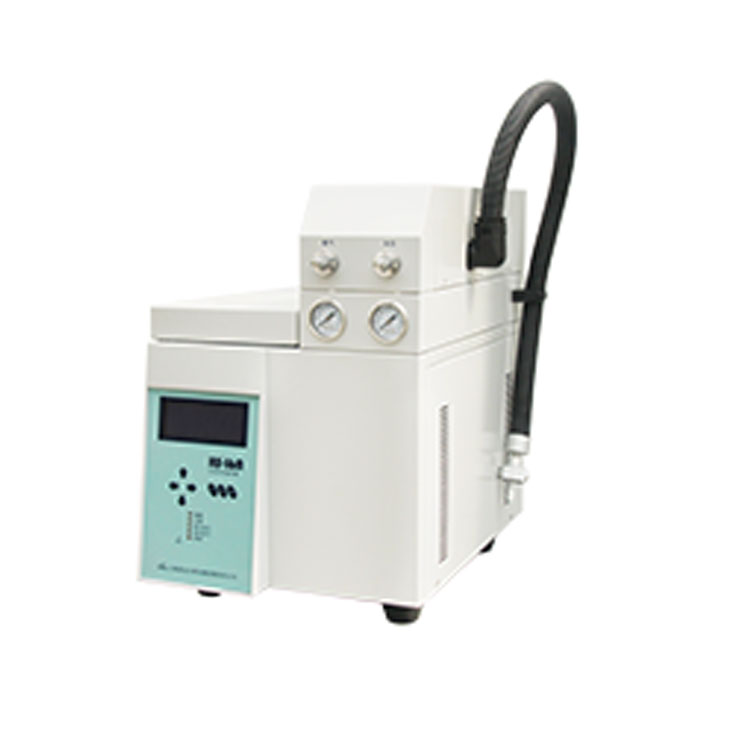
The principle of Static HeadSpace Analysis (HS/Static HeadSpace) involves placing the sample to be tested (liquid or solid) into a sealed container (sample vial). Under specific temperature conditions, volatile components of the sample enter the gas phase space within the vial, while some volatile components in the gas phase space return to the sample. After a certain period, the system reaches dynamic equilibrium, and the concentration of volatile components in the gas phase space within the vial remains constant and is proportional to the original concentration of volatile components in the sample. At this point, extracting a portion of the gas from the gas phase space within the vial for gas chromatography analysis allows for the determination of the composition and content of volatile components in the sample. Since the sample (liquid or solid) is generally located at the bottom of the vial and the gas phase space is at the top, this type of analysis is called headspace analysis. The headspace sampler is a device based on the headspace analysis principle, designed for sample equilibration, sampling, and injection into a gas chromatograph.
1.2 Characteristics and Application Scope of Headspace Analysis
Headspace analysis can directly measure volatile substances in liquid and solid matrices, such as alcohol content in blood, carbon tetrachloride in drinking water, and benzene compounds in water, without the need for other pretreatment techniques. This eliminates the organic contamination risks associated with pretreatment processes like extraction, while also removing matrix interferences, enhancing the measurement sensitivity. It finds wide applications in natural product analysis, environmental monitoring, and traffic law enforcement.
The image below shows the use of a headspace sampler coupled with a gas chromatograph to measure alcohol content in blood:
The relationship with Sweep and Capture (P&T) and Dynamic Headspace (DHS)
Due to the sealed state of the sample bottles during sampling analysis, the volatile components are in a dynamic equilibrium within the gas phase space of the sample bottles and the analyte sample (liquid or solid), with their concentrations remaining constant in both. This type of headspace analysis is generally referred to as "Static Headspace Analysis," distinguishing it from Purge and Trap (P&T) and Dynamic Headspace Analysis (DHS).
The sweeping and collection device continuously passes gas through the sample during sampling analysis, sweeping volatiles from the top of the sample bottle into an adsorption tube (collection trap) containing adsorbent material for enrichment (collection). In principle, the sweeping and collection method, which uses inert gas to sweep the sample and remove volatile substances from the top of the sample bottle, is a non-equilibrium continuous extraction process. As the sweeping gas disrupts the two-phase equilibrium within the sealed container, the partial pressure of volatile components in the top gas phase approaches zero, causing them to continuously evaporate from the liquid phase. This differs from "static headspace" analysis, where volatile components in the sealed container (sample bottle) reach a dynamic equilibrium between the gas and liquid (or solid) phases. Sweeping and collection is often referred to as "dynamic headspace" in many literature.
In practice, there is another type of product known as "dynamic headspace," which is similar to a purge and trap device. The main difference is that a purge and trap device requires the introduction of an inert gas into the sample and bubbling the sample during the purge process, whereas the dynamic headspace device continuously passes the inert gas through the headspace above the sample without using bubbling. In this case, dynamic headspace is not only suitable for liquid samples but also for solids or sticky materials.
Summary
Many manufacturers produce headspace sampler instruments, which are easy to operate and highly automated. Each instrument has its unique features in terms of principle, such as using gas-tight needles, balanced pressure, or pressure loop modes for sampling.
The combination of headspace analysis, headspace samplers, and gas chromatography coupled with mass spectrometry is widely used, involving numerous relevant standards. It boasts features like simple pretreatment, high sensitivity, and easy operation, as evidenced by recommendations in standards like "HJ 1067-2019 Determination of Benzene Compounds in Water by Headspace-Gas Chromatography" and "GAT 842-2019 Method for Testing Blood Alcohol Content." With the development of related industries, headspace analysis and its equipment are expected to be more prevalent in laboratories.
Contact us

Service Hotline
13391046116
Company Telephone
021-65352003

Address
No. 1300, Lane 1300, Yangpu District, Shanghai, China, Building 11, Hesheng Tea Shore Cultural and Creative Park
www.114global.com © Zhongshang 114 Hebei Network Technology Co., Ltd.Address: Room 6009, Oriental New World Center, No.118 East Zhongshan Road, Qiaoxi District, Shijiazhuang City, Hebei ProvincePlatform Service Hotline: 4006299930