
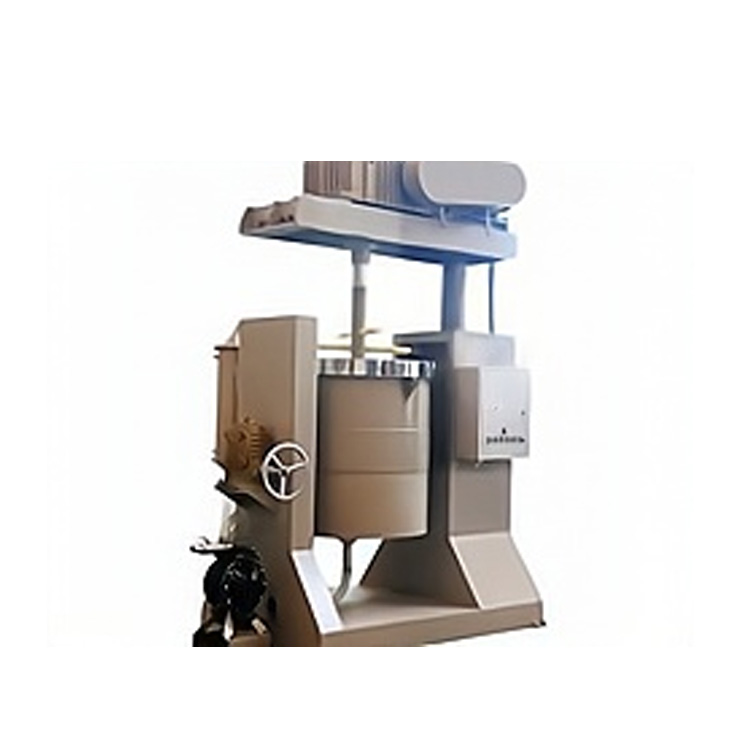
 Vertical Mixing Ball Mill
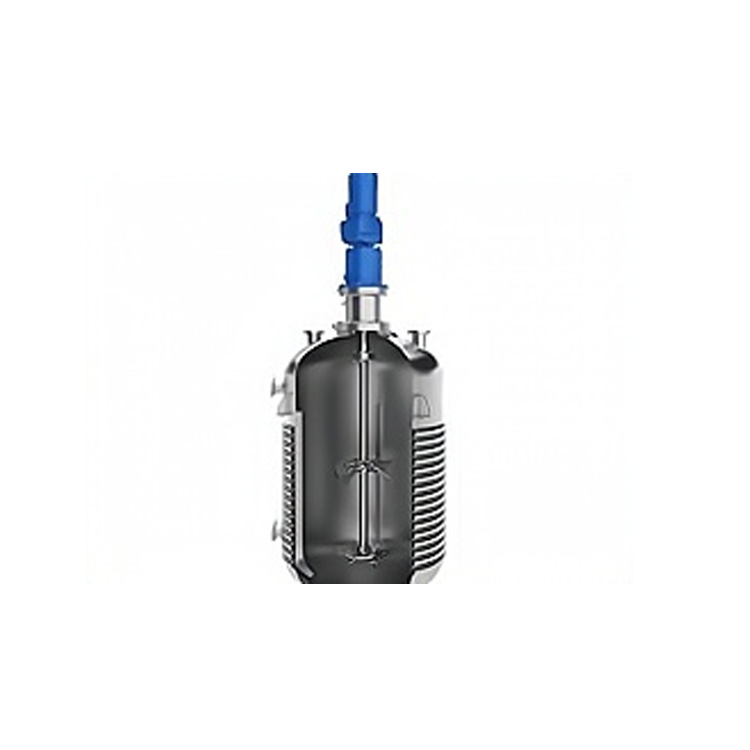 Agitator Tank
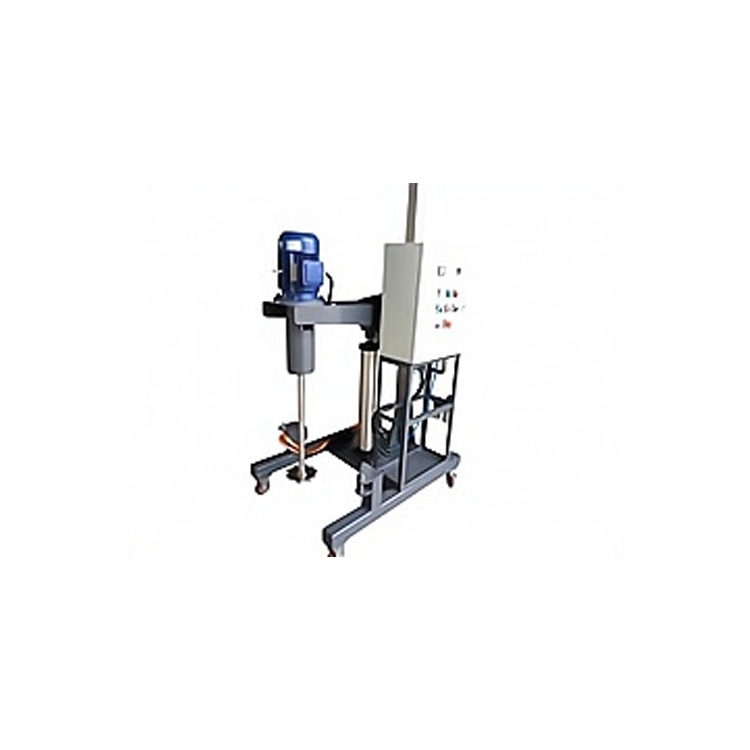 Pneumatic Lift and Scatter Machine
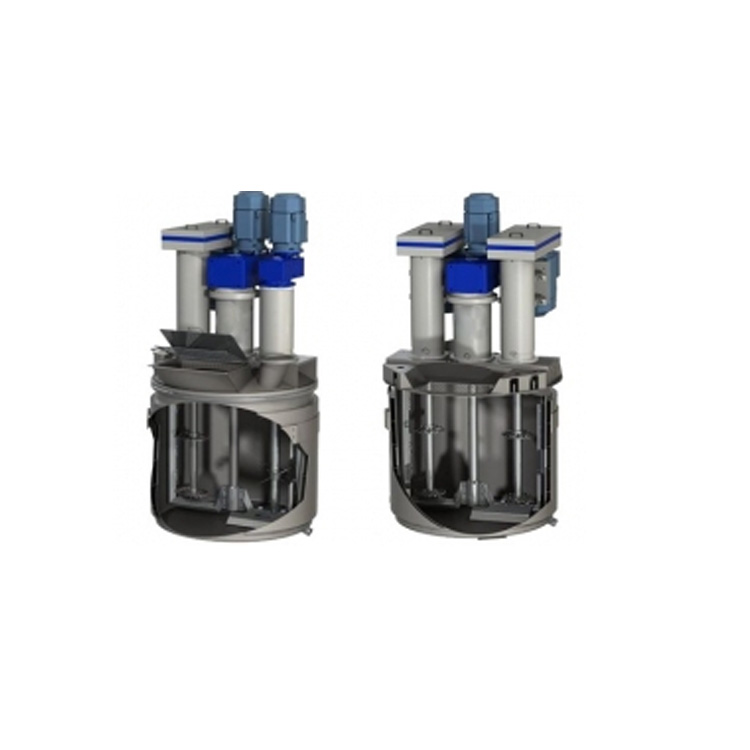 Multi-functional Blender/Drum
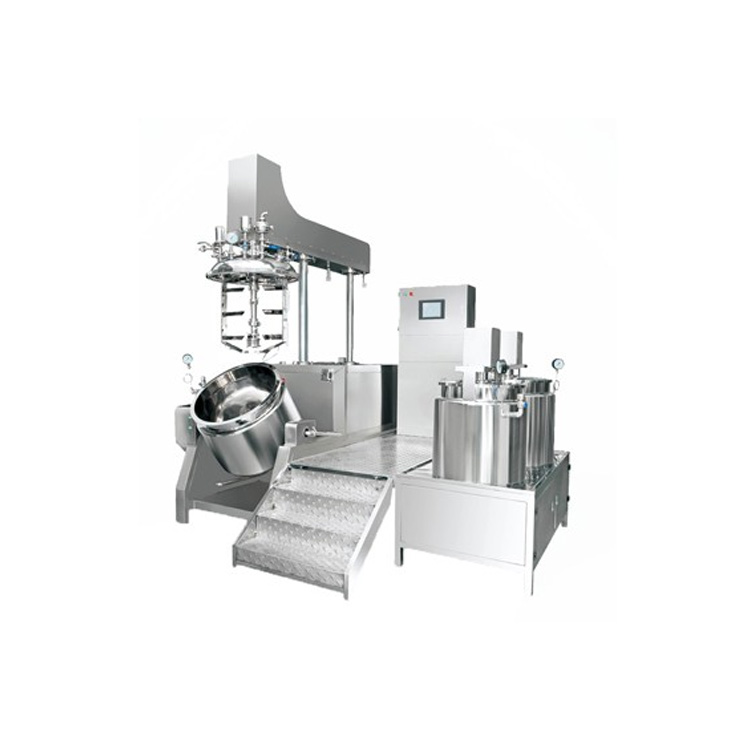 Vacuum Emulsifying Blender
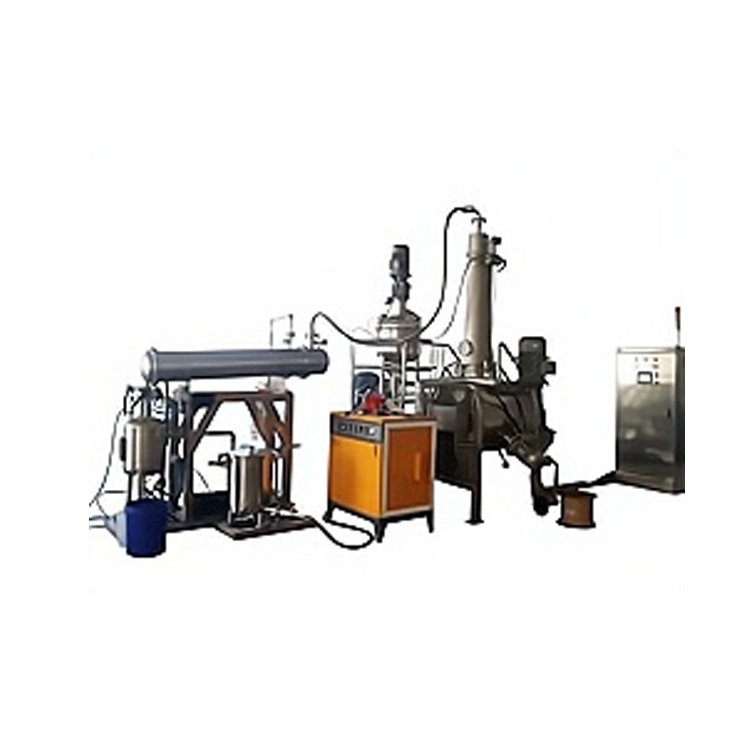 Horizontal Plow Blade / Broom-Type Vacuum Dryer
Product Details

Equipment

产品Price Negotiable
最小起订Quantity: 供货总Quantity:


Do you offer customization? |
|
Specification |
Comprehensive |
Shipment Time |
7 days |
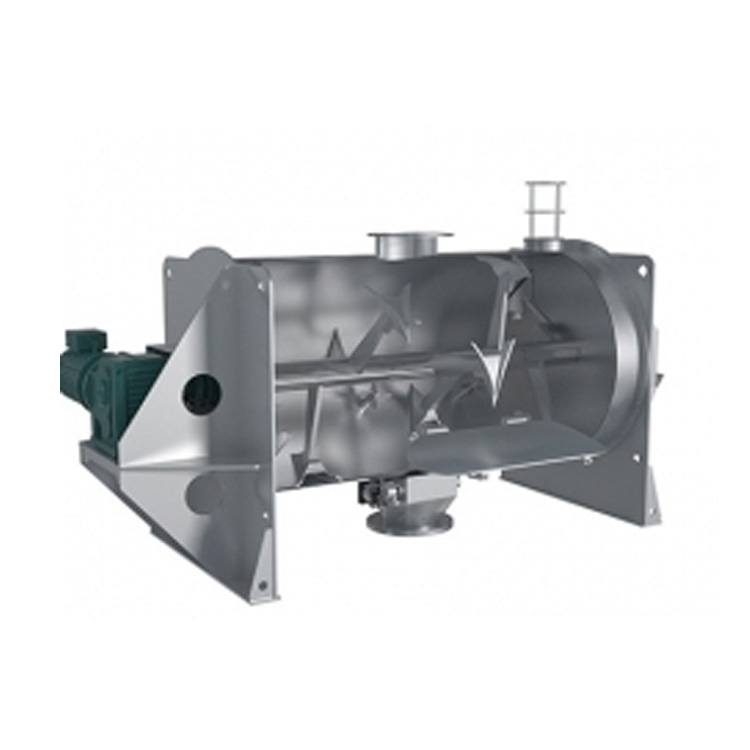
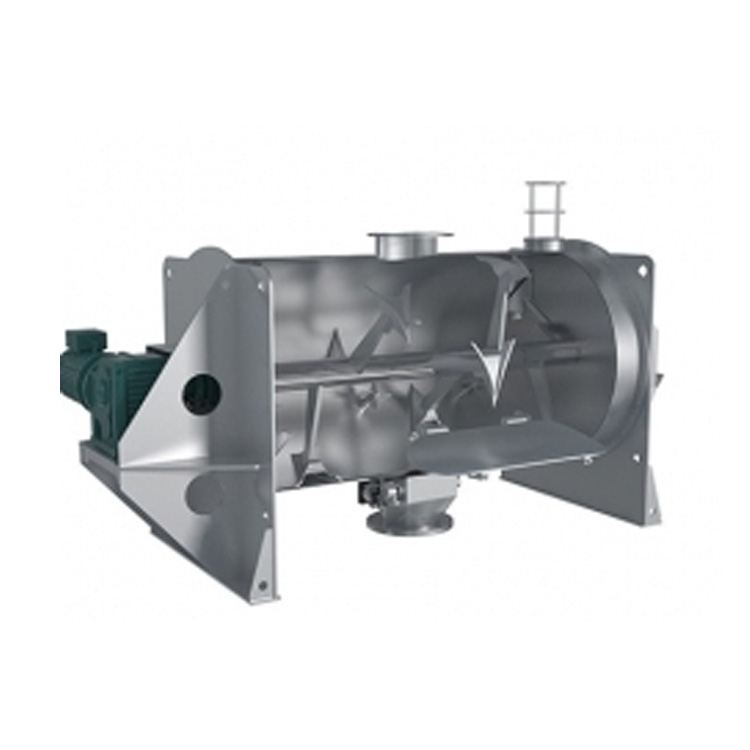
Horizontal犁刀mixers are applicable to the mixing of powders with powders, powders with liquids (i.e., liquids added to powders), and powders with pastes in industries such as chemicals, coatings, food, feed, fuel, metallurgy, and mining. They are also used in complex processes like wet granulation, drying, and concentration. This machine features high-speed knife action for dispersion, allowing materials to achieve uniform mixing in a short period under the combined action of the plow and the knife. Particularly suitable for mixing powders with paste materials and powders with fibrous materials, it is a new type of mixing equipment characterized by high efficiency, high uniformity, high crushing, low energy consumption, and low pollution. Working Principle: Once the mixer is operational, the plow blades rotate around the axis, causing the material to move in a circular turbulent motion along the radial direction of the cylindrical body, while simultaneously throwing the material outwards along the normal direction of the sides of the plow blade. When the material flow, thrown and helically turbulent, passes through the flying knife assembly, it is quickly and powerfully scattered by the rapidly rotating knives. Materials undergo continuous replacement and dispersion under the combined action of the aforementioned plow and flying knives, achieving uniform mixing in a short period of time with high mixing accuracy. For materials requiring solid-liquid mixing, the mixed liquid is evenly sprayed onto the moving material within the drum via a spray device. Component Parts: The mixer structure is mainly composed of the transmission part, horizontal cylinder, plow blade shaft assembly, flying knife assembly, discharge valve, and spray liquid device. The transmission part of the blender includes a motor, reducer, and coupling, primarily converting the motor's motion into the required speed and torque to be transmitted to the complex blade shaft. The horizontal cylinder is made from steel plates, used for containing materials. The cylinder features several holes for material intake and output, as well as observation. The plow blade shaft support is fixed to the covers at both ends of the cylinder. The plow blade assembly consists of the plow blade, blade arm, and main shaft. The plow blade is mounted on the main shaft using the blade arm and serves as a hinged structure for easy disassembly. The Fly Knife Assembly consists of multiple flying knives, directly driven by an auxiliary motor and mounted on the cylinder side. To prevent dust from entering the bearings, the fly knife shaft is equipped with a multi-sealed structure. The discharge valve is mounted at the bottom of the cylinder (except for continuous discharge), used for closing and releasing materials. Its operation is achieved through the handle and a four-bar linkage mechanism. Optional Features: Flexible material selection options The mixer can be customized with carbon steel, manganese steel, 304 stainless steel, 316L stainless steel, 321 stainless steel, and other steel materials, and different materials can also be combined. Material selection distinction: parts in contact with the material and parts not in contact with the material; the interior of the mixer can also be targeted to add functional coatings or protective layers such as corrosion resistance, anti-adhesion, insulation, and wear resistance; surface treatment of stainless steel includes sandblasting, brushing, polishing, and mirror finishing, which can be applied to different usage areas. Section II: Reliable Drive Configuration Mixers are equipped with drive units configured for different capacities, power levels, and output speeds, based on material properties, startup methods, and mixing techniques. Available drive motor options include: standard motor, explosion-proof motor, variable-frequency motor, energy-saving motor, high-protection-grade motor, and motors for different voltages; common reducers: R, K, F series gear reducers, harmonic drive reducers, and general-purpose gear boxes; common connection methods: direct coupling, belt pulley connection, and hydraulic coupler connection. Section 3: High-Efficiency Mixing Equipment Blenders can be equipped with different mixers based on the properties of the materials: furrow blades, furrow blades + knives (multi-layer cross, multi-leaf lotus); conventional material blending types: blending of different powders, batch mixing of the same material, adding a small amount of liquid to powder for mixing, mixing powder into paste by adding liquid, thickening or thinning of paste, mixing granular materials with powders, mixing granular materials with granular materials, crushing and mixing lumpy materials, cooling or heating mixing, etc. Four. Excellent material feeding device The conventional configuration of the blender includes an pneumatic curved plate valve. When the valve is closed, the curved plate of the valve perfectly fits the cylinder's arc surface, ensuring there are no dead mixing spots during the blending process, resulting in a more uniform mixture. The valve drive can be differentiated into manual, pneumatic, and electric types. For reference, other valves include spherical powder valves, drum valves,梅花 misaligned valves, butterfly powder valves, and rotary feeding valves. V. Various Opening Methods The cover of the blender can be equipped with different types of openings to meet various operational conditions. Depending on the function of the opening, options include manholes, cleaning doors, feeding ports, exhaust ports, and dust extraction ports. The opening styles include flanged standard openings and quick-opening hinged doors. Six. Robust Auxiliary Components The mixer is adaptable to various components for use, commonly including coiled steam jackets, honeycomb pressure-resistant jackets, circulating medium jackets, on-line sampling valves, high-speed cutting blades, magnetic separators, temperature detection, weighing systems, dust removal and purification components; The jacket of the mixer uses different types according to the heat source medium, capable of both heating and cooling, with a maximum temperature of up to 250 degrees Celsius; When adding a small amount of liquid, a spray liquid atomization device is required for more even dispersion and mixing with the main material; The spray system consists of three basic modules: a pressure source, a storage tank, and a nozzle. Typical Parameters: Model Nominal Volume (L) Work Volume (L) Power (kw) Speed (rpm) Length x Width x Height (mm) Equipment Weight (kg) MDH-100 100 30-60 3 85 1500*500*700 400 MDH-200 200 60-120 4 85 2000*600*900 600 MDH-300 300 90-180 5.5 85 2200*900*900 750 MDH-500 500 150-300 7.5 62 2700*980*1200 1000 MDH-1000 1000 300-600 11 62 3200*1000*1350 1600 MDH-2000 2000 600-1200 15 50 4100*1250*1600 2400 MDH-3000 3000 900-1800 18.5 50 4350*1450*1800 3200 MDH-4000 4000 1200-2400 22 42 4700*1500*1950 4000 MDH-5000 5000 1500-3000 30 42 5000*1600*2100 5000 MDH-6000 6000 1800-3600 37 42 5400*1700*2200 6000 MDH-8000 8000 2400-4800 45 33 5750*1800*2300 7200 MDH-10000 10000 3000-6000 55 33 6000*1900*2500 8500 MDH-15000 15000 4500-9000 75 26 7000*2100*2800 9800 MDH-20000 20000 6000-12000 90 26 8000*2400*3000 13800 Note: The above typical parameters are measured with a medium of powder with a specific gravity less than 1g/cm³. Selection should be based on calculation of parameters such as the mesh size and specific gravity of the material. You can specify your required processing volume, equipment type, size requirements, or the characteristics of the material you need processed, along with the process details. Mico's sales engineers will provide a satisfactory solution for you.



Phone Consultation