Rentable generator trucks, generator set rentals, emergen...

In our rental applications for generator sets, there is an increasing demand for lower noise levels. Below, we analyze the sources of noise in generator sets and methods for control.
I. Noise Sources: Diesel generator set noise primarily includes exhaust noise, mechanical noise, combustion noise, cooling fan and exhaust air noise, intake noise, generator noise, and ground vibration noise.
Mechanical Noise: Mechanical noise primarily originates from the periodic changes in shock or impact friction caused by the movement of various components in the engine during operation, due to gas pressure and the inertial force of motion (noise from the piston connecting rod mechanism, noise from the valve mechanism, noise from the transmission gears, mechanical shock and noise caused by unbalanced inertial forces).
2. Combustion Noise: The structural shock and noise produced during the combustion of diesel result in a high sound pressure level inside the cylinders. However, most parts of the engine structure have a high stiffness and their natural frequencies are predominantly in the mid-to-high frequency range. Due to the mismatch in frequency response to sound waves, the high peak pressure levels at low frequencies cannot be easily transmitted, while the mid-to-high frequency pressure levels are relatively easier to propagate.
The engine fan noise is composed of vortex noise, rotating noise, and mechanical noise. Exhaust noise, airflow noise, fan noise, and mechanical noise are propagated through the exhaust duct. The purpose of the intake channel is to ensure the normal operation of the diesel generator and to create favorable cooling conditions for the generator set itself. The selected solution should effectively reduce environmental noise while organizing the air movement within the machine room, meeting the air flow requirements for the diesel generator set operation to ensure the normal functioning of the diesel generator set.
Noise Control Measures: Implement high-efficiency sound-absorbing materials and noise reduction devices on the intake and exhaust air channels and exhaust system of the diesel generator set, ensuring that the ventilation requirements are met without reducing the output power. This will result in noise emissions reaching the national standard of 85 dB(A).
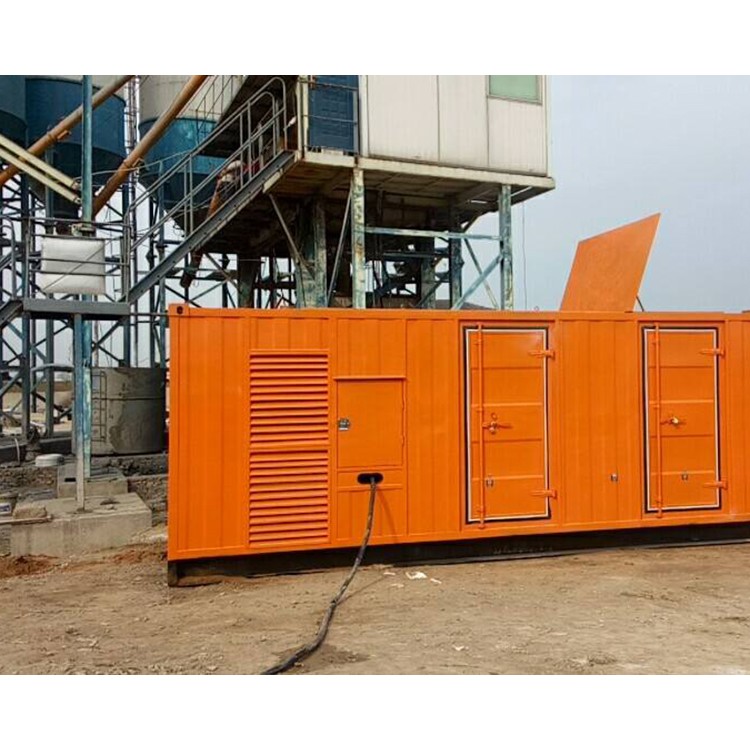
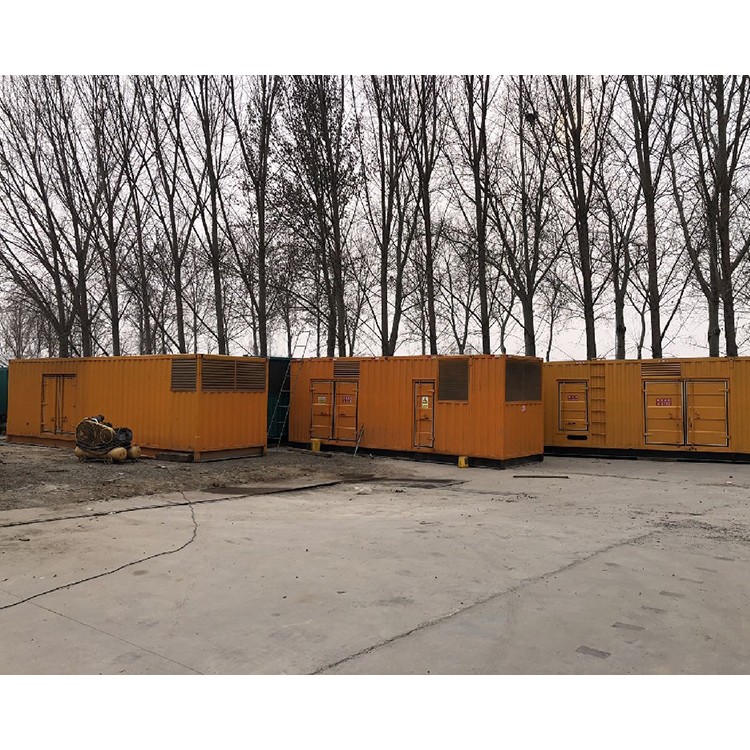
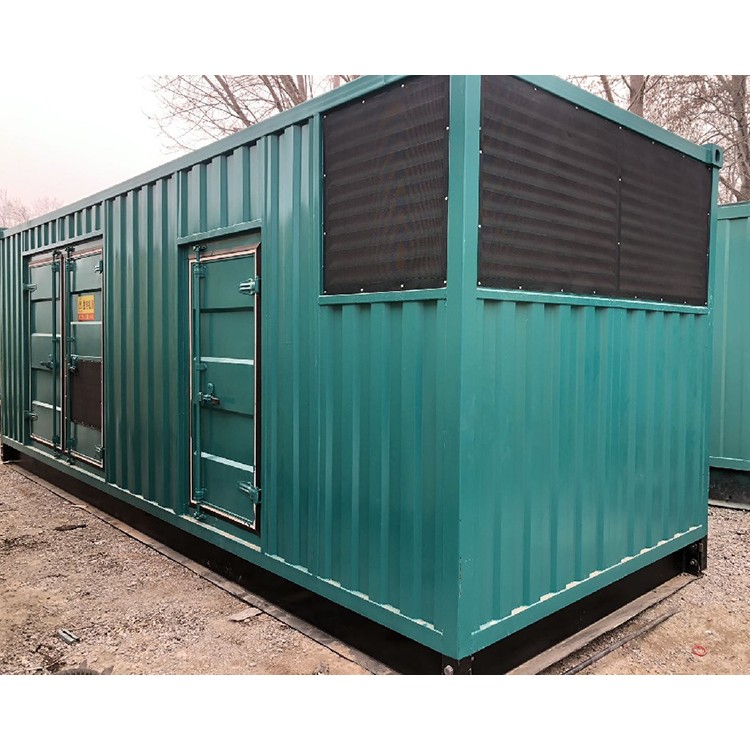
Low-noise containerized generator set
Reduce exhaust noise levels. Exhaust noise is the main source of noise from the unit, characterized by high noise levels, rapid exhaust flow, and significant management challenges. Using specially designed impedance-type composite mufflers can generally reduce exhaust noise by 40-60 dB (A).
The intake vent should be aligned directly with the diesel generator set and exhaust vent. The intake vent should be equipped with a resistive plate-type silencer, as the pressure loss at the intake vent is also within the permissible range. This allows for balanced air flow in and out of the room, significantly enhancing ventilation and heat dissipation effects.
The exchange of indoor air and good sound insulation in server rooms can cause a lack of air convection in the机房 when a closed-loop water-cooled diesel generator set shuts down, leading to high temperatures that cannot be promptly reduced. A low-noise axial fan, paired with a resistive sheet-type silencer, can be employed to address this issue.


www.114global.com © Zhongshang 114 Hebei Network Technology Co., Ltd.Address: Room 6009, Oriental New World Center, No.118 East Zhongshan Road, Qiaoxi District, Shijiazhuang City, Hebei ProvincePlatform Service Hotline: 4006299930