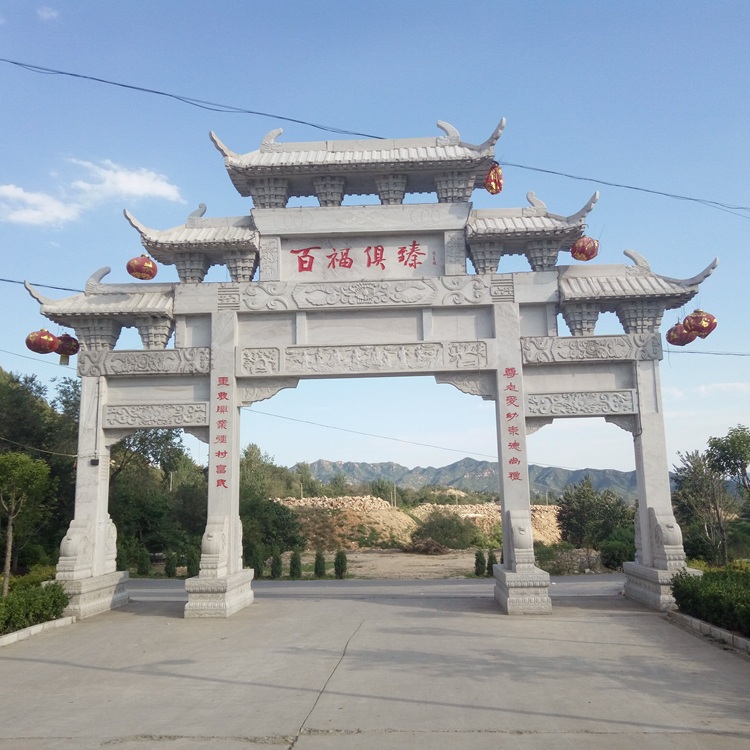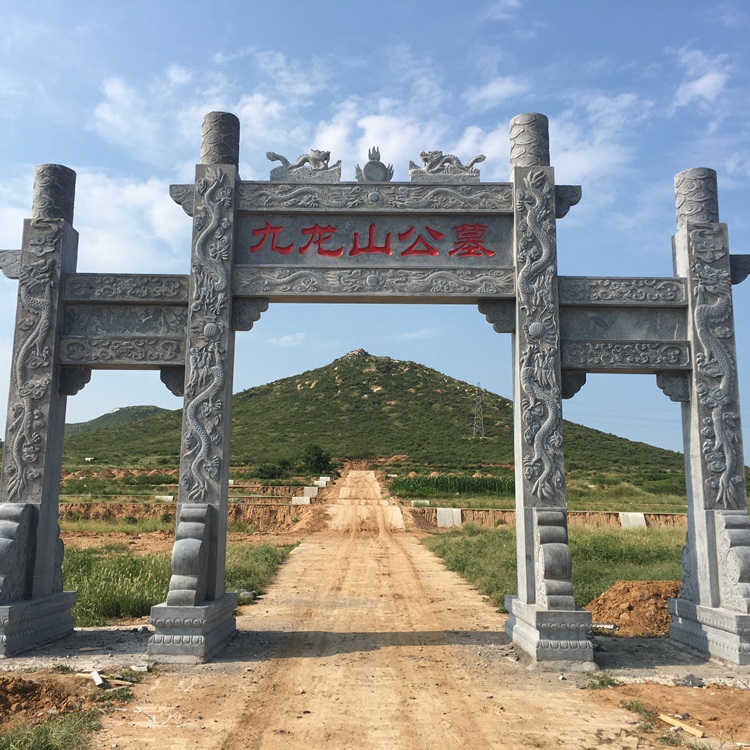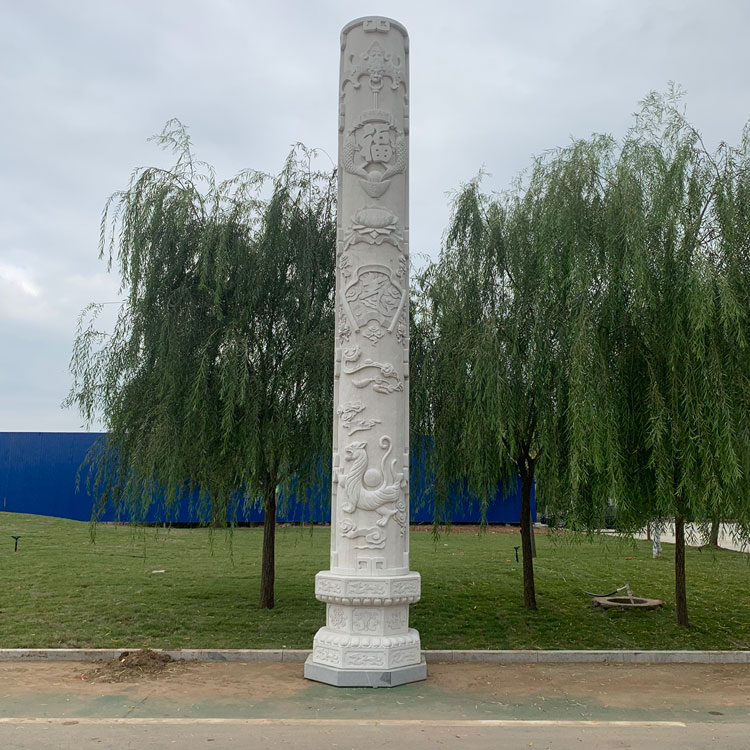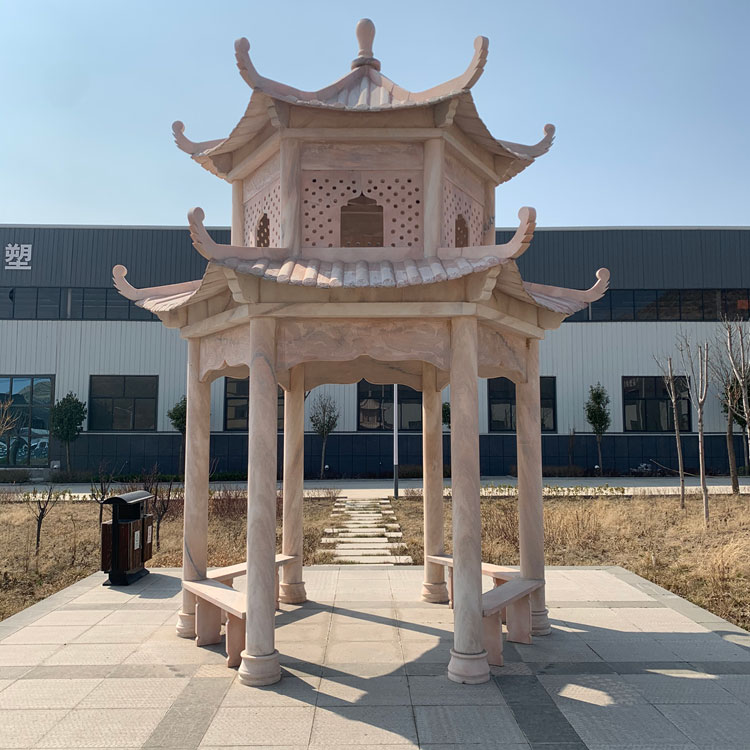
Stone Slabs; Stone Railings; Stone Archways; Stone Pergol...



Product Recommendation
The stone pavilions can be three-dimensional in form or incorporate a certain two-dimensional aspect; they can be attached to a carrier or exist relatively independently. Generally speaking, the distinguishing feature of stone pavilions compared to round sculptures is their two-dimensional or flat characteristics after compression processing, to accommodate specific viewing or decorative needs. The difference between stone pavilions and round sculptures lies in their relative flatness and three-dimensionality.
The spatial form is a so-called compressed space that lies between the two-dimensional virtual space inherent in painting and the three-dimensional tangible space of round sculptures. The compressed space confines the free development of the stone pavilion's space. Under the support of a flat background, the tangible sense of the round sculpture is diminished, and it more readily adopts and utilizes the virtuality and illusion from painting and perspective to achieve its expressive goals. Compared to round sculptures, the Hebei carved pavilions are more often handled according to principles of painting in terms of spatial and form relationships.
The carving and shaping on the plane enable the stone pavilion to integrate the technical advantages of sculpture and painting, maintaining diversity in techniques. The perspective reduction in the two-dimensional space, along with the depiction or virtualization of the background to complement the main image, gives the shaping language of the stone pavilion a stronger narrative quality compared to other sculptures, particularly round sculptures, while still retaining the expressiveness of general sculpture.


www.114global.com © Zhongshang 114 Hebei Network Technology Co., Ltd.Address: Room 6009, Oriental New World Center, No.118 East Zhongshan Road, Qiaoxi District, Shijiazhuang City, Hebei ProvincePlatform Service Hotline: 4006299930