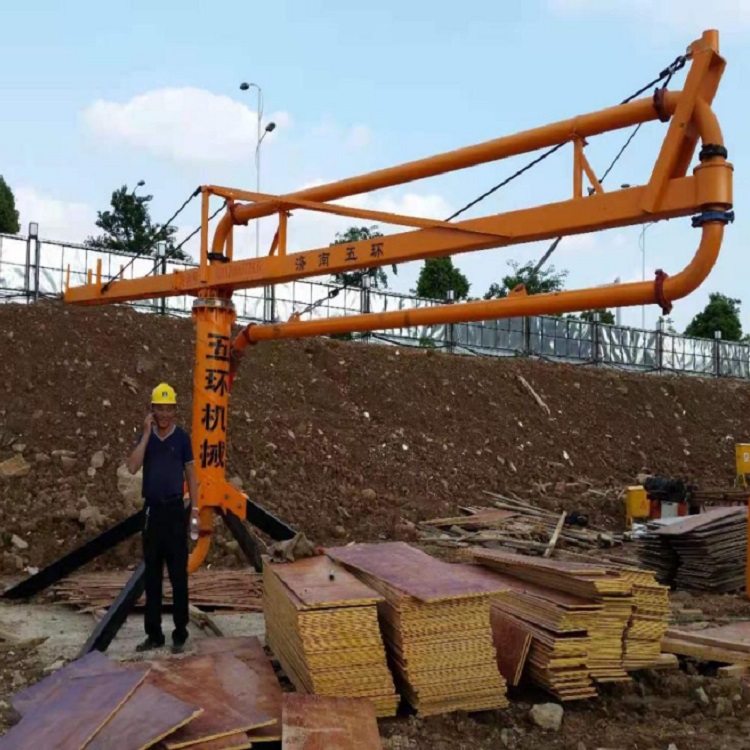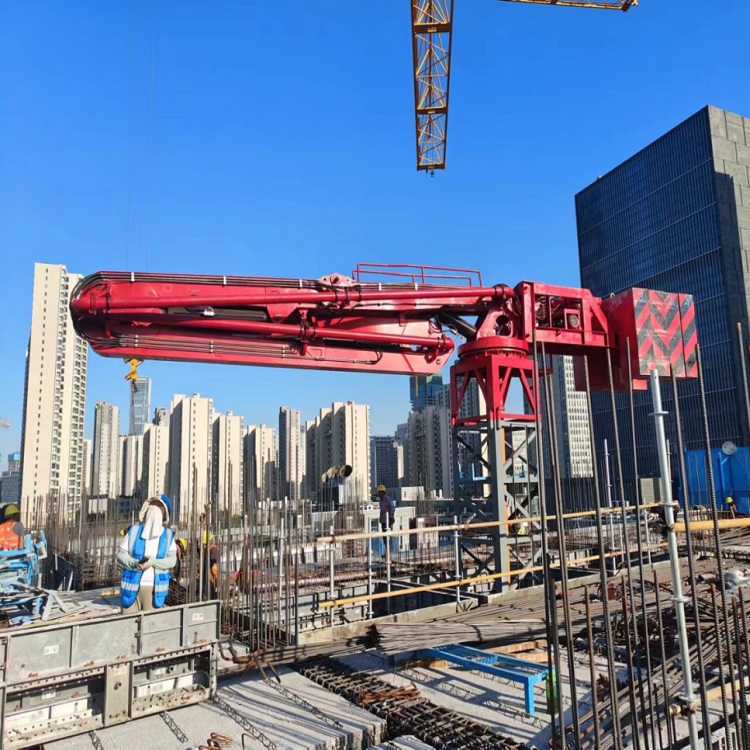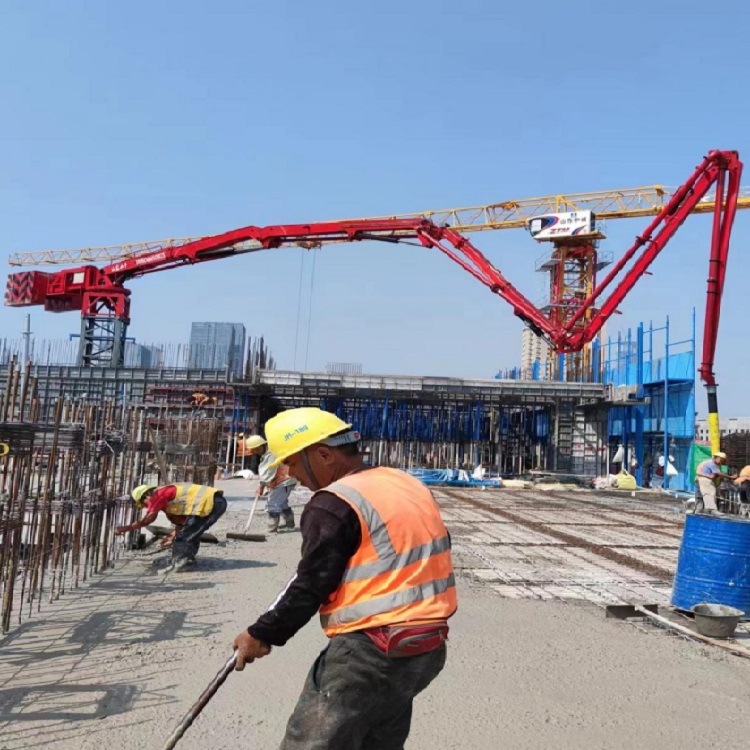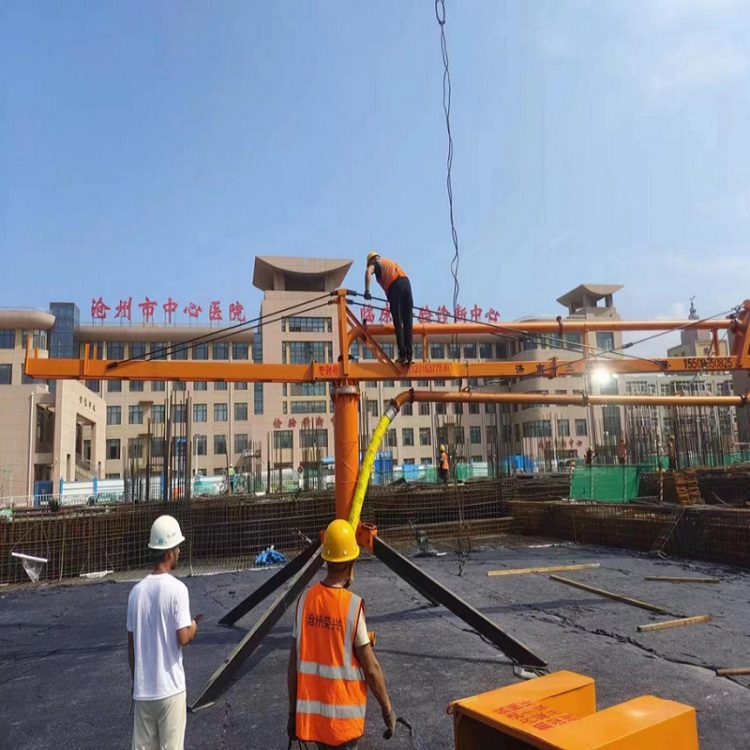

We specialize in material spreaders, concrete spreaders, spreader rentals, used material spreaders, hydraulic spreaders, and secondary structure pumps.
13954127779


Preventing and Controlling Measures for Concrete Pumping Clogs
During construction, frequent occurrences of concrete blockage in pipes have impacted the normal pouring of concrete. We have implemented the following measures, with positive results.
One, Preventive Measures for Concrete Mix Proportions and Materials
1Cement
(1The amount of cement used is determined based on the strength of concrete and the water-cement ratio. In the case of pumped concrete, in addition to meeting the aforementioned requirements, it is also essential to satisfy the pipeline transportation requirements. This means that there must be an adequate amount of cement slurry during the pumping process to lubricate the pipe walls and overcome the frictional resistance on the inner walls of the pipeline. Therefore, a minimum cement content for pumped concrete should be restricted, preferably to:300kg/m
(2To prevent segregation during concrete pumping, ordinary portland cement should be used. In case of special circumstances requiring the use of slag cement, appropriate measures should be taken. For example, reduce the slump slightly; add an appropriate amount of fly ash; and increase the sand ratio moderately to enhance water retention.
2Sand
(1Stricter Control of Particle Size0.3mmThe content within should be controlled at the level.15%~30%Between.
(2Sand particle size of5~10mm翻译结果:Gravel should be kept under control.10%No Chinese content provided.
3Stone.
(1The maximum particle size of concrete pumping and gravel is directly related to the diameter of the pump pipe. The gravel particle size should be as per the table.1Choose
Pump Tube Specifications (Inner Diameter) | 100A(¢105) | 125A(¢130) | 150A(¢155) |
Please provide the Chinese content to be translated.m) | 30 | 40 | 50 |
(2The stone aggregate is used in a continuous gradation to ensure the void ratio between the stones and the amount of mortar; the content of needle-like and flake-like particles should not exceed10%。
4No Chinese content provided.
The sand ratio refers to the relationship between fine and coarse aggregates in concrete. Changes in the sand ratio can affect the workability of concrete, influencing its pumpability.
The sand ratio can be calculated using the following formula.
Sanding Rate=Fine aggregate/Coarse Aggregate+Fine Aggregate) ×100%
The sand ratio for concrete pumping should be38%~45%。
5Water-cement ratio
The water-cement ratio refers to the ratio of water to cement in concrete. During the design mix, it is essential to ensure the required design strength and slump for pumpable concrete, while preventing segregation.
The water-cement ratio for concrete pumping should be0.4~0.6。
6Pumping Agent
Pumping agents should be pre-bagged according to the dosage per reel to ensure accurate measurement of the pumping agent.
Preventive Measures Against the Impact of Taiwan Equipment on Pumping Efficiency
1The order of sand and gravel being poured into the batching bin has been changed to first pour gravel, followed by sand. This change helps to prevent sand from sticking to the hopper when it is too wet, thereby ensuring the accurate usage of sand.
2The pit for the conveying pump should not be too deep, and the concrete outlet of the conveying pump should be level with the ground, with an appropriate piping height to avoid the concrete's initial velocity being affected due to a low outlet.
3Concrete pump placement should not be too far from the building; it should be arranged as close to the building as possible to avoid excessively long pump pipes. The pump should also not be too close to the building, ensuring ease in laying horizontal piping on the ground with a length not less than the vertical length.1/3If space is limited, additional bends can be added to alleviate the reverse pressure on the distribution valve caused by concrete backflow.
4The shortest time for pumping concrete mixing should comply with the table.2Ensure the fluidity of concrete.
Table2 The shortest time for pumping concrete mixing
Three: Preventive Measures for Piping Arrangement
1When arranging pump piping, it is recommended to minimize bends (each with a radius)0.5mNo Chinese content provided.900Elbow9~12mDirect pipe resistance).
2The pipe slope under the chute is less than200When pumping begins, first open the plug, and then tighten it once the lower pipe is filled with concrete.
When the height difference is greater than20mAt the moment, a device should be installed at the bottom of the inclined tube.5Horizontal tubes with varying lengths can be provided with bends or circular sections, if conditions permit.5The requirement for a difference in length.
3After use, pump tubes should be promptly cleaned thoroughly for future construction use.
4Pump tubes should be replaced promptly if they are damaged or dented, to prevent affecting the concrete's delivery.
By implementing these measures, the conveyance of pumped concrete is ensured, guaranteeing the smooth progress of the project.
During concrete pumping, a common issue is pump blockage, where there is concrete in the hopper of the pump machine and the piston of the concrete pump is still functioning normally, yet the pressure at the far end of the system is almost zero, and no concrete is being discharged from the delivery pipeline. The analysis of the possible causes for this malfunction, in order of likelihood, is as follows:
1. Concrete sector
(1) The aggregate in the concrete within the hopper of the pump machine is excessive and segregating. This causes the mixing pressure to rise, resulting in a crisp grinding sound from the mixing blades during operation, and the frequent occurrence of the mixing shaft being jammed and stopping.
(2)The concrete slump is too high, causing the mortar in the mixture to be prematurely discharged. Increasing the number of bends or circular pipes can meet this requirement.5Requirement for varying lengths.
(3The concrete slump is too low, resulting in a dry, hard concrete.
In the event of such occurrences, individual measures can be taken to address them.;
① First, shut off the pump and relieve the accumulator pressure; then, clear the poor-quality concrete from the pump hopper down to the bottom, and add an appropriate amount of mortar to the hopper. Begin the reverse-pump operation, thoroughly mixing the concrete returned by the reverse pump. During the pumping process, frequently poke the intake channel at the bottom of the hopper with a steel rod, and alternate between forward and reverse pump operations. If the pump blockage is not severe, this method can completely resolve the issue. It's worth noting that this method should not be overused, as while it may force the poor-quality concrete into the conveying pipeline, it is more likely to cause pipeline blockage, which is more difficult to handle than pump blockage.
② The pump was stopped and the accumulator pressure released, followed by the removal of the valve window. The poor-quality concrete inside the hopper and valve box was then cleared out. Subsequently, the valve window was reinstalled, and a small amount of mortar or high-quality concrete was added to the hopper, starting the pump. The concrete was then re-pumped while alternating between forward and reverse pump operations until the concrete in the hopper fell at an accelerated rate, and the main oil line pressure gradually increased.
(4)If there is a layer of mortar on the surface of the concrete within the hopper of the pump, and no coarse aggregates are visible in the concrete, this indicates that the sand content in the concrete is too low and the slump is too high, or the aggregate gradation is poor. For example, there may be an excessive amount of oversized aggregates or an improper match of aggregate sizes that meet the requirements, leading to the complete blockage of the intake channel of the conveying pump.
The aforementioned issues can be addressed through the following methods:
① Perform reverse-pumping operations by poking a steel rod a few times in the intake channel of the hopper; then alternate between forward and reverse pumping, continuously moving the steel rod up and down, and left and right at the base of the hopper until all the concrete within is pumped out.
② Incorporating higher-quality concrete, if pumping is difficult, pump reverse operations should be performed according to the situation. If this method still does not resolve the issue, proceed with the fault resolution methods previously mentioned.Proceed with Method ②.
2.Mechanical aspects
(1)Valve window reasons. The valve window is not tightly closed or is leaking, causing the delivery pump to吸入 air while suctioning material, which drastically reduces the pump's suction efficiency and subsequently leads to pump blockage; The contact surface between the valve window and the valve body is not clean, with sand or mortar present, causing pump blockage; The seal ring of the valve window is damaged, causing..."Plugged pump"Valve window deformation or damage to the bonding surface results in pump blockage.
Remedial Measures: Depending on the situation, methods such as opening the valve windows, cleaning or replacing the seals and then re-tightening them, or replacing the valve windows with new ones or repairing the bonding surfaces are employed to rectify the issue.;
(2)The asbestos gasket between the valve cover and the valve body is damaged, causing a leak and blocking the pump.
Action Measures: Firstly, unscrew the bolts securing the bucket and move it forward one position (to leave space for the valve box cover). Then, remove the valve box cover and replace the asbestos gasket. Additionally, replace the asbestos gasket between the hopper and the valve box body. Since the asbestos gasket is usually damaged when removing the hopper, both these areas should be replaced. When replacing the asbestos gaskets, seal them with white lead oil. Finally, reassemble the valve box cover and the hopper.
(3) The asbestos gasket between the hopper and valve housing was damaged, leading to a pump blockage.
Action Required: Simply replace the asbestos gasket between the bamboo box and valve housing.
(4)The connection surface between the hopper and valve box body has experienced deformation and poor sealing due to certain reasons, leading to pump blockage. Measures taken: replace the hopper or repair the connection surface.
It is important to note that in dealing with pump blockages caused by the aforementioned mechanical factors, the fault exclusion work must be carried out only after the pump has been stopped and unloaded.
Contact us

Service Hotline
13954127779
Company Telephone
13954127779

Address
Ji'nan Zhangqiu District Pucheng Town Shanggao Industrial Park
www.114global.com © Zhongshang 114 Hebei Network Technology Co., Ltd.Address: Room 6009, Oriental New World Center, No.118 East Zhongshan Road, Qiaoxi District, Shijiazhuang City, Hebei ProvincePlatform Service Hotline: 4006299930