




- AllProduct Category
-
Medication Equipment Series
Sludge Treatment Series
Filter Series
Wastewater Treatment System
Water Purifier Line





详情描述
Screw Press Sludge Dewatering Machine

Product Overview and Description
1. Technical Introduction:
The screw press sludge dewatering machine boasts a long service life, minimal space requirements, easy maintenance, and low operational costs. It can operate 24/7 automatically, and its low-concentration treatment capability reduces reliance on sludge storage ponds (concentration ponds) to some extent, saving investment for new wastewater projects.
2. Application Range:
The screw press dewatering machine for sludge has a wide range of applications, including oil, municipal, chemical, breeding, pharmaceutical, textile dyeing and printing, machinery manufacturing, and various other industries' wastewater treatment. It can also be partially used in the finished product industry.
Operation Principle Introduction
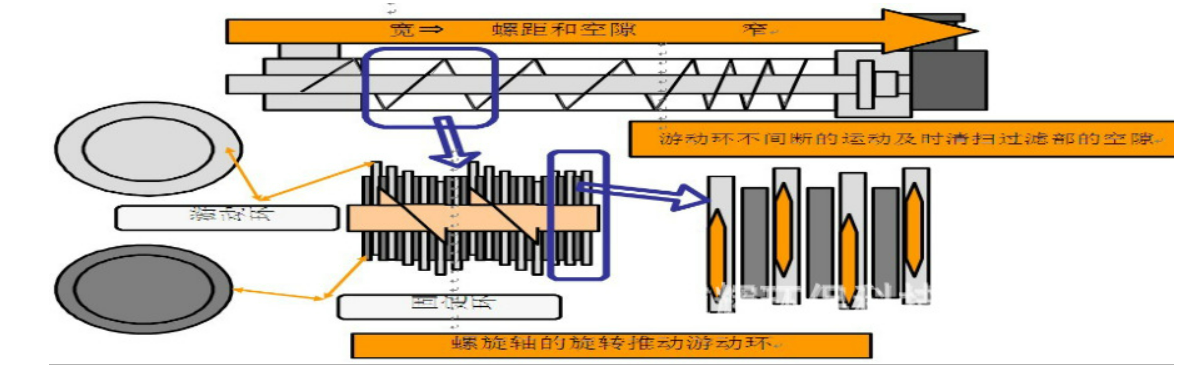
The above image illustrates that the screw core is composed of fixed rings and movable rings overlapping each other. The front section is for concentration and filtration, while the rear section is for squeezing out sludge. The screw shaft runs through the core, driving the rotation of the movable rings within the rings to achieve gradual dewatering. As the gap between the screw shaft continuously decreases, the pressure within it increases, effectively dewatering. This achieves the goal of reducing water content and extracting sludge, while also cleaning the rings during the rotation and squeezing process.
Specs and parameters, as well as other details


Process Illustration and Description

1. Sludge is transported to the measuring tank and then flows into the flocculation mixing tank via an injection pump. Excess sludge returns to the sludge pond through the overflow pipe. Filtered liquid is discharged from the outlet.
2. Inject high molecular weight flocculant into the flocculation mixing tank, stir to form flocs, and then enter the dewatering section after gravity concentration in the main screw concentration section.
3. The pitch of the spiral shaft in the dewatering section gradually decreases in the direction of the sludge cake discharge, as the compression of the back pressure plate increases the internal pressure within the main body. After achieving the dewatering goal, the sludge cake is discharged. The need for and height of the foundation can be determined based on the actual height of the equipment that receives the sludge cake. The dewatering machine does not produce vibrations during operation, so there is no need to pre-bury screws. After on-site installation, it can be securely fastened with expansion screws.
4. The electrical control cabinet on this dehydrator is equipped with a dosing pump and a sludge conveying pump control system. Please refer to the circuit diagram for wiring.
Component equipment selection
6.1 Sludge Pump Selection:
Sludge pumps continuously transport sludge from the sludge pond to the dewatering machine without the need for a high-pressure pump. The sludge volume transported per unit time is calculated based on the dewatering machine's dry sludge processing capacity and the actual sludge concentration.
Selected Model: EA-301 Type; Treatment Capacity of Absolute Dry Sludge: 50 [kg-DS/h]; Sludge Concentration: 10,000 [mg/L] (The sludge concentration determines the sludge pump selection, hence accurate measurement is essential.) Treatment Capacity of Sludge Transfer Pump = 50 [kg-DS/h] × 1000 [g/kg] ÷ (10,000 [mg/L] ÷ 1000 [mg/g]) = 5,000 [kg/h]; Choose a submersible pump with adjustable capacity of ≥ 5 cubic meters per hour. It is recommended that the sludge dewatering machine be set at a height above the sludge pond, as this design helps return excess sludge to the sludge pond due to excessive pump flow. We suggest installing valves on the sludge transfer pipe to allow quick return of excess sludge to the sludge pond.
6.2 Chemical Feed Pump (Metering Pump) Selection:
The function of the dosing pump is to deliver the high molecular weight flocculant liquid to the flocculation mixing tank of the dewatering machine. The dosage of the high molecular weight flocculant can be calculated based on the dry solids handling capacity of the dewatering machine, the flocculant addition rate, and the dilution factor. The addition rate of the flocculant is related to the sludge properties and the type of flocculant, with an appropriate diameter of 5mm. The dilution factor can also be adjusted appropriately according to the actual conditions.
Selected Model: EA-301 Type, Processing Capacity: 50[kg-DS/h], Powdered Polymer Flocculant Addition Rate: [0.6%], Dilution Ratio: 1000x
High molecular weight flocculant transfer pump capacity = 50 [kg-DS/h] × 0.6% × 1000 × 1000 [g/kg] ÷ 60 [min/h] = [5 liters/minute], it is recommended to choose a metering pump with a flow rate of 5 L/min.
6.3 Medication Bath System
1. Automatic Medication Bubble Machine (1 Set)
Features: Simply prepare an adequate amount of flocculant dry powder, and it can automatically add water and medicine. The dosing amount is relatively stable. However, it is relatively expensive.
2. Manual Medicine Soaking Drum (1 Set)
Features: Primarily consists of a mixer and a medicament soaking drum, but difficult to achieve long-term unattended operation of the equipment. Also, it tends to lead to unstable concentration settings, resulting in waste.
The calculation data provided above is for reference only and does not constitute actual usage data. Field-specific data should be recalculated based on the actual on-site conditions.
Comparison and Reference of Various Types of Dewatering Machines


