
Programmable Exchange Switches, Multimedia Dispatching Un...

1. Overview
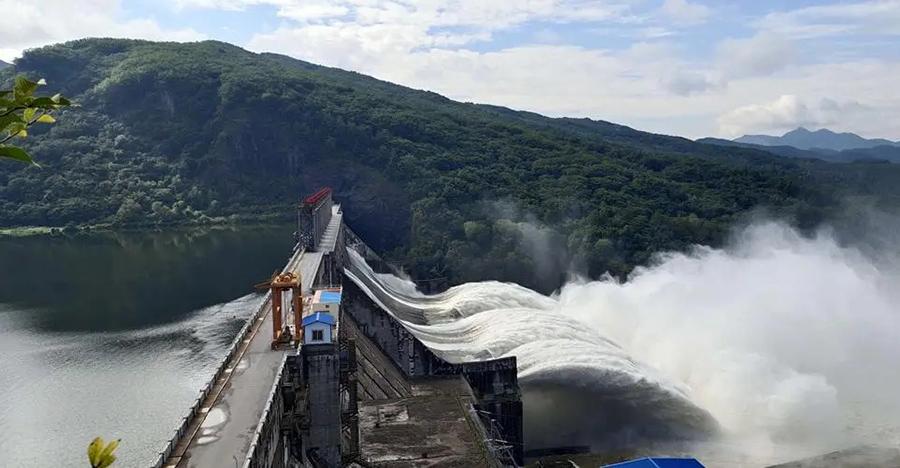
● Telecommunications and voice dispatch systems must ensure communication between the dispatch center and main and branch dams, administrative offices, lock stations, pump stations, and other personnel. They must also facilitate the broadcast of emergency announcements and calls during urgent situations.
● The main system switch unit is designed in full digital format. Its overall structure takes into account ease of installation and maintenance, as well as flexibility in expanding capacity or adjusting the number of devices, utilizing a card-slot modular design.
● The system should provide a communication interface with the factory's dispatch telephone exchange (it should at least support digital trunks or)The IP telephone exchange interface for the SIP protocol (Session Initiation Protocol) has been implemented, enabling dialing from the extensions of the dispatch telephone system.
● Inbound system for segmentation/Full area broadcast or point-to-point call station conversations; also supports dialing calls from stations within the system to schedule phone system extensions for full-duplex conversations.
● The system should be built-in with an interface for wireless communication systems. Radios from the wireless communication system can call stations within this system, and stations within this system can also call the radios from the wireless communication system.
● The system should provide an interface for integration with the on-site fire emergency public address system, ensuring a minimum of concurrent broadcast channels.32th Avenue.
● The dispatch communication host at the site or pump station must support the vibration feature, allowing incoming calls from external lines to ring internally and simultaneously vibrate to the central control center or dispatch center, ensuring that no important calls are missed in unmanned areas.
● The system features an auto-diagnosis function, which can automatically diagnose and detect critical components or devices, such as for faults occurring in a specific station or a section of the main host.
● The system should offer various communication priority levels, including call answering, broadcast, and alarm settings.
● The equipment in this system must meet the requirements of a damp, rainy, corrosive, and high-noise environment in the dam area.
● The system host and industrial terminal phones must be from the same manufacturer to ensure product compatibility and stability.
● The scheduling console allows for text input to be automatically converted to voice, and can be set for scheduled calls. This enables voice notifications to be delivered to emergency posts at subordinate power plants, pumping stations, or substation facilities, as well as customer scheduling positions.
● The job line is currently unattended, please keep calling until someone picks up.
● The inbound call queuing feature allows dispatch desks to quickly redial missed calls or other numbers from their call logs upon receiving an unanswered call.
● The dispatching telephone system must have high fidelity, with telephones equipped with noise resistance to accommodate outdoor environments, especially high-noise areas. The sound level of the loudspeakers in the installation area should be higher than the ambient noise.15dB, but should be chosen between 110dB and 75dB.
2. Design Principles and Standards
2.1 Design Principles
System Compatibility
● The company is considering the flexibility and compatibility of system upgrades and expansion. The system is an open, distributed system, allowing for convenient upgrades and expansions without altering existing equipment, ensuring the scientific rationality and advancement of the system.
● The system is capable of interfacing with the administrative communication system.The company has integrated PSTN and other systems to ensure interoperability, safeguarding the original investments of enterprises.
Reliable disaster recovery redundancy capabilities
● The system hardware is designed in a modular fashion, utilizing advanced and reliable design and manufacturing techniques to ensure system reliability in terms of structure and control methods. The system's common sections feature redundant hot backup capabilities, guaranteeing the system's normal operation.
● Multi-system联动 capability
● The system supports emergency broadcast and fire alarm interlinking functions, as well as integration with video surveillance systems.
Ease of operation and maintenance
The system boasts user-friendly design, rich features, and strong ease of use in operation.
Economical
The system design is rational, with high integration and cost-effectiveness.
2.2 Citing Standards
As per the International Telecommunication Union (ITU)ITU-T's specifications and standards. Compliant with ITU-T Recommendation G.712 and G.732.
This specification refers to the following regulations of the Ministry of Industry and Information Technology and the former Ministry of Posts and Telecommunications:
YDN 065-1997 General Technical Specification for Telecommunications Exchange Equipment of the Ministry of Posts and Telecommunications
(2) YDN 034-1997 "ISDN User-Network Interface Technical Specification"
GF009-94 "Technical Requirements for Open Call Forwarding, Voice Mail, and Phone Cards, etc."
YDN 047-1997 "Technical Specification for China's Intelligent Network Equipment Business Exchange Points (SSP)"
GF017-95 Application Procedure for Intelligent Network (INAP)
DL/T598-1996 "Technical Specification for Automatic Exchange Network of Power System Communication"
YD/T 954-1998 "Technical Requirements and Test Methods for Digital Program-Controlled Dispatching Machines"
(8) YD/T 1821-2008 "Requirements for Environmental Conditions of Communication Center Equipment Rooms"
Domestic No.7 Signaling Method Technical Specification - User Part of Integrated Services Digital Network
"Standard for Design of Electronic Computer Rooms - GB 50174-2008"
(11) YD/T751-95 "Testing Methods for Digital Telephone Exchange Equipment for Public Telephone Networks"
GF002-9002.1 General Technical Specifications for Telecommunication Exchange Equipment of the Ministry of Posts and Telecommunications.
GF002-9002.4 Technical Specification for Telecommunications Exchange Equipment of the Ministry of Posts and Telecommunications.
"GB3377-82 Signal Mode of Multi-Frequency Recording and Signaling in Automatic Telephone Exchange Networks"
"GB3379-82 Standard for Direct Current Signaling Method in Telecommunications Automatic Exchange Networks between Exchange Offices"
"B3380-82: Telephone Automatic Exchange Network Ringing and Signal Tones"
"GB3971.2-83: Interexchange Digital Line Signaling for Telephone Automatic Exchange Networks"
"GB/T14381-93 General Technical Conditions for Program-Controlled Digital Subscriber Automatic Telephones."
(19) YD/T 1534-2006 "Information Security Technology Requirements and Testing Methods for Digital Program-Controlled Exchange Systems"
YD/T 1141-2007 "Testing Methods for Ethernet Switches"
(21) YD/T 2044-2009 "IPv6 Network Device Security Testing Method -- Edge Router"
This specification refers to the following:ITU Suggests:
(1) Q.500 Series Suggestion
Q.551 Digital Switching Exchange Transmission Performance
(3) Q.552 Digital Exchange Switch 2-line Analog Interface Transmission Characteristics
(4) Q.554 Digital Exchange Switch Digital Interface Transmission Characteristics
Q.543 Digital Switching Performance Design Specifications
(6) Q.512 Switch Interface for Q.512 Users
(7) K.20 Telecommunications Switching Equipment's Resistance to Overcurrent and Overvoltage
(8) G.700 Series Suggestion
(9) Physical/Electrical Characteristics of G.703 Series Digital Interfaces
(10) G.704 Base and Submultiplex Series Level Synchronous Frame Structure
(11) G.705 Specifies the Characteristics Required for the Interface of Digital Links to Digital Switching Offices
Frame Location Cyclic Redundancy Check (CRC) Procedure Related to Basic Frame Structure as Defined in G.706 and Proposed G.704
G.960 for Digital Section Utilization in ISDN Basic Rate Access
G.961 Digital Transmission System for ISDN Basic Rate Access
3. Solution Design
● Voice Dispatch System (including multimedia dispatch console) supports wired phone connections.SIP phones, wireless mobile phones, wireless two-way radios, various gateways, remote user modules, and also supports broadcast systems, IP broadcast systems,
● The integration of fire alarm systems and video surveillance systems, among others, also allows for the connection of various sensors and controllers through industrial terminals as needed, achieving full interconnectivity and unified dispatching.
● Long-term planning should be in place for the audio intercom communication system, gradually implementing and upgrading it based on one's capabilities and current situation. Opt for advanced, flexible, and scalable communication system solutions.
● The solution is both economically feasible for the water conservancy industry and practical.
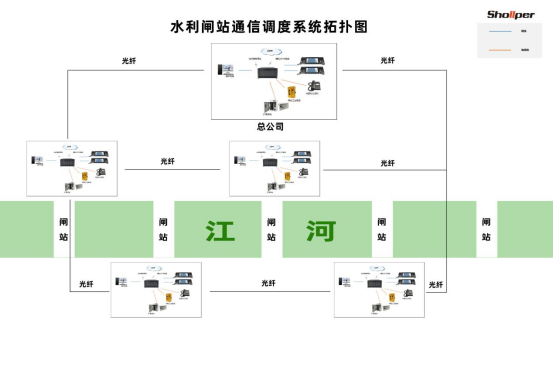
3.1 Scheme design diagram
3.2 Solution Introduction
The system provides ample call channels to enable full-duplex, unobstructed communication, ensuring complete reliability of the calls. Each area within the system supports partitioned/broadcasting to the entire area, with at least 128 partitions available. The system utilizes a mixed mode of intercoms and trunks, allowing customers to configure the specific number of intercoms and trunks according to their needs. This system assists command and dispatch personnel in executing command and dispatching through multimedia means and can be highly integrated with various business systems, enhancing the intelligence and automation of command and dispatch operations.
This design encompasses the entire system's capacity:600 doors
Scheduling Center: Configuration1 set of 112-line PSTN trunk with IP relay host, 1 set of multimedia touch screen dispatch console, 1 set of built-in full-channel recording system.
Management Department: Various ConfigurationsA set of 56-port PSTN trunk line with 8 IP relay host, 1 set of built-in full-channel recording system.
Pump Station: Various ConfigurationsA 16-port PSTN trunk with 4 IP relay host.
Valves and Gate Stations: Each ConfiguredA 4-line 8-port PSTN trunk and IP relay host.
Note: Dispatch hosts in various regions are configured through the settings.IP relay point-to-point registration interconnects enable free calls between each other, facilitating local and public network communication via PSTN.
Noise-canceling Amplified Phones paired with Dispatching PBX systems to form an Amplified Intercom Communication System.
This product also features audio input and output ports, allowing for inter-system cascading to form a local area network broadcasting amplification communication system.
3.3 Scheduling and Command Function
One-Touch Broadcast Call
All talk stations can perform one-touch group paging, including talk stations and broadcast paging features.RelevantStaff interconnect key presses, others disconnect lines.
Integrated Wired and Wireless Scheduling
Supports simultaneous wired and wireless user access, enabling wireless terminals to have all scheduling functions identical to wired terminals. It supports interoperability with wired scheduling systems, broadcast systems, and alarm monitoring systems, achieving comprehensive wired and wireless scheduling capabilities across the network, providing a reliable guarantee for on-site scheduling and command.
Audio-Visual Synchronization and Dispatch
Digital or analog cameras can be paired with fixed-line or mobile terminals, allowing the dispatch console to display corresponding video information during call dispatching to extensions, achieving a seamless integration of audio and video for unified command and dispatching.
Full-channel recording
High-stability embedded recording board card with system configuration, supporting real-time recording of all terminals within the system, including conference recording and interconnection recording; recording supportWeb search, online streaming, downloads, and a multifunctional client search software with various conditionsAccurateInquiry.
Flexible networking
The integrated communication platform system not only facilitates internal communication but also interconnects with various traditional voice communication networks through the core platform, enablingInterconnect PSTN fixed lines, GSM/3G mobile phones, PBX communication private networks, and NGN communication platforms in traditional communication networks. This allows the system to quickly integrate non-system personnel into the system, enabling unified dispatching and command, and meeting the needs of multi-departmental collaboration.
EASY TO DEPLOY
Deploy the scheduling system anywhere with an internet connection. The parent-child scheduling system can be integrated or operated independently, truly achieving centralized scheduling and distributed networking.
Phone Dispatch
Dispatchers can still schedule via the phone, even without access to the dispatch console.
Virtual Group Scheduling Feature
The entire scheduling system can be virtually divided into multiple independent scheduling systems, each handling different scheduling tasks.
Full Heat Backup Function
All public units of the system are fully hot-swappable, supporting live insertion and removal while ensuring seamless switching in case of failure. This does not disrupt normal communication or work, and makes system maintenance and upgrades more convenient, providing a strong guarantee for the long-term stable operation of the system.
Enhanced Scheduling Functionality
Multiple priority forced insertion, forced removal, group forced insertion, group forced removal Multi-level Call; Priority Call; Group Answer/Group Reject Function; Overnight Service Feature; 2 sets of full substation codes with lengths ranging from 0 to 20 digits; direct dialing with call insertion; incoming call announcement feature; SMS platform integration; various meeting modes, including ad-hoc meetings, preset meetings, and incoming calls.
Seamless Upgrade
System InterfaceIntensiveOur advanced concept ensures both the present and the future, achieving a seamless upgrade to avoid redundant investments and resource wastage.
Multiple relay interfaces, strong networking capabilities, and easy for users to add new services.
To provide for users 2M PCM digital trunk interfaces, including NO.1, NO.7, and ETSI (PRI) signaling, along with loopback, E&M, carrier, magneto, and SIP trunk interfaces. Capable of flexibly establishing specialized communication networks with various interface configurations, it boasts strong networking capabilities.
No Chinese content provided for translation.Integrated architecture
Utilizing a distributed modular structure and a fully decentralized workload distribution method, each module operates relatively independently, with minimal fault correlation and impact scope. Faults in one module do not affect those in the same level, and the entire system requiresThe TDM architecture supports IP extension functionality, rather than using a combination of pure softswitch servers and gateways.
Enhanced broadcasting capabilities supported
The system supports an integrated broadcast system, capable of handling both analog and digital signals.Our broadcasting terminal supports various types of connections, including SIP, enabling one-click broadcasting, scheduled targeted broadcasting, process broadcasting, concurrent broadcasting with different voices across multiple regions, and the ability to insert and broadcast announcements through any main exchange.
Enhanced teleconferencing capabilities supported
The system must support robust teleconferencing capabilities, enabling the initiation of meetings through methods such as ad-hoc summoning and fixed groups, with a capacity for a large number of meeting participants.128 participants, with over 64 full-duplex speaking channels, supporting the coexistence of internal and external phone numbers in the membership composition.
User-defined Ratio for Relay Proportion
The system boasts flexible scalability, supporting any expansion of the user-to-relay ratio within the system's physical positions, including expanding the system into a pure trunking exchange method.
Control room count scalable to any number
The system supports an unlimited expansion of dispatch consoles.
Multi-system integration and联动 functionality supported
Supports integration with fire alarm systems, personnel positioning systems, and video surveillance systems.
Wireless interconnectivity with vehicle-mounted two-way radios
The system supports built-in cards (not using an external gateway) for connection with the two-way radio system, allowing for two-way, semi-duplex communication between internal stations and handheld radios.
Full-Channel Recording Feature
Built-in full-channel recording capability for all internal extensions and calls connected via the dispatching host, with recording duration of not less than30,000 hours, rather than using external recording devices.
All Extension Codes
2 groups of full substation codes with lengths ranging from 0 to 20.
Headword Management
The system header management is comprehensive, capable of meeting complex and professional networking requirements.
Word Index
All header index tables of the system 8 distinct groups, each offering 8 independent number processing strategies.
Relay Call Display
Relay supports ringback or digital ringback with caller ID for any ringback format.
Call Information
Comprehensive inbound and outbound call information.
Dialing Preprocessing
Robust dialing preprocessing capabilities.
Internal and external line numbers
All or part of the internal and external lines are allowed to have duplicate numbers.
Call Recordings Throughout
This host call record provides full-mode call process recording.
PCB Fault Detection
Advanced hardware card fault detection and automatic fault shutoff features, with full card operation status viewable in the background.
Rerouted through an indirect relay
The routing system employs an alternative relay route, which normally uses the primary route but switches to the alternative route in case of a fault, automatically completing recovery or switching functions.
Data Backup
Robust system data backup and recovery features.
Virtual PBX
This setting alleviates the workload of the main switchboard operators. When an external call is connected to a relay with a virtual PBX feature, it directly rings the virtual PBX and transfers the call; if the virtual PBX is busy, it will sequentially call the physical switchboard according to the number order.
Intelligent Voice Service
Any extension can dial a specific function code to report various information such as the system date and time, extension number, physical address, level, malicious phone number, host version number, and music. The voice is clear and smooth, allowing users to conveniently and quickly obtain the required service information.
Dual Number Function
Each section machine can possess simultaneously 2 phone numbers, each capable of making calls.
Intercom Ring Cut
The intercom ring-off immediately stops the ring current, preventing any noise feedback into the ear.
Inbound and outbound line ring differentiation
According to the different incoming call attributes, the phone emits different intervals of ringtones, making it easier for extension users to determine whether the incoming call is an internal or external line.
External Coding
When dialing out through digital trunks, the extension can choose to send the caller ID as a public number. 1-14 external codes.
Insider Group
We have implemented a grouping management system for internal extensions, allowing a single dispatching machine to be used by multiple different user units.
Malicious Phone Calls Inquiry
Extension numbers can be used to retrieve the caller ID of the most recent internal call made to the host number.
Multi-level restrictions
We have introduced a brand new tier definition, allowing trunk users to arbitrarily and flexibly define tier permissions, with a total of [number] settings. 32 levels.
PlanningRelay Out
Extension lines are available.No Chinese content provided. Please provide the text to be translated.The relay line has been disconnected.
Call Forwarding Feature
This series of call transfer switch not only allows transferring incoming calls from internal or external lines to internal extensions, but also enables call forwarding to external lines (mobile phones or landlines). There are four call forwarding states: All Calls Forwarded, Forward on Busy, Forward on No Answer, and Forward on Busy.+ No Answer Transfer. Users can set or cancel the call forwarding feature at any time using the feature code on their phone.
Please call back when busy.
During intra-line calls, if the called extension is busy, the calling party should press the line busy tone when listening to the busy signal."3" followed by hang-up. When the called line is idle, the calling extension automatically rings; when the calling extension is picked up, the called extension rings to indicate the call.
Please take the incoming call.
If the called extension is not answered, other extensions may call."Function code" to answer incoming calls.
Direct Line Hotline Feature
After picking up the extension, if no dialing occurs within a specified period (referred to as the hot line duration, which can be set by the extension itself), the system automatically dials the internally set extension (internal hot line) or external line number (external hot line). This feature also allows for automatic outgoing trunk occupation without the need to dial any outgoing trunk digits.
Do Not Disturb
Set the Do Not Disturb feature to avoid incoming call interruptions during inconvenient times.
No Chinese content provided. Please provide the text to be translated.Outbound Call Transfer
You can transfer incoming internal and external calls to other extensions.
Internal and external line forced insertion/Strong Demolition Function
To ensure access to important calls, a forced insertion can be performed on the parties currently in a conversation.Strong Demolition.
The long-anticipated transfer to the main switchboard is now in effect.
External line voice calls can be dialed through extension numbers. If the called extension is not answered, the system can choose to transfer to the main line, and the number of ringouts before the transfer can be set individually. (This feature can be set for unanswered transfers.)
Self-recorded voice
Users can record their own voice prompts for the phone relay according to their own requirements.
Voice Call and Bill Inquiry
Users can inquire or settle the total call charges for all or individual branch lines within a specific time period, and can also print detailed and statistical call bills.
Trilateral Call
The system allows for simultaneous calls with all three parties, or you can choose to keep one party on the line while disconnecting the others.
Voice Navigation
Customers listen to navigation voice prompts, dial the corresponding numbers based on the voice instructions, and guide the outside line to...No Chinese content provided for translation.Please enter an internal extension or navigate to the next level of voice guidance.
Emergency Call Feature
This series of digital programmable dispatching machines is equipped with an emergency button on the alarm telephone, which, when pressed during an unexpected emergency, causes all extension phones within the group to ring, and a looped alert tone is played to prompt other users to quickly evacuate the danger zone.
Intelligent Relay
The intelligent relay feature is now activated. The system will record the external line numbers dialed by extension phones. If there's no answer on the external line, the line will call back the extension, and the system will directly transfer the call to the internal extension that was last dialed for that external line, bypassing voice navigation or the main switchboard.
Blacklist Feature
Users can add certain outside numbers or spam calls to their blacklist based on their own circumstances. Numbers on the blacklist will be unable to call in.
3.4 Extension Function
Basic voice calls, number transformation, call restriction, tapping feature, caller ID, caller number restriction, local number lookup, unconditional call forwarding, busy call forwarding, no answer call forwarding, do not disturb, call waiting, called party transfer, speed dialing.CorrespondingIntercept, Three-way Calling, Number Sharing, Single Number Reach, User Groups, Group Intercept, Busy Callback, Priority Insert, Priority DisconnectIVR, conference calling, alarm services, fax services, automatic recording, secretarial services, global recording...
3.5 Routing Grouping Function
● SupportFXS/FXO Interface, RJ45 Interface, RADIUS Billing and Authentication Interface
● Supports various narrowband signaling, such as Chinese1 Signal, R2 CAS Signal, China 7 Signal, PRI Signal, Q Signal, DTMF and MFC Signal, as well as various trunking signals
● Supports various broadband protocols, such asSIP, H.323, MGCP, H.248, and various other protocols
● SupportG.711, G.723.1, G.729, G.726-32 voice codecs, T.30 and T.38 fax protocols,
● Support for signaling tracking toolsFE Port Mirroring
● SupportMultiple standards, including Wi-Fi.
● Support for multiple wireless private network roaming and seamless switching between public and private networks for roaming
● Supports features such as interconnection and detour routing
● SupportEM Relay and Cluster Integration Features
● Supports various flexible number call settings such as abbreviated dialing, supplementary dialing, and wait-listed dialing.
3.6 Integrated Recording Unit
Achieve full network recording, with the ability to search and playback recording files.
3.7 Audio-Video联动调度
Digital cameras can be paired with landline and mobile terminals, enabling the platform to automatically monitor, capture images, and record the scene at the terminal's location during calls. The monitored video feed is then intelligently displayed on the command center's large screen, integrating audio and video command and dispatch capabilities.
3.8 Broadcast Coordination and Scheduling
All broadcast terminals can be registered to the dispatching host, enabling unified scheduling via the dispatching console.
4. Key System Features
4.1 Comprehensive Business Functions
Basic voice calls, number transformation, call barring, tapping features, caller ID, caller number restriction, local number lookup, unconditional call forwarding, busy call forwarding, no answer call forwarding, all incoming calls forwarding, do not disturb, call waiting, called party transfer, speed dial.No Chinese content provided.Intercom, Three-Way Calling, Number Sharing, Single Number Reach, User Groups, Group Intercom, Busy RedialIVR, conference calling, alarm services, fax services, automatic recording, secretarial services, global recording, point-to-point calling, group calling, broadcast group calling, select calling functions, waiting queues, call pickup, night service feature, computer operator, force disconnect, force insert, call transfer, call hold, monitoring...
4.2 Unique Scheduling Feature
● The分级scheduling supports a three-tiered hierarchy, where each level can collaborate independently while forming a unified whole.
● The Virtual Scheduling Function allows the entire scheduling system to be virtually divided into multiple independent scheduling systems, each responsible for different scheduling tasks.
● All authorized dispatchers across the network can now receive real-time notifications on the status of online terminal users (call, idle, online, offline, etc.).
● The Roaming Scheduling System allows for real-time monitoring of roaming users' statuses and their scheduling.
● The dispatch console remains operational even after a fault in the fault-tolerant dispatch console, allowing dispatchers to handle calls through the telephones.
● The temporary meeting scheduler can add any queued users to the current call at any time to conduct a meeting.
● Our in-built meeting management dashboard features software that allows you to invite meeting members and perform actions such as muting, isolating, or removing participants.
● Unified Network Management supports unified administration of all scheduling machines, access terminals, and other devices, enabling real-time acquisition of device alarms and status information.
● Unified Recording Management Portal administrators have access to the unifiedThe WEB management portal performs search and playback operations on audio files.
4.3 Multi-network convergence and multi-standard wireless access
Our system utilizes various relay methods to connect with PSTN or NGN, achieving interconnection between the internal and external networks. It can integrate with the existing PBX voice system, enabling seamless communication within the internal network and, without altering the original voice system, achieving interconnection between the internal and external networks. Additionally, under certain conditions, it can also provide a unified wired and wireless office service model. It not only supports a wired and wireless integrated dispatch function for the private network but also a unified dispatch function for both public and private networks, showcasing the versatility and uniqueness of its dispatch capabilities. The system supports various wireless access technologies, such as WiFi, allowing for either standalone wireless access or a combination of multiple wireless access methods, featuring a unique wireless roaming function.
4.4 Flexible and diverse networking strategies and management models
The system supports both centralized and distributed networking modes. The core equipment is interconnected in a cascading manner to form the core network of the system. Terminal devices and access gateway devices can not only connect to the core equipment via IP private networks but also via VPN. All core devices, access gateways, and IP terminals support both remote and local maintenance modes. The system employs both centralized and distributed management approaches, featuring a unified network management system for overall device management and maintenance. Additionally, it can implement a hierarchical network management model, facilitating efficient and rapid management of all devices.
4.5 System Reliability
Equipment Reliability Assurance
The switchboard, as the core of the voice scheduling integration system, demands a high level of reliability due to its potential impact on all users within the system in the event of a failure. The entire system ensures the safety of the entire communication network across multiple levels.
Network Reliability Assurance
All critical single boards of the core switch in the scheduling exchange are equipped with backup features. The core equipment is designed according to telecommunication-grade standards, with redundant backup of key components including the core control unit and power unit, and all single boards utilize telecommunication-grade components.
5. System Main Equipment Functions and Technical Specifications
5.1 Scheduler Switch
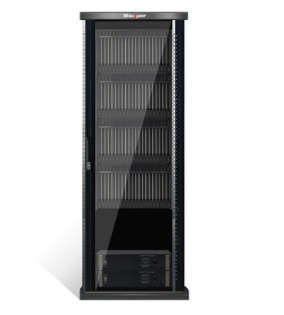
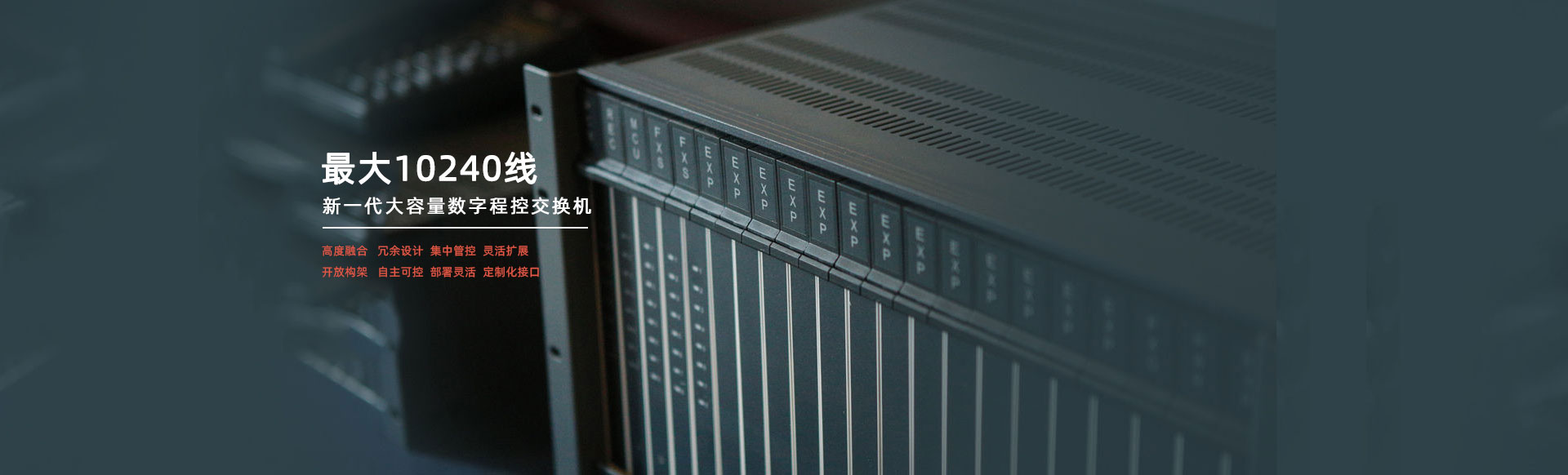
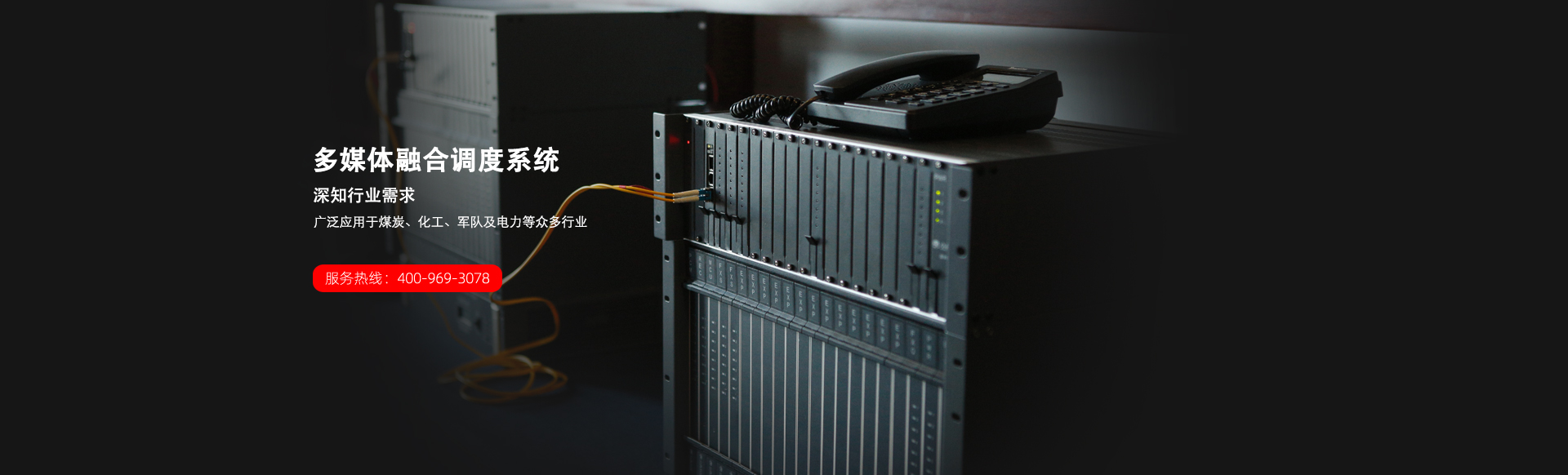
The SPC8000-D6 digital programmable dispatching machine is an intelligent multi-layer frame-type integrated dispatching machine, featuring modular design with flexible and convenient configuration, high reliability, and large capacity. The system supports up to 1792 loop extension stations/loop trunks, 56 E1 lines, and offers support for VOIP trunks, EM trunks, radio intercom, analog trunks, analog extension stations, and SIP extension stations. It is equipped with an all-channel recording system. It supports PCM remote fiber optics, 2M, and network extension, and is suitable for decentralized installation in various environments for flexible networking. The system utilizes a mixed combination of extension stations and trunks, allowing customers to configure the specific number of extension stations and trunks according to their needs.
1792 lines, on-demand allocation
Adopting the 6U standard rackmount structure
Hot-pluggable, mixed-plugging
Mainboard Hot Backup
Secondary Power Hot Standby
Unit Board Fault Detection and Automatic Isolation
Relay routing with redundant backup
Upgradable and highly scalable
The system boots up quickly, in just 3-5 seconds.
All user ports and communication ports are equipped with K20 lightning protection.
Power Supply:AC:220V±20% 50Hz±2Hz
External:48V 20-100AH battery pack
Power Consumption:50W to 1,000W (depending on system configuration)
Application Environment:Temperature Relative humidity: 35% - 75% at temperatures between 0°C to 36°C
Host Dimensions:480mm x 336mm x 264mm (Width x Depth x Height)
5.2 Integrated Scheduling Platform
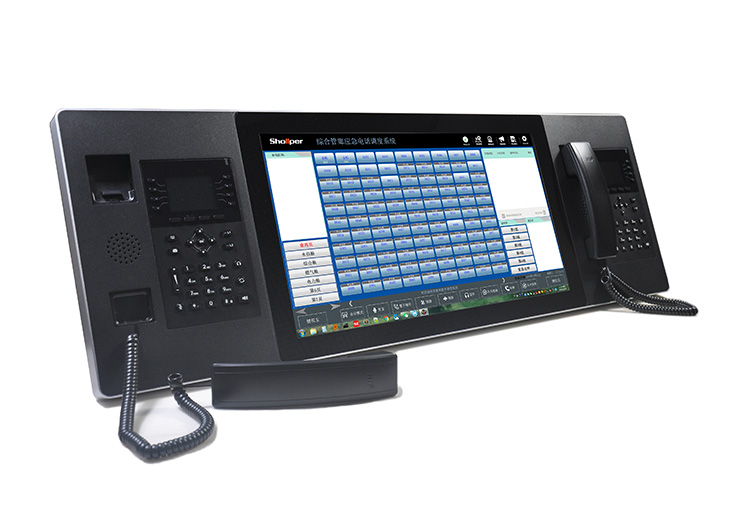
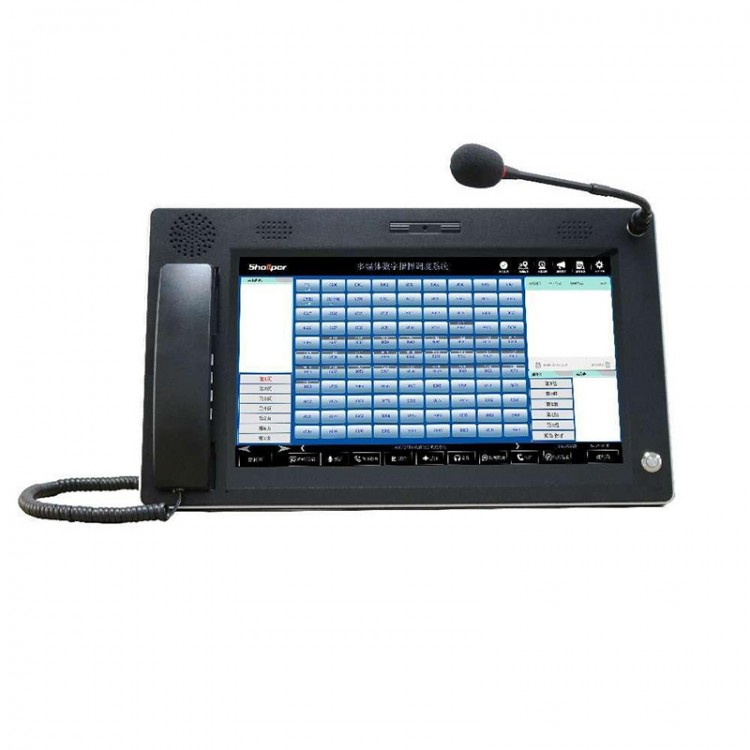
The 21.5-inch PC-type dual-handheld touch screen dispatch console is a newly designed LCD industrial-grade touch screen dispatch console with an elegant and generous appearance. The screen features a new 21.5-inch 16:9 high-brightness low-power consumption environmentally friendly LCD wide screen, offering clearer and more atmospheric text display; paired with capacitive touch screen, the operation interface is intuitive and clear, making it easier to use; it integrates an industrial-grade low-power consumption embedded motherboard, supports CF, HDD, and has multiple I/O interfaces.
Structural Parameters
Surface Treatment:Black sand grain baked varnish panel, color black, edges silver.
Box Structure:Surface paint treatment offers aesthetic appeal, lightweight design, and excellent heat dissipation properties.
Handle PhoneBuilt-in Custom Phone2 hands-free buttons;
Installation Method:21.5-inch embedded desktop model
Overall Weight:17KG;
Overall Dimensions:915mm*336mm*89mm;
Working Voltage:220V;
System Parameters
Processor:I5-4200H series processor
Memory:4G DDR3 / 8G DDR3;
Hard Drive:500G / 1TB;
Expand Interface:VGA and HDMI interfaces
I/O Interface:1*RJ45, 4*USB, 2*Phone Line LAN, 1*AUDIO
5.3 Video Server
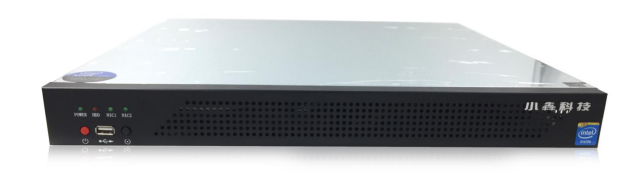
The SPC-V100 Server video server is an integrated unit system specifically designed for video scheduling and monitoring. Its function is to collect data streams from various video terminals and process them according to the instructions of the scheduling system.No Chinese content provided for translation.Achieve real-time scheduling for video communication and video surveillance on the basis of voice dispatch communication, realizing highly integrated communication!
● Enhancing the on-site command and dispatch handling capabilities for major emergencies has become one of the key indicators of modern management level.
● The Video联动Scheduling System can transmit real-time on-site video back to the scheduling center on top of voice scheduling, providing visualized detailed information for command and decision-making.
● Hardware is of pure industrial server grade.
● Hardware configuration must be adjusted accordingly based on the number of video terminals connected.
● AdoptThe company has customized a Linux system for enhanced stability and efficiency.
● Equipped with the capability to collect data streams from various video terminals
● Equipped with data interaction capability with the Xiong Ben integration and scheduling system.
May 4th - Communication-Specific Power Supply
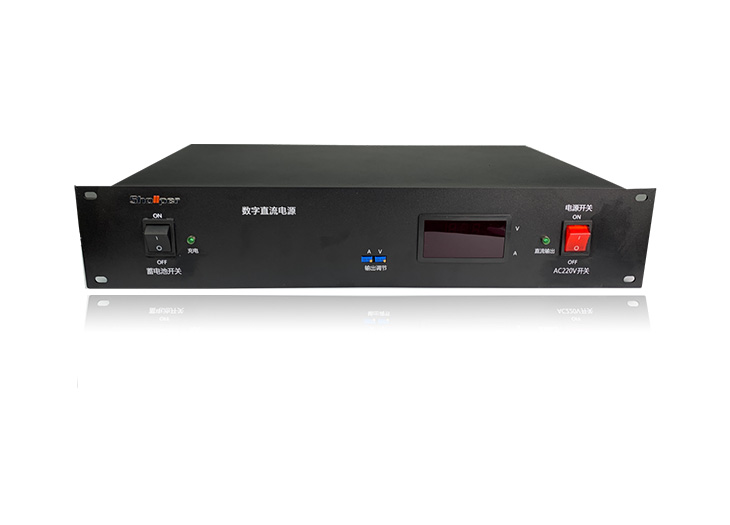
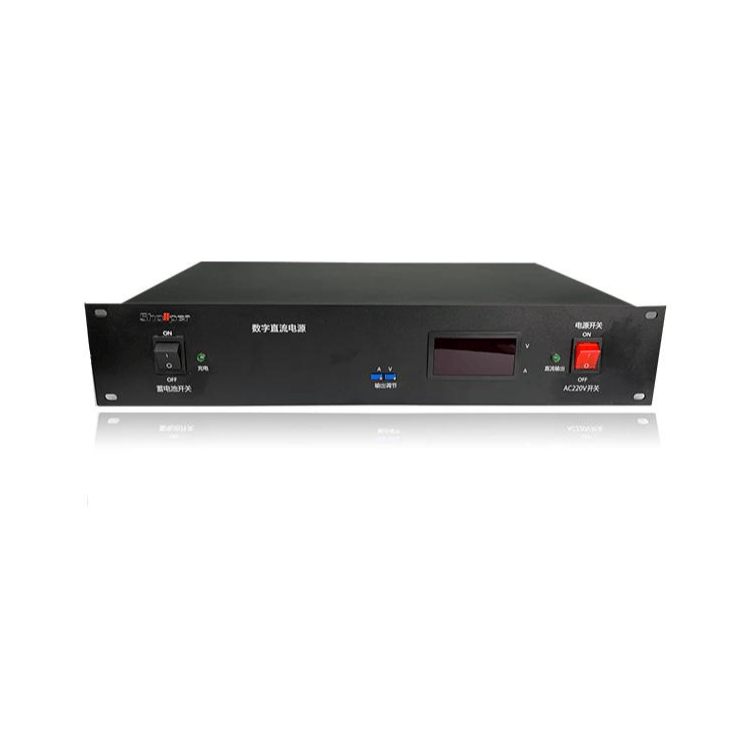
Our power supply utilizes advanced high-frequency pulse width modulation technology, enhancing efficiency. The entire unit boasts high voltage regulation accuracy, rapid dynamic response, low output noise, strong anti-interference capabilities, and a wide operating temperature range. The operational status of this power module is clearly displayed on the panel, allowing for intuitive viewing of voltage and current readings. The module is equipped with comprehensive protection functions. It features an integrated equalizing and floating charge switching circuit, offering manual or automatic control options. The monitoring interface can monitor the module's operational status, control power on/off, equalizing and floating charge, and is equipped with an automatic equalizing bus interface, equalizing bus interface, and system battery current limiting bus interface. This series of power modules is designed for telecommunication and wireless base station high-frequency switching power systems, where modules can automatically balance and supply power to each other. With the use of automatic equalizing technology, it can be used in parallel for easy expansion. The individual rectifying module has an independent battery interface, enabling automatic management of battery charging, discharging, and protection.
5.5 Amplified Speakerphone Station
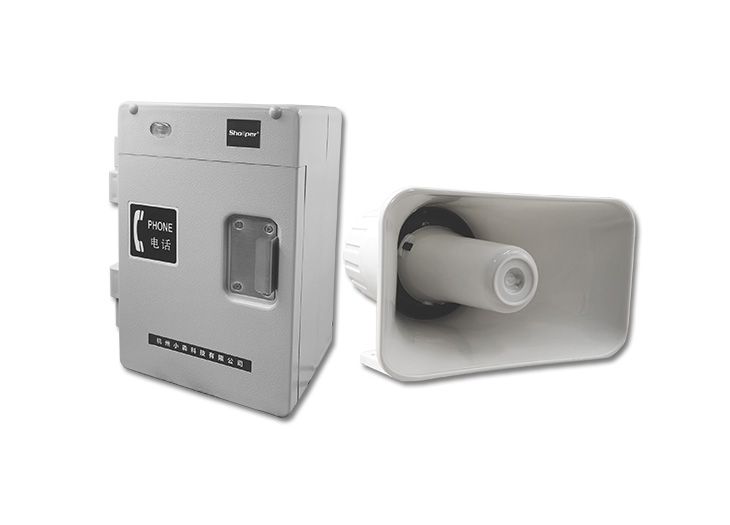
● The phone case is made with high-strength reinforced material.ABS Engineering Plastics
● The sealed structural design effectively prevents dust, rain, moisture, and corrosion.
● Protection rating achievedIP66, suitable for harsher environments.
● This unit can be used in conjunction with programmable switching exchanges, voice gateways, and other systems.
● Digital circuit design with strong anti-interference capabilities.
● The ring signal is indicated through both audio and visual modes.
● Equipped with automatic picking and hanging control, capable of automatically switching into and out of loudspeaker call status.
● Digital Noise Reduction
● Features busy tone detection.
● Feature: Redial Function for the Second Set of Phone Numbers
● Number plate night glow indicator.
● The number of incoming ring tones is adjustable.
● The phone and shell are designed as a single unit, providing anti-theft functionality.
Product Specifications:
Transmission Cables2-core telephone wire, 2-core audio wire
Communication Standard:Standard Simulation
Equipment Type:Outdoor Wall-Mounted
Protection Level:IP66
Body Material:ABS Glass Fiber Reinforced
Equipment Dimensions:335*235*170mm
Equipment Weight:5kg
Power Input:220VAC 50Hz
Overall Power Consumption:50W
Ambient Temperature:-30℃~+60℃
Ambient Humidity:0%~95%
5.6 Integrated Communication Server
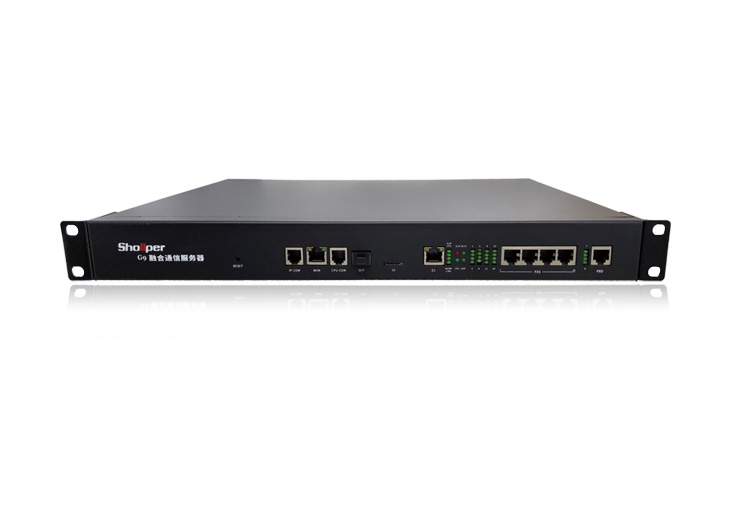
● Based onThe TI series processors and Mindspeed solutions are independently developed with a Linux kernel.
● The company designs both hardware and software independently, utilizing high-precision assembly technology and equipment.
● CorePCB boards with 6-10 layers, gold immersion process, and an independent, complete ground layer ensure anti-interference and stability.
● Adopting scheduling communication switching systems, recording systems,VoIP Voice System Integrated Design.
● Highly integrated architecture provides robust hardware support for interconnection of audio and video.
● Boasts robust call handling capabilities, ensuring seamless communication at all times.
● Ethernet Maintenance MethodsGraphical management on the web, supporting remote maintenance and management.
● Dispatch Operation Platform Adopted The Windows graphical interface offers intuitive and straightforward operation.
● Modular Design: The entire unit features a modular structural design, allowing for flexible configuration of the overall capacity to meet requirements.
● Support2 sets of serial numbers ranging from 0 to 16 digits.
● Utilizing dual power supply mode:AC220V/50Hz and DC-48V dual power input, serving as backup for each other.
● Pure digital signal recording, telecommunication-grade sound quality, using2.5-inch hard drive storage, with 8K capacity used per second for recording.
● Support dual SIM functionality, offering solutions for multiple carrier connections.
● SupportIMS Access, PCM Access, FXO Access, Intercom Radio Access, etc.
● SupportMultiple voice codecs, including G.729, G.723, and G.711.
● SIP (RFC3261) Protocol.
● SupportBulk Deployment of IP Telephony
● CompatibleMost terminals and platforms.


www.114global.com © Zhongshang 114 Hebei Network Technology Co., Ltd.Address: Room 6009, Oriental New World Center, No.118 East Zhongshan Road, Qiaoxi District, Shijiazhuang City, Hebei ProvincePlatform Service Hotline: 4006299930