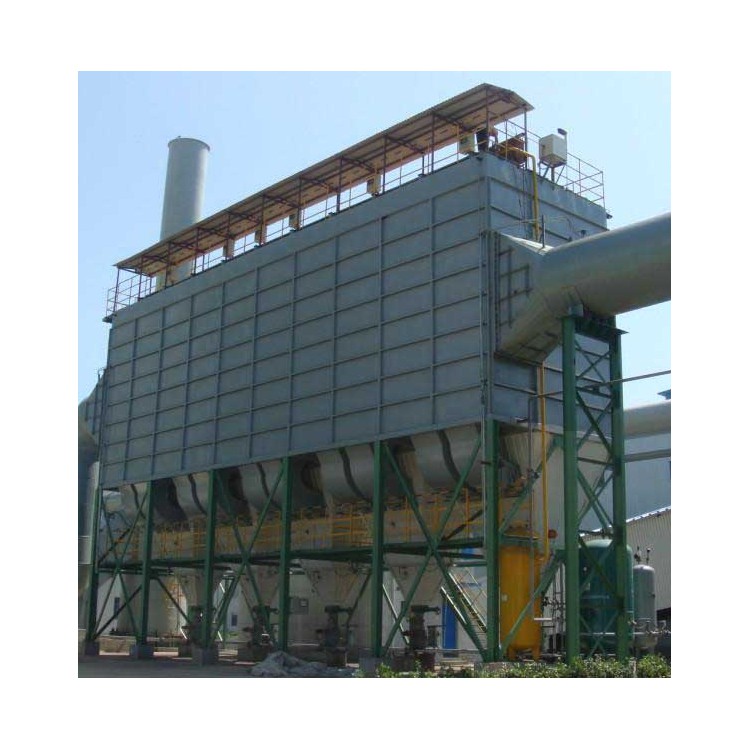
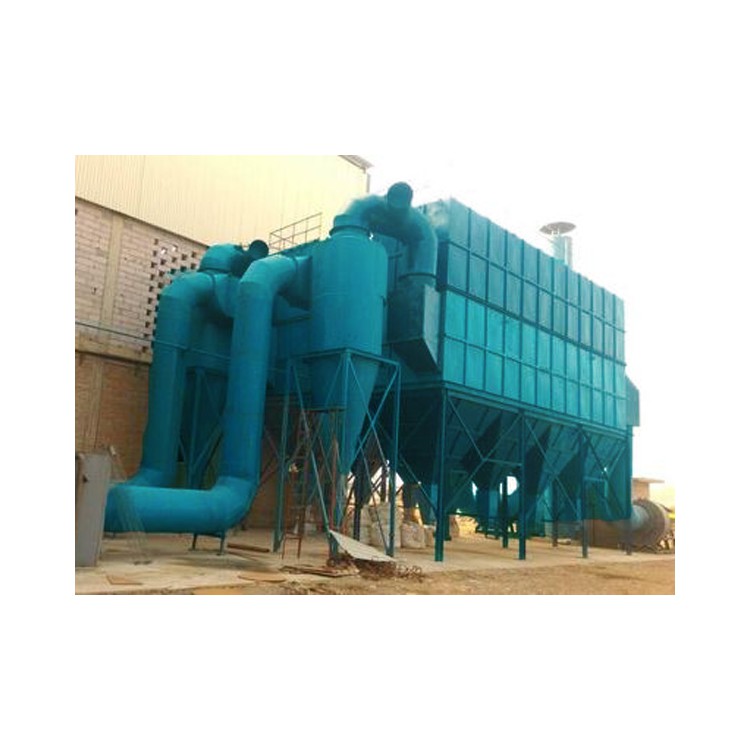















Boiler dust collectorEquipment smoke and dust treatment process flow
How is boiler flue gas generated?The flue gas of a boiler is the fine dust particles generated during the combustion, volatilization, decomposition, and combustion of boiler fuel when it encounters heat. These fine dust particles dispersed in the air will form floating smoke type air soluble dust. The vast majority of the smoke particles are fine carbon particles, with a particle size between 0.01-10 μ m and a specific gravity of 3-10g/cm. Environmental protection manufacturers can use conventional methods such as spray settling, cyclone separation, and bag filtration that are suitable for the working environment based on their weight and particle size.The smoke and dust emitted by boilers can meet the environmental emission requirements according to both dust concentration and smoke color concentration indicators. However, due to various reasons such as combustion efficiency, selection and efficiency of dust collectors, boiler smoke and dust emissions may exceed the standards of dust emissions, smoke color emissions, or smoke color emissions to varying degrees. Because the smoke and dust emitted from industrial boilers are like what we can see with the naked eye - black smoke, which is mainly composed of black particles with a diameter of less than 1 micron, such as carbon black, coal tar, and sulfides (as well as a small amount of large particles of fly ash). These particles are small and mostly hydrophilic. In the 1970s and 1980s, most common processes used single-stage granite water film dust collectors. However, due to the technical limitations of water film dust removal, the dust removal efficiency is limited. Even if surfactants are added to the water film, the dust concentration and blackness in the exhaust gas are difficult to meet the emission standards; The cyclone dust collector is specialized for collecting dust with larger particle size and higher specific gravity, and its dust removal efficiency is also relatively low. It belongs to primary dust removal equipment, and it is generally difficult to meet emission standards if a single primary cyclone dust collector is used for treatment; The design concept of this plan is based on the principle of saving investment as much as possible, using the commonly used pulse bag dust removal technology in China to eliminate black smoke and recover dust, so that all emission indicators meet stable emission requirements.
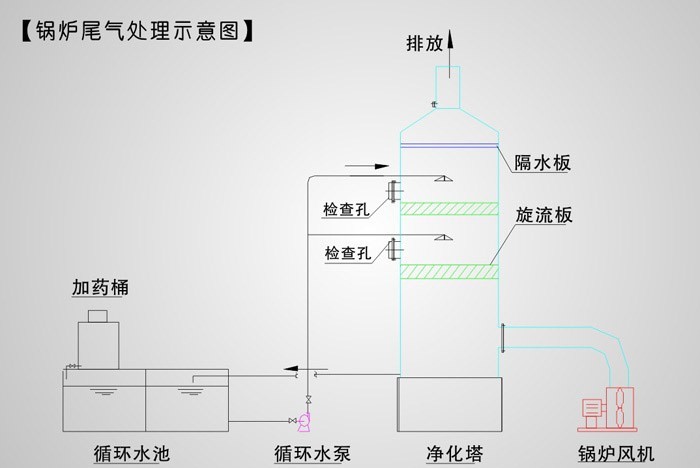
Structure and process flow of boiler dust collector equipment
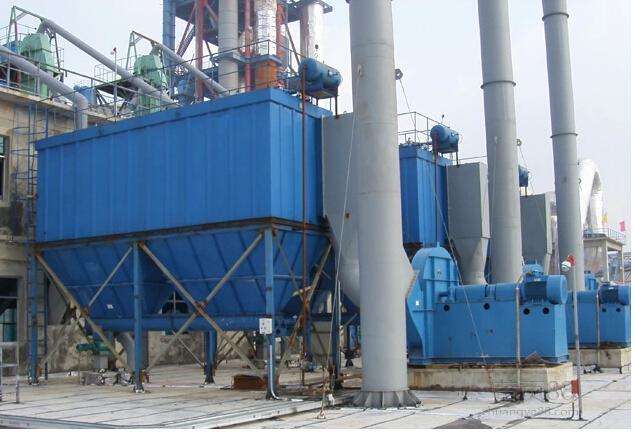
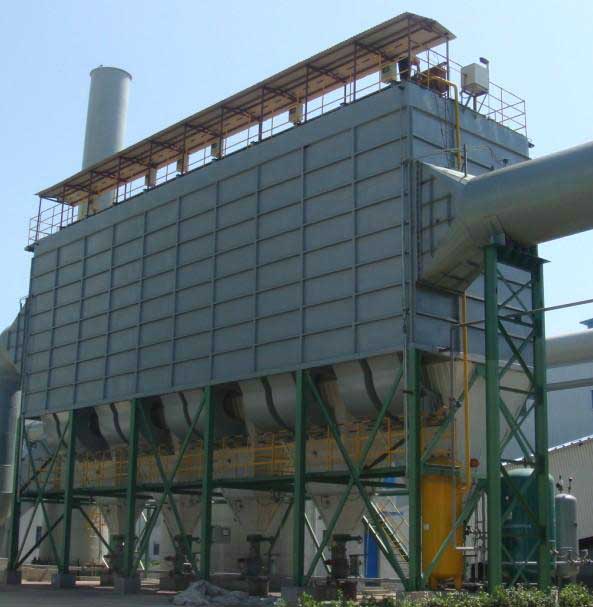
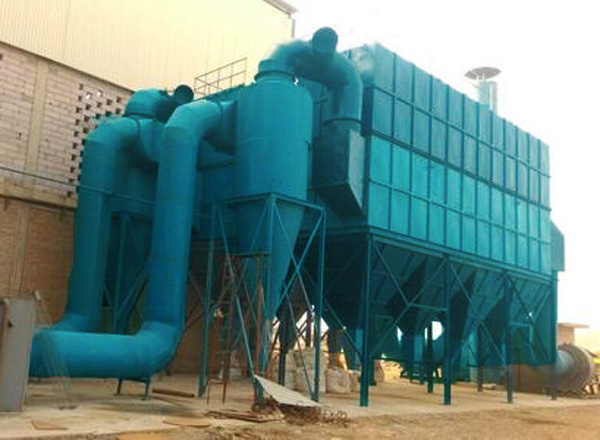
Structure of Boiler Dust Collector Equipment and Smoke and Dust Treatment Process FlowThe boiler pulse bag filter is composed of ash hopper, middle box, upper box, inlet and outlet air ducts, filter bag and frame, spraying device, discharge mechanism, electric control system, etc. The middle box can be divided into compartments or groups. When working, the dust containing gas enters the ash hopper through the air inlet and passes through the filter bag. The dust is separated and blocked from flowing on the outer surface of the bag. The clean gas then enters the upper box through the filter bag and is discharged by the fan through the upper outlet of the upper box Dust accumulates on the inner surface of the filter bag and continuously thickens, causing the resistance of the dust collector to continuously increase. When the time relay of the control cabinet gives a cleaning signal, the pulse valve starts the electromagnetic pulse valve row by row according to the pre-set program. After receiving the signal, the pulse valve instantly releases compressed air and injects surrounding air to form a strong airflow for reverse cleaning of the bag, removing dust attached to the outer surface of the bag. The dust sinks into the ash hopper bin under the action of gravity and is discharged by the ash discharge valve. After the dust cleaning is completed, the filter bag enters the filtering state again. For more boiler dust collectors, please follow our company website http://www.btshhb.com