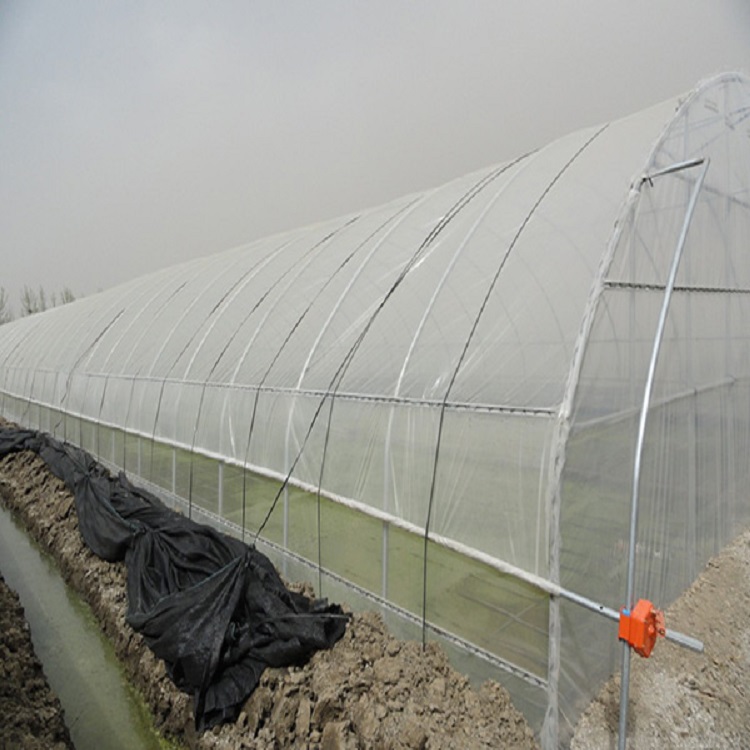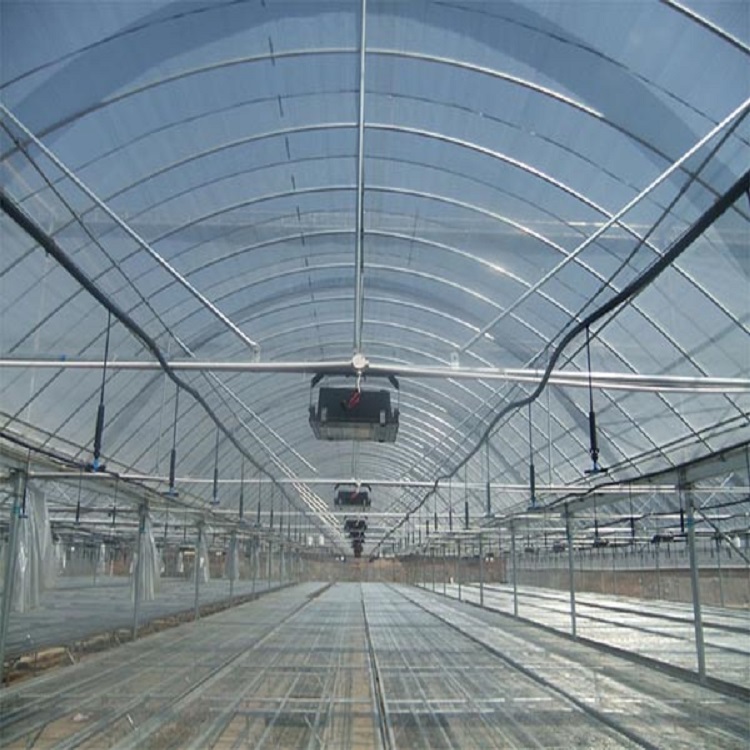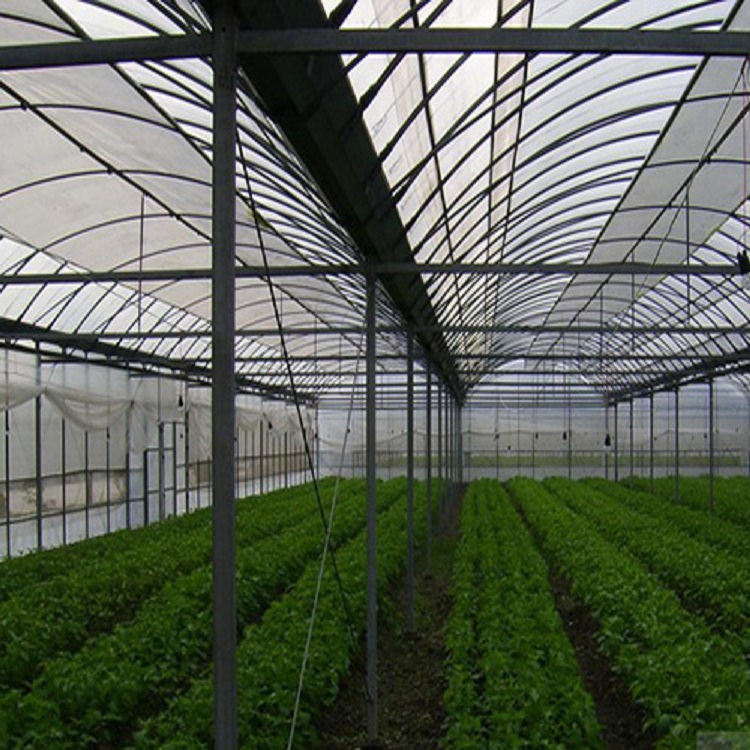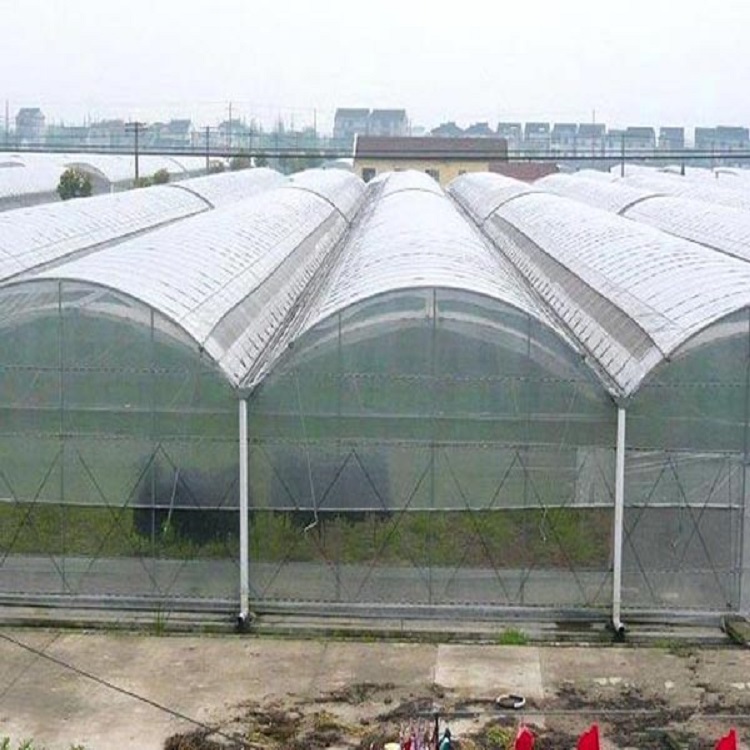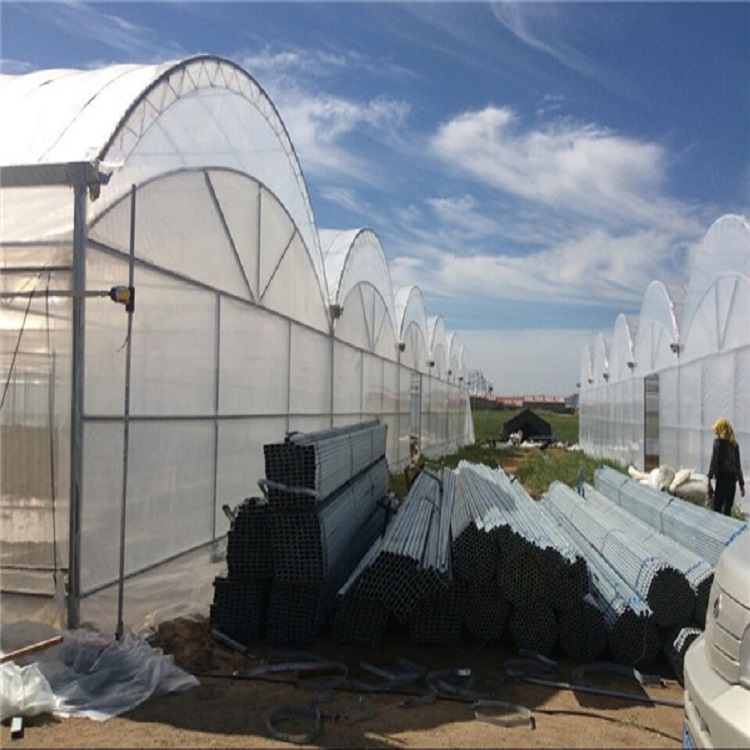















The connected greenhouse is an upgraded version of a greenhouse, essentially a large greenhouse that connects the original single-room greenhouse structures through scientific methods, rational design, and high-quality materials.
Film-covered greenhouses make full use of solar energy, provide certain insulation, and can adjust the temperature and humidity inside the greenhouse to some extent by rolling the film. Therefore, in northern regions of our country, film-covered greenhouses mainly serve as insulation for early spring and late autumn cultivation, generally allowing for a 30-35-day advance in spring and a 20-25-day extension in autumn, but they cannot be used for overwintering cultivation. In southern regions, besides using film-covered greenhouses for insulating vegetables and flowers during winter and spring and for overwintering cultivation, they can also be equipped with shading nets for summer and autumn to provide shading, cooling, and protection against rain, wind, and hail for facility cultivation.
Our vast territory and complex climate make the use of film greenhouses for the cultivation of vegetables and flowers, etc., play a particularly significant role in alleviating the supply and demand contradictions during the off-season for vegetables. This practice offers substantial social benefits and substantial economic returns in the present.