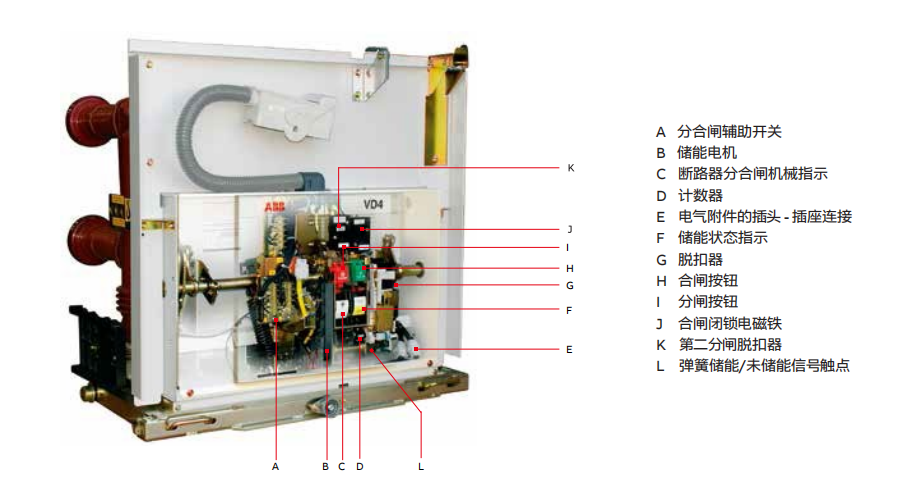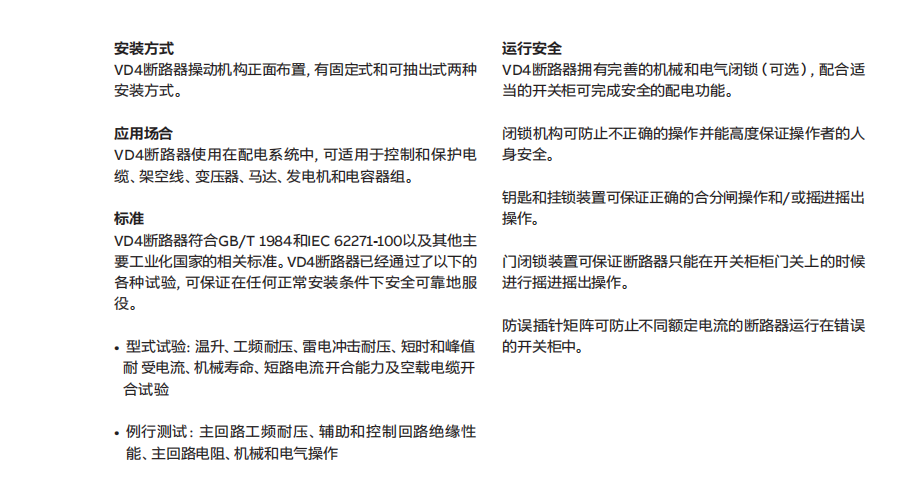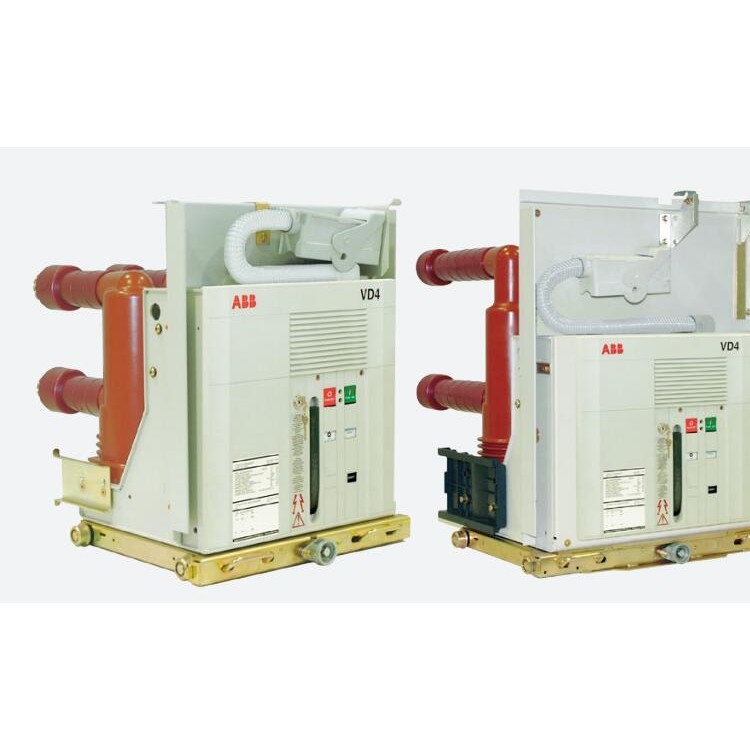

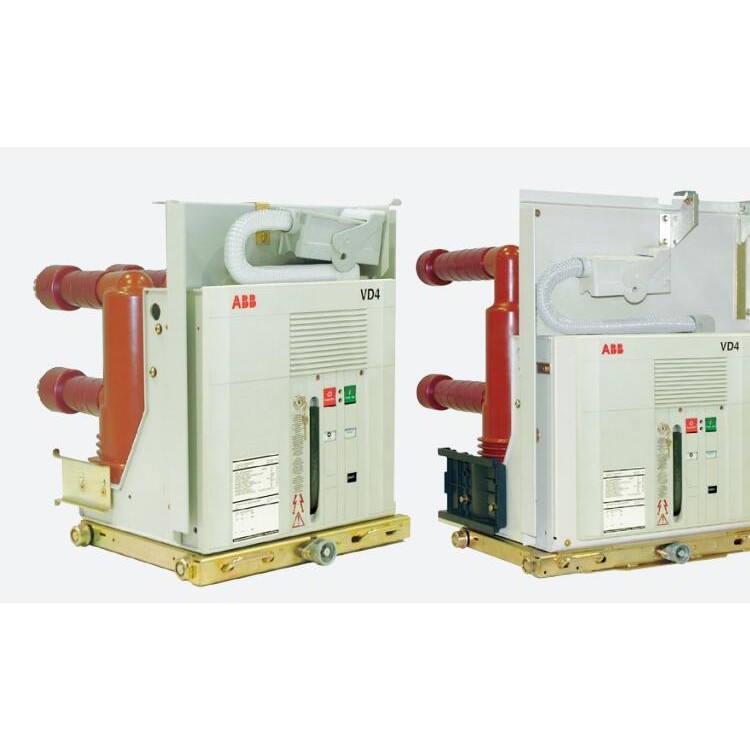
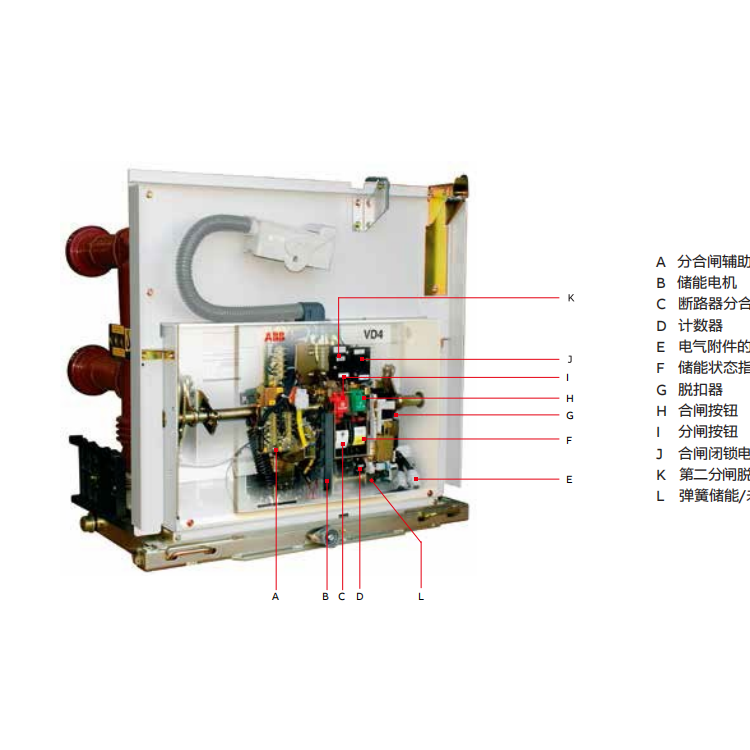
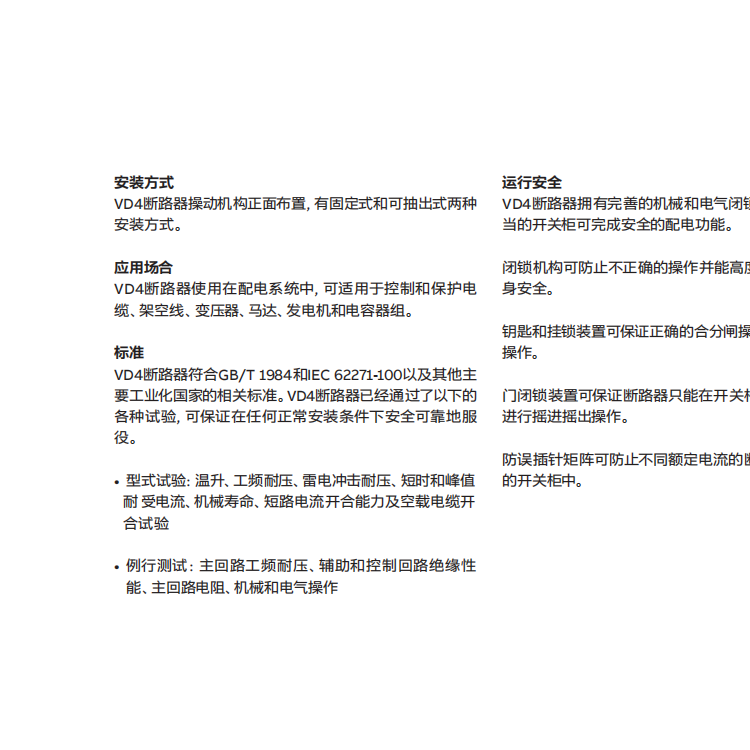









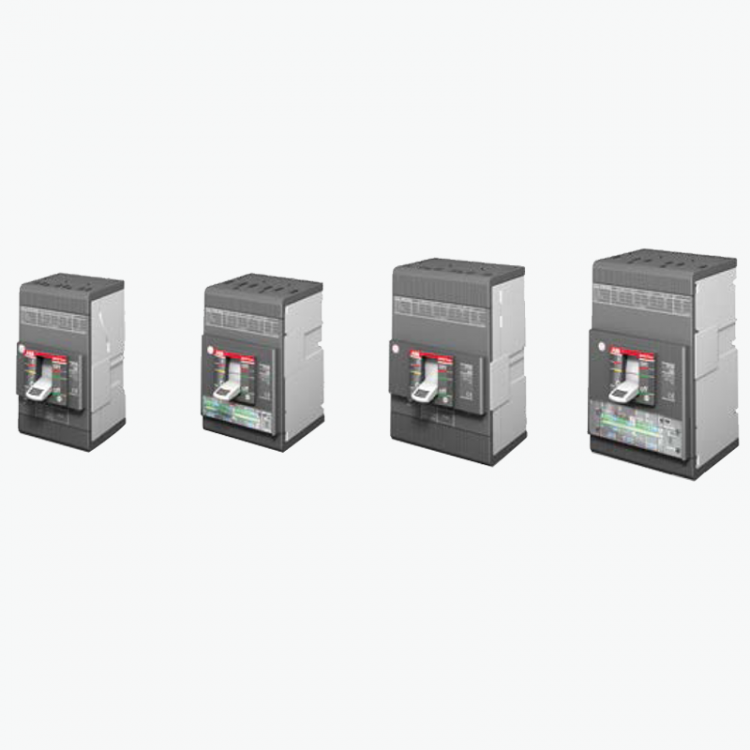
The VD4 vacuum circuit breaker incorporates ABB's renowned vacuum arc chamber and solid-sealed pole pieces, along with a functional modularized operating mechanism, representing the perfect blend of ABB Group's global research, design, and manufacturing technologies.
The VD4 vacuum circuit breaker with a solid-sealed pole terminal offers higher reliability and advanced solutions, committed to enhancing customer productivity, optimizing the total lifecycle cost of switching equipment, and ensuring safety for personnel and equipment. It is widely used in industries such as utilities, industrial, transportation, and infrastructure.
—
The newVD4 vacuum circuit breaker is a perfect integration of ABB's renowned arc extinguishing chamber and cast pole technology for research, development, and manufacturing, along with advanced research, design, and production technology for the operating mechanism.
The arc chamber of the VD4 medium-voltage vacuum circuit breaker is fully cast into the pole. The monolithic cast pole structure is more robust, offering enhanced protection to the vacuum arc chamber, and can eliminate the impact of dust and moisture on the external insulation capability of the arc chamber.
The arc-extinguishing chamber maintains the main contacts of the switch sealed in a vacuum environment, forming an arc-extinguishing unit.
In a vacuum, the circuit is interrupted without the need for arc quenching and insulating medium. In fact, there are no materials capable of ionization within the arc chamber. Under no circumstances, when the contacts separate, the arc path between them is solely composed of metal vapor from the contact material.
An arc can only be maintained by external energy. When the main circuit current disappears at the natural zero-crossing point, the arc cannot be sustained. At this moment, the rapidly decreasing current density and the quickly condensing vacuum metal vapor rapidly restore insulation between the contacts. As a result, the vacuum interrupter regains its insulation capacity and the ability to withstand transient recovery voltages of the system, ultimately extinguishing the arc.
Even at very small gaps, vacuum possesses high insulation strength, thus, by separating the contacts of the vacuum arc chamber just a few milliseconds before the current passes zero, successful interruption can be guaranteed.
Specially designed contact geometry and material, along with very short arc quenching times and low arc voltages, result in extremely low contact erosion, ensuring the longevity of the arc chamber. Moreover, vacuum prevents the contact from oxidation and contamination.