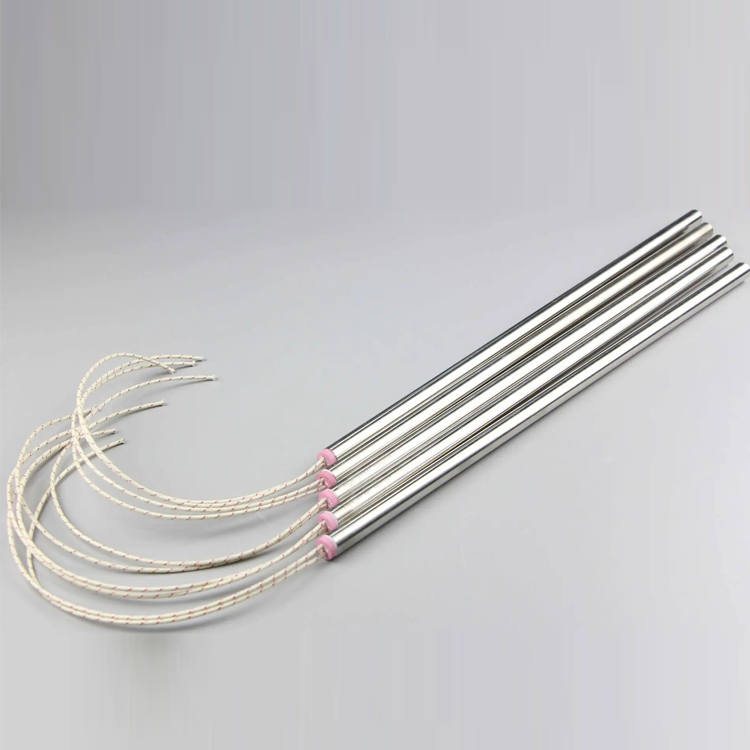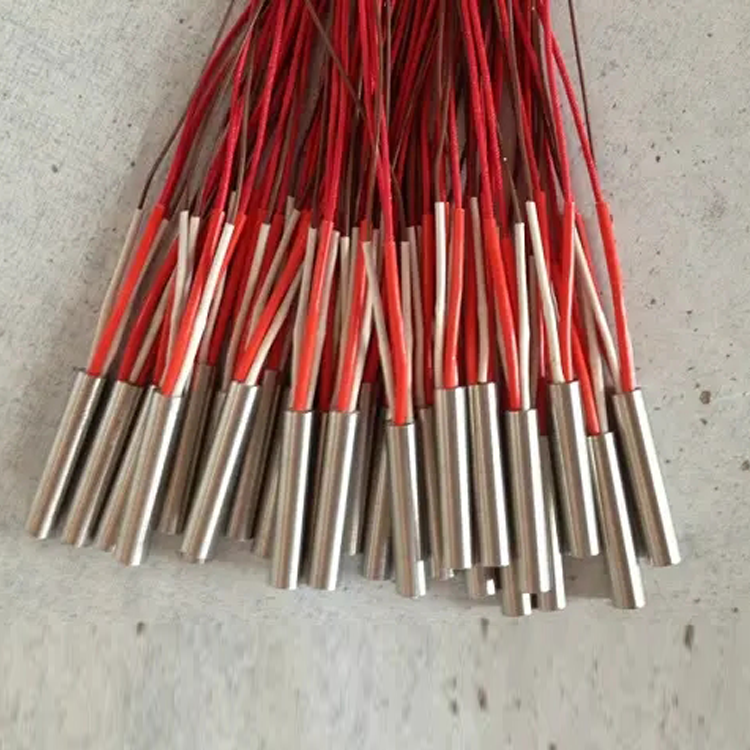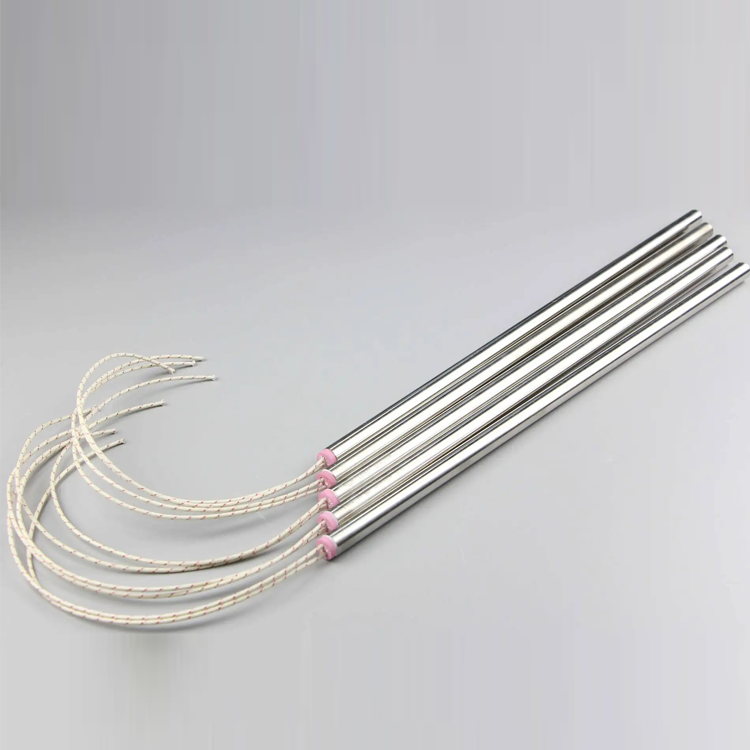

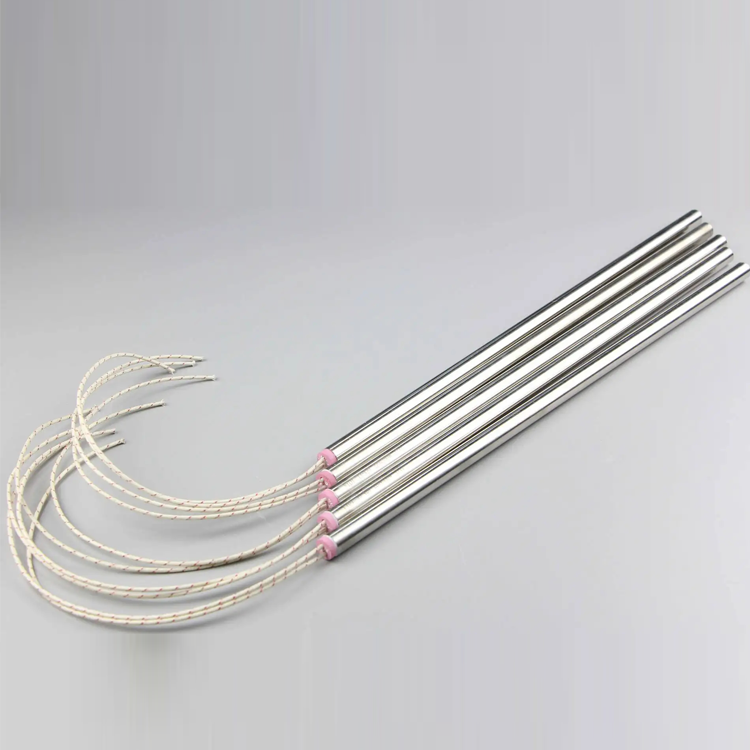
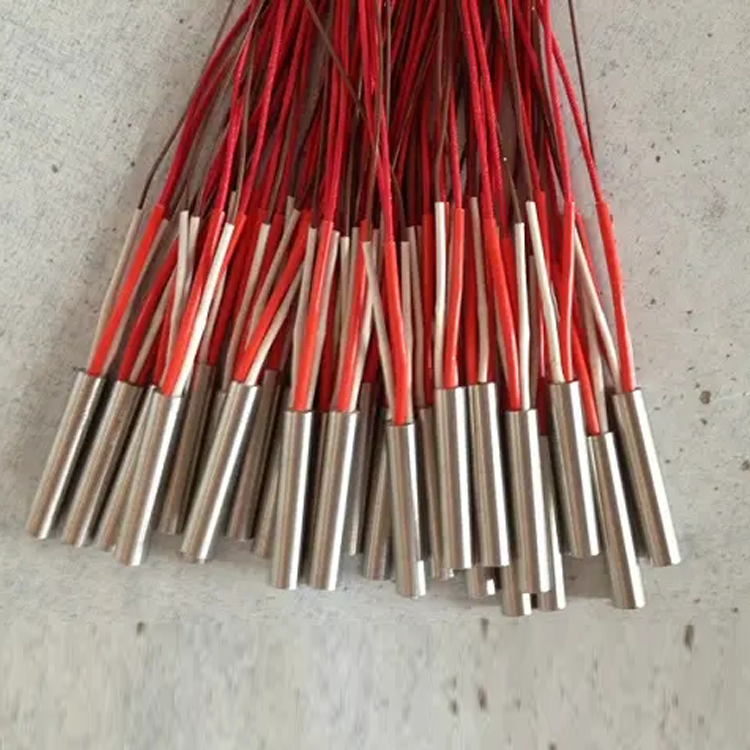











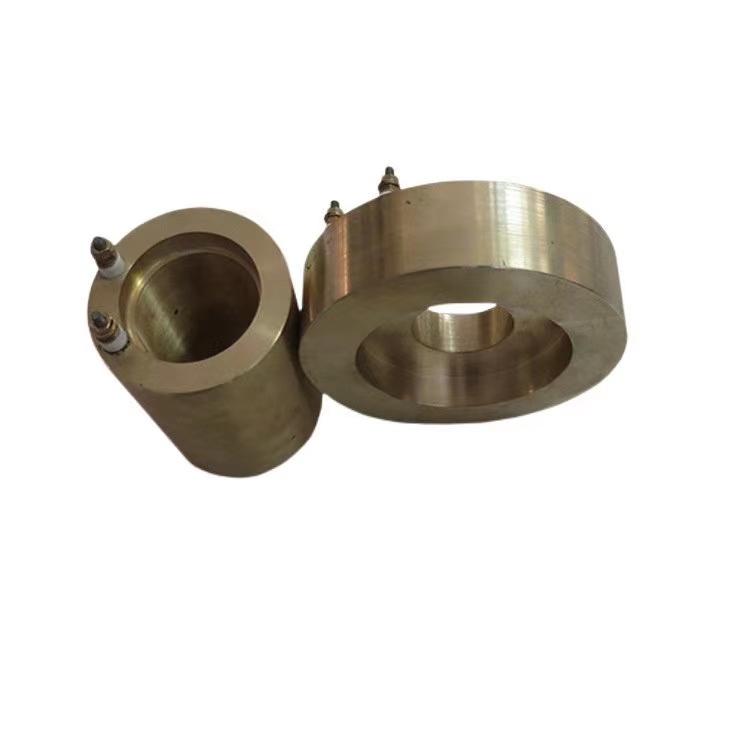
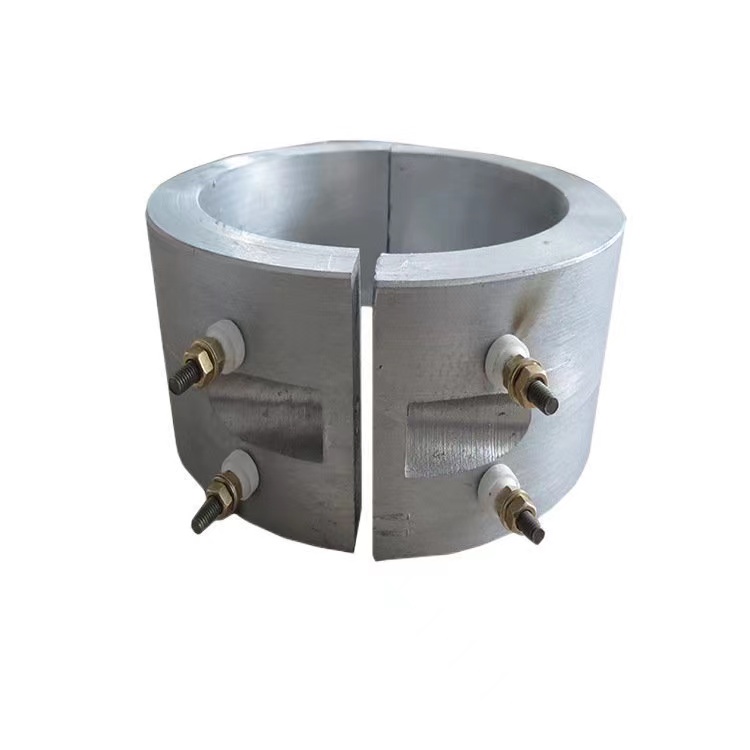
Mold single head electric heating tube is mainly used for:
3D glass bending molds, quick sealing machines, injection molds, hot pressing machinery, meltblown molds, semiconductor processing for the shoe industry, etc.
Mold Single Head Electric Heating Tube - Also known as a single head electric heating tube or a tubular heater, it consists of a core of nickel-chromium heat-resistant alloy wire wrapped around a magnesium oxide mandrel with excellent insulating and thermal conductivity. After filling the space between the heating wire and the shell with insulating thermal magnesium oxide powder, the air inside is compressed and expelled by the machine, making it a single integrated unit.
Key points for using single-head electric heating pipes in molds include:
Customize the mold hole depth according to the length of the heating section of the mold single-head electric heating tube
Holes too shallow can expose the heated section of the heating tube after installation, lacking an adequate heat dissipation environment, which may damage the heating tube and even lead to fires or other accidents; holes too deep can cause the sealed and wiring parts of the heating tube to be immersed in a high-temperature environment after installation, long-term use may lead to issues like short circuits between electrodes.
Avoid bending the heating tube wires during use.
The bending of the lead wire at the heating tube can easily cause breakage or short circuits at the bend. If the lead wire needs to be bent or folded repeatedly during use, please consult with the technical staff to select an appropriate structure.
3. Pay attention to moisture-proofing for the heating tube; it is recommended to start with a low voltage during initial use.
If the heating tube is stored and used in a high-humidity environment, it may cause a decrease in insulation resistance. However, after being powered on, the moisture inside the heating tube will evaporate, and the insulation performance will gradually recover. Therefore, it is recommended to start with a low-voltage method during initial use.