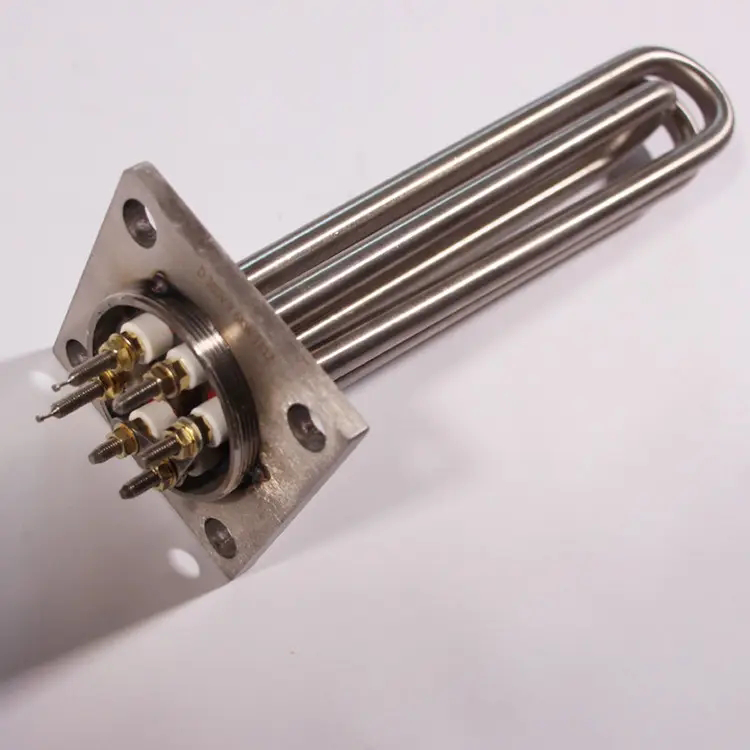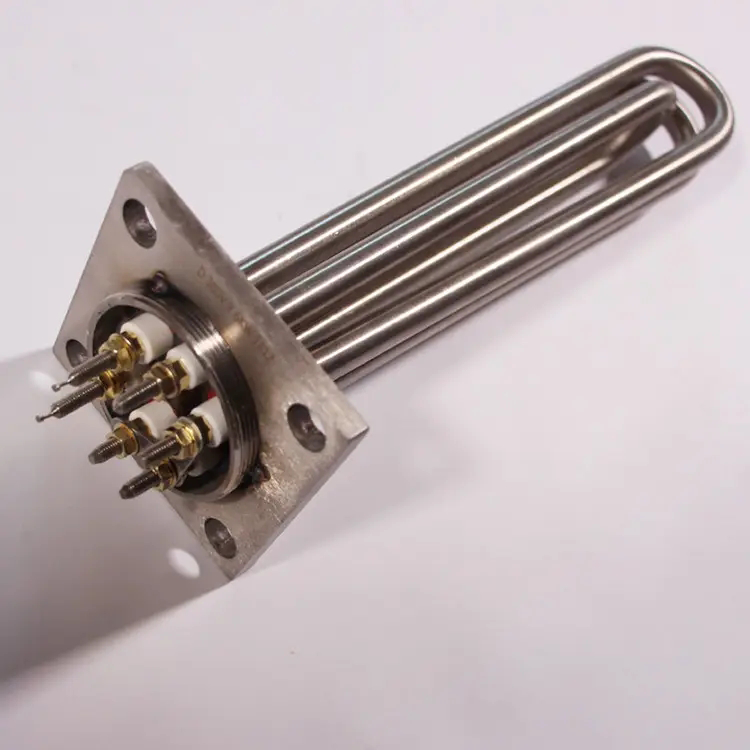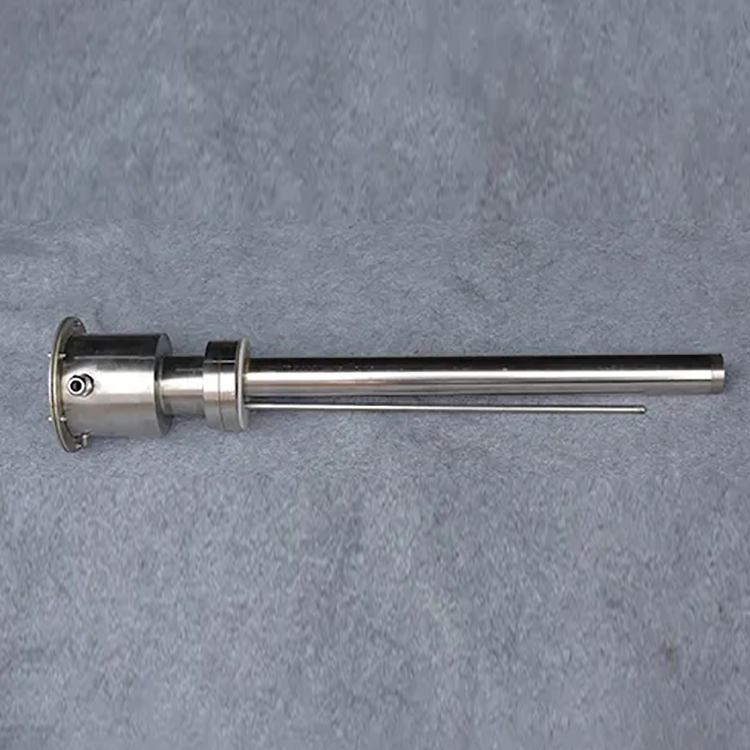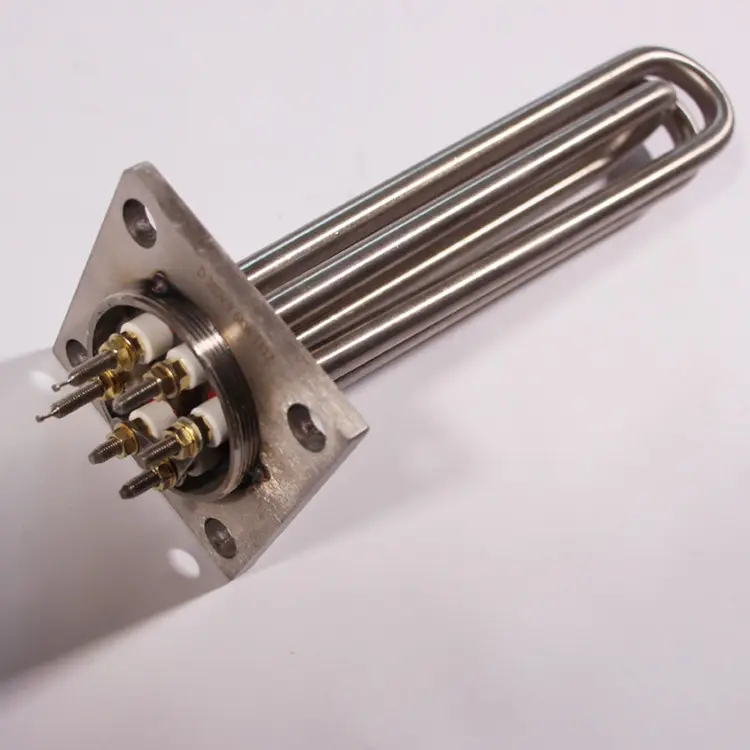

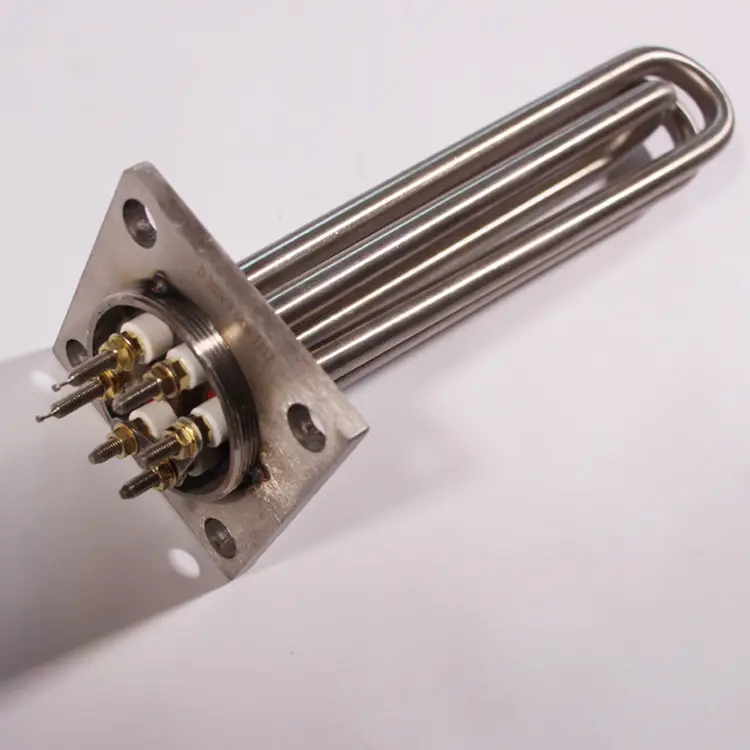
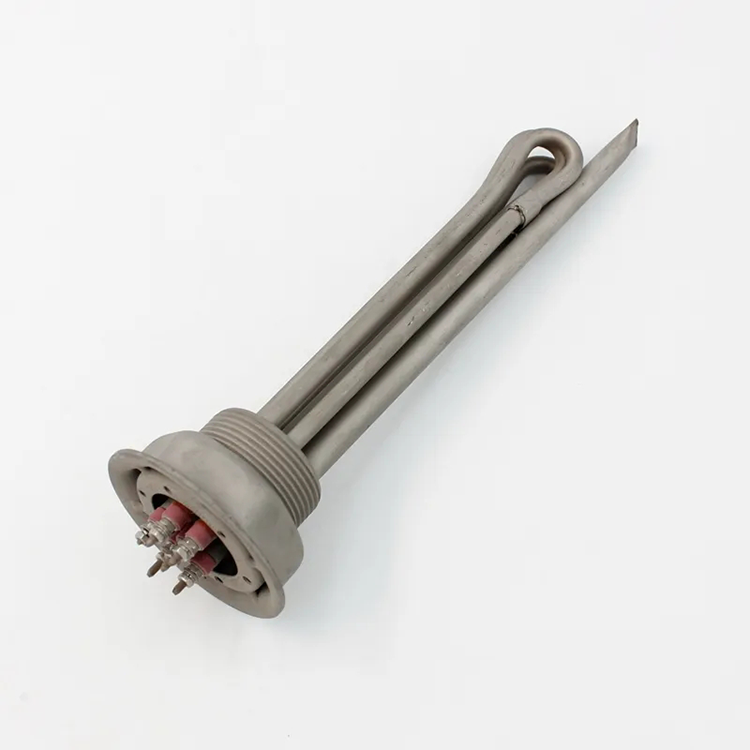
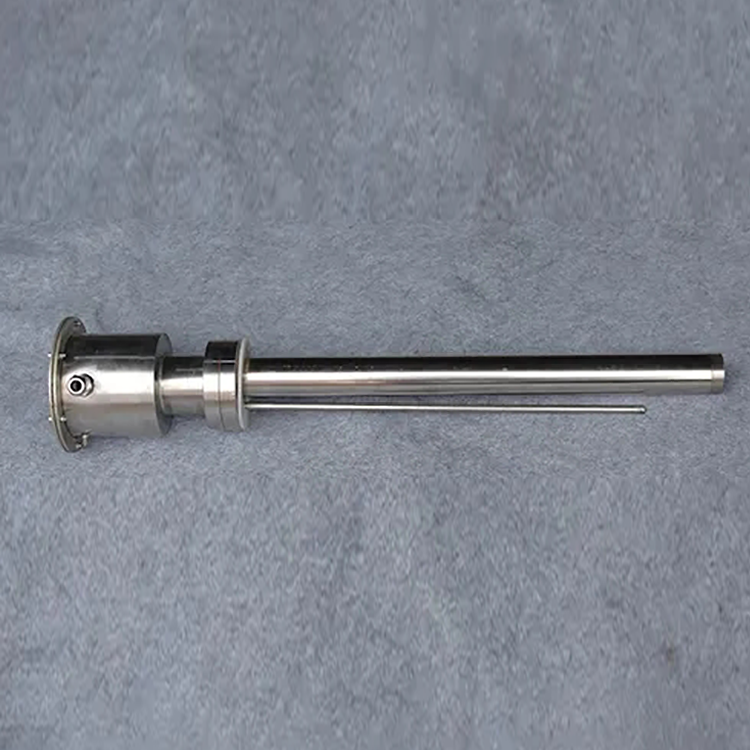











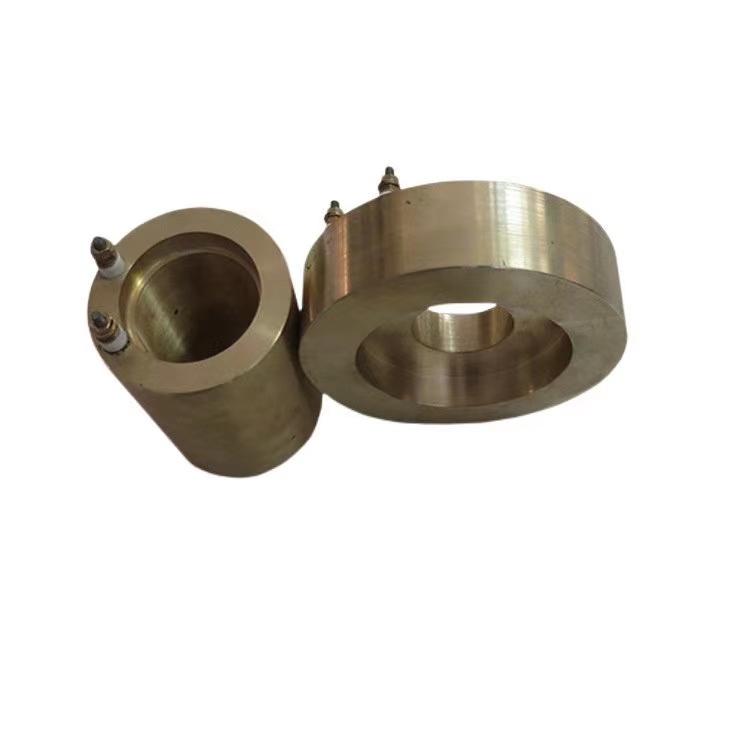
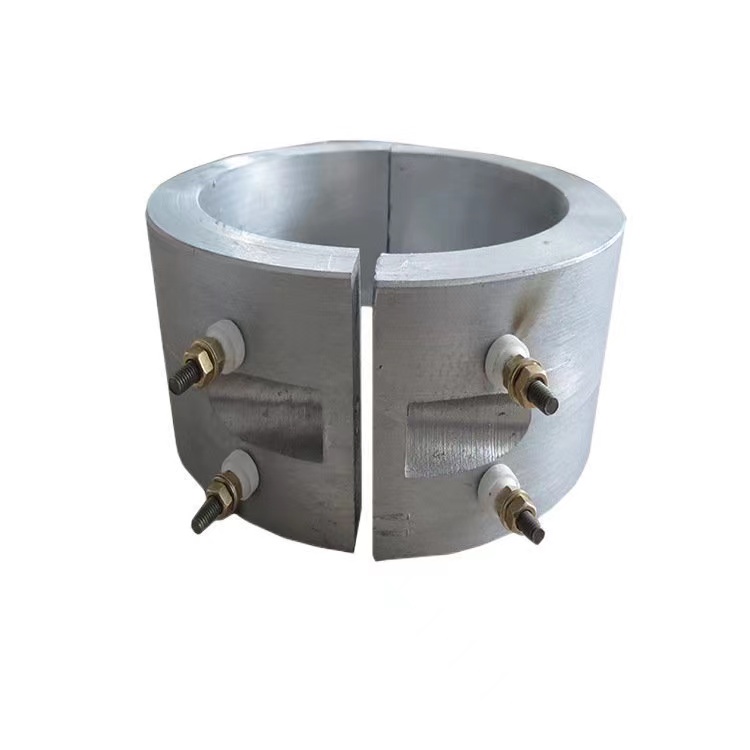
The flanges of heating tubes are generally divided into threaded flanges and flat flanges. Threaded flanges commonly come in sizes of 1 inch, 1.2 inches, 1.5 inches, and 2 inches, with the 2-inch size being most popular. Threaded flange tubes are generally used for low-power heating applications, with power settings usually ranging from a few thousand to ten or so thousand watts. Flat flanges are available in sizes from DN10 to DN1200, and can be designed to different power requirements as per customer specifications. Generally, flat flange heating tubes with high power ratings, ranging from a few thousand to several hundred thousand watts, are used. They have a surface power that is 2 to 4 times greater than that of air heating surface loads.
Process: The majority of法兰heating tubes are manufactured using tungsten inert gas (TIG) welding to connect the electric heating tube with the flange for centralized heating. Alternatively, a fastening device can be used, where each heating tube is welded with fasteners. These are then secured to the flange cover with nuts. The tubes are TIG-welded to the fasteners, ensuring no leaks. A scientific process is employed for sealing the fastening area.
Features: Primarily used for heating in open and closed solution tanks and recirculation systems, it boasts a high surface power, which is 2 to 4 times the surface load of air heating.