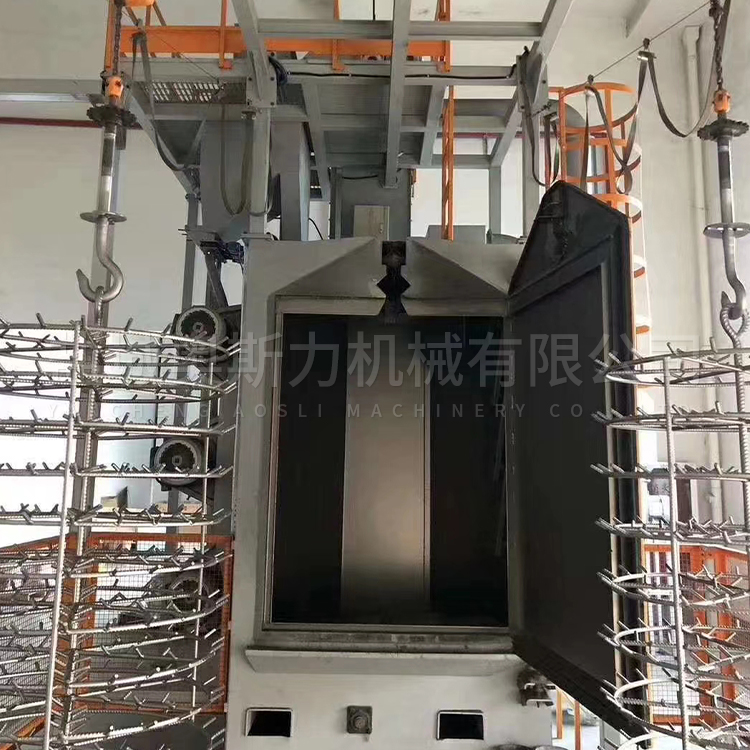

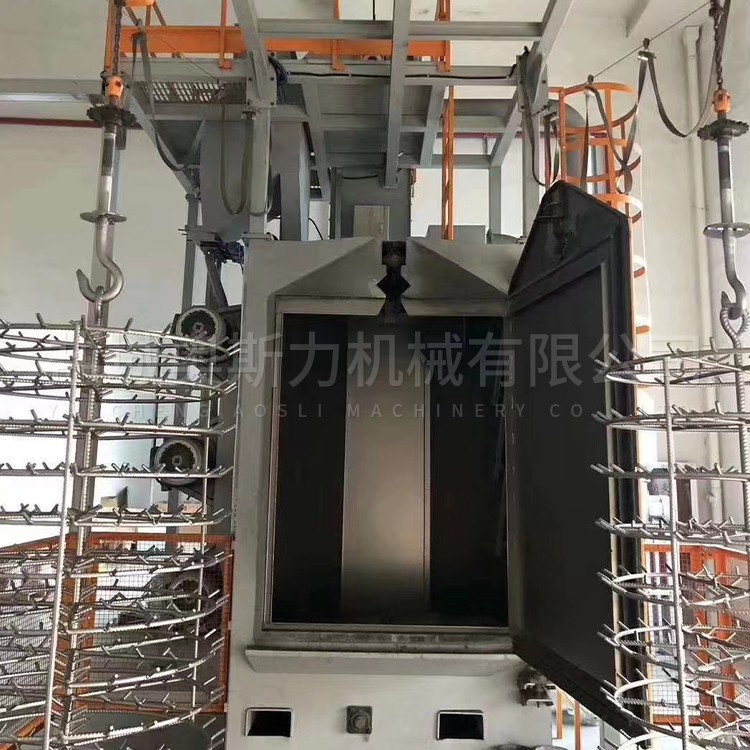











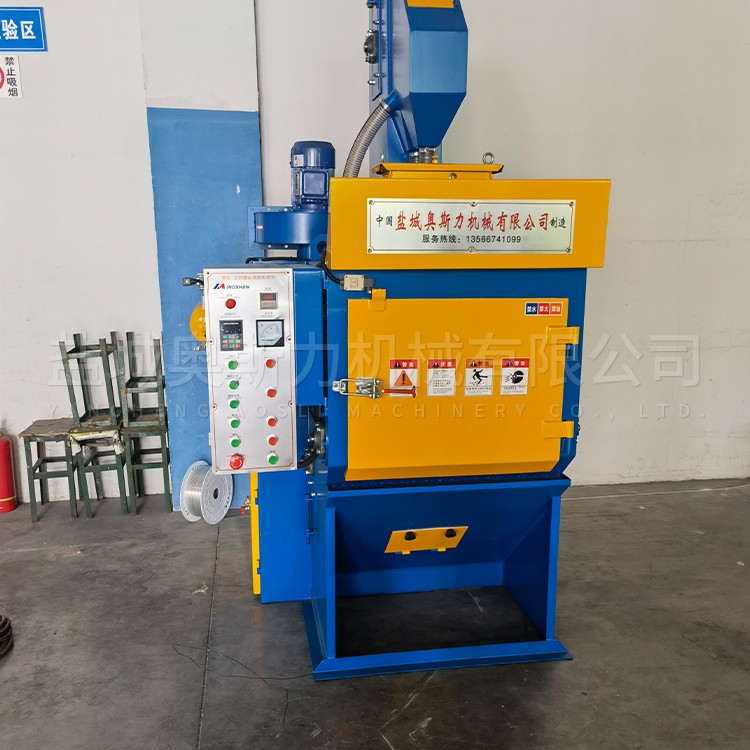

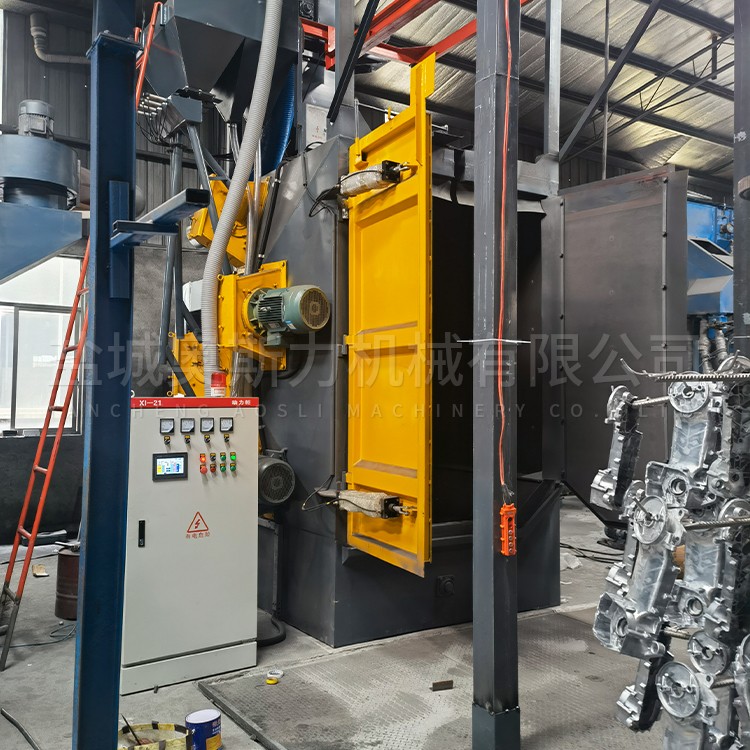
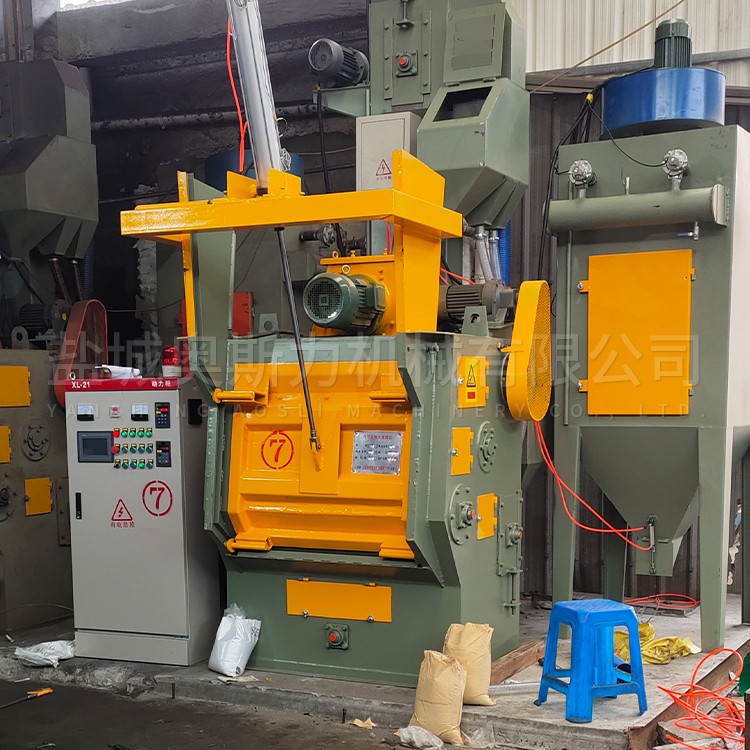
The overhead shot blasting machine is available in single and double hook models. The hook type shot blasting machine loads workpieces alternately with two hooks into the shot blasting cleaning chamber. The shot blaster is used to propel 0.2 to 0.8mm shots onto the surface of the workpiece, achieving a certain roughness to enhance the appearance or alter the compressive stress to extend the service life. This model is widely used for surface cleaning or strengthening treatment of medium and small castings and forgings in industries such as foundry, construction, chemicals, motors, and machine tools. Additionally, it is suitable for cleaning slender, thin-walled parts that are prone to damage.
Ball Shot Gun Adjustment Method
When adjusting the shot blasting unit of a hook-type shot blasting machine, pay attention to the position of the directional sleeve. Ensure that the pellets are projected to fully cover the workpiece being cleaned; otherwise, it may affect the cleaning efficiency.
The directional nozzle window location should be marked on a wooden board or a thick paper sheet, placed at the position of the cleaned workpiece. Activate the shot blast machine, manually add a small amount of shots into the infeed tube of the blast machine, check the position of the blast zone. If the position is incorrect, adjust the directional nozzle to achieve the desired location.
Advantages
Utilizing the fourth-generation international overhead centrifugal shot blasting machine with high shot blasting volume and speed, it can significantly enhance cleaning efficiency and achieve satisfactory cleaning quality.
2. The simulation projection diagrams (including the determination of the model, quantity, and spatial layout of the shot blast machines) and all drawings of the shot blast machine are entirely created using Computer-Aided Design (CAD), making the selection and arrangement of the shot blast machines more rational. This has improved the utilization rate of shot pellets and labor productivity, ensured cleaning efficiency, and reduced wear on the chamber protective panels.
3. Utilizing the popular no-pit structure design, it not only saves on the construction costs and time for pit foundations but also resolves the issue of ball mill sand rusting and caking inside the hoist due to water accumulation in the pit for southern users.
4. Indoor heat zone cleaning utilizes rolled Mn13 plate protection, which offers significantly longer service life compared to the previous rubber plate protection, and is also aesthetically pleasing and easy to replace.