








I. Overview
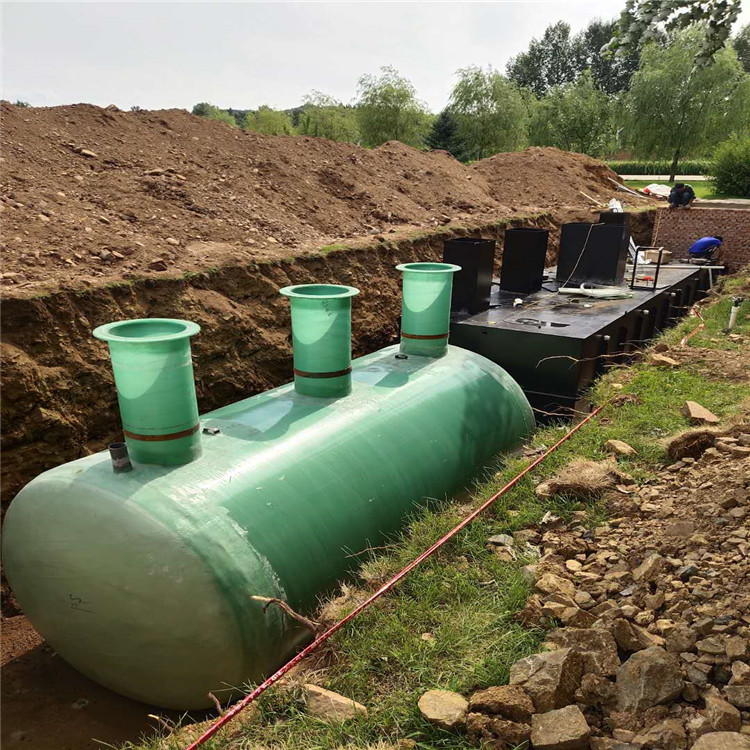
A septic tank is a small-scale wastewater treatment system, comprising a pond and a septic system. As wastewater enters the pond, bacteria carry out anaerobic decomposition of waste, reducing the volume of solid waste and, after sedimentation, the effluent is discharged, thereby lowering the level of water pollution. The initial purpose of installing septic tanks within urban residential areas was to collect fertilizer. With the advancement of urbanization and the intensification of environmental pollution, septic tanks have played a positive role in protecting water bodies. Today, in many large cities across our country, the role of septic tanks in providing fertilizer for agricultural production has largely disappeared, and they have become one of the fundamental measures for environmental protection.
Section II: Application
Septic tanks are fundamental facilities for sludge treatment and also serve as pre-treatment for domestic wastewater, their uses are manifested in:
1. Ensure the cleanliness of the residential community environment, preventing the spread of domestic wastewater and pollutants in living spaces.
2. Eliminate mosquito and fly larvae in the anaerobic digestion environment of septic tanks.
3. Temporary storage of sludge, anaerobic digestion of organic sludge; matured organic sludge can be used as agricultural fertilizer.
4. Preliminary treatment of domestic wastewater (primary treatment), sedimentation of impurities, and hydrolysis of macromolecular organic matter into smaller organic molecules such as acids and alcohols, to improve subsequent wastewater treatment.
III. Process Principle
A septic tank is a treatment facility that utilizes sedimentation and anaerobic fermentation to remove suspended organic matter from domestic wastewater, classified as a primary transitional wastewater treatment structure. Domestic wastewater contains a large amount of feces, paper debris, pathogenic parasites... The concentration of suspended solids is 100~350mg/L, and the concentration of organic matter CODCr is between 100~400mg/L, with the concentration of suspended organic matter BOD5 ranging from 50~200mg/L. After entering the septic tank, wastewater undergoes 12~24 hours of sedimentation, which can remove 50%~60% of the suspended matter. The sludge settled at the bottom is decomposed by anaerobic fermentation for more than 3 months, converting organic matter in the sludge into stable inorganic matter, transforming the easily decomposable raw sludge into stable mature sludge, altering the sludge structure, and reducing its moisture content. The sludge is periodically removed and transported for landfilling or use as fertilizer. Requirements: The calculation volume of the sedimentation and digestion sections of the septic tank should be determined according to Article 4.8.4~4.8.7 of the "Code for Design of Building Water Supply and Drainage" (GB50015-2003). The retention time of wastewater in the septic tank should be 12~24 hours. For wastewater treatment systems without sludge disposal, the volume of the septic tank should also include the storage volume for sludge.
IV. Advantages
1. Unique design, pressure and impact-resistant
Unique annular dense corrugated structure design, with compressive and impact resistance several times stronger than rectangular, cylindrical, and spherical arch shapes, no additional reinforcement measures are required to meet usage under various conditions. Tested by Henan Province Product Quality Supervision and Inspection Institute, the standard model can bear 20 tons of cargo trucks without issues, and the reinforced model can bear 40 tons of cargo trucks without abnormalities.
2. Compact structure, space-saving
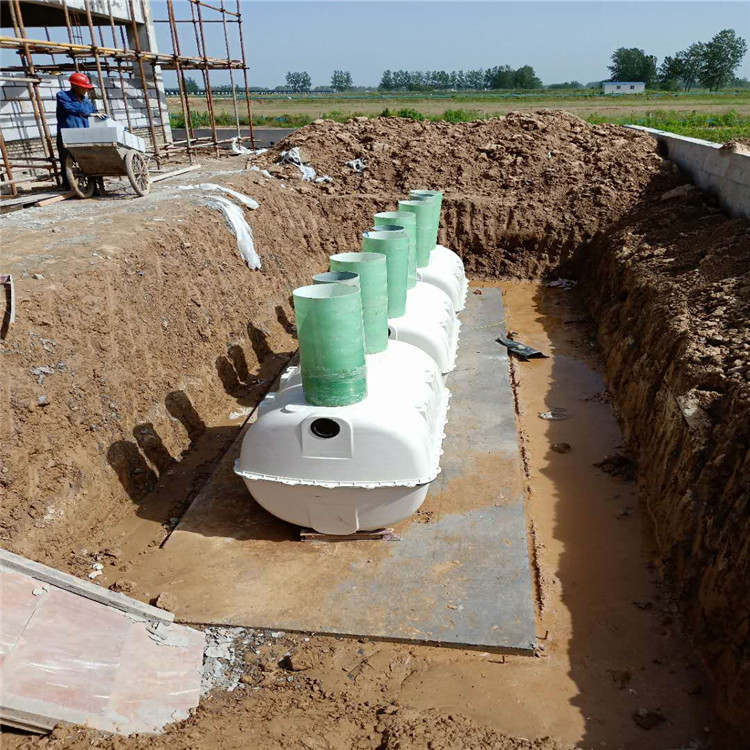
This product features a compact structure with a small footprint, occupying approximately 60% of the area of a traditional septic tank, thereby conserving land resources.
3. Easy installation, saving labor and time
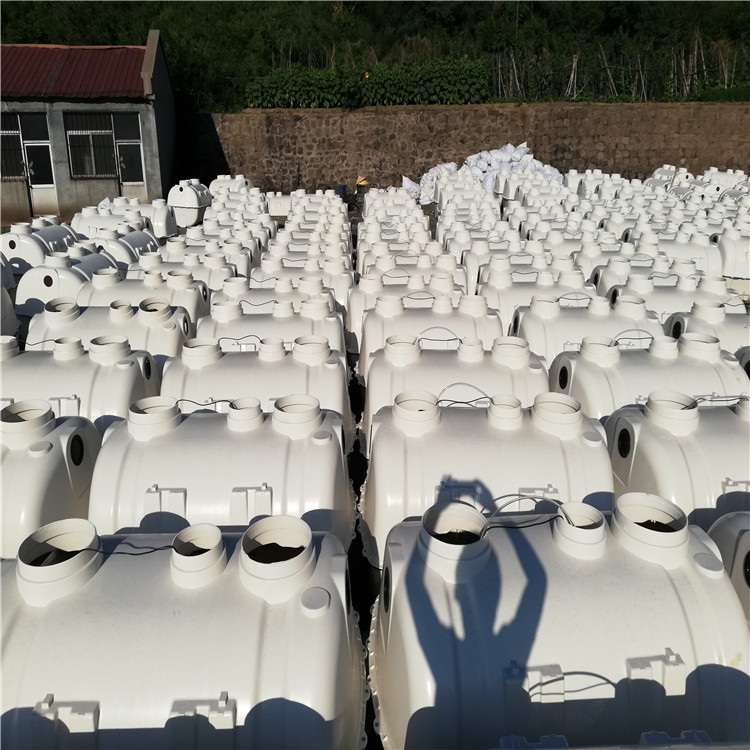
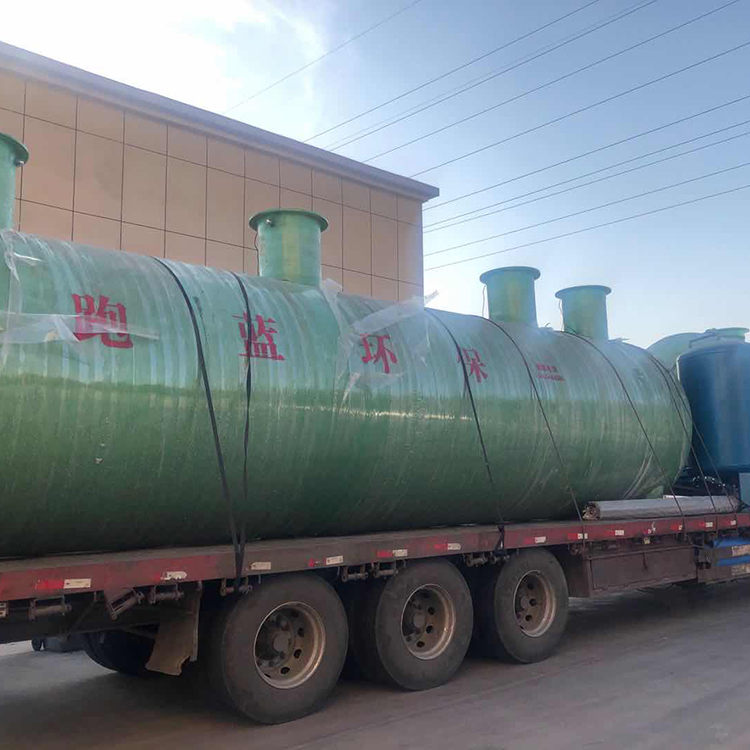
Factory production, lightweight, easy to transport, flexible site selection, short construction period, low construction costs, ready for installation and use on the same day.
4. Leak-proof, excellent sealing properties
This product is manufactured in an integrated manner with superior technology, featuring no cracks or leaks. It avoids the issues associated with traditional septic tanks, which can contaminate groundwater and compromise building safety due to leakage.
5. Eco-friendly and easy to manage
This product utilizes "MDS Special Filler" internally, which, through the anaerobic biofilm formation on the suspended spherical filler, primarily relies on the biofilm attached to the carrier for reaction. After sufficient contact and reaction, it enhances reaction efficiency, making it a new generation of passive anaerobic reactor.
6. Economical and practical, cost-effective
Budget prices are about 20% lower than reinforced concrete septic tanks, and are roughly equivalent to brick-lined septic tanks. The YJBH septic tank is an ideal product that offers good quality at a reasonable price, and is highly praised by real estate development companies, construction units, and construction entities.
7. Durable and safe
Utilizing high polymer composite materials, in line with the trend of material development, it is resistant to aging, deformation, acid and alkali, corrosion, and has a lifespan comparable to that of the building under normal use. Eliminates the issue of traditional septic tanks being unsuitable for acidic wastewater.