












Note: Prices are subject to actual.
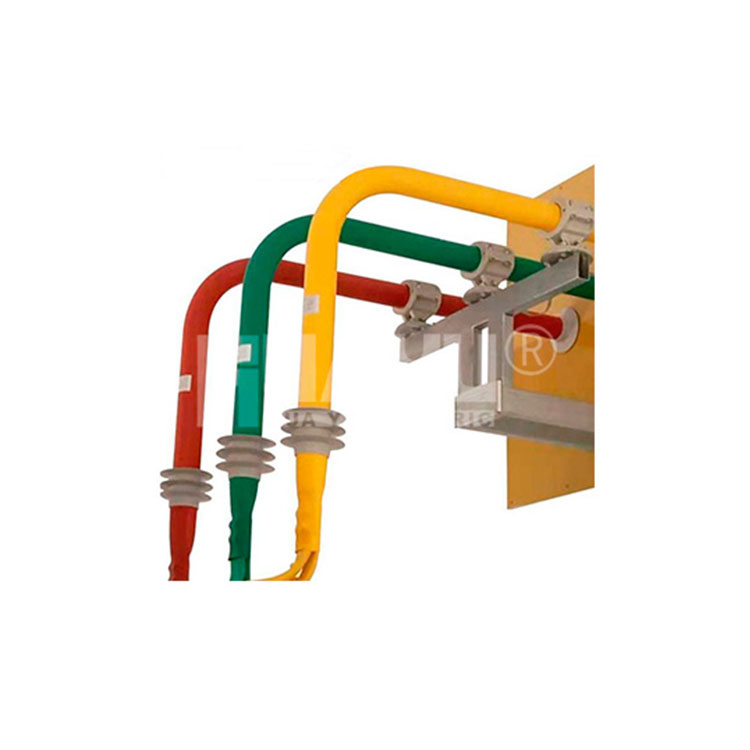
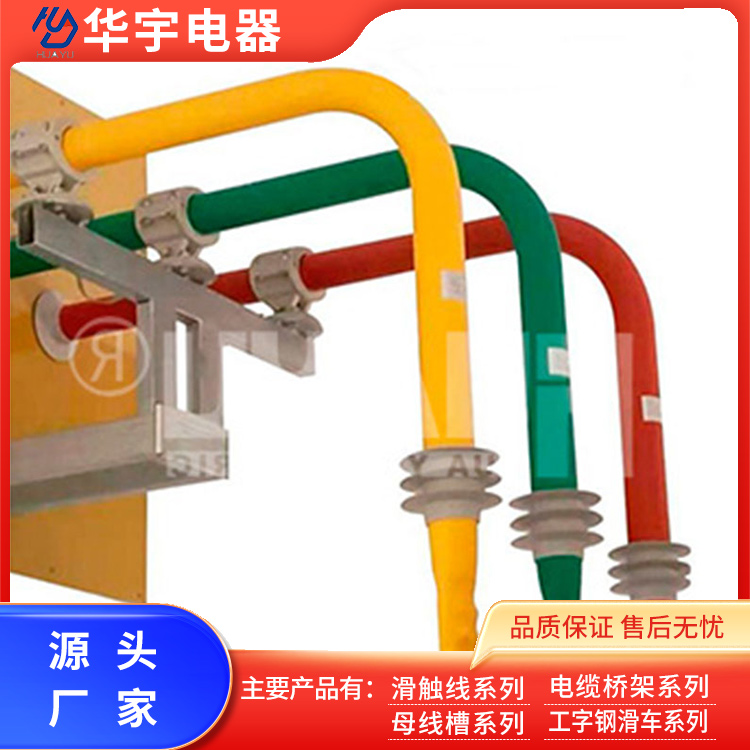
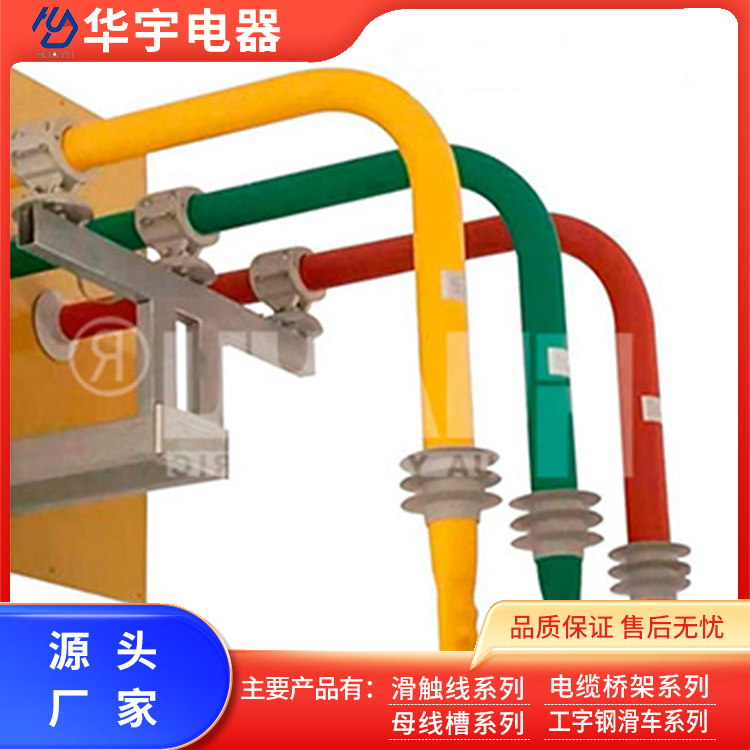
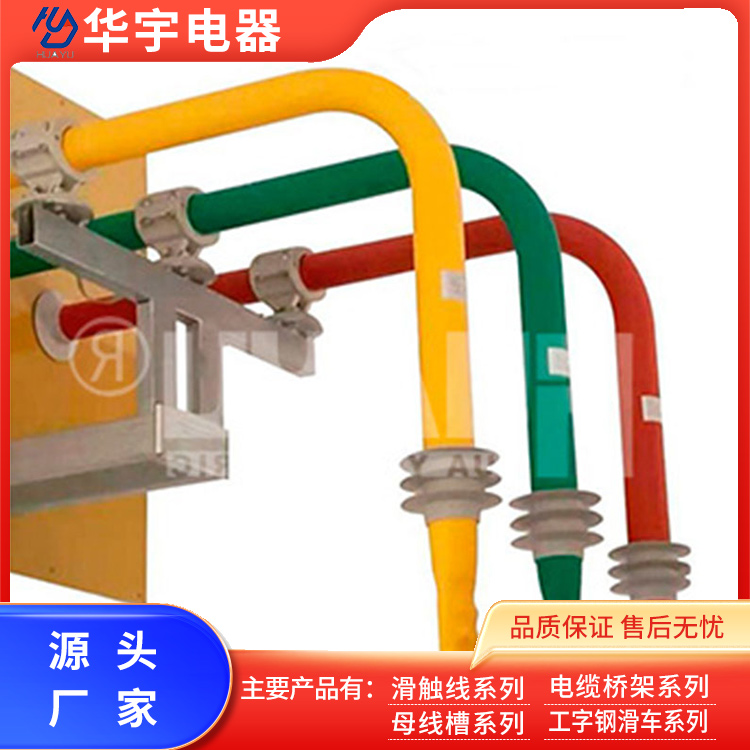
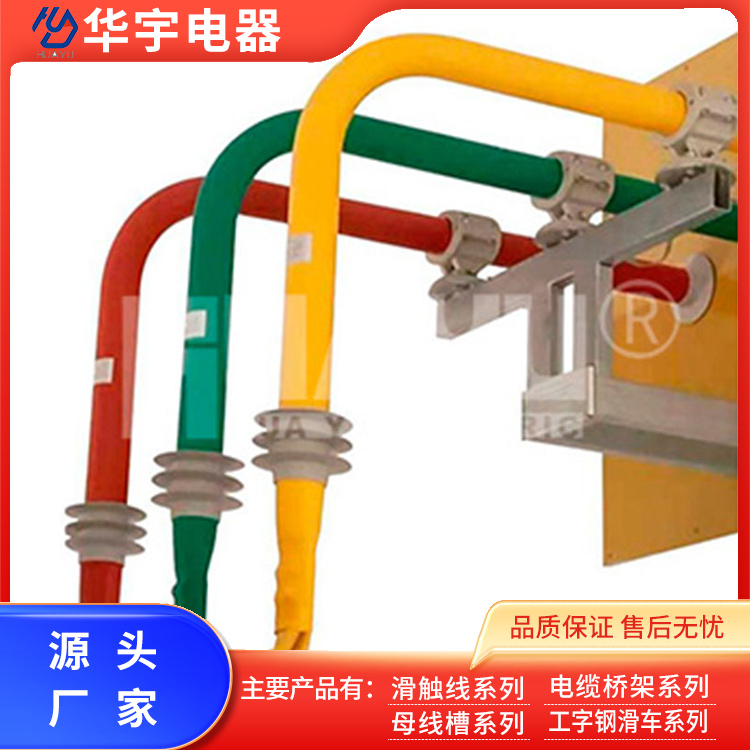
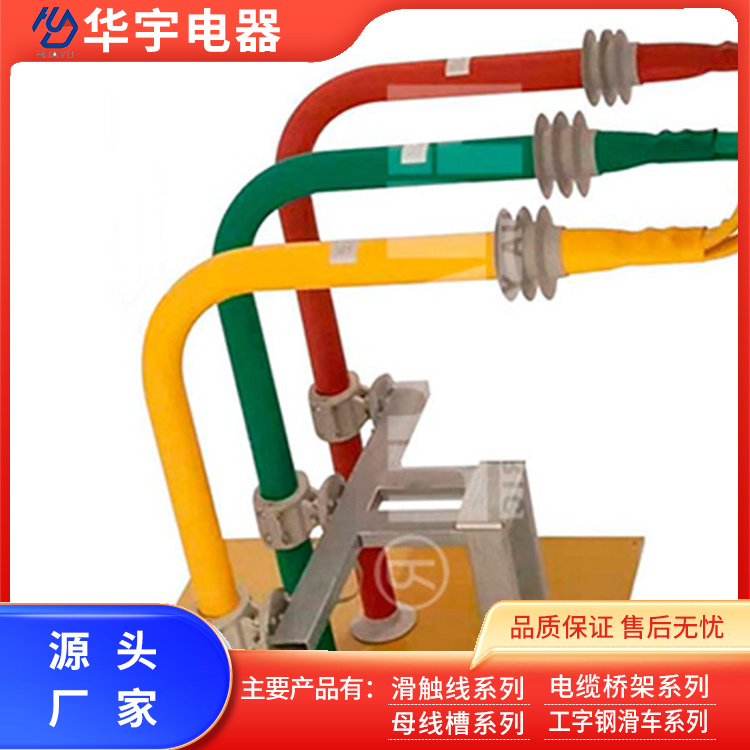
Conduit busbars, a type of busbar product that uses copper tubes or aluminum alloy tubes as conductors and is externally insulated.
Tubular cables are known internationally. These tubular insulated busbars possess features such as high current capacity (12,000A), high mechanical strength, excellent insulation, and a wide range of applications, which is why they are increasingly recognized and accepted by customers. Internationally, such products have a decades-long history and experience. However, domestically, due to a shorter time in this field, limited technological development capabilities, and constraints in insulating materials, we can only produce products up to 35kV and below.
This product is still a niche industry domestically, with no specific detailed product standards set by the country. Generally, each company follows its own corporate standards. Domestic manufacturers of tubular insulating busbars have their own naming conventions and model numbers, such as "tubular shielded insulating busbar, cross-linked polyethylene tubular busbar, insulated copper tube busbar," and so on. In essence, they are all the same type of product. The confusion in naming and models creates difficulties for users in selecting the right product. As a user, the first step is to understand your own requirements, then determine the voltage level, rated current, and insulation method of the busbar based on the specific installation and laying conditions.
Conduit busbar features
With China's rapid economic growth, the entire society's demand for electricity is increasing. Both the low-voltage sides of 110kV and 220kV sub-stations use 10kV and 35kV voltage levels. As the main transformer capacity increases, the rated current at the low-voltage side of the transformer's incoming line is also continually rising.
Conventional rectangular busbars are increasingly difficult to meet the technical and structural requirements for busbar heating and short-circuit electromagnetic forces, leading to additional losses, increased skin effect coefficients, and a decrease in current-carrying capacity and uneven current distribution. Particularly when the main transformer capacity is 180MVA or more, the 10kV outgoing side of the main transformer not only faces the electromagnetic force and heating issues of the busbar bridge itself but also issues related to the busbar bridge insulators, steel structures, and concrete columns near the busbar bridge, as well as steel reinforcement within the foundation, all of which induce eddy currents and cause heating in the electromagnetic field. Tubular busbars, as an alternative to rectangular busbars, offer the following characteristics:
High load capacity
The main body of the tubular busbar is a hollow copper tube or aluminum alloy tube, featuring a large surface area. Compared to conventional rectangular busbars, its conductor surface current density distribution is uniform, with a rated current limit up to 12,000A.
Good insulation properties
The tubular busbar employs a sealed shielded insulation method, with the housing grounded to zero potential. The busbar surface has a uniform electric field distribution and strong electrical insulation properties. It can be directly routed through cable trenches and cable voids.
High mechanical strength
The busbar body allows stress four times that of a rectangular busbar, supporting a higher short-circuit current and greater mechanical strength, thereby enabling the busbar support span to reach up to 8 meters.
Excellent heat dissipation, low temperature rise
The tubular busbar is a hollow conductor, with ventilation holes at both ends of the busbar. The internal diameter air channel naturally forms a heat air convection, providing better heat dissipation conditions compared to conventional busbars.
Low loss
The shape of the busbar determines a low skin effect coefficient on its surface, Kf ≤ 1, resulting in a small AC resistance and thus low power loss in the busbar. The dielectric loss of the insulated layer in cross-linked shielded insulating busbars is less than 0.01%.
High-heat resistance coefficient of insulating materials
The main insulation material for the cross-linked屏蔽insulatedbusbar is polytetrafluoroethylene, which boasts excellent electrical properties and chemical stability. It can operate normally at temperatures ranging from -200℃ to +200℃, with low dielectric loss, flame retardant, aging-resistant, and when paired with other insulation materials, the product's service life is ≥30 years.
High resistance to electrical vibration
The dynamic stability test results indicate that a copper busbar with a voltage of 10kV and a rated current of 4000A can withstand a short-circuit current impact of 63kA (4s). It can be directly mounted on steel structural frames or concrete supports, eliminating the need for wall penetrating conduits and insulators, and possesses strong seismic resistance.
Unaffected by environmental interference, high reliability
Each phase of the tubular busbar is enclosed and shielded with insulation, eliminating condensation inside, and it also removes issues caused by external humidity, dust, and foreign objects, such as grounding and phase-to-phase short circuits, ensuring highly reliable operation.
Busbar architecture is straightforward, well-arranged, easy to install, and requires minimal maintenance efforts.
Product installs once and is maintenance-free for life.