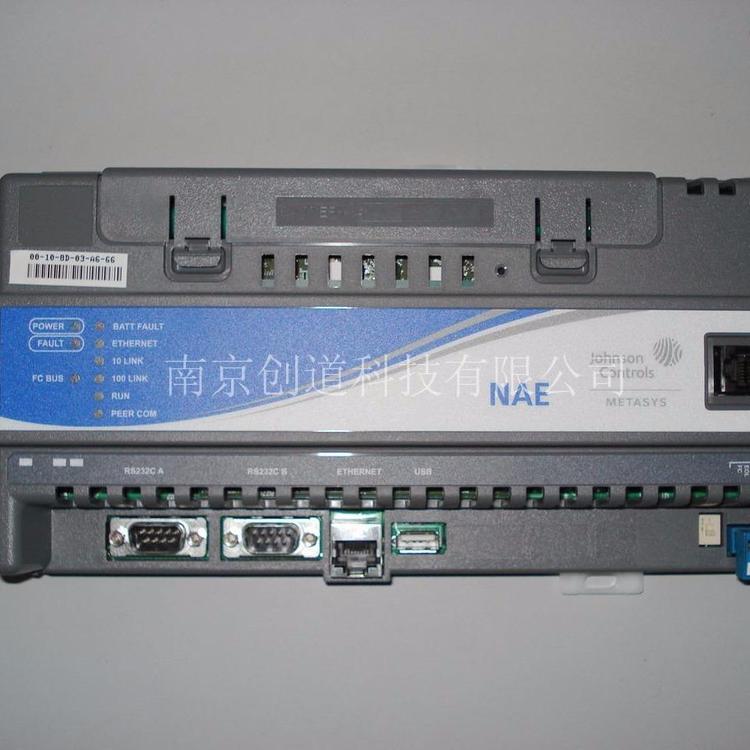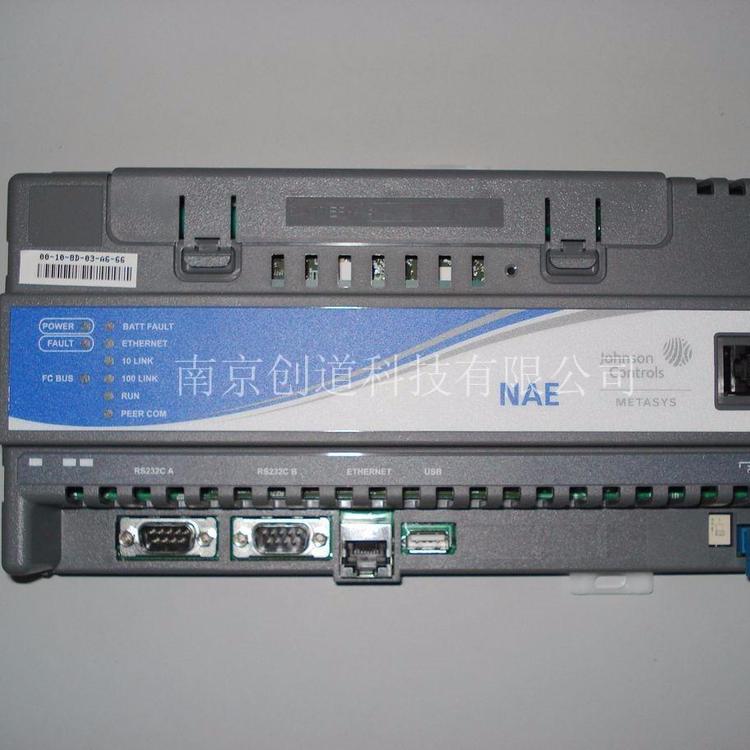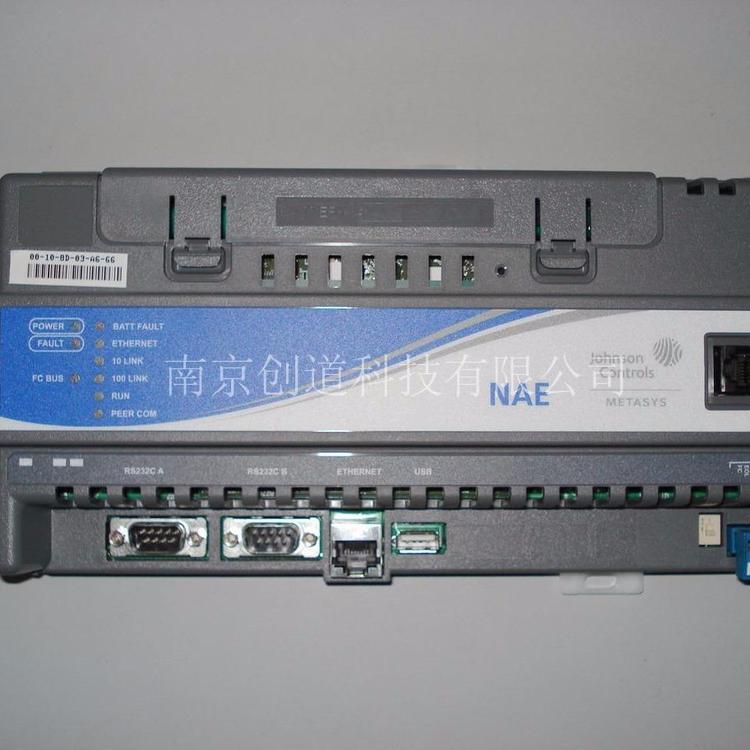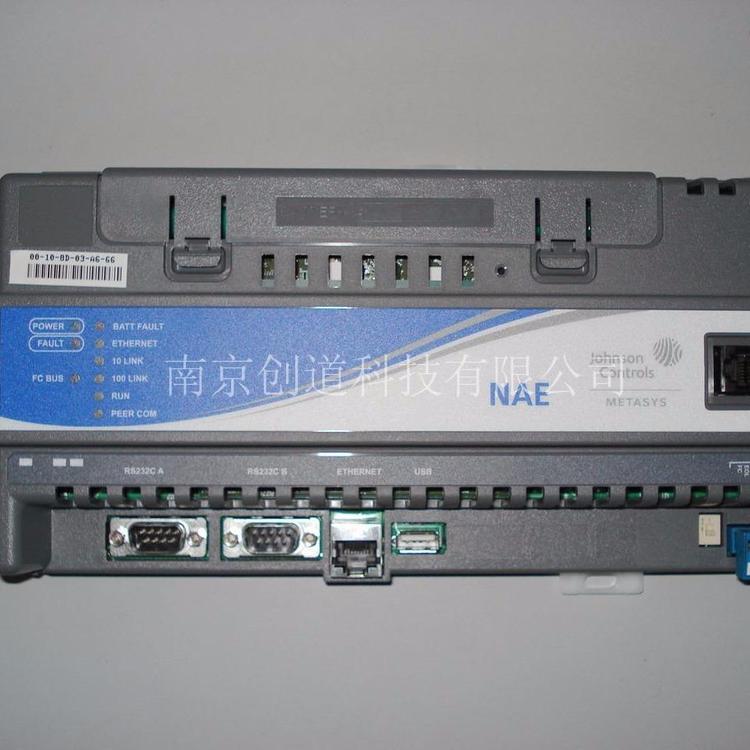


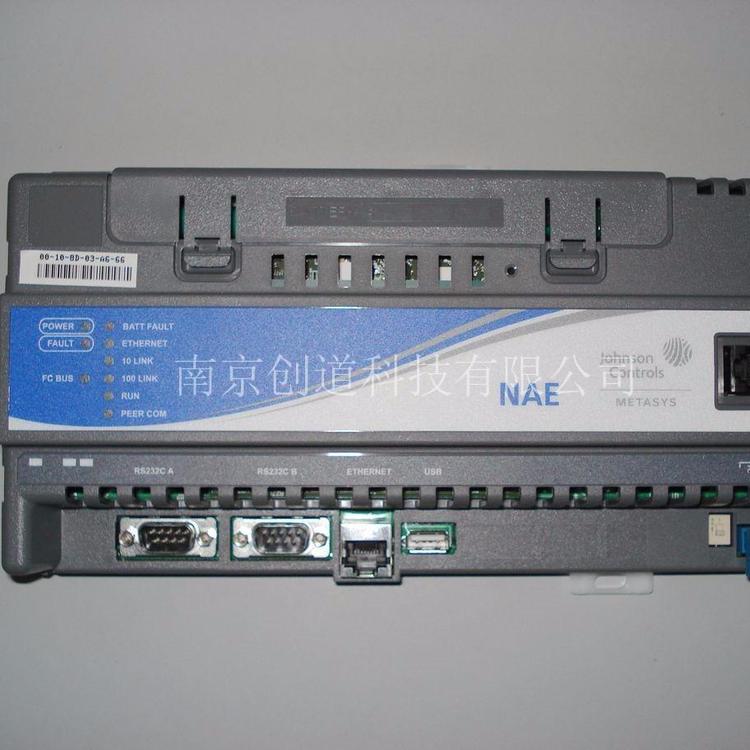
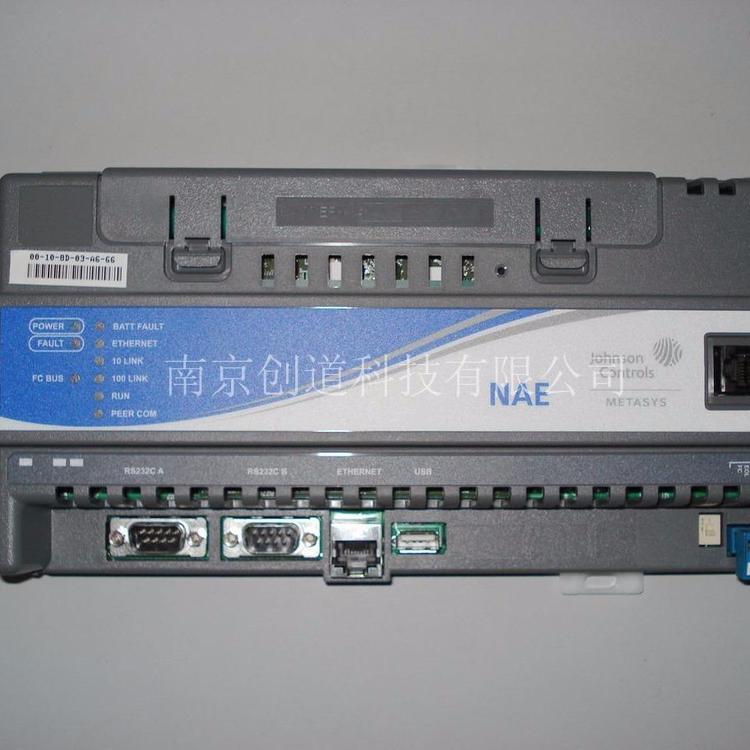













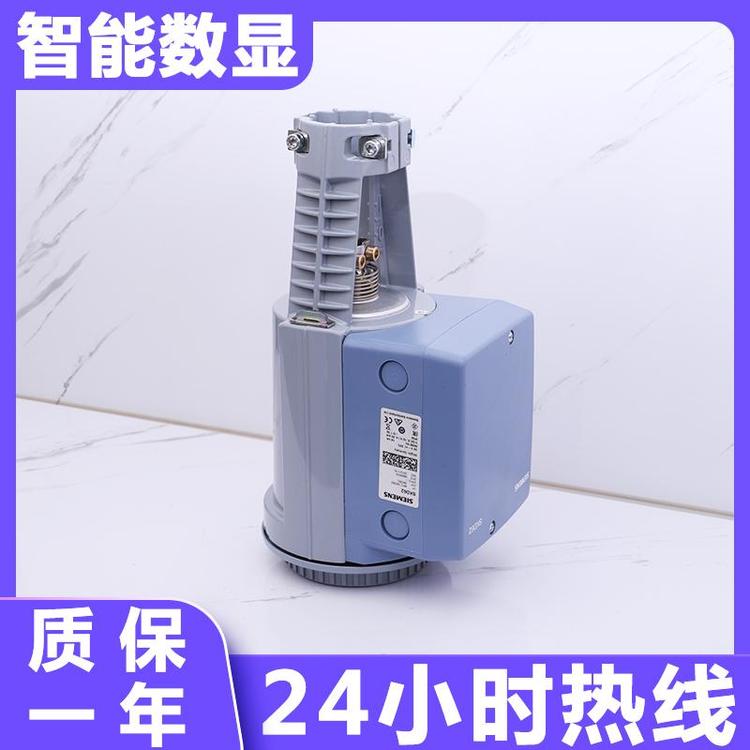
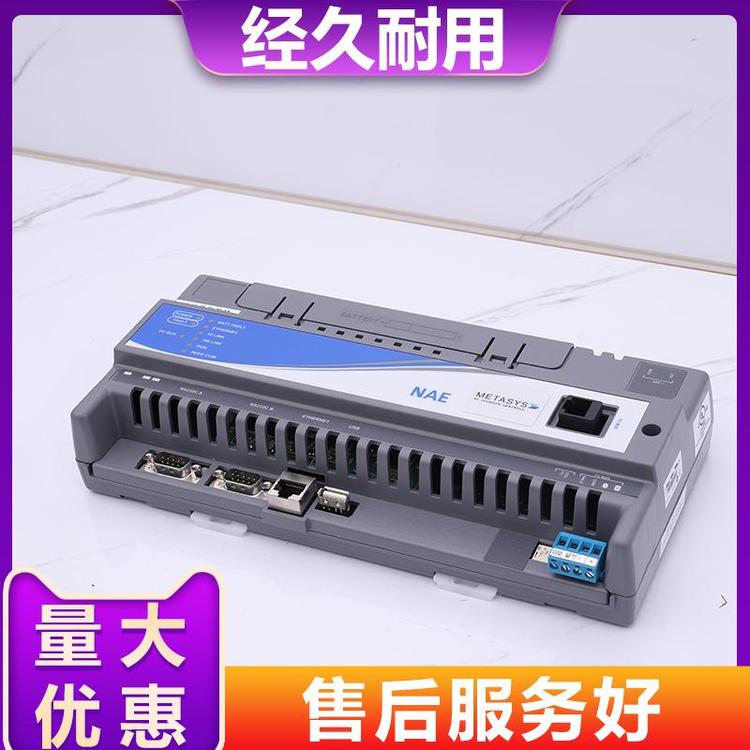




Jensen Network Engine (NAE) enhances IP network connectivity, enabling web-based controllers to
metasys plays a more significant role in Building Automation Systems (BMS).
NAE employs building automation industry-standard communication technology for facility management, including BACnet? protocol, LONWORKS? protocol, and N-bus. With this technology, NAE can monitor and manage a building's HVAC systems, lighting, security, and fire protection operations. A single or multiple NAEs within a building can provide monitoring, alerts, event management, data exchange, trend analysis, energy management, scheduling, and data storage. NAE is equipped with a site manager user interface, supporting single or multiple web browser interfaces, and utilizes password authorization and IT industry protection technologies.
NAE supports the monitoring and management of large facility systems within premium buildings.
NAE / NAE saves equipment investment costs, applicable to small-scale construction facilities, and can be expanded in large-scale facilities.
NAE is a high-capacity network device used for integrating large BACnet/IP systems, capable of replacing multiple NAEs.
Equipment.
NAE Network
NAE offers a variety of connection ports for the establishment of flexible enterprise-level communication networks and on-site networks.
Browser integration
Users can access the site from any computer running a web browser (desktop or laptop).
Retrieve data from the building systems within NAE. No specialized workstation software is required for the user interface devices. Web browsers can directly log into NAE via IP network, internet, or telephone dial-up.
IP Ethernet: NAE is directly connected to IP Ethernet operating at 10Mb or 100Mb per second, and the NAE series can also be connected to 1Gbps networks. Multiple NAEs can be interconnected via the network, with one NAE acting as the site controller. Authorized users can log into the site controller via a browser to access the entire metasys system. Data transmission between networks utilizes standard IT protocols, services, and formats. Interconnections between different buildings can be achieved through standard wide-area network technologies and network service providers. The speed of transmission depends on the technology used.
Remote NAE can be accessed remotely via standard wide area networks, through the internet using an ISP, or via public telephone networks using modems and end-to-end protocols. Specific NAEs offer built-in modems for selection, and most NAEs support external modems.
The Data Management Server ADS/ADX is a software package running on a specific server platform that provides a storage system for configuration databases, trend records, alarm logs, audit trails, and graphical locations. The Data Management Server can also be set as a site controller to coordinate users connecting and running web browsers on the same computer platform via network, internet, or dial-up connections.
On-site networking and protocols
NAE can transfer data between field networks and also from field networks to enterprise and automation-level networks. This allows your system to operate as a complete control network.
Control layer communication: The NAE can transmit data over IP Ethernet via peer-to-peer networks. Each NAE can share data and also obtain information from other NAEs on the network, thereby enhancing the overall coordination and control functionality of the building control system.
Compatibility with BACnet Protocol: The control layer's communication also supports the BACnet protocol, facilitating integration with other systems and devices that adopt this standard protocol. NAE supports BACnet alarm and event management services, primarily used for workstations and field controllers.
MS/TP Fieldbus Controller
BACnet MS/TP bus is a peer-to-peer master protocol, where each master takes turns as the information source.
Transmit information to other devices on the bus. The NAE can communicate with Johnson Controls' MS/TP fieldbus controller viatasys Field Equipment Controllers family communication, including FEC1 and FEC field controllers, VMA100 series variable air volume controllers, IOM1, IOM, IOM, IOM input/output modules. NAE can also be integrated with TEC xx series temperature regulators and those compliant with the American National Standards Institute/ASHRAE (American Society of Heating, Refrigerating and Air-Conditioning Engineers) standards.nal Standards Institute/ American Society of Heating, Refrigerating, and Air CoConditioning Engineers. Communication with third-party MS/TP devices using the BACnet protocol as per ANSI/ASHRAE Standard 1-00.
N2 Bus
N-Bus is an open fieldbus by Johnson Controls, which can connect application controllers (ASC) and programmable controllers.
The controller is connected to the upper network controller. The Application Controller (ASC) includes Air Handling Unit (AHU) controllers, VMA Variable Air Volume controllers, etc.; the programmable controllers include DX-100.
N-bus can also be connected to other manufacturers' metasys compatible equipment and metasys Integrator? Integrator
Specific NAEs can establish communication paths between application controllers (ACS) or compatible N-bus devices and the NAE over IP networks, making the product's applications more flexible. Remote N devices can be connected to the NAE via Ethernet using the N data encapsulation feature.
LONWORKS Bus
If the network interface adheres to the LONMARK? standard and features a free topology
FTT-10 network communication interface, specific NAE models can control LONWORKS devices. These models of NAE support all LONMARK? certified devices, including LN series controllers and Nexsys? controllers. LONWORKS devices enhance the flexibility of programmable series controllers.
Software to enhance building operational efficiency
Version meTasys system software and NAE feature the following:
The integrated NAE user interface provides data and graphical information to all connected web browsers. Authorized users can conveniently log in to NAE through the user interface offered by the web browser. This embedded user interface is ideal for smaller networks and remote locations with a single PC that do not require user workstations.
The Systematic NAE identifies legitimate users by recognizing the entered user ID and password at the user interface. The data obtained by users is encrypted during transmission and managed by the user administrator, including the NAE database, user information, and accounts. Authorization is required for everything from configuring the entire system to merely browsing a specific part of a system or site. The system administrator assigns user IDs, passwords, and specific NAE data retrieval rights to each user's account.
Basic Access Features Basic access features enable users with basic access account privileges to access a subset of the standard user interface within their designated permissions.
Monitor and control data from all mechanical and electrical systems within the building's on-site control equipment. NAE can coordinate commands and transmit them to the priority equipment for the building's operation.
Global Search
Apply the global search function to help users achieve naming and target type-based searches on me.Search multiple objects meeting specific criteria in the tasys system, allowing users to manage the object list. These objects can be utilized by other features for sending commands, conducting trend predictions, generating reports, and object selection.
Global Command - With this additional command feature, you can send a single instruction to multiple objects and check the command result log.
Management Record Function
All actions performed by users through NAE, including going online, going offline, issuing commands to devices, modifying parameters, and changing system configurations, are recorded in the NAE audit trail log.
Warning and Event Handling Function: The NAE will transmit warning or event information to online web browsers, pagers, email servers, and printers on data management servers. The information can also be immediately stored in a local record file on the NAE and later transferred to a record file on the server.
Historical trend data - NAE supports trend analysis of any monitored values within a user-defined period. Trend analysis data is highly useful in analyzing the performance of building control systems and pinpointing the sources of system issues. If the NAE's trend analysis data is full, this data can also be sent to the data management server.
Data Aggregation: NAE's data aggregation feature allows for monitoring energy usage and other consumptions. Users can generate reports on the energy costs of certain equipment. It also provides data for service and maintenance planning, as well as assists in early identification of potential system issues.
Trend Analysis: With the trend analysis feature, you can view multiple extended trends in a single view for convenient monitoring and maintenance.Various sites of the tasys system.
Schedule Function The Schedule function allows users to set the operating hours for buildings and the on/off times for mechanical and electrical equipment. Users can schedule operation parameters for specific days of the week, certain holidays, or even a specific date.
A system-wide network连锁 that enables NAE to gather data from field controllers on-site, and then logically analyze it to issue a set of control instructions to any other relevant field controllers anywhere on the network.
Startup Mode: The startup mode can independently determine the correct time to activate the heating and cooling systems, thereby ensuring the equipment is ready according to a schedule. It can adjust according to seasonal changes and can optimize energy consumption.
Demand Limiting and Load Balancing (DLLR) allows for the monitoring of energy meters for electricity, gas, steam, or water, and controlling the loads of energy-consuming buildings to maintain them at the energy consumption levels specified by the user. Demand limiting aids users in managing energy consumption charges for facilities. Load balancing is used to control the operational levels of equipment to reduce the overall energy consumption of building facilities. The Comfort Override feature helps the system determine which equipment should be unloaded first.
Database Configuration Management
Using the system configuration tool, engineers can define system configurations and databases offline, for later downloading data to the NAE from the network. All software required for database configurations is resident on the System Configuration Tool (SCT) or the NAE, so users do not need to make local copies of the database through a web browser when making authorized changes.
Applicable for validation environmentTasys System (MVE)
Applicable for validation environmentTasys System Expansion Architecture (MVE), designed by Johnson Controls, is aimed at facilities that require environmental-related systems to comply with relevant regulations, as well as other electronic information management needs, such as the U.S. Code of Federal Regulations, Title 21, United States Food and Drug Administration.
Regulatory requirements under Section 1 of the (FDA) and the system for design promotion.
Features provided by MVE include: digital control of facility environment, electronic records and signature, user access with time-stamped audit and event tracking features, an advanced reporting system based on web browsers, scalable configuration, and an intuitive web browser user interface.
The functionality of MVE can only be achieved through NAE.
Conclusion
NAE solidified Johnson Controls' leadership in the BAS industry and its status as an innovator in comprehensive building management solutions. Integrating IT and internet standards within NAE, it also adopted open field network protocols, consolidating the advantages of the global communications and control industry into a single system. Accessible from any location via a web browser represents a more effective utilization of the control network.