


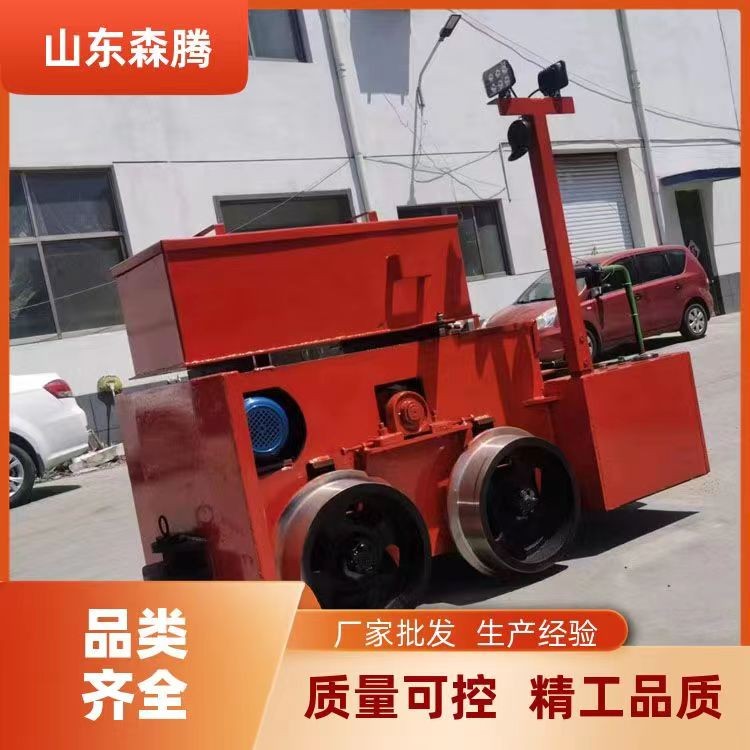














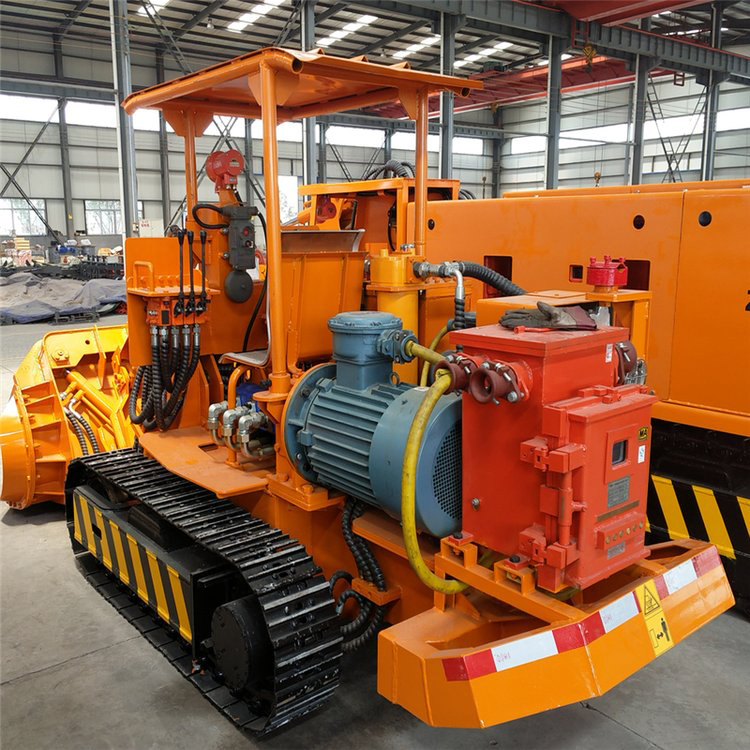


Battery-powered electric trolley
The working principle of battery-powered electric locomotives is similar to that of overhead cable-powered locomotives. Direct current from the battery is driven through components like explosion-proof connectors, controllers, and resistor boxes to power the motor, thereby propelling the train.
Battery-powered electric trolley
Battery-powered electric locomotives are powered by batteries. Battery charging typically occurs at the underground electric locomotive garage. Once the battery pack on the locomotive has been used to a certain extent, it is removed and replaced with a fully charged one. Therefore, each locomotive must be equipped with 2-3 battery packs.
Advantages: No spark ignition hazard, suitable for use in mines with gas; no need for wiring, flexible usage, highly applicable to small-scale transportation systems and tunneling operations with irregular tunnels.
Drawbacks: Requires charging equipment; High initial investment; Low energy efficiency; Higher transportation costs.
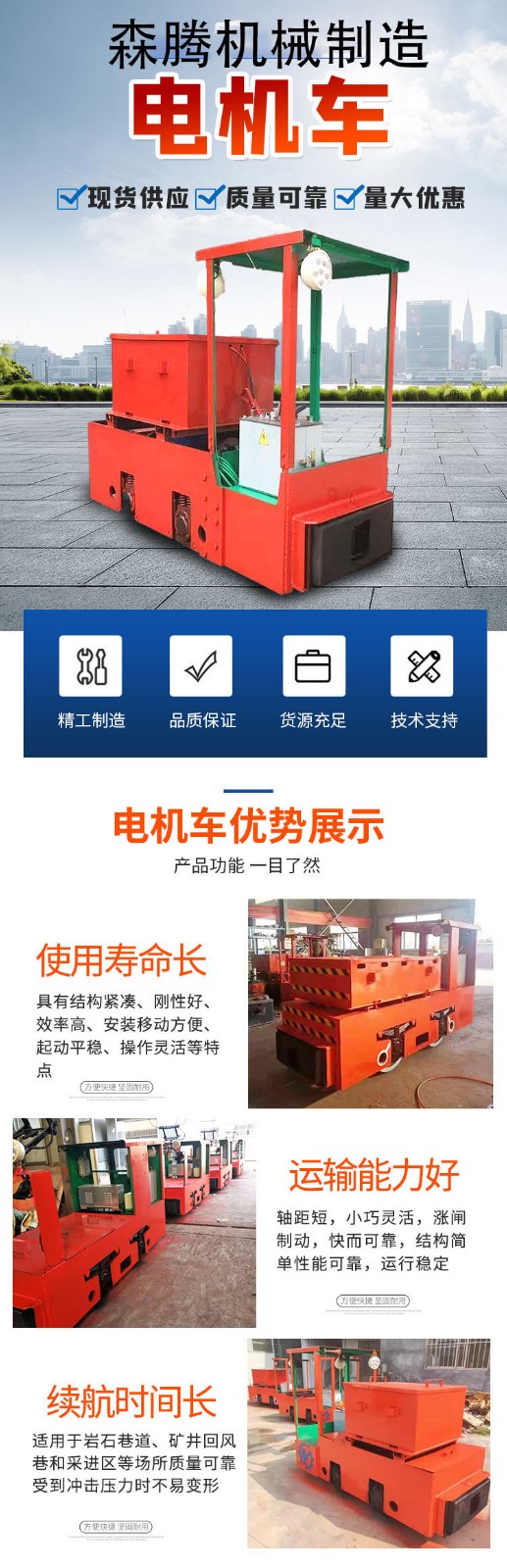
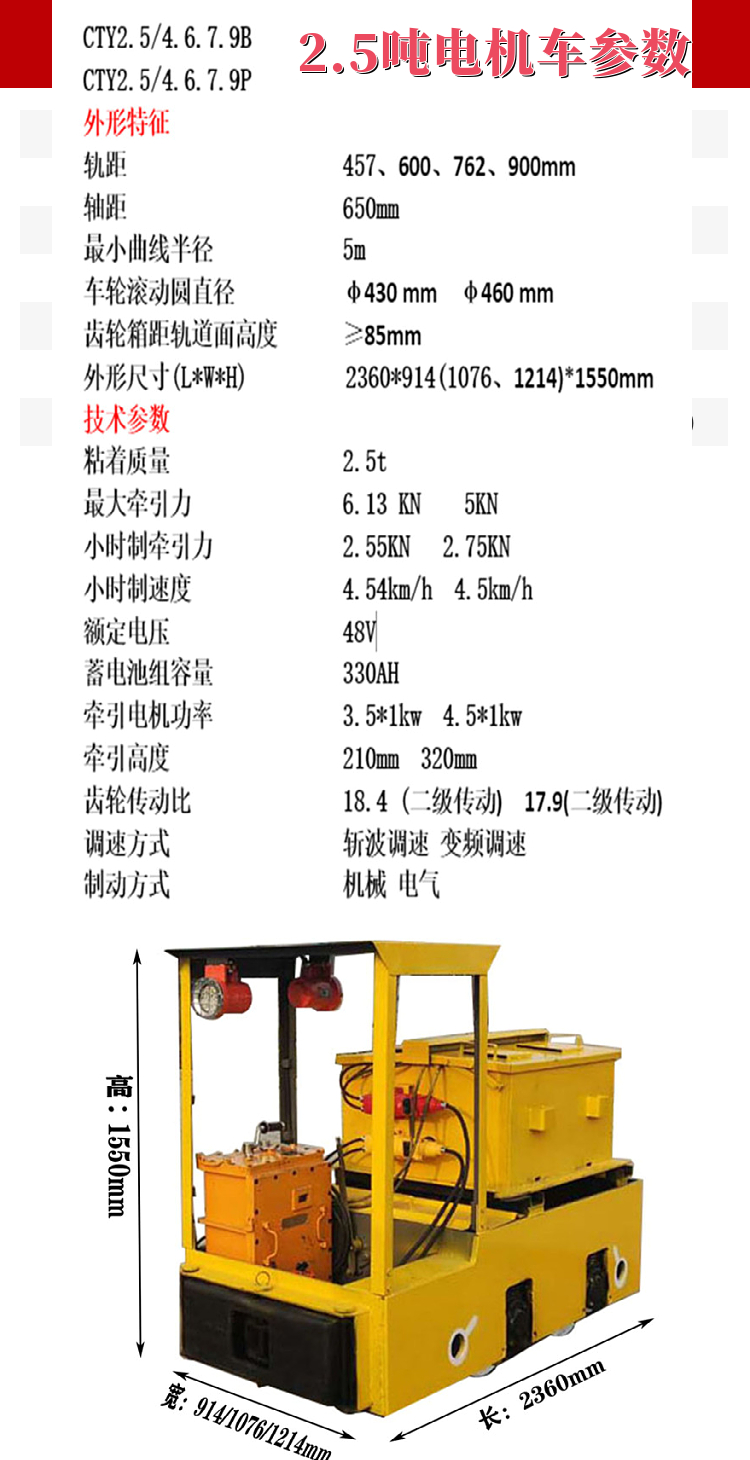

5T explosion-proof special electric vehicles, available in both stepless and stepped speed regulation. Key features: rational overall structure, reliable explosion-proof performance, smooth start-up, energy-saving. Main technical specifications meet the level of similar products domestically and internationally. The stepped speed regulation model uses battery-powered parallel motors in series with added magnetic fields and magnetic field reduction. The speed regulation steps are 7, with a smooth start-up and no significant shocks. The explosion-proof performance is reliable, the quality is good, the structure is simple, and it is easy to maintain, making it highly popular among users.


















